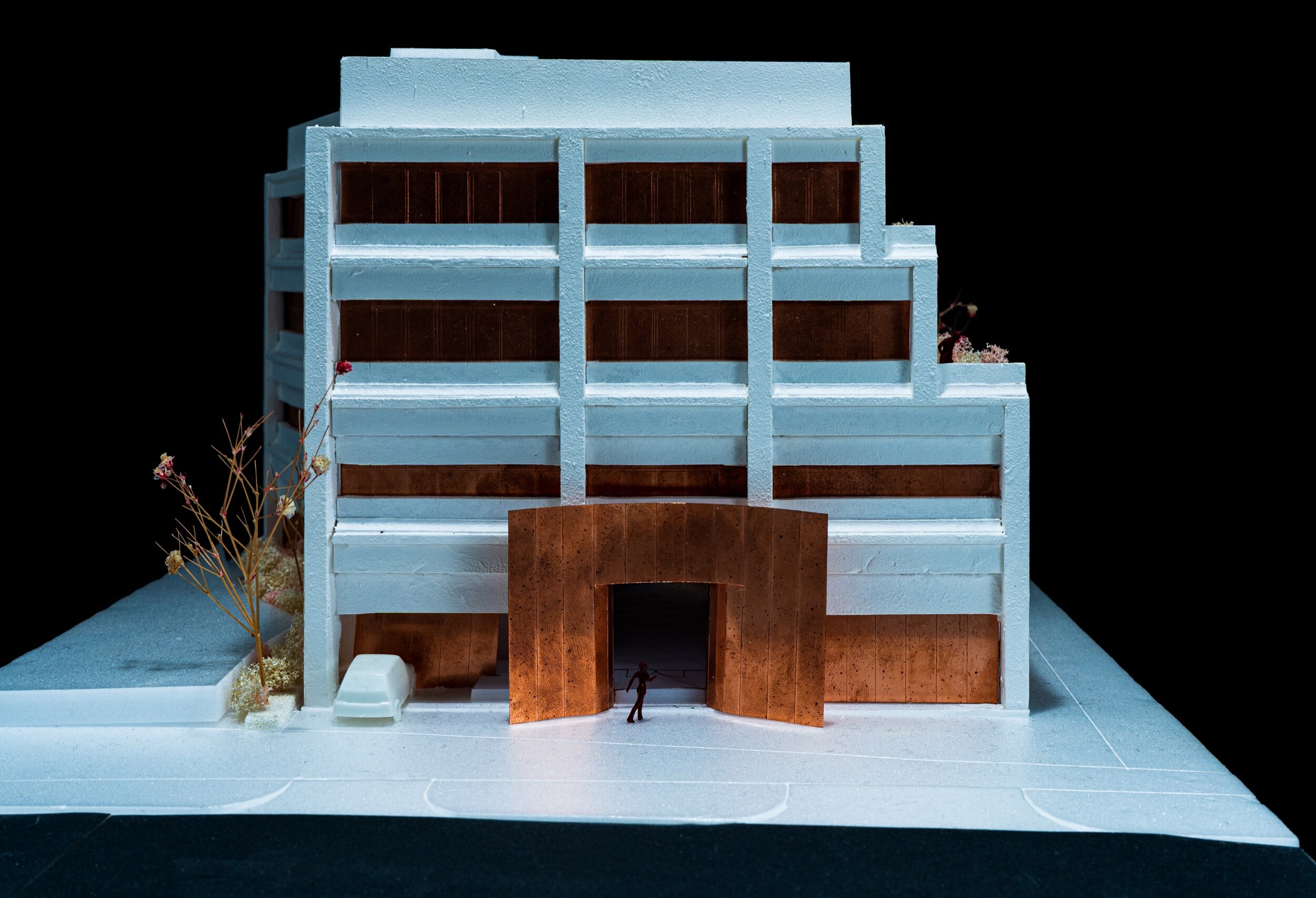
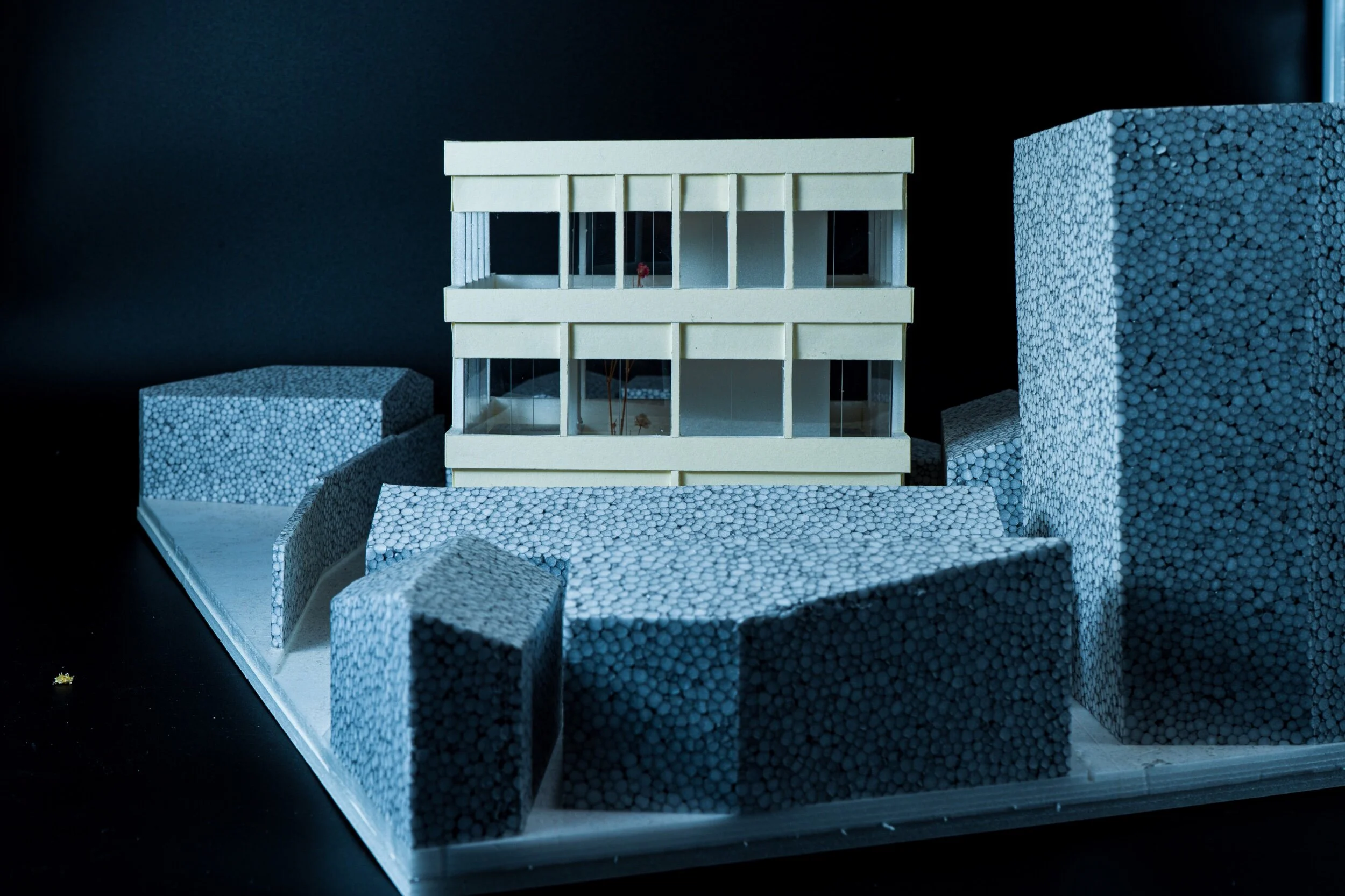
Location : mapo-gu, buckgajwa-dong, Seoul Korea
Principal use : Office + Commercial
Stage : be under Design
Design period : 2022~2024
Size: 200㎡
Volume : 4 story
35mm
Office Building
Condition & Method
Architecture is not the result of a purely formal decision.
A form is never completed by the architect’s intention alone. Legal constraints of the site, the client’s programmatic demands, structural logic, and the realities of construction intertwine to shape the building. Each condition operates simultaneously as a limitation and as a potential. Architecture emerges through the act of interpreting and organizing these conditions.
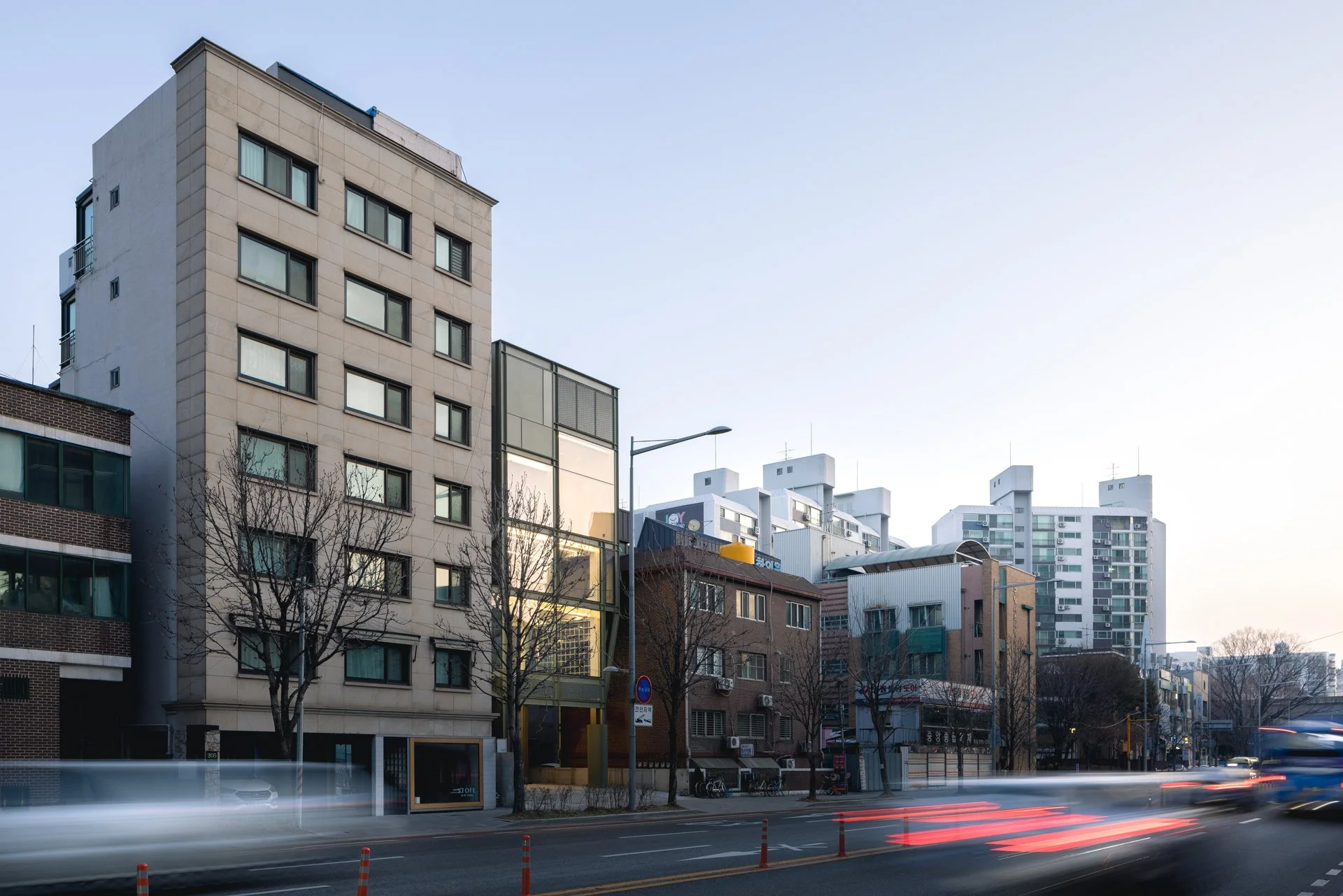
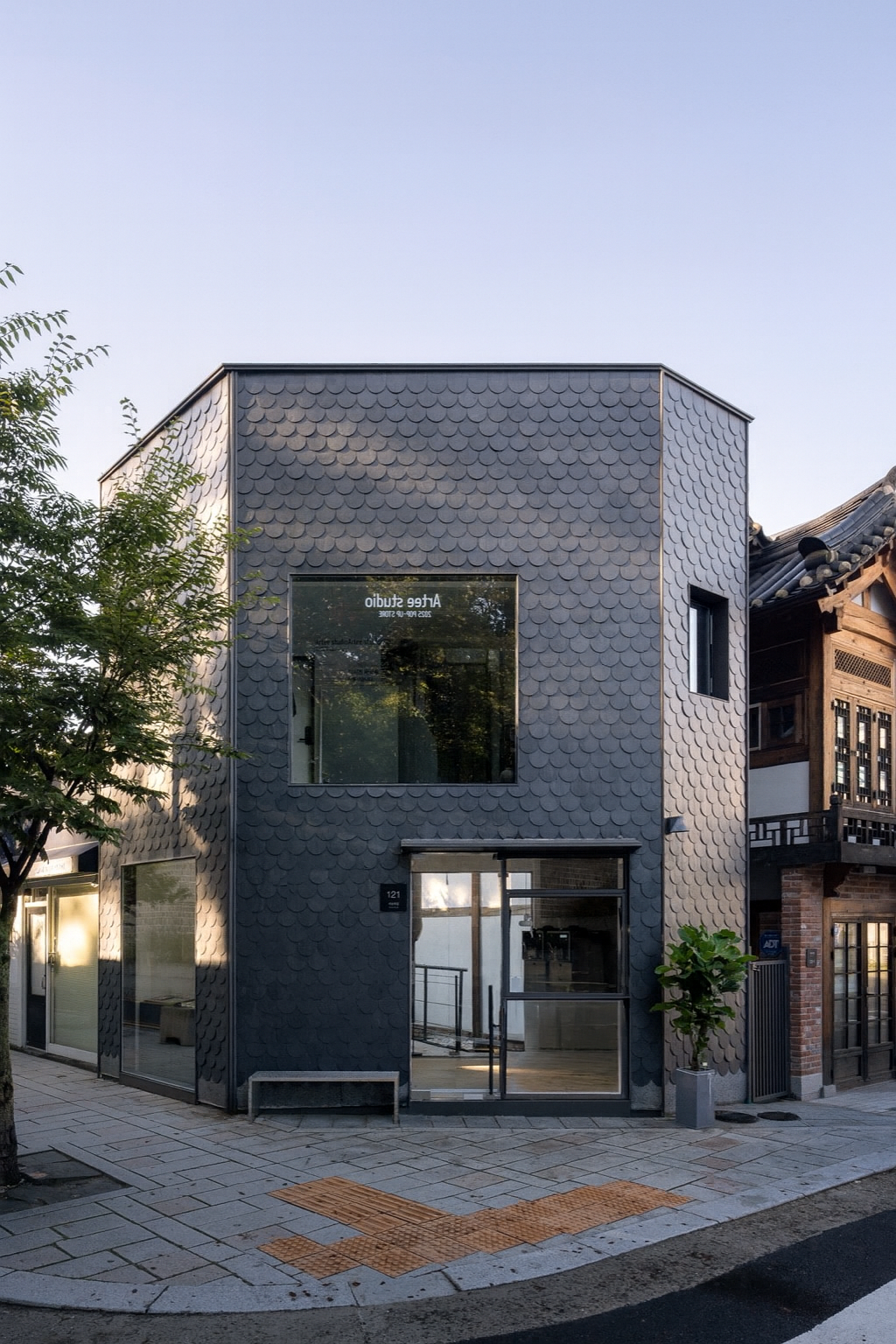
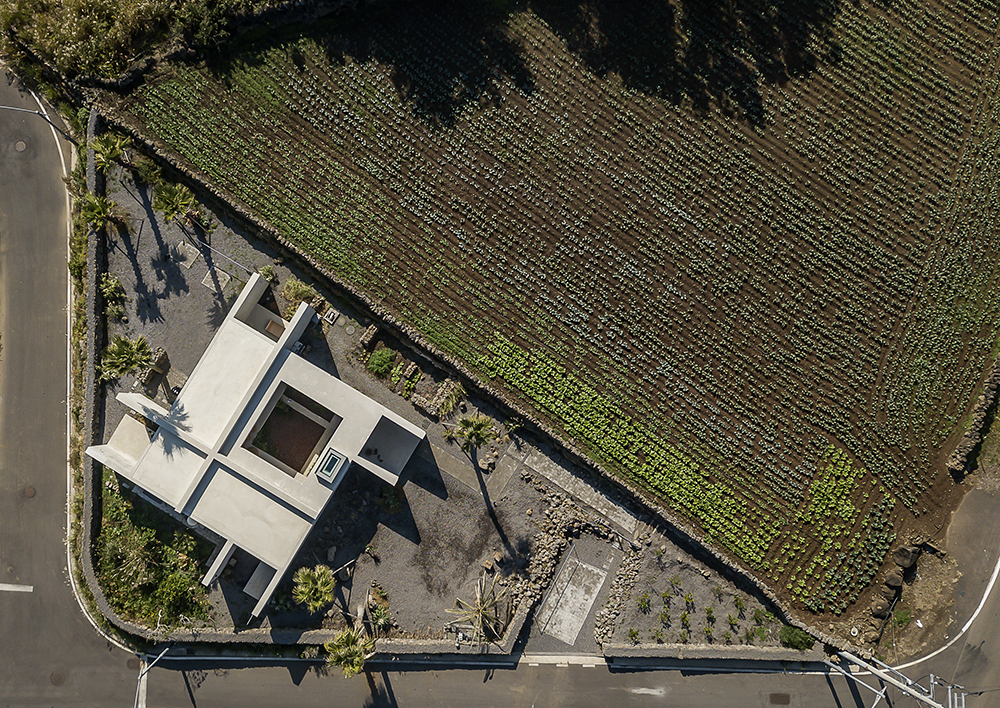
The 35mm Office Building begins with its location at an intersection.
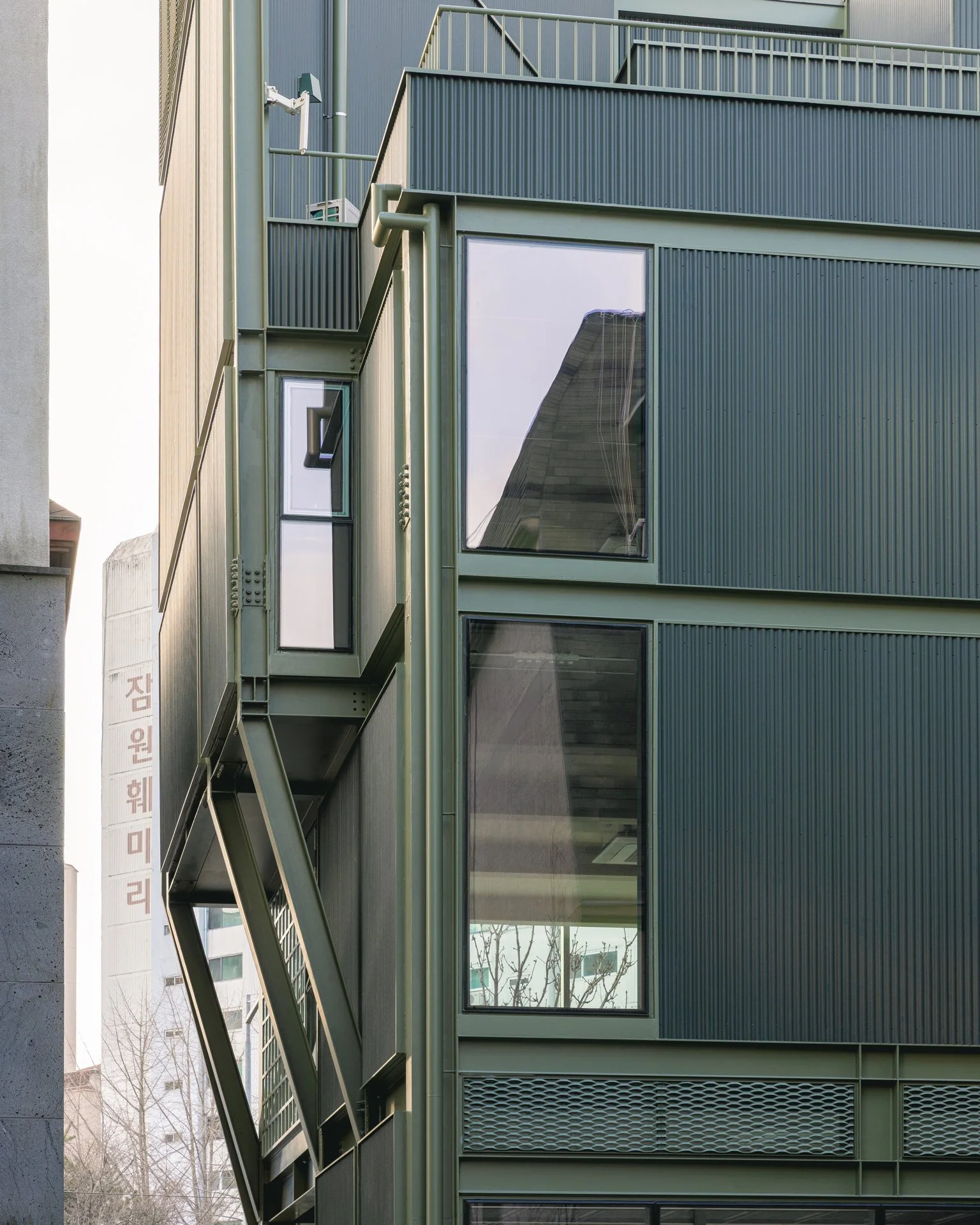
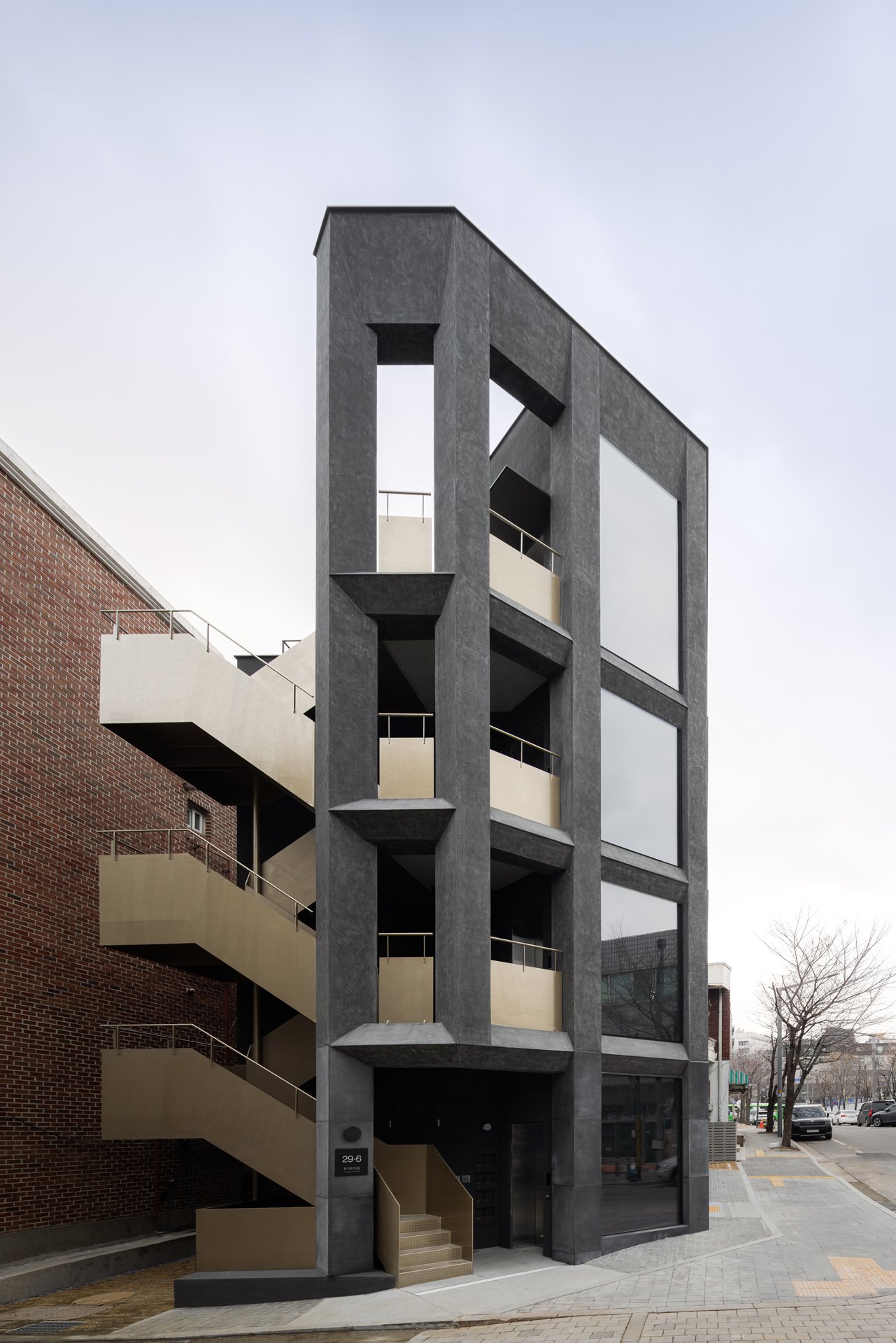
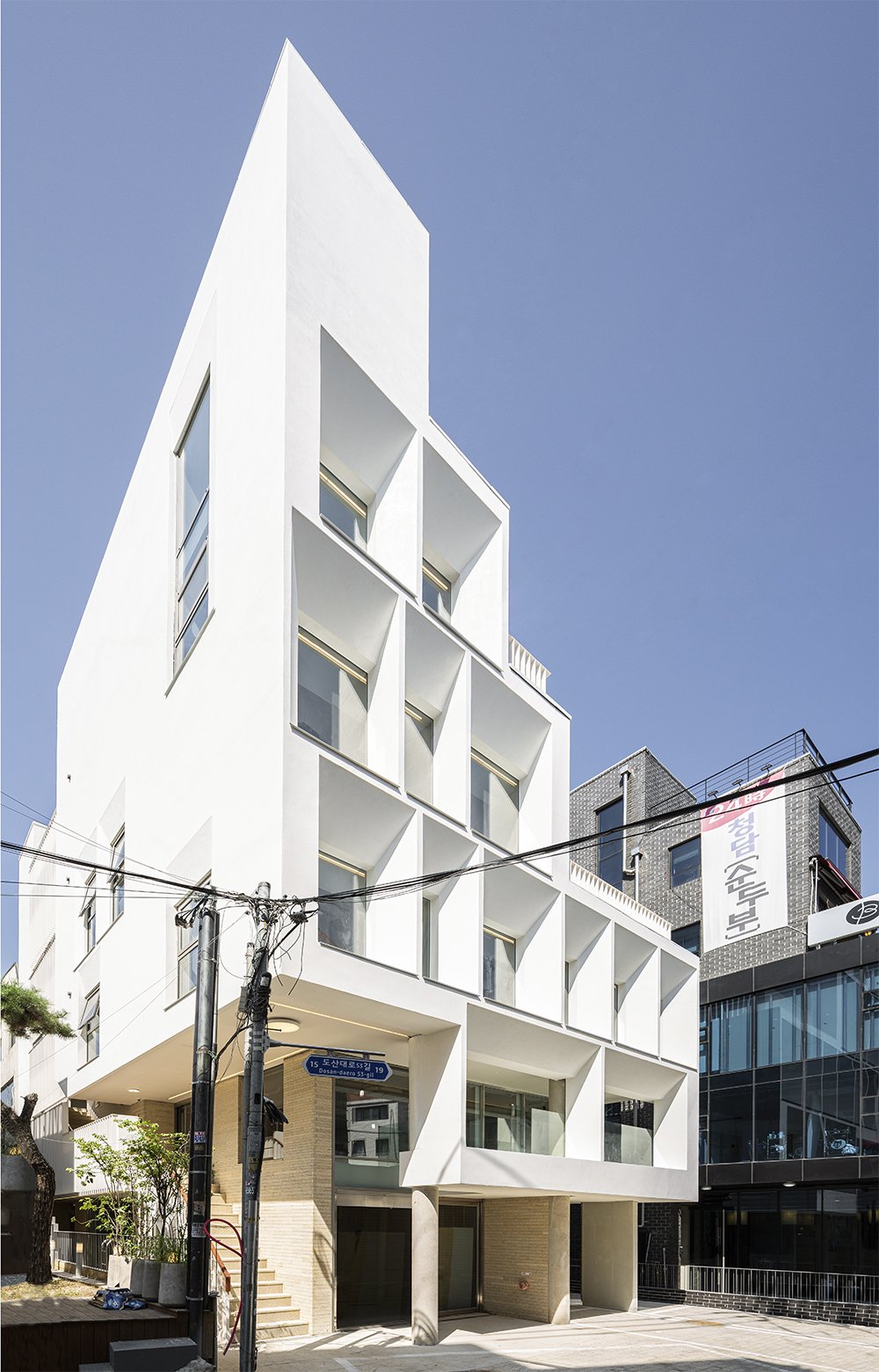
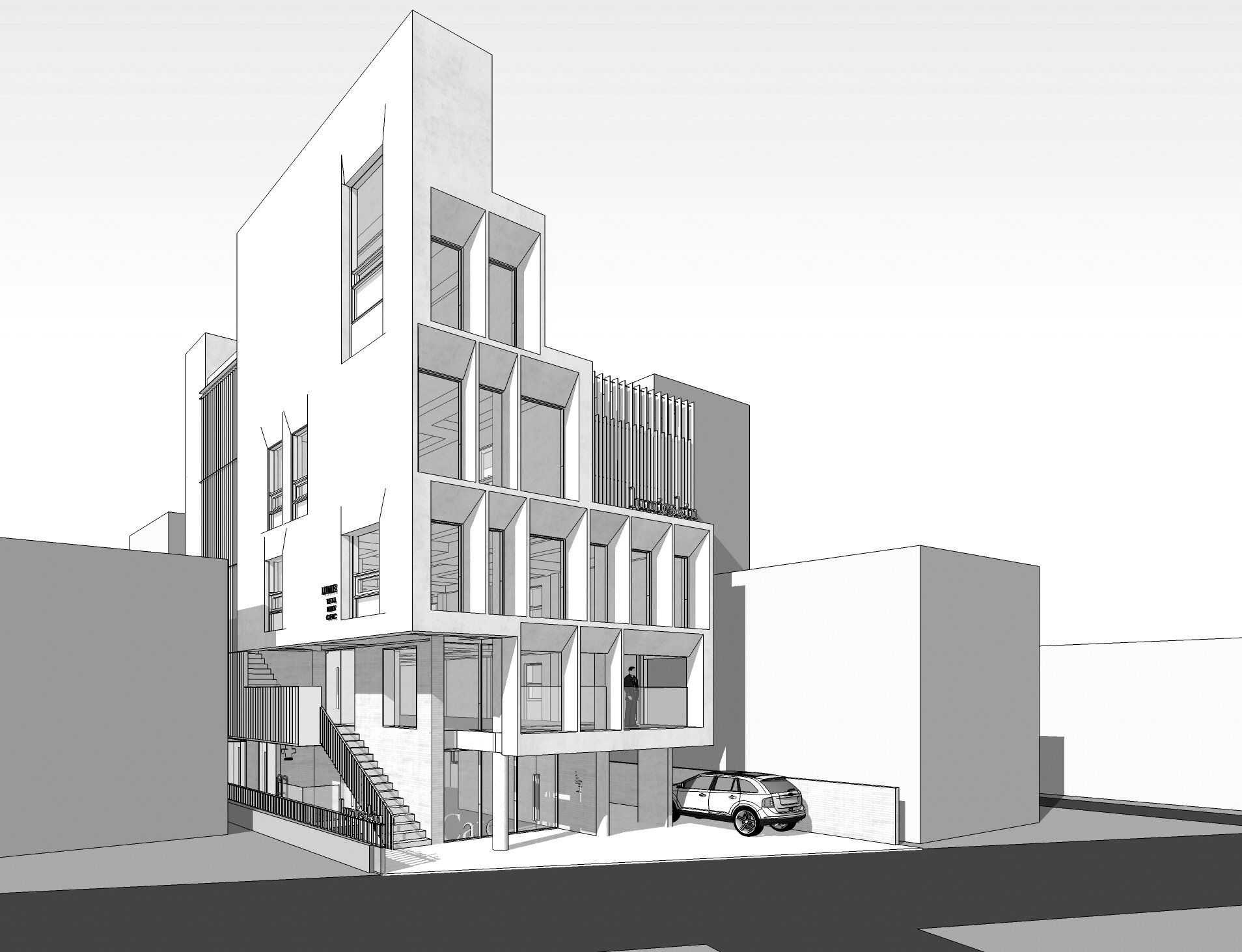
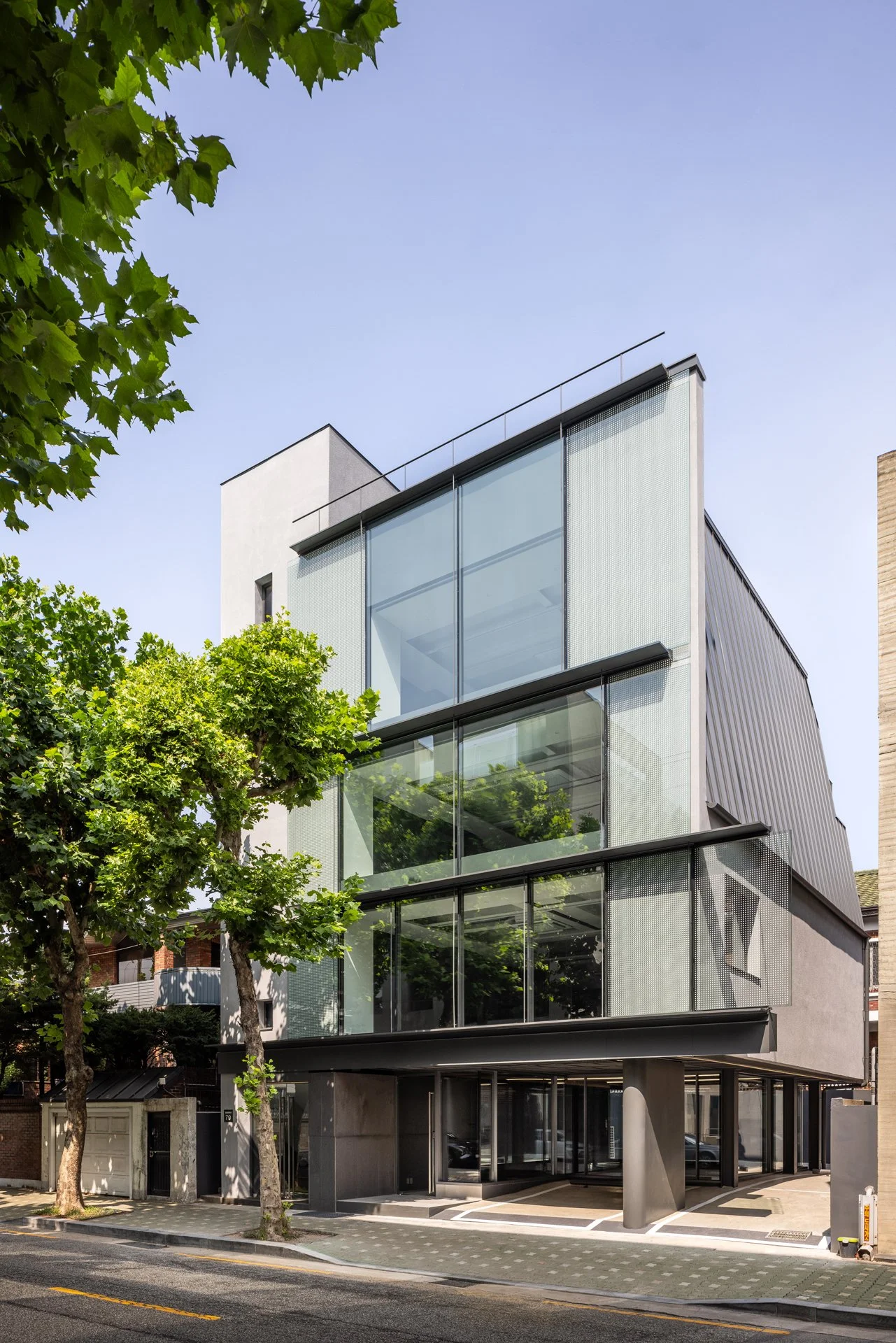
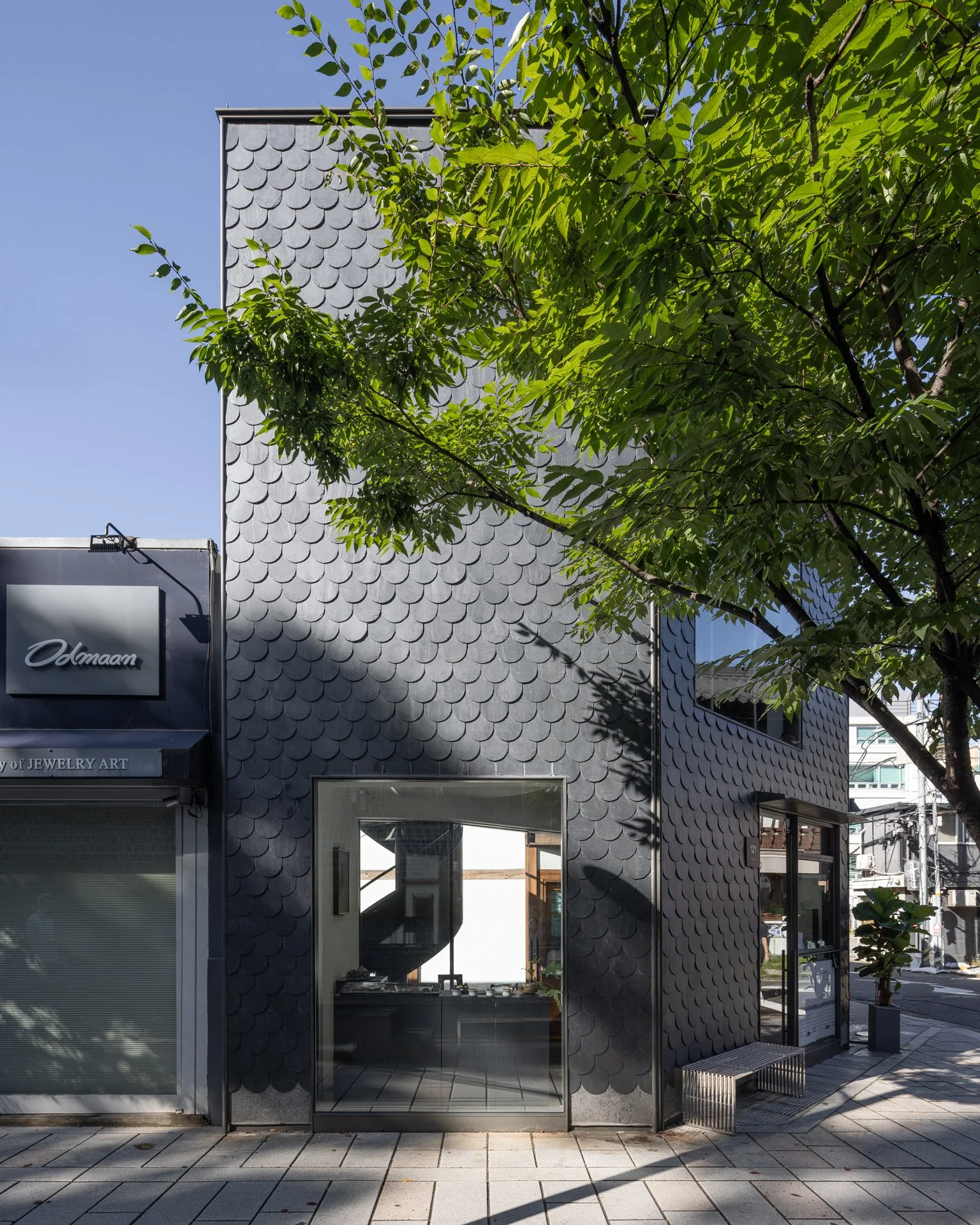
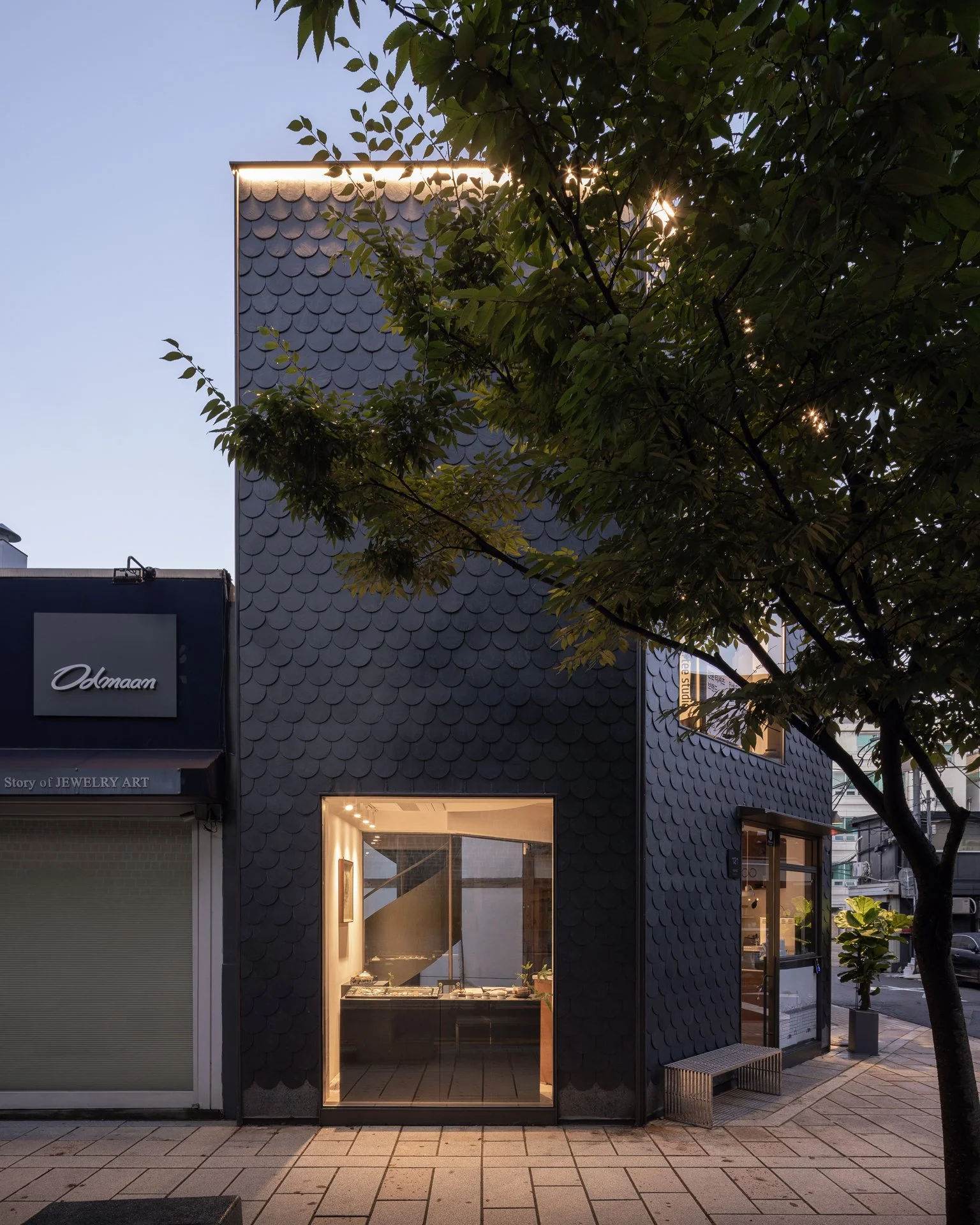
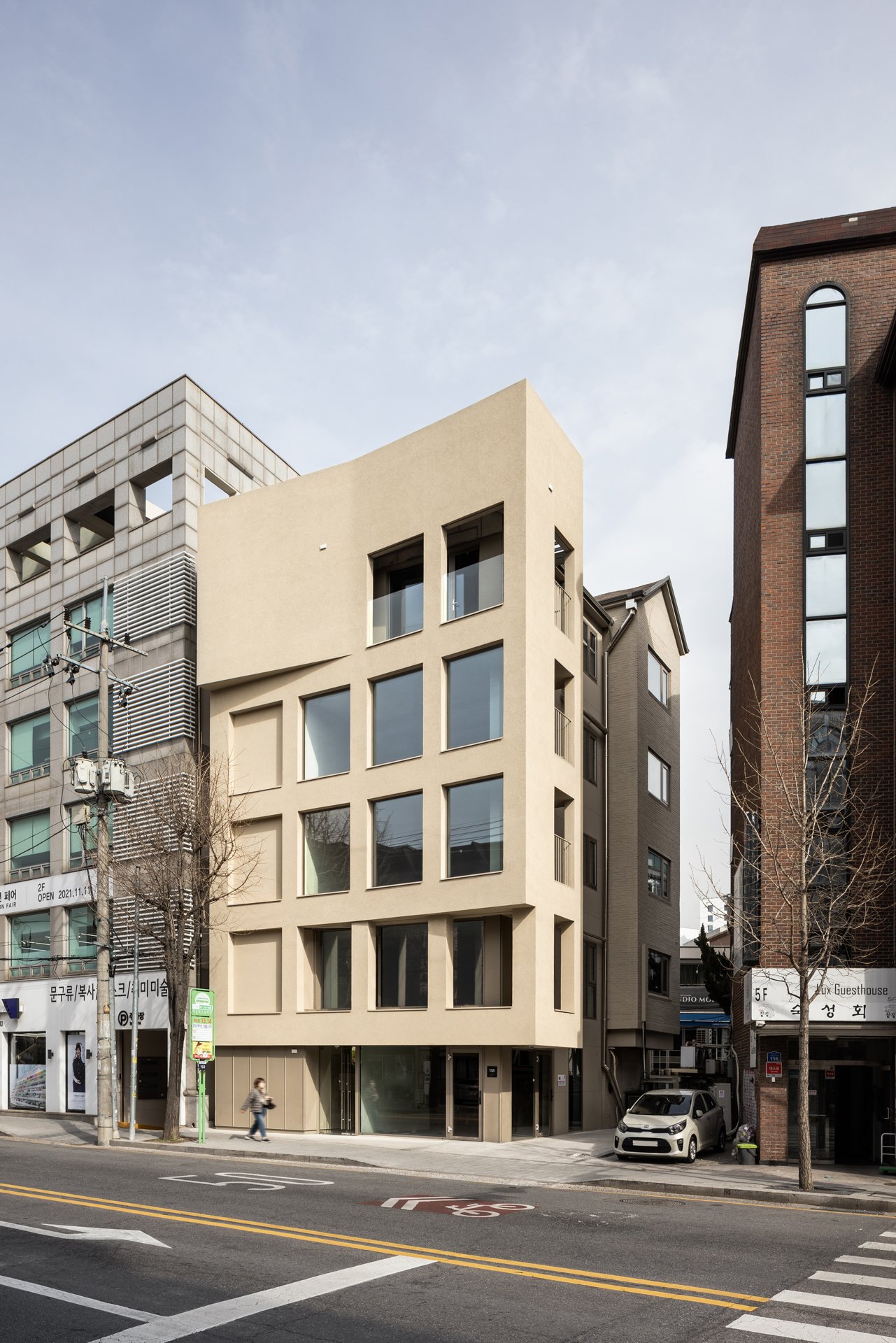
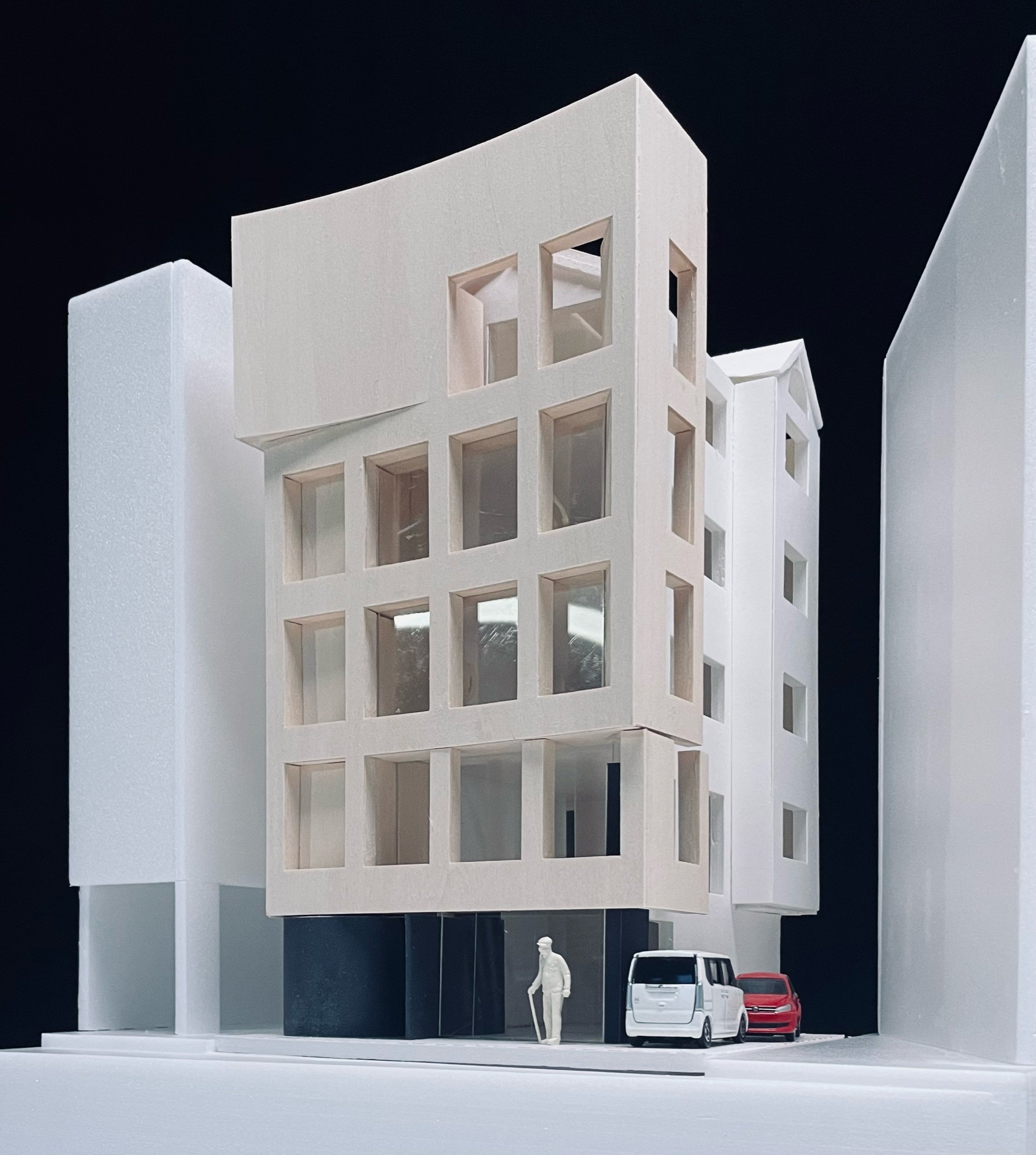
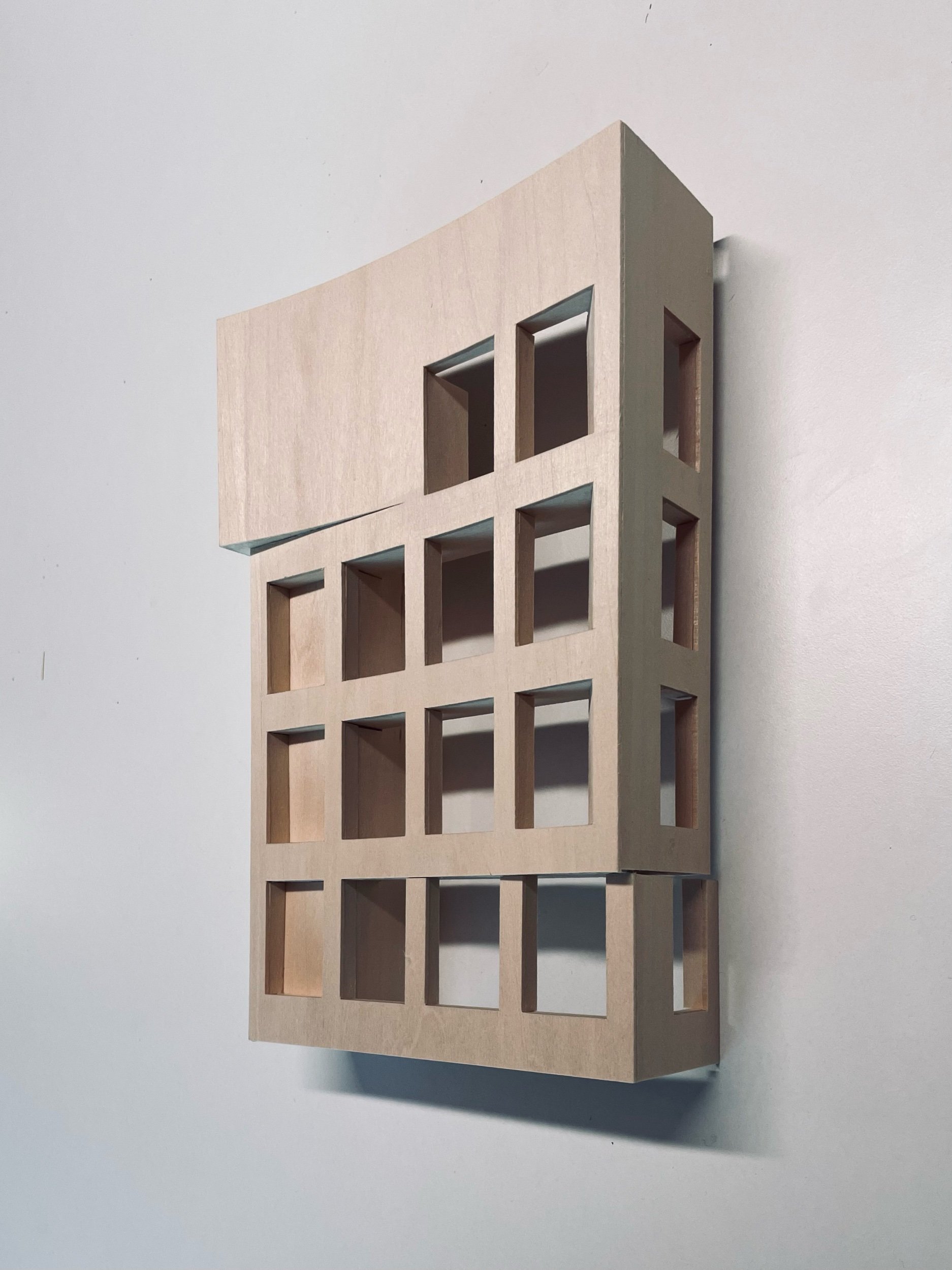
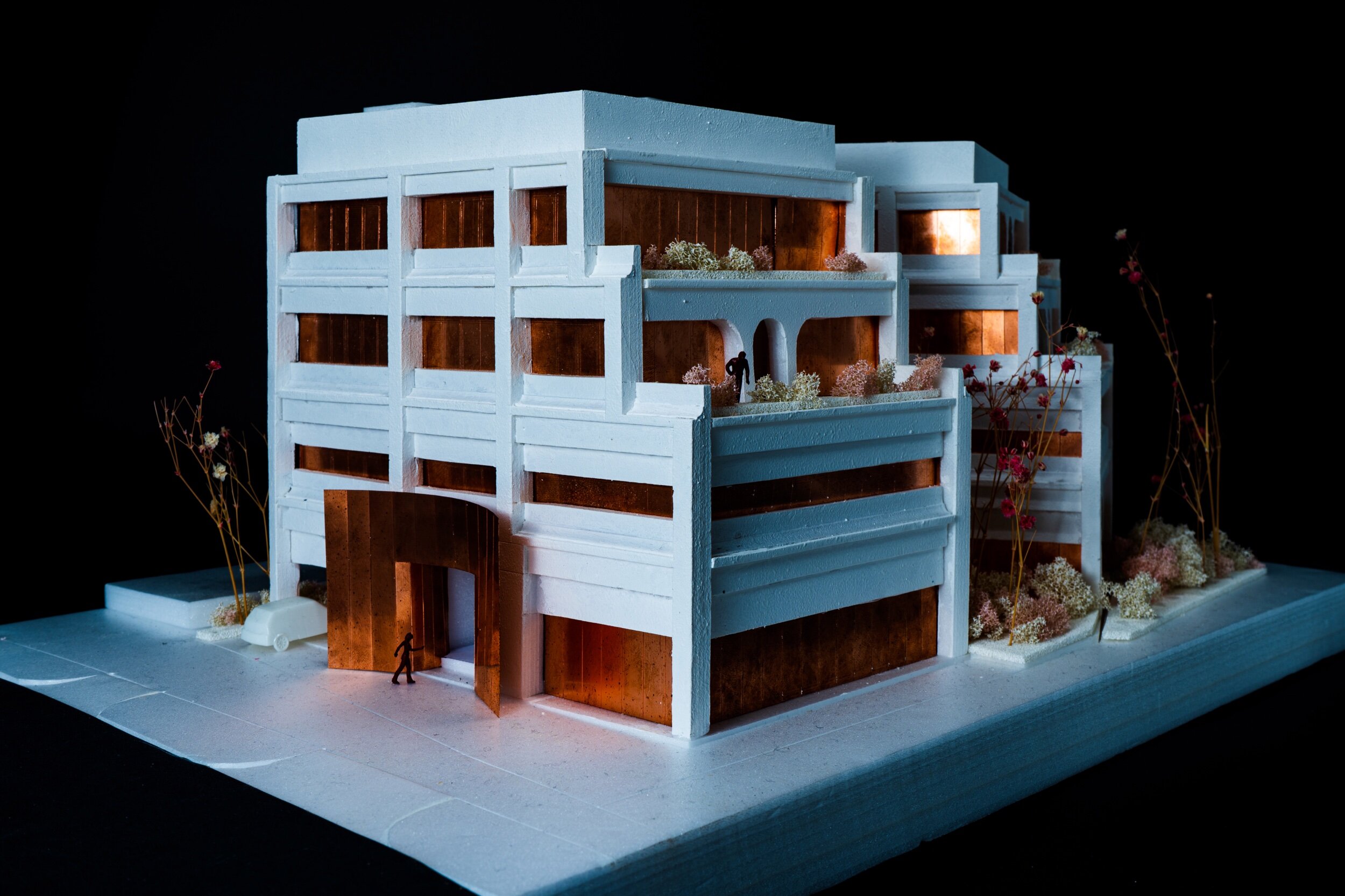
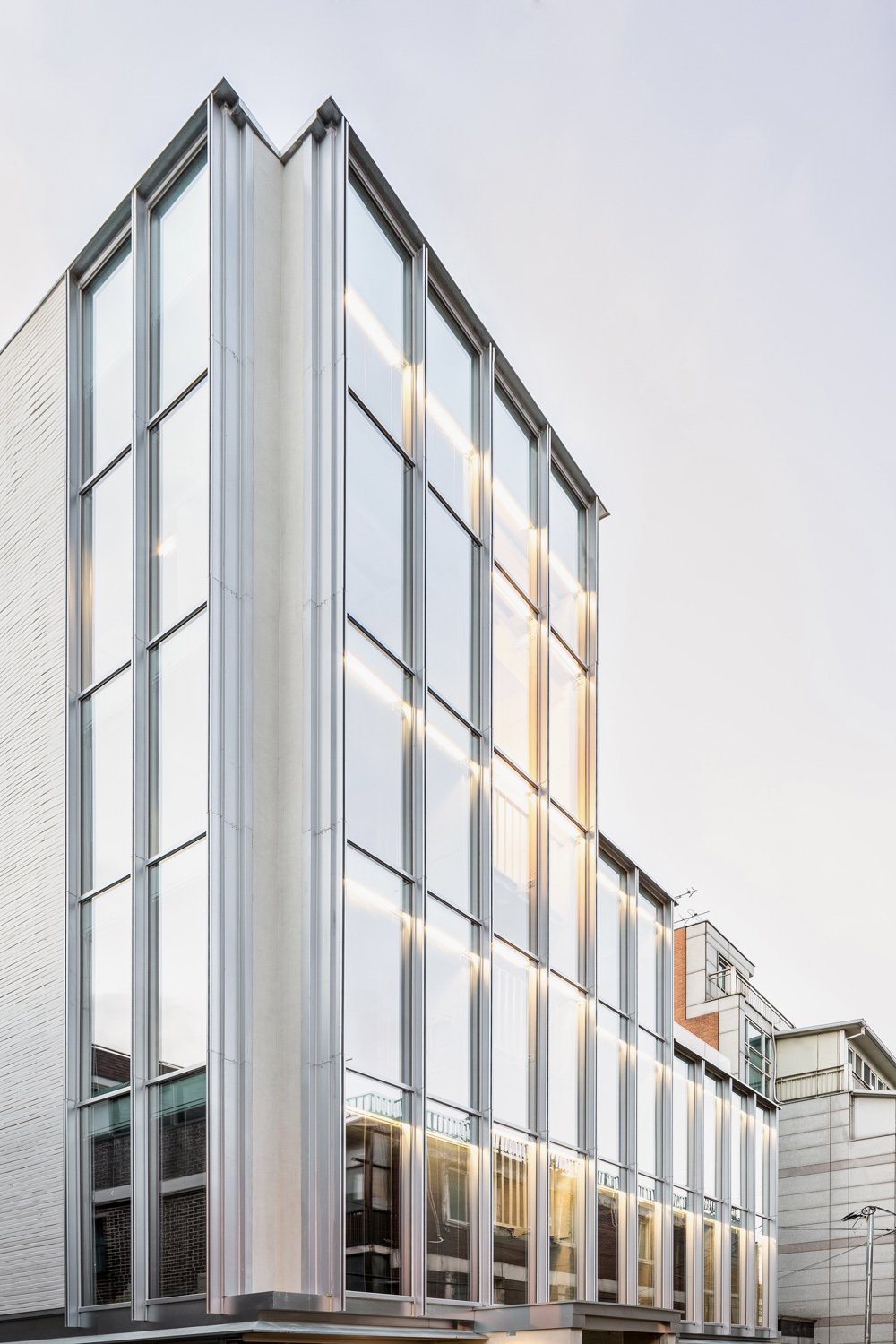
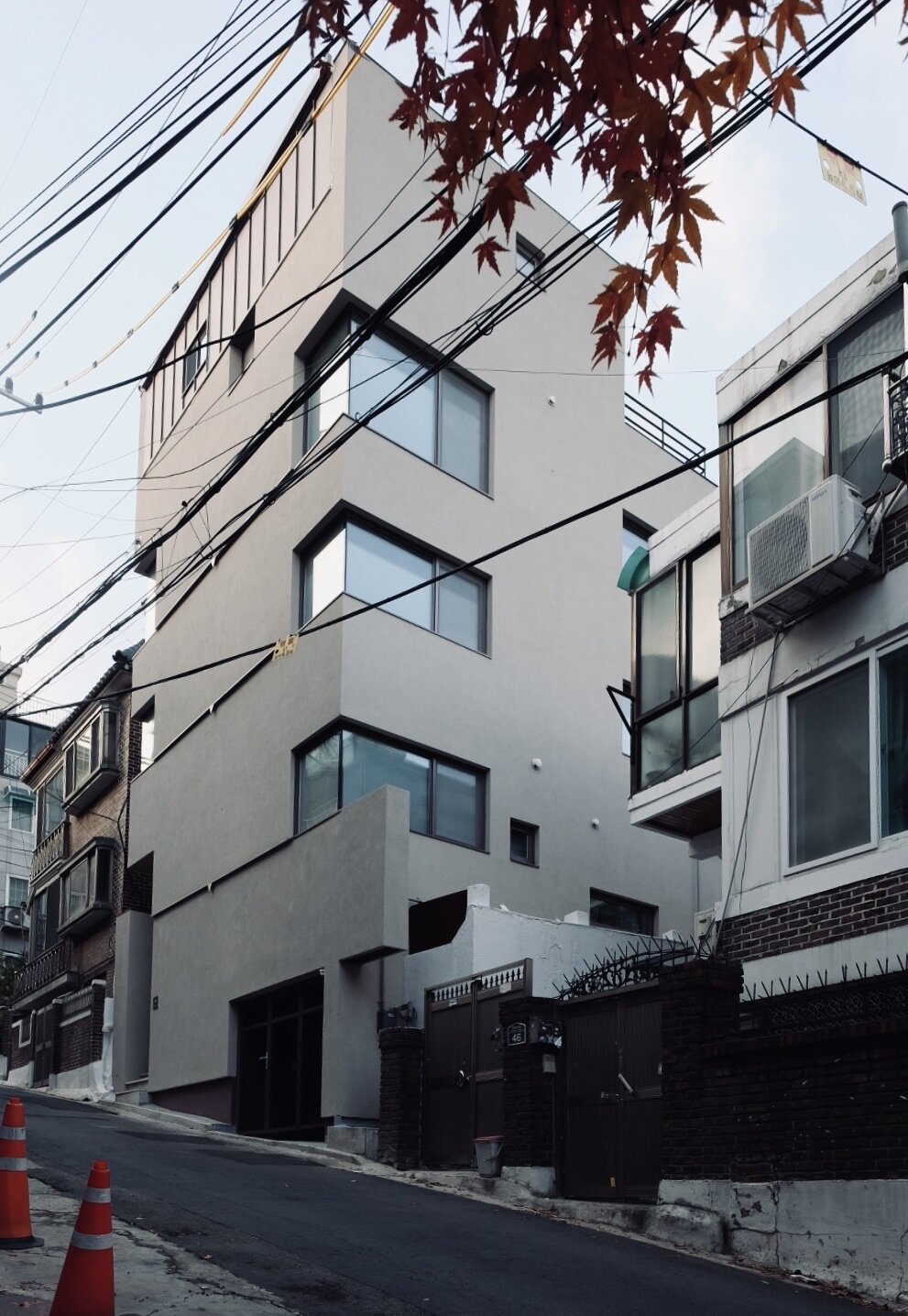
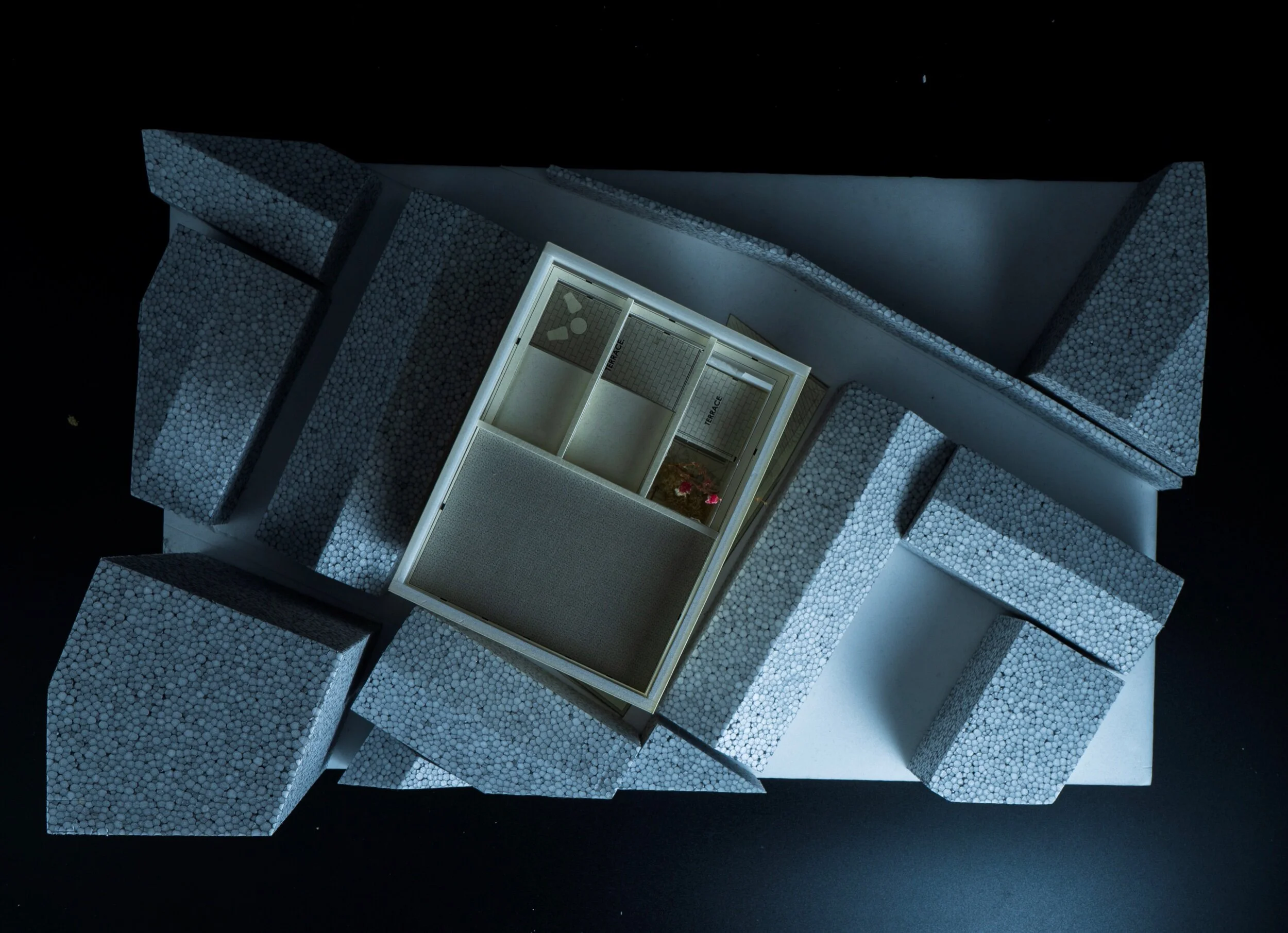
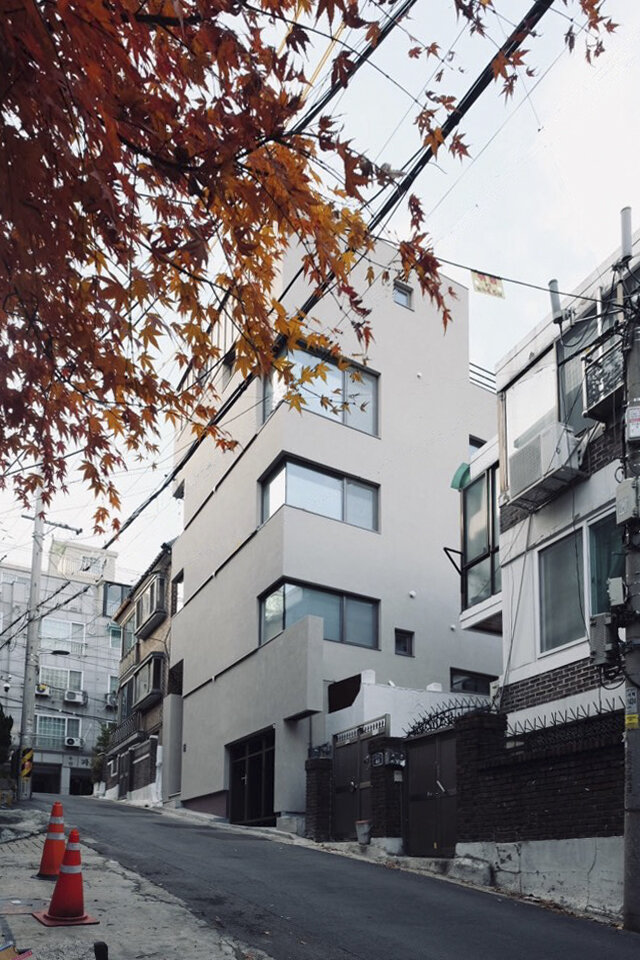
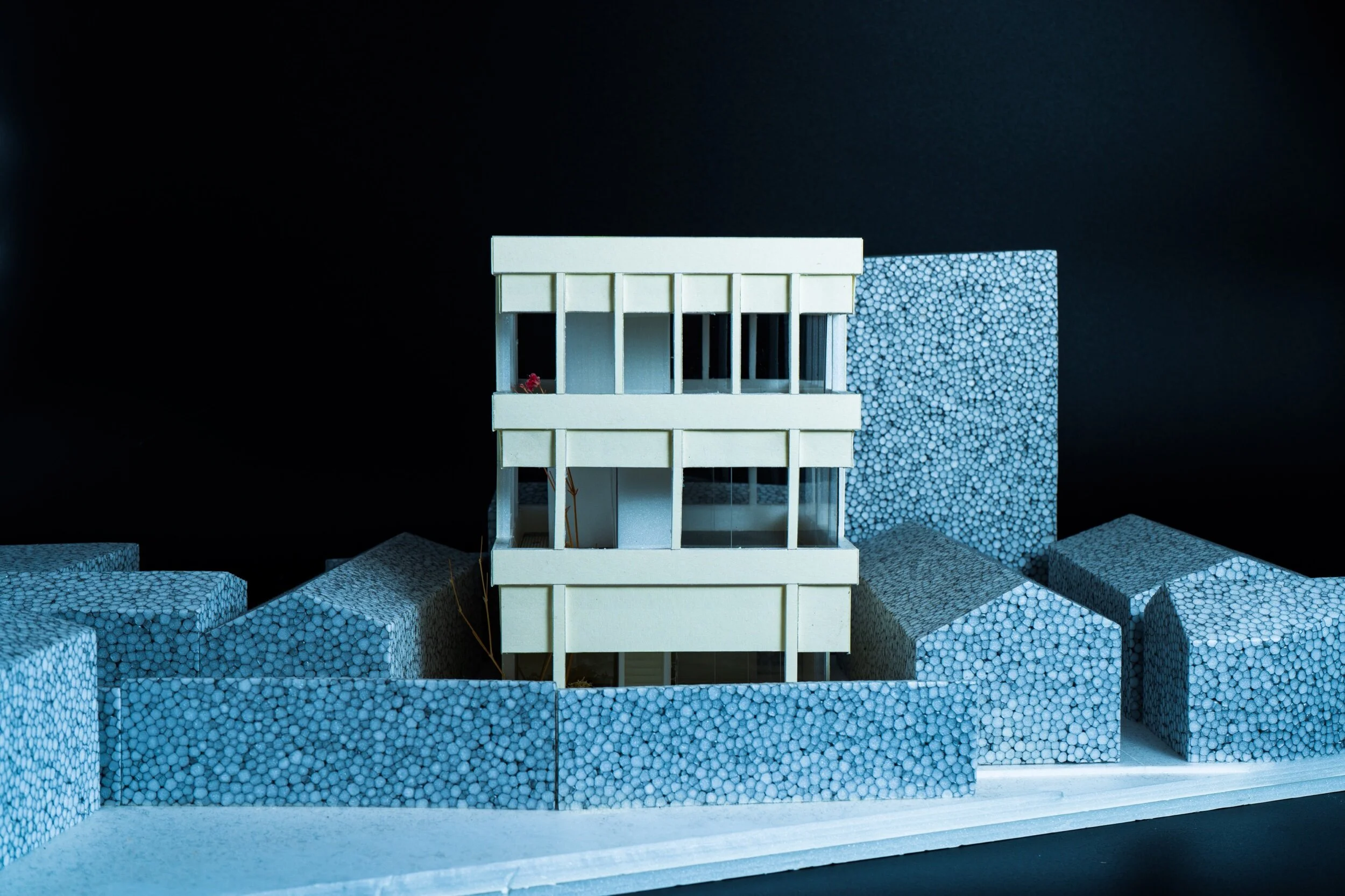
The site is subject to the corner-cut regulation, which trims the edge of the plot diagonally to secure visibility and traffic flow. Rather than neutralizing this diagonal condition, we chose to read it as a guiding line.
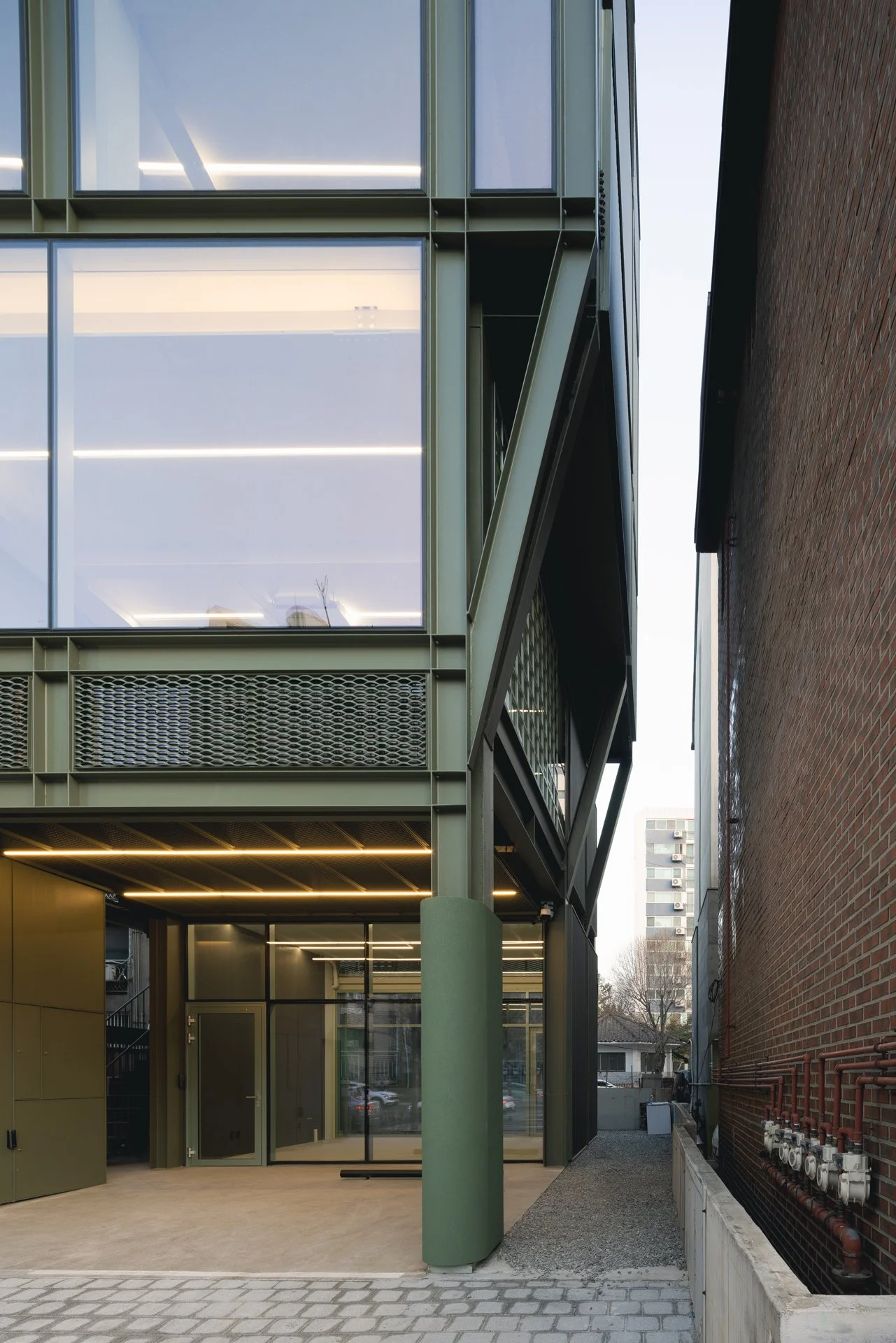
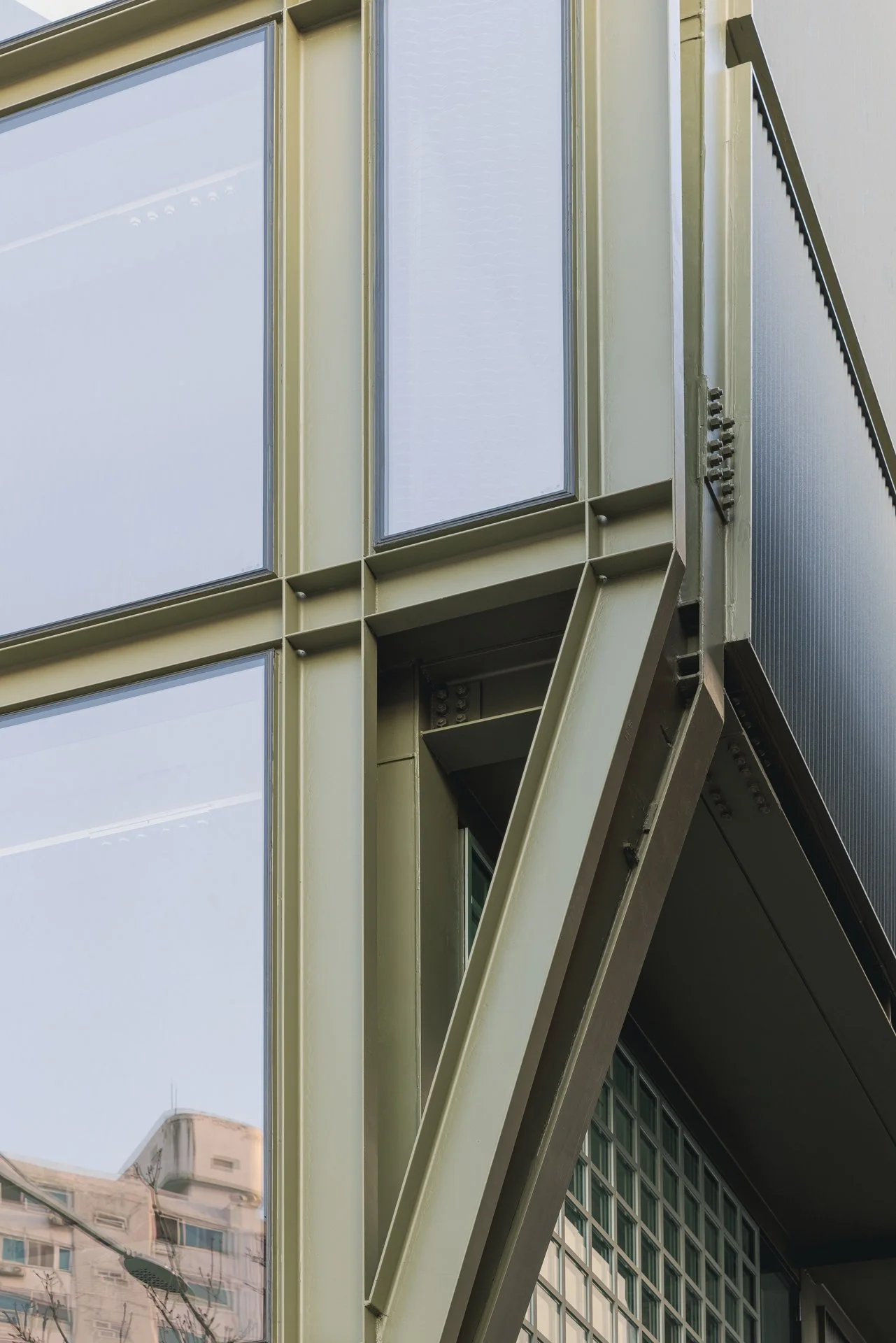
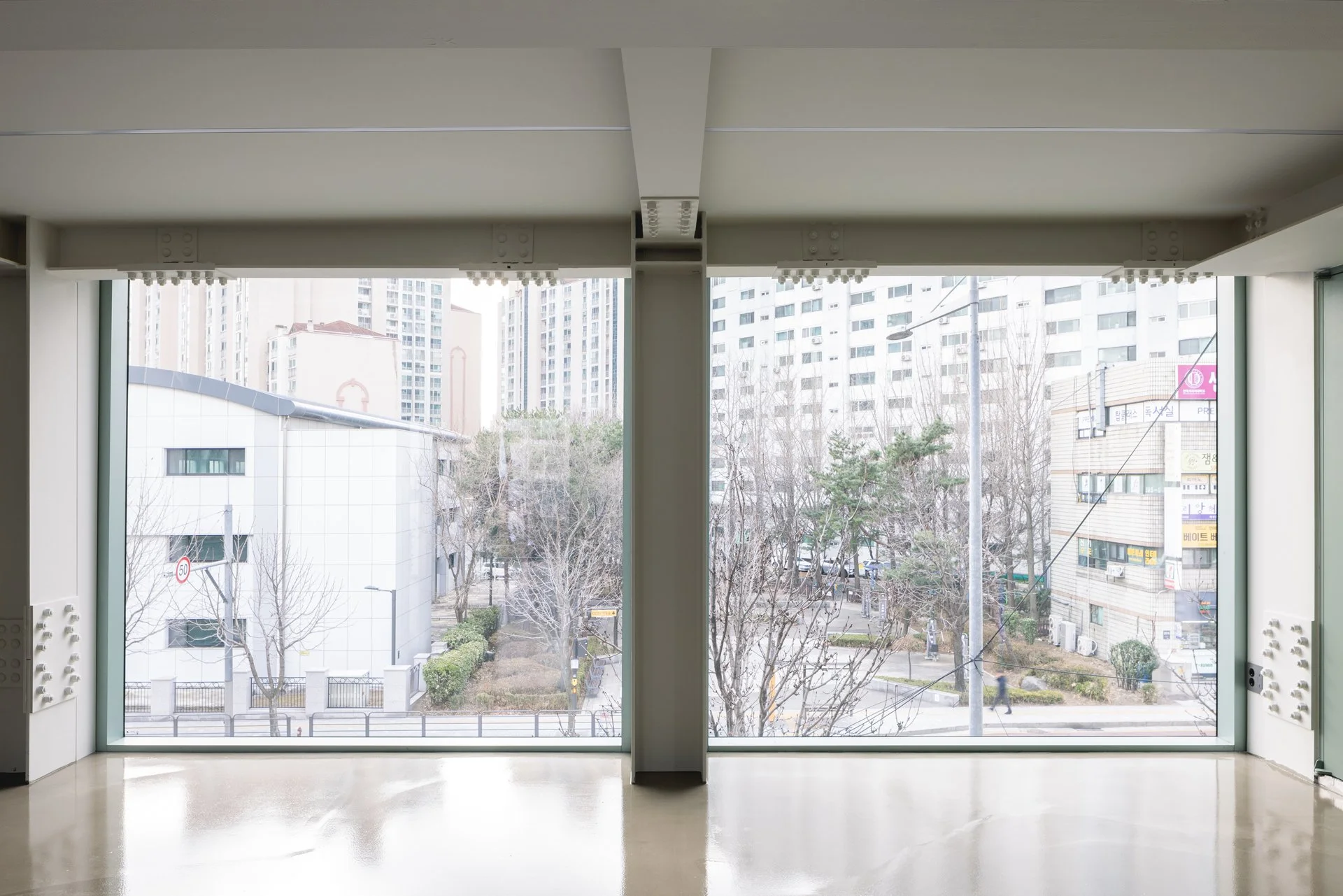
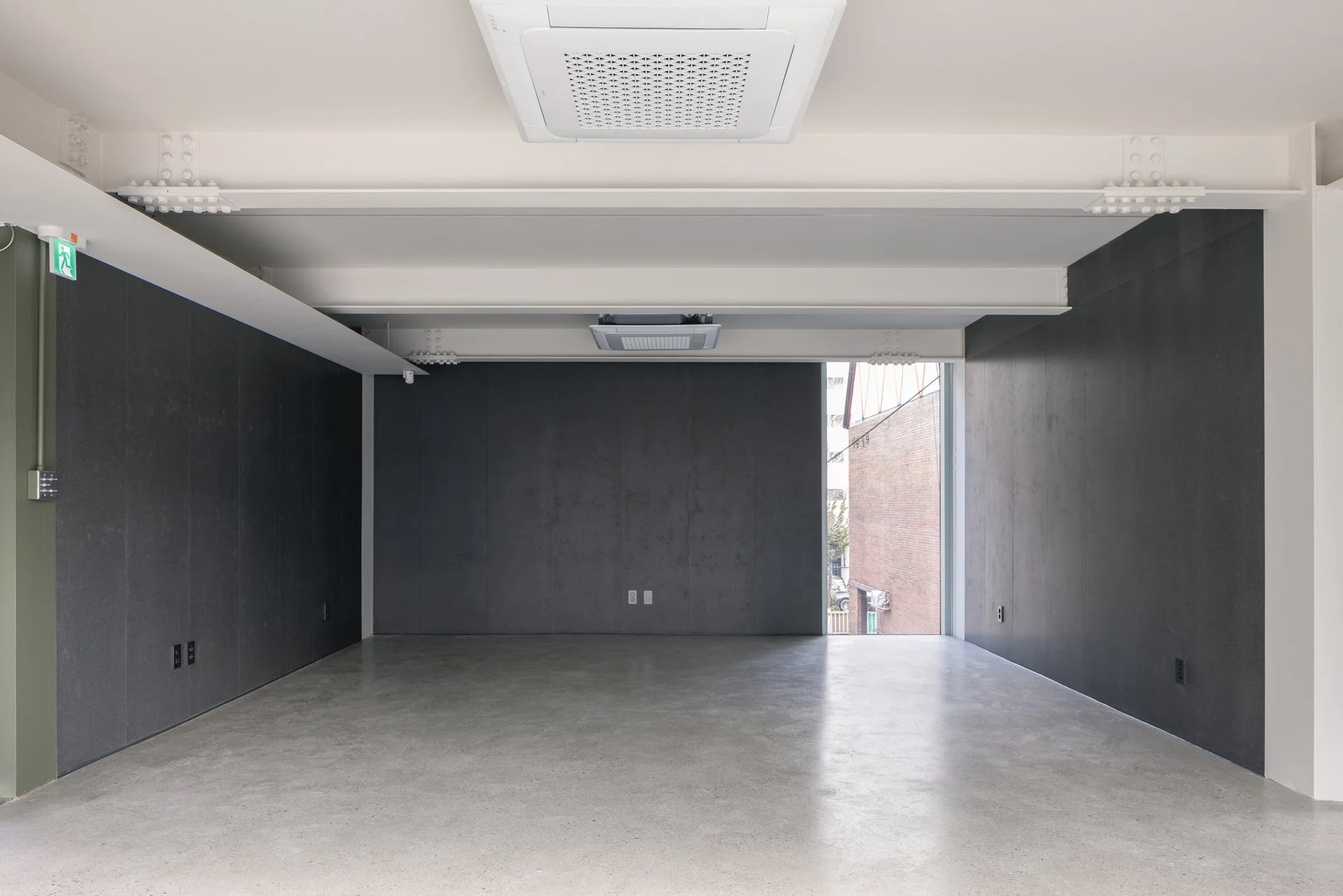
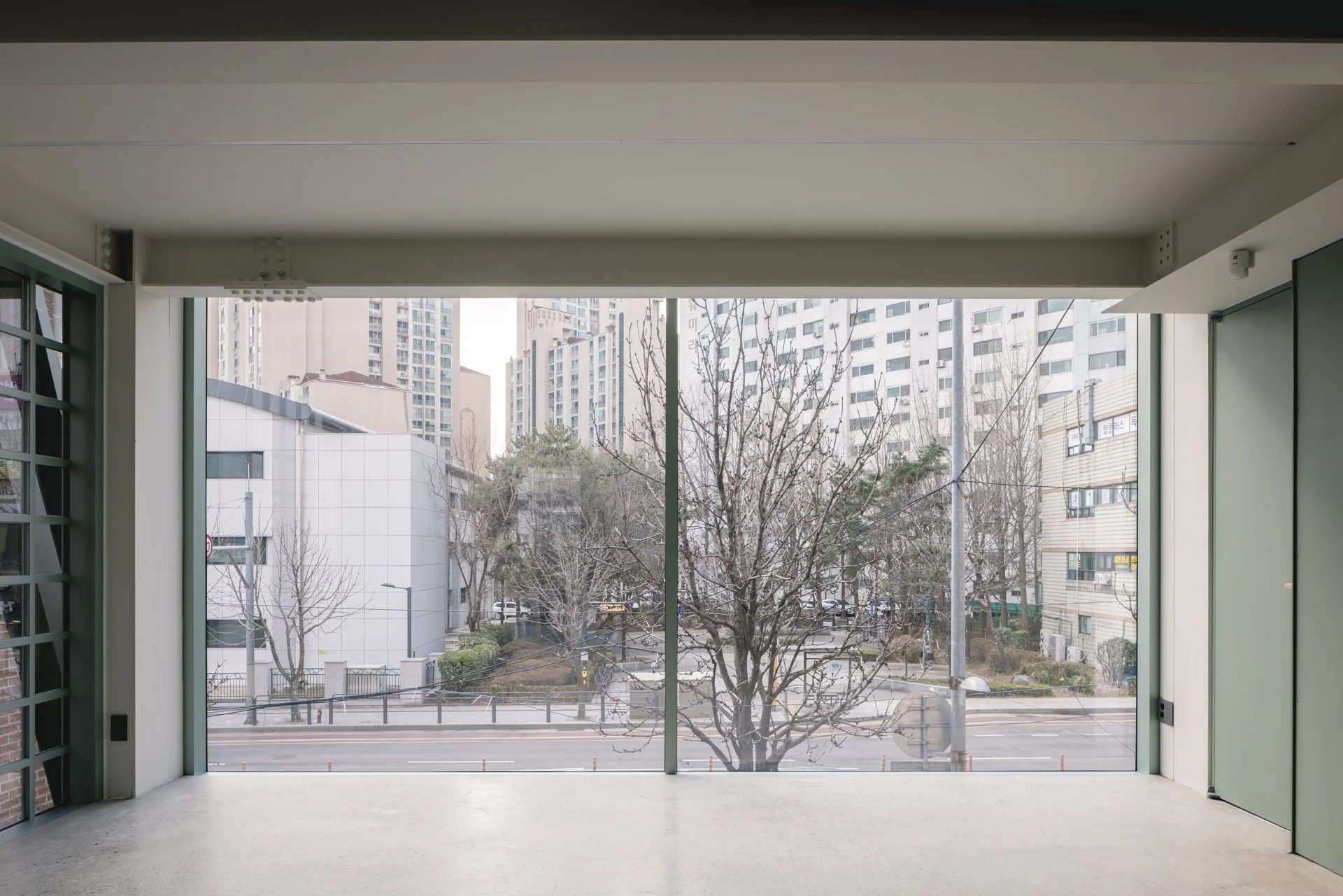
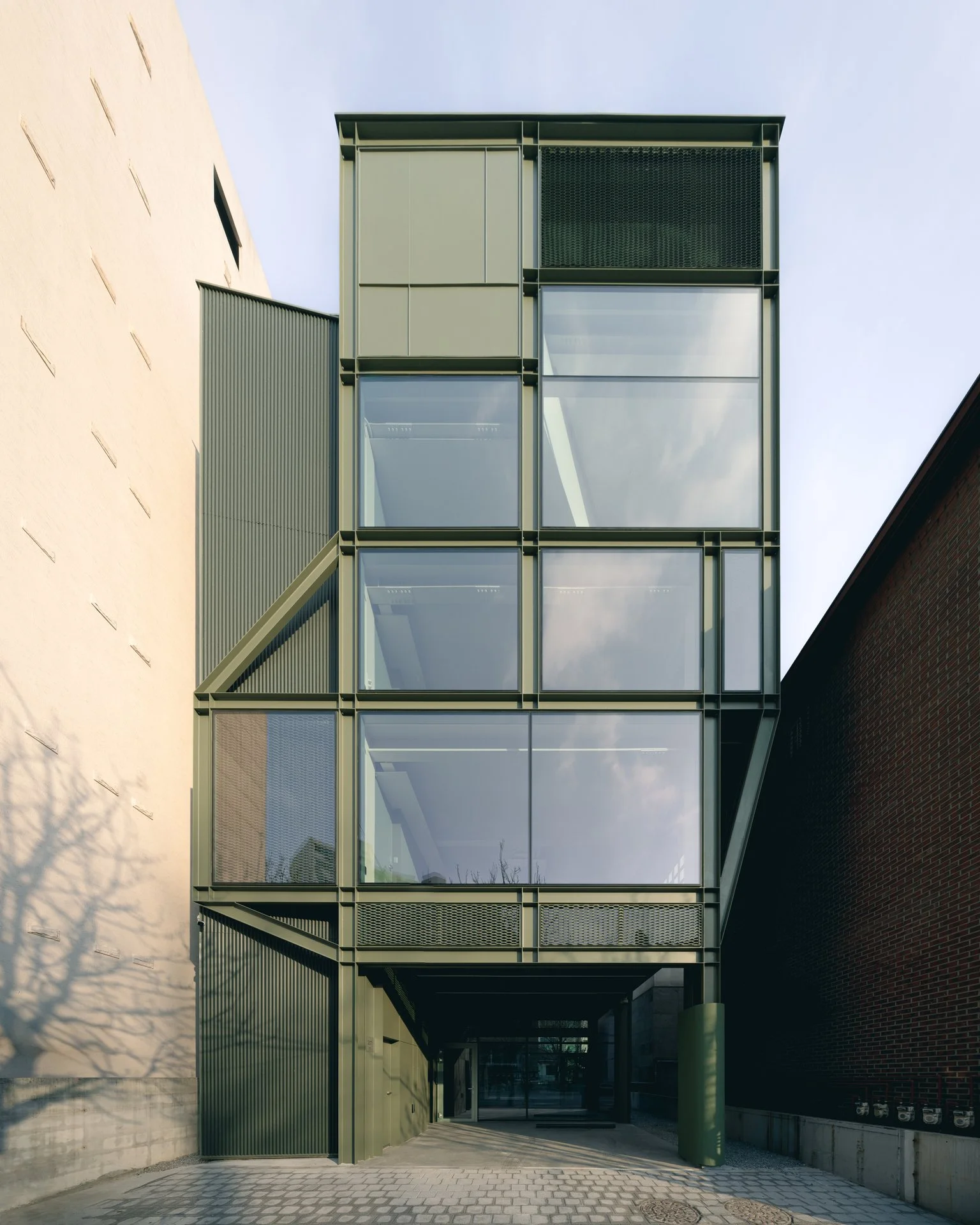
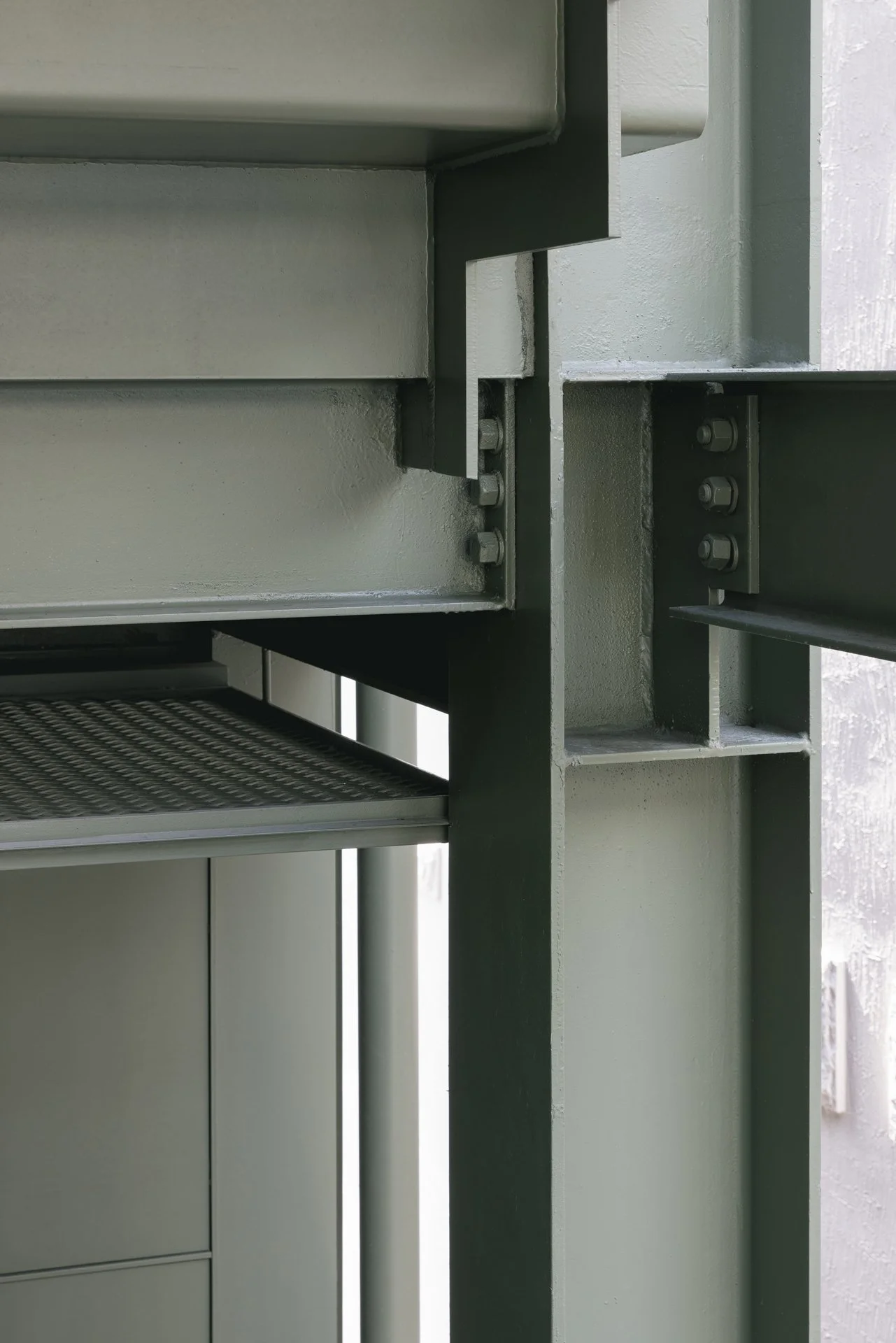
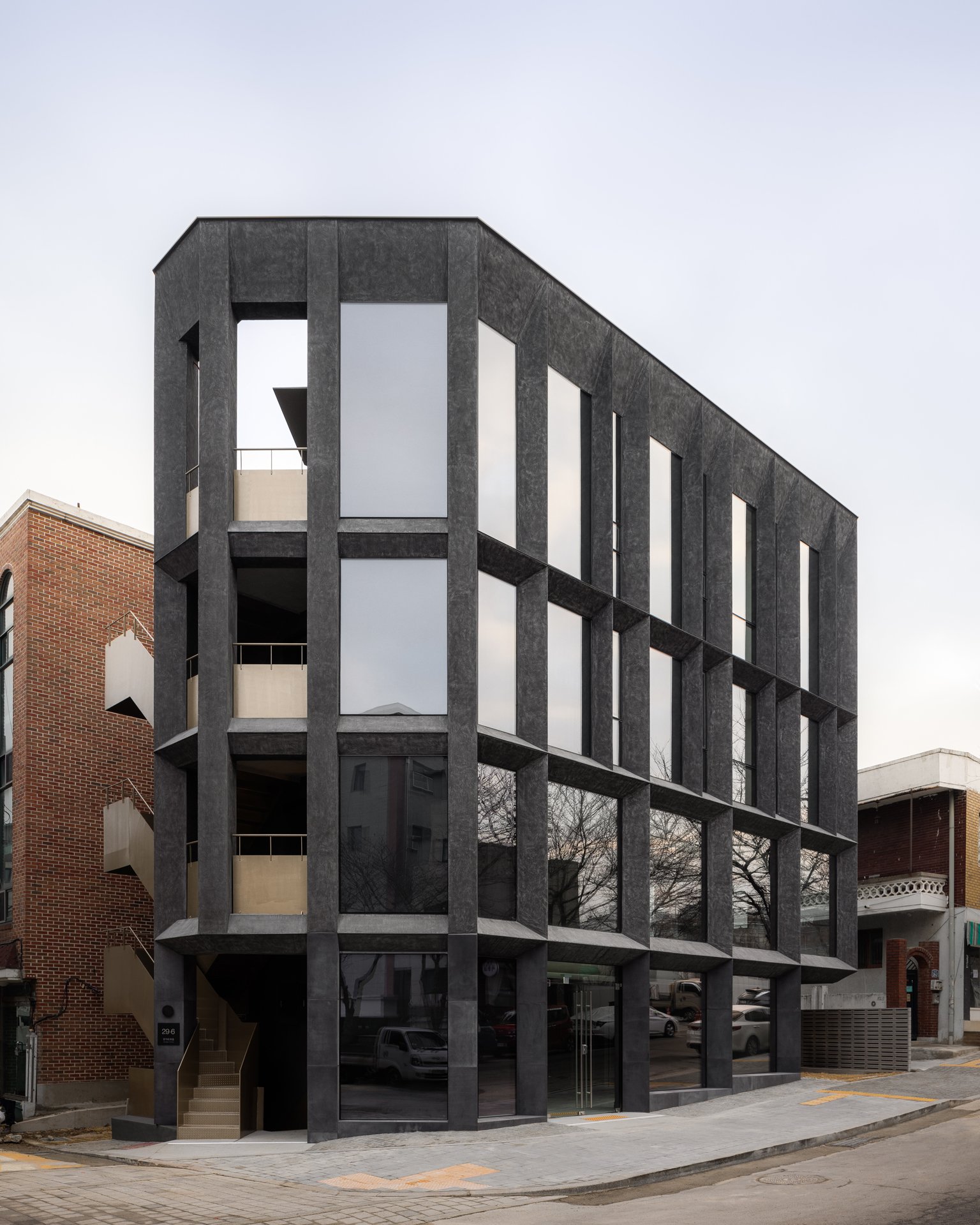
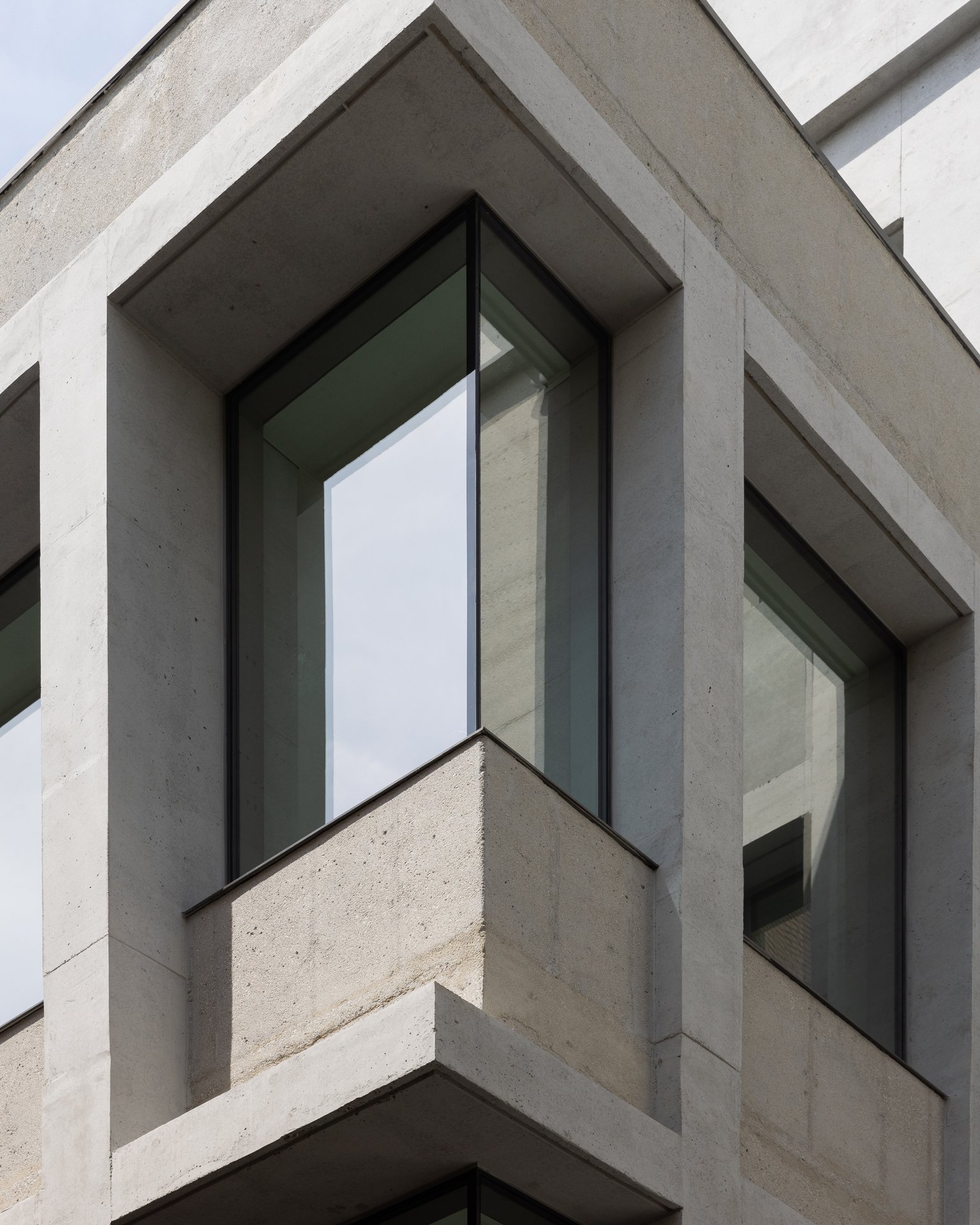
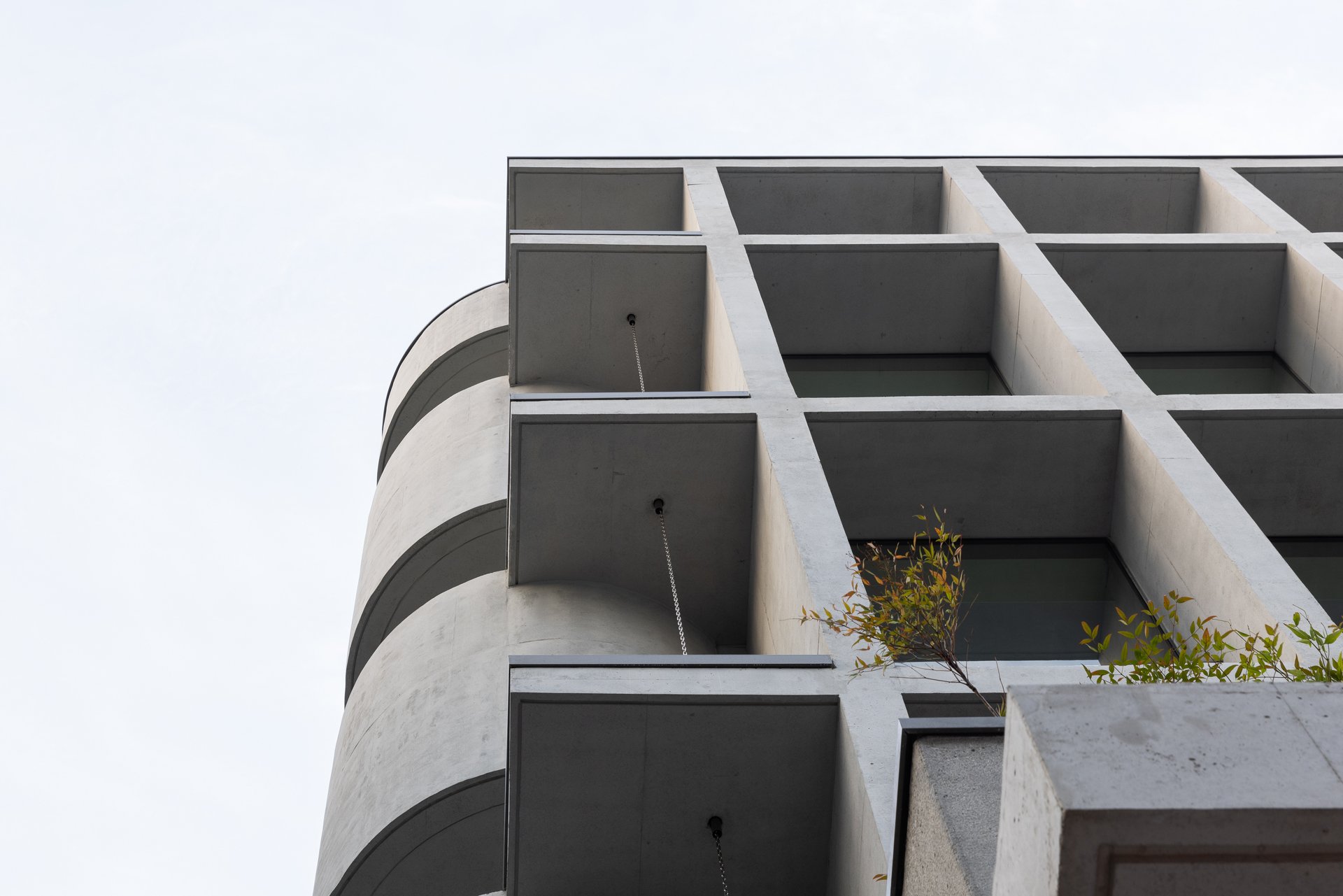
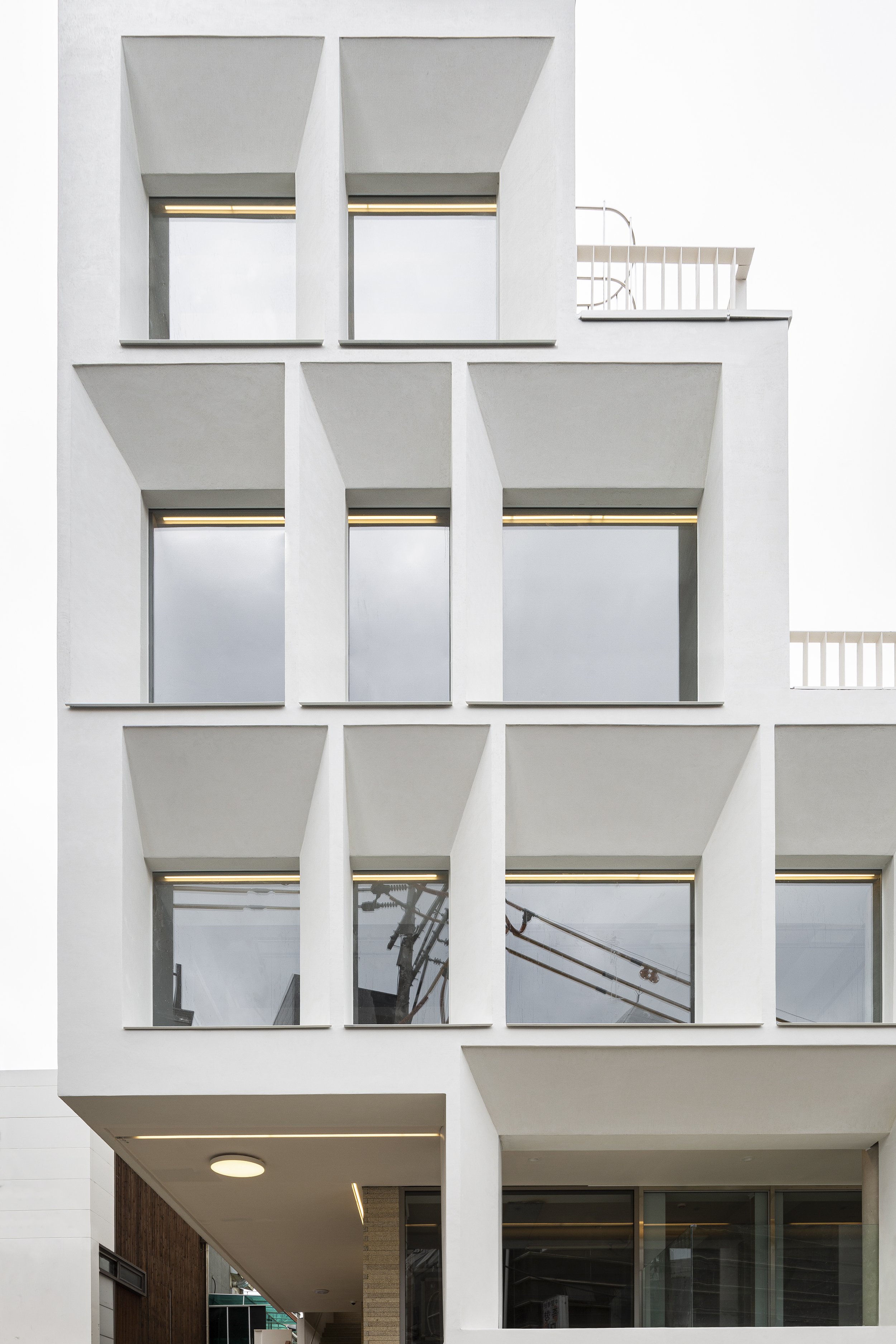
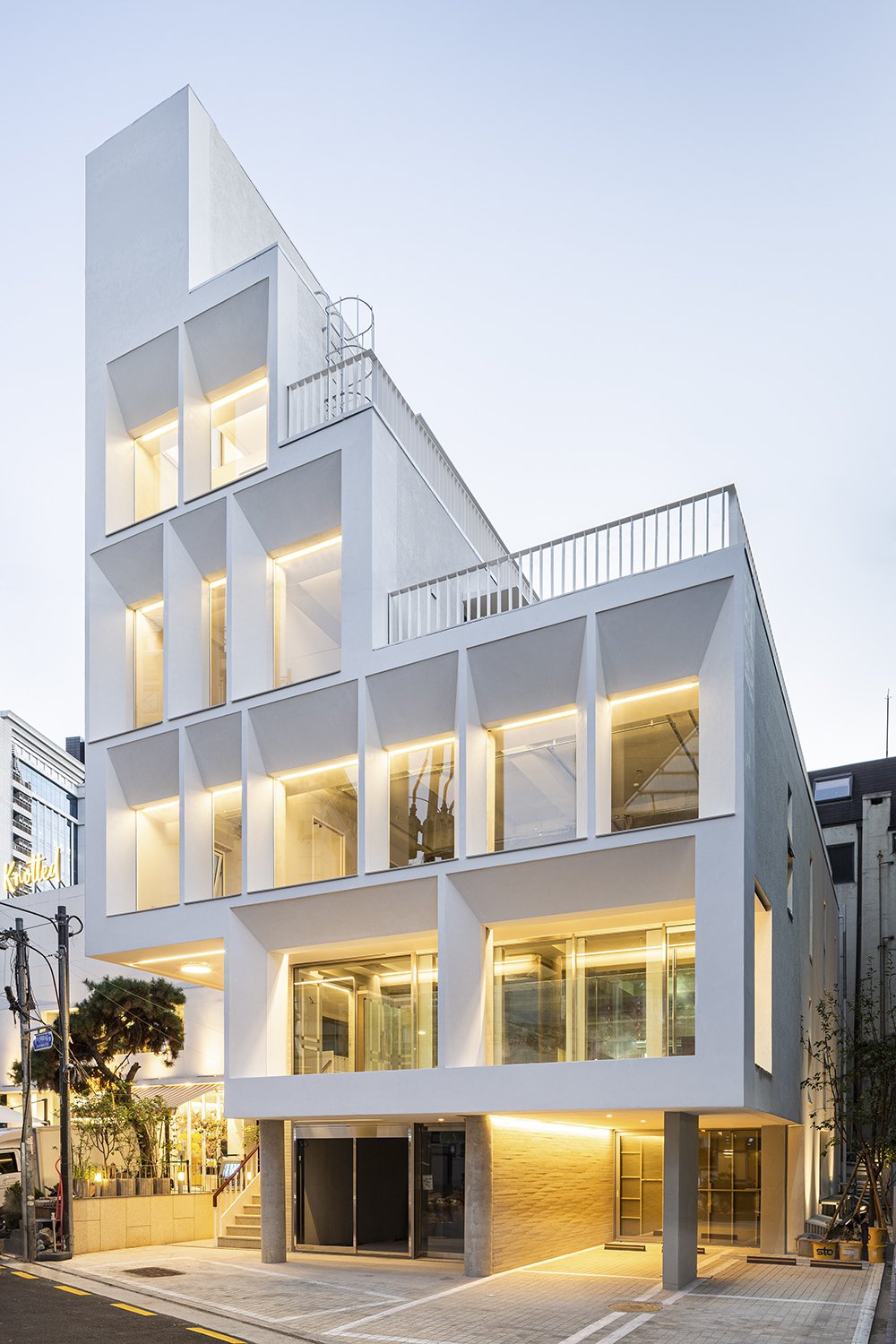
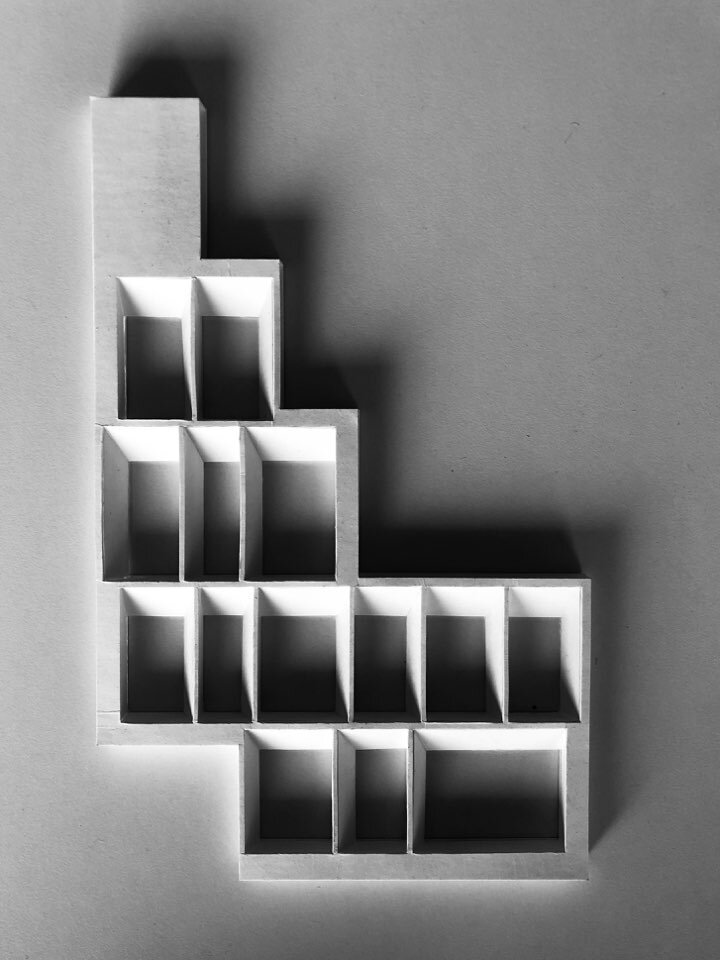
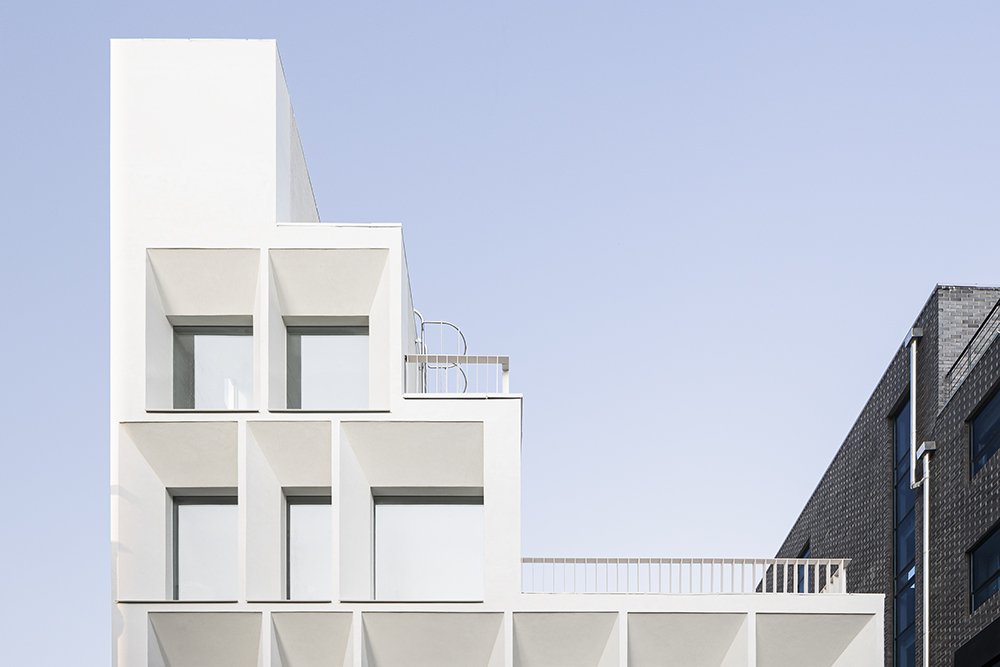
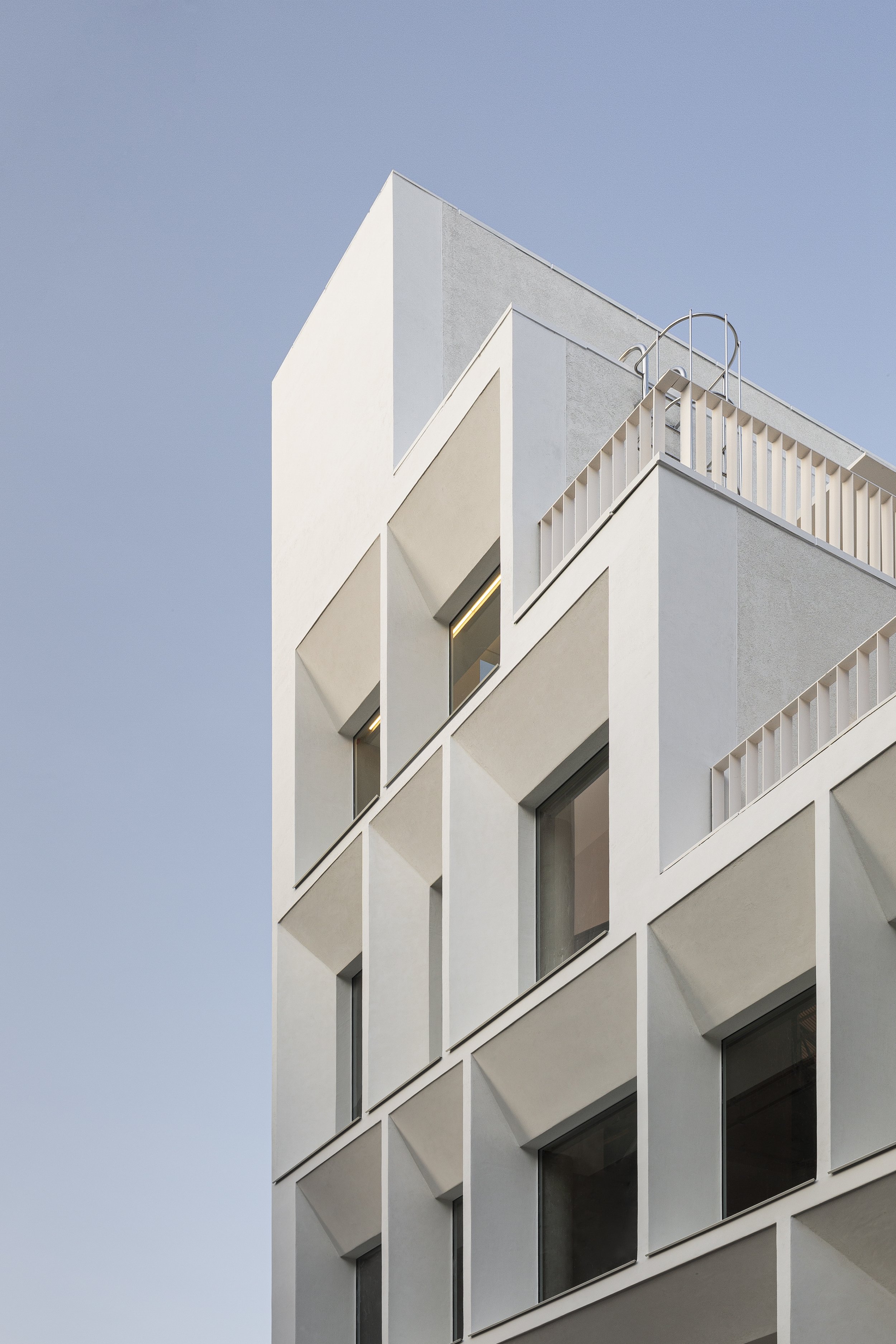
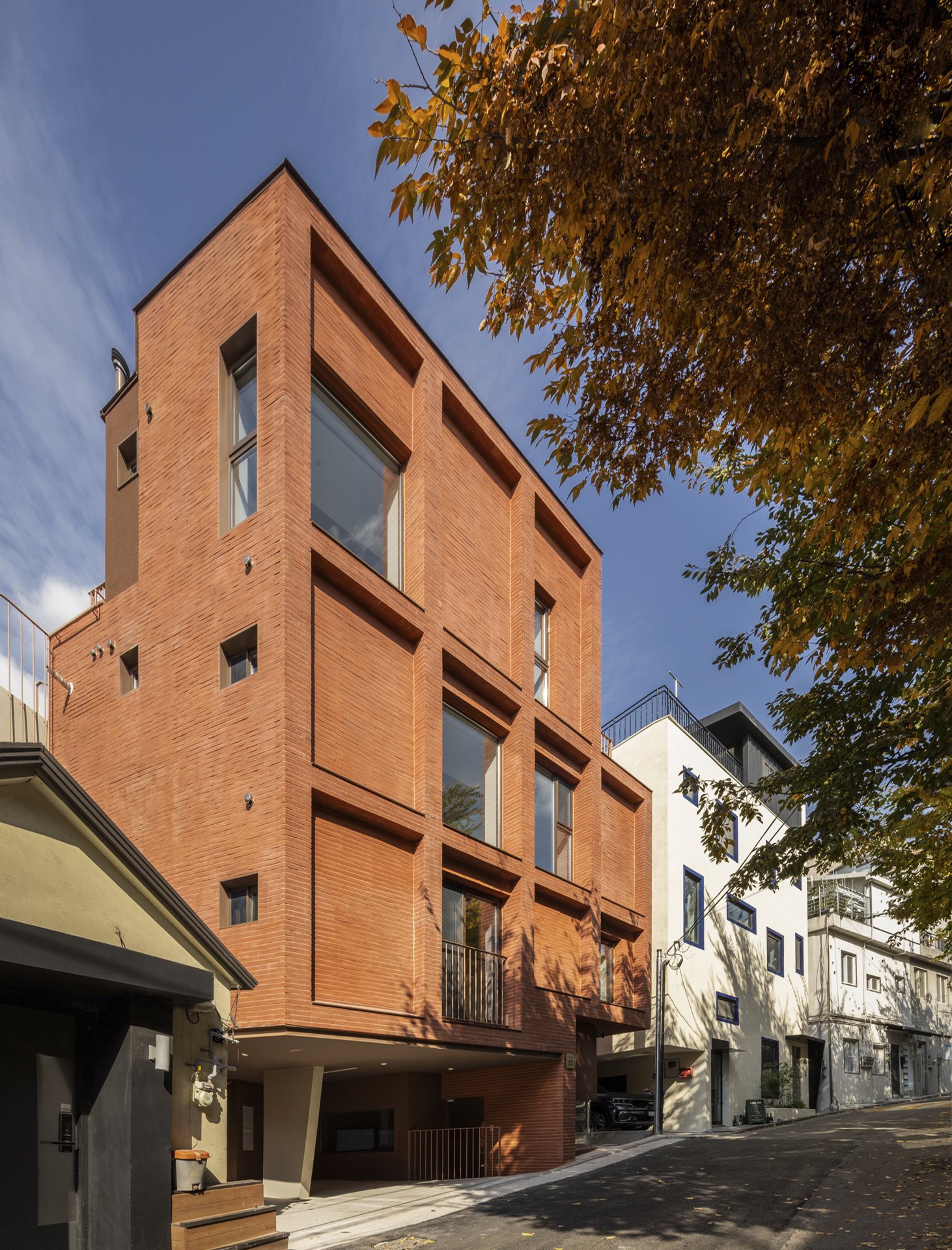
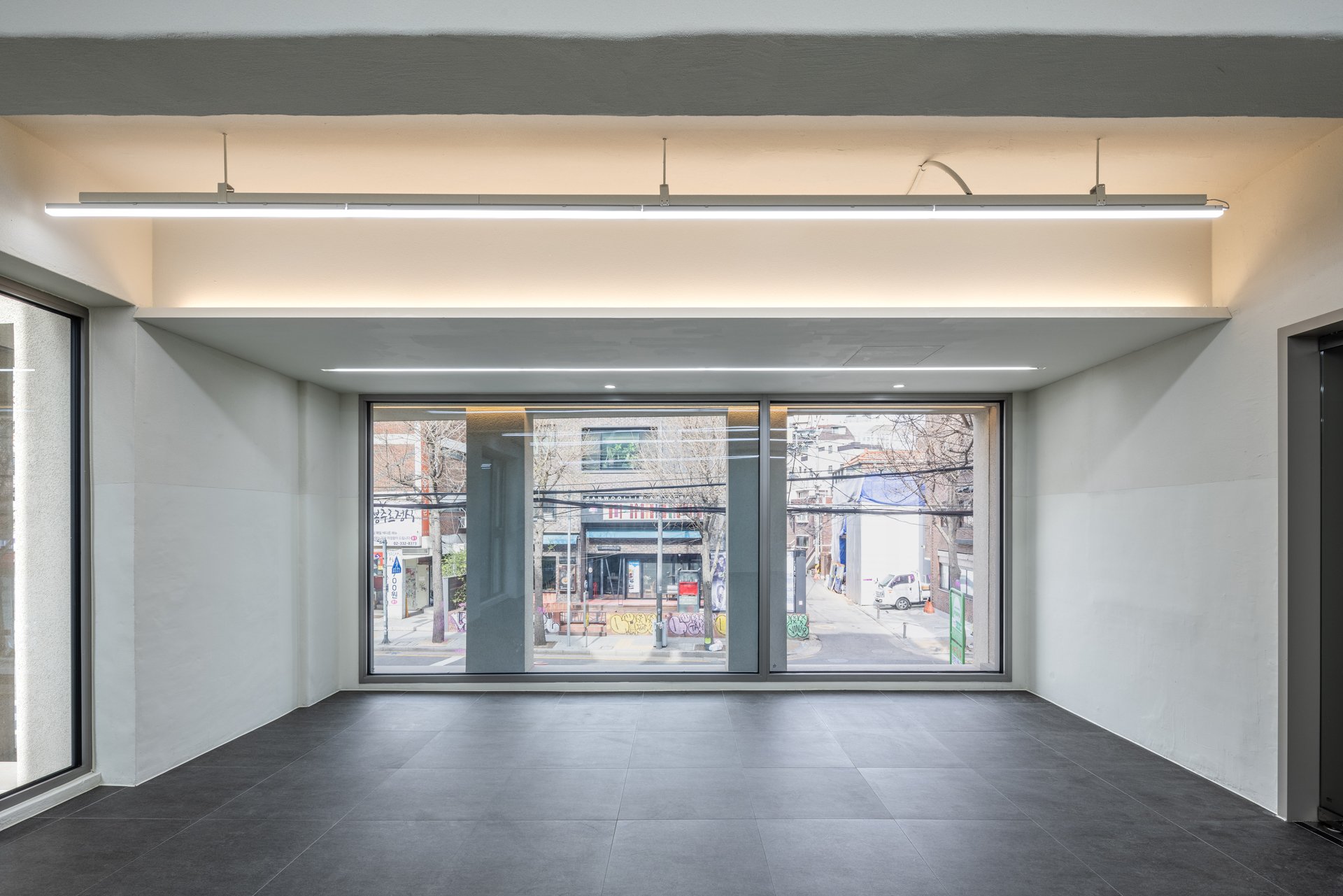
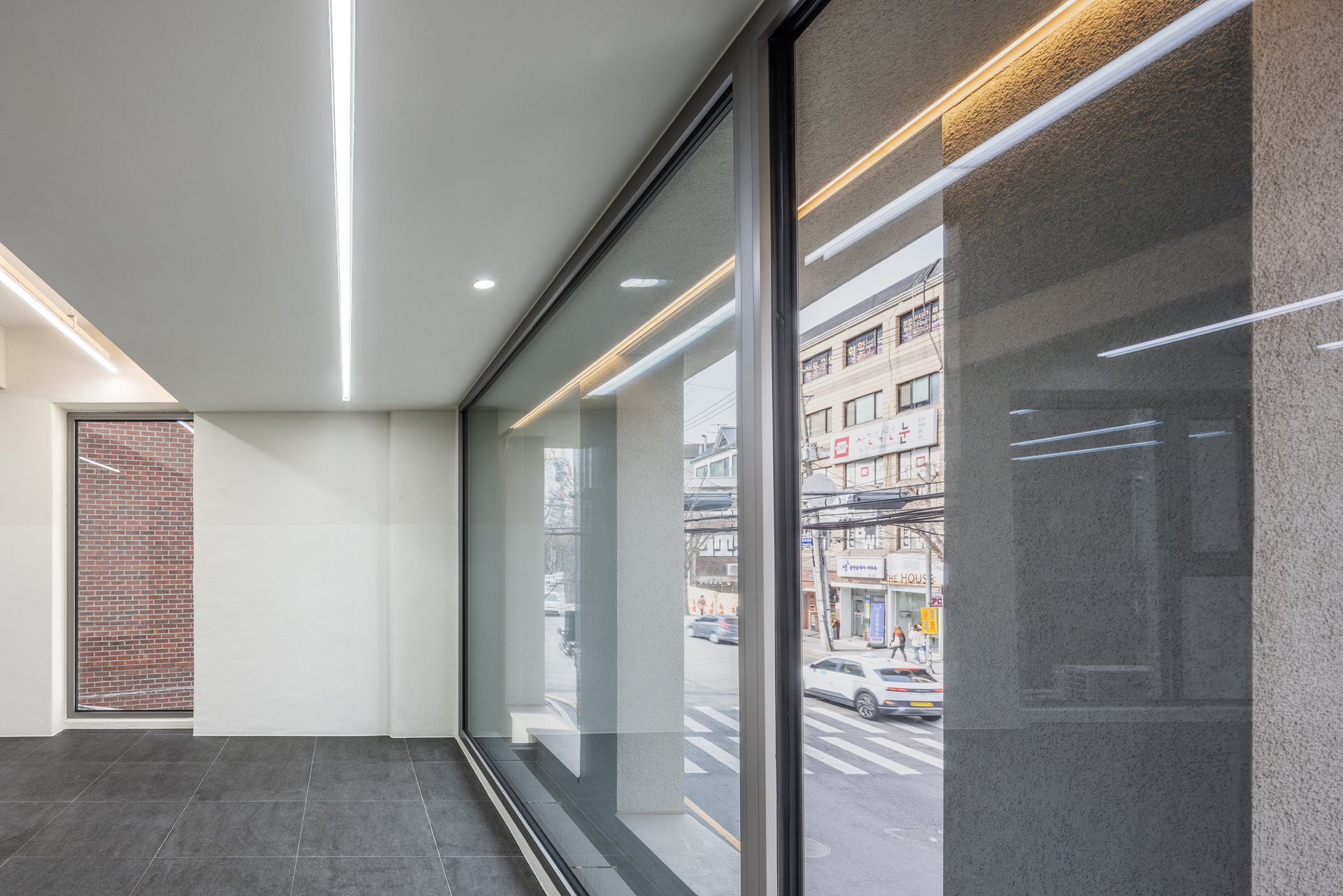
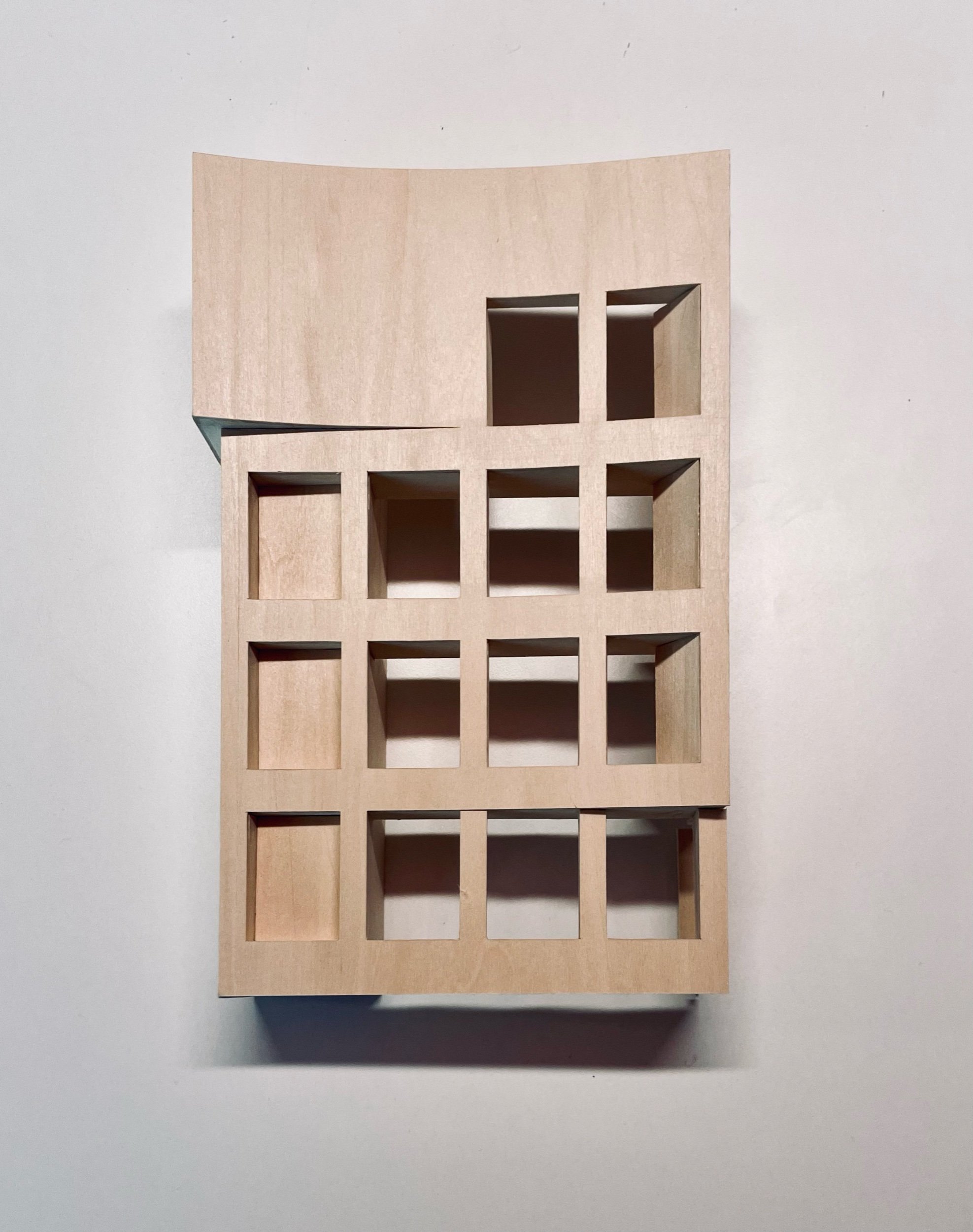
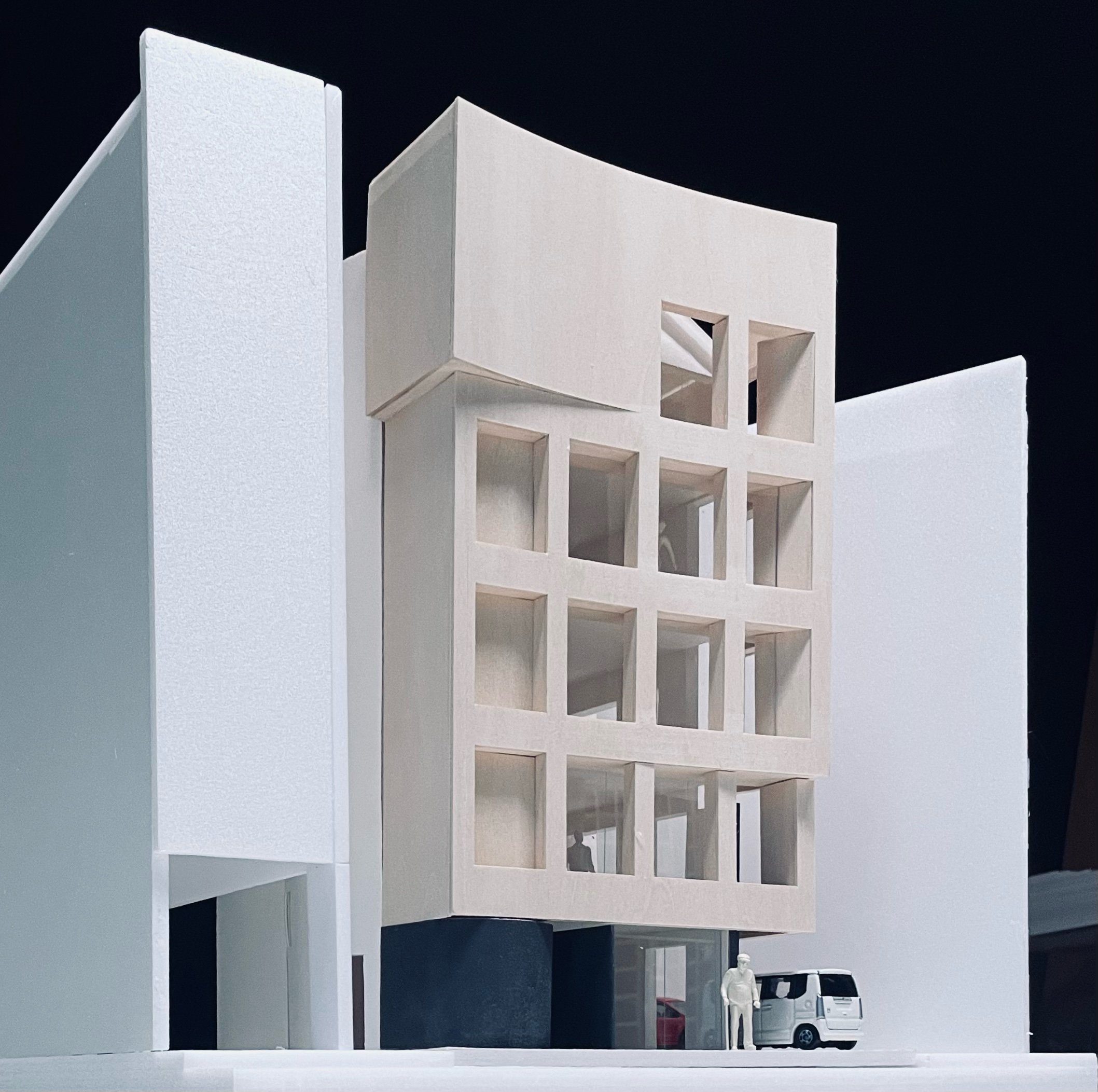
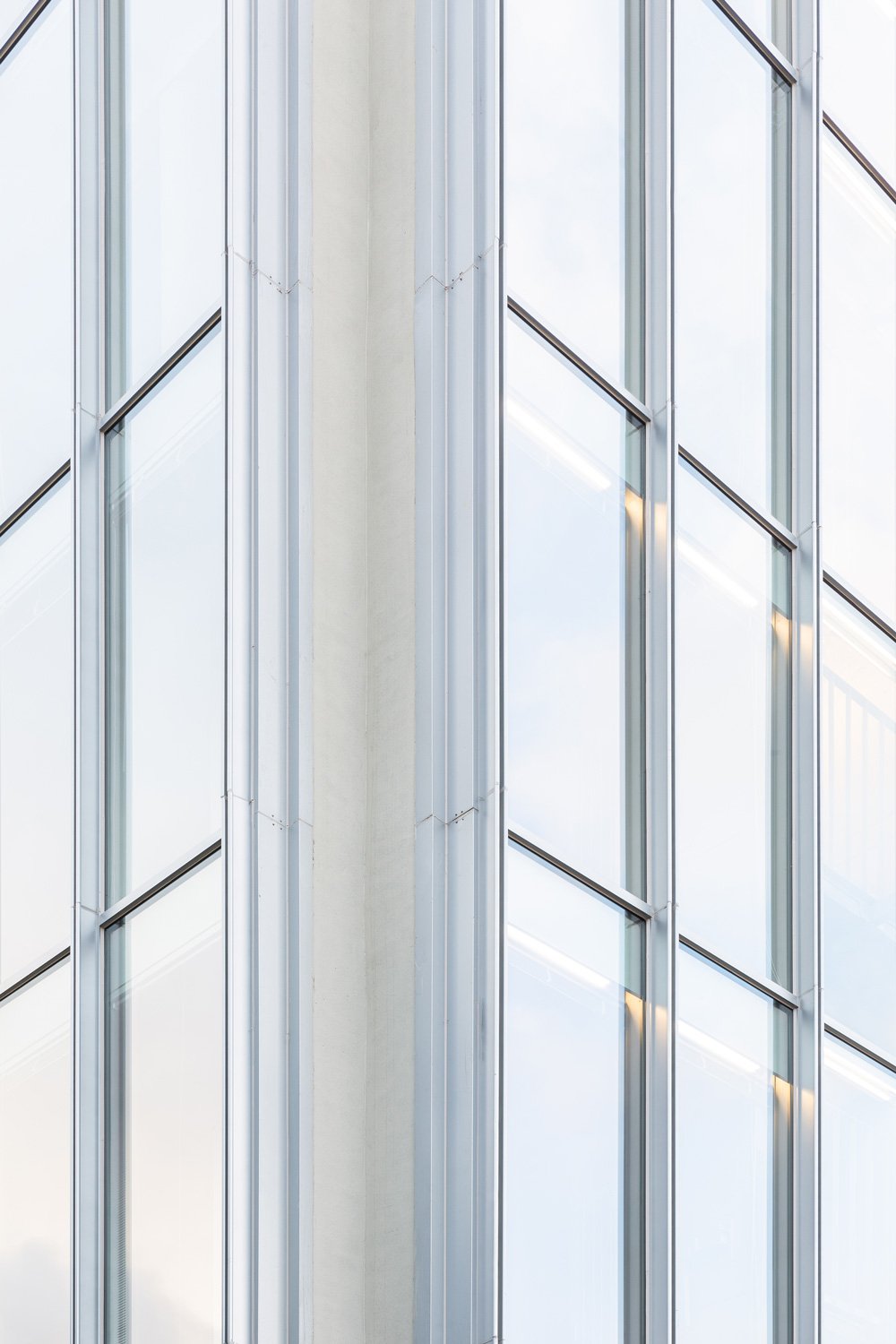
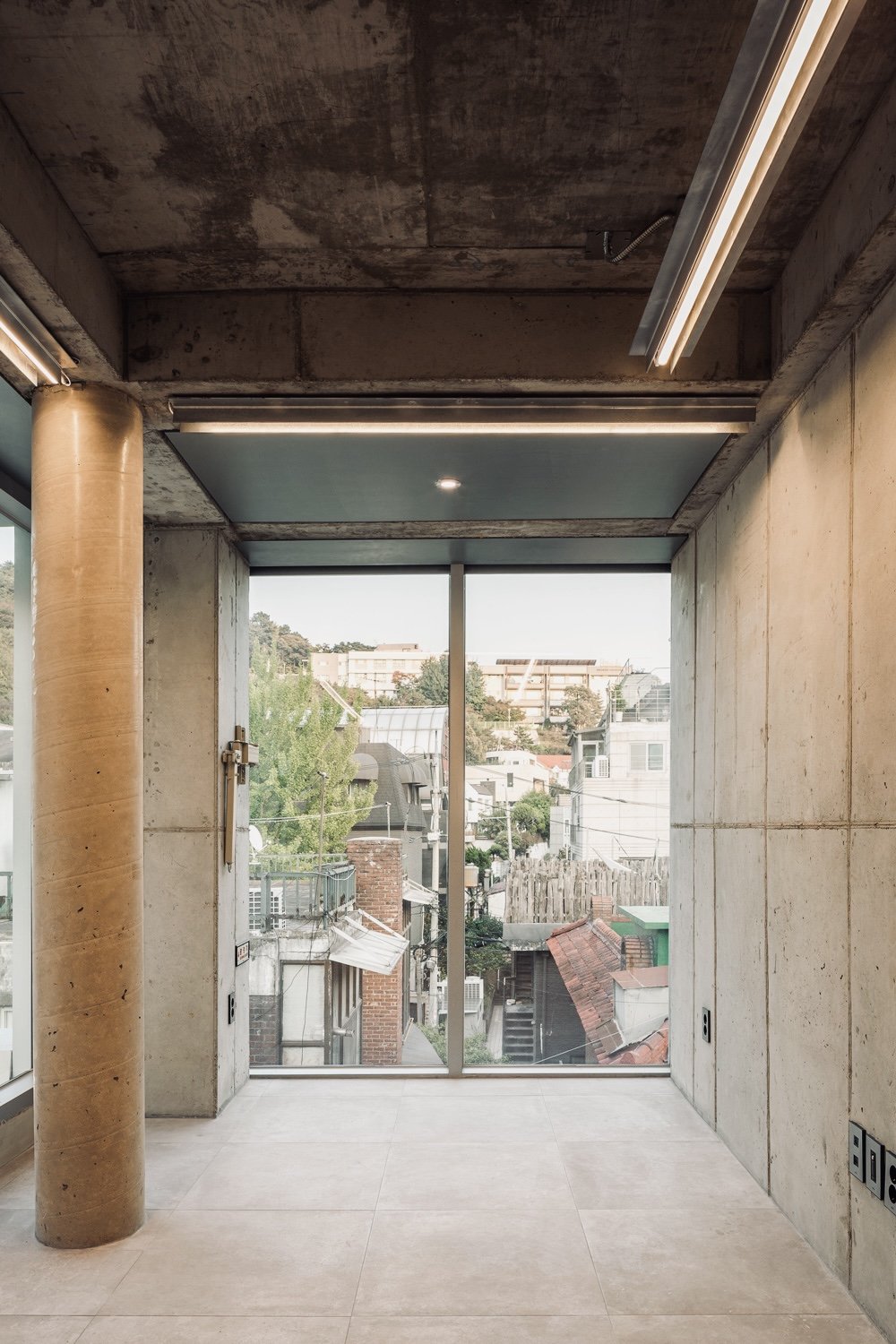
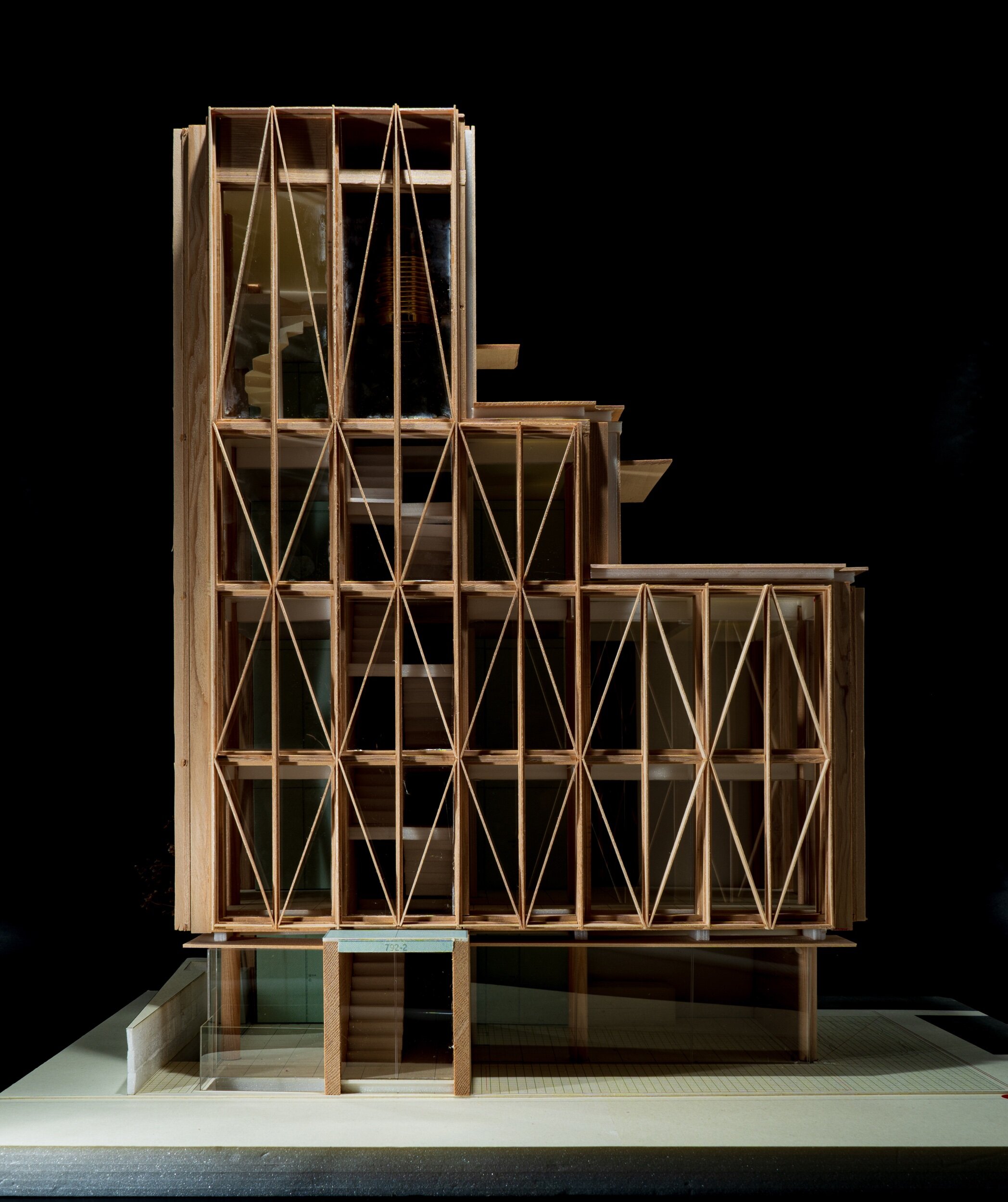
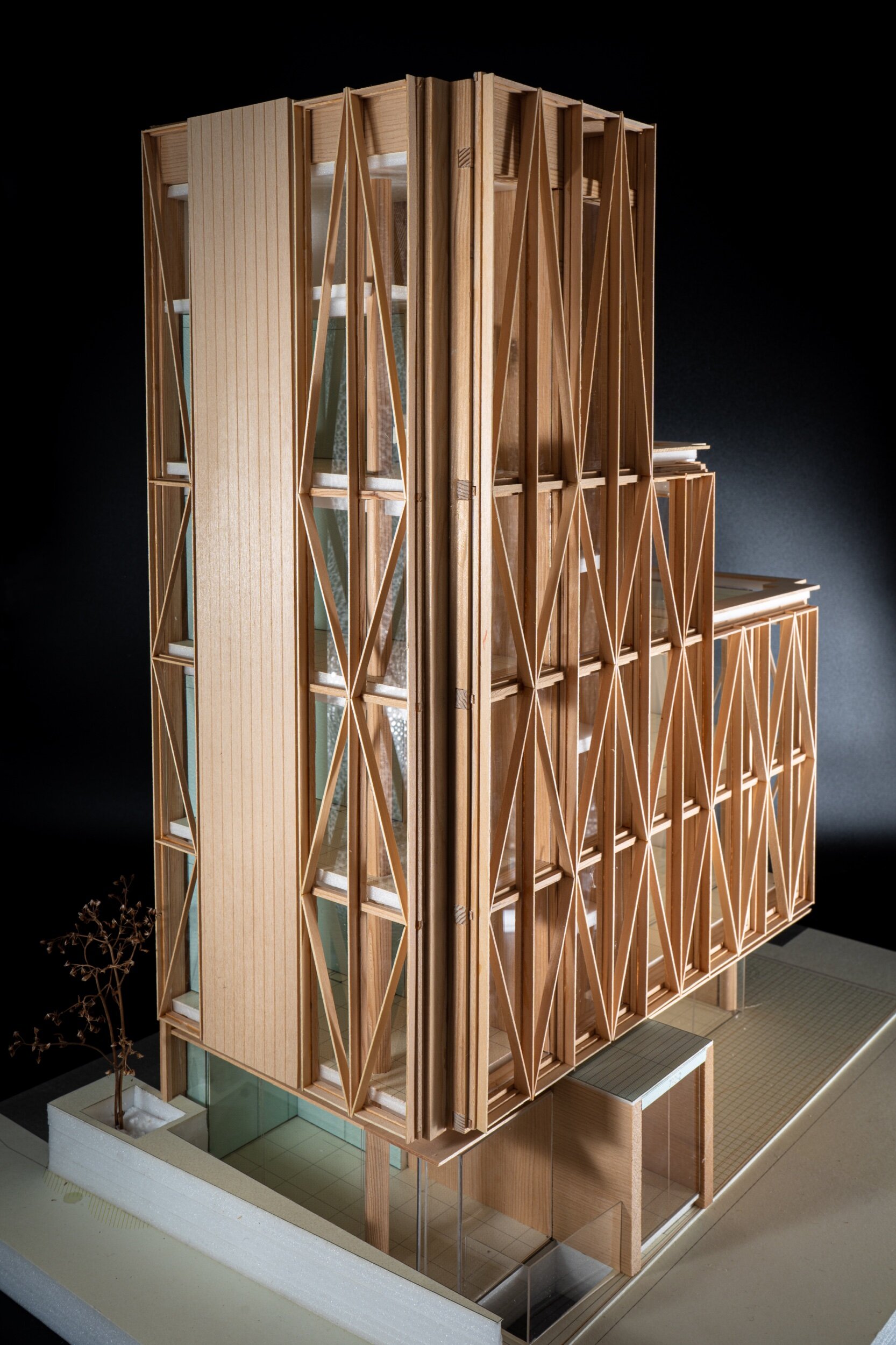
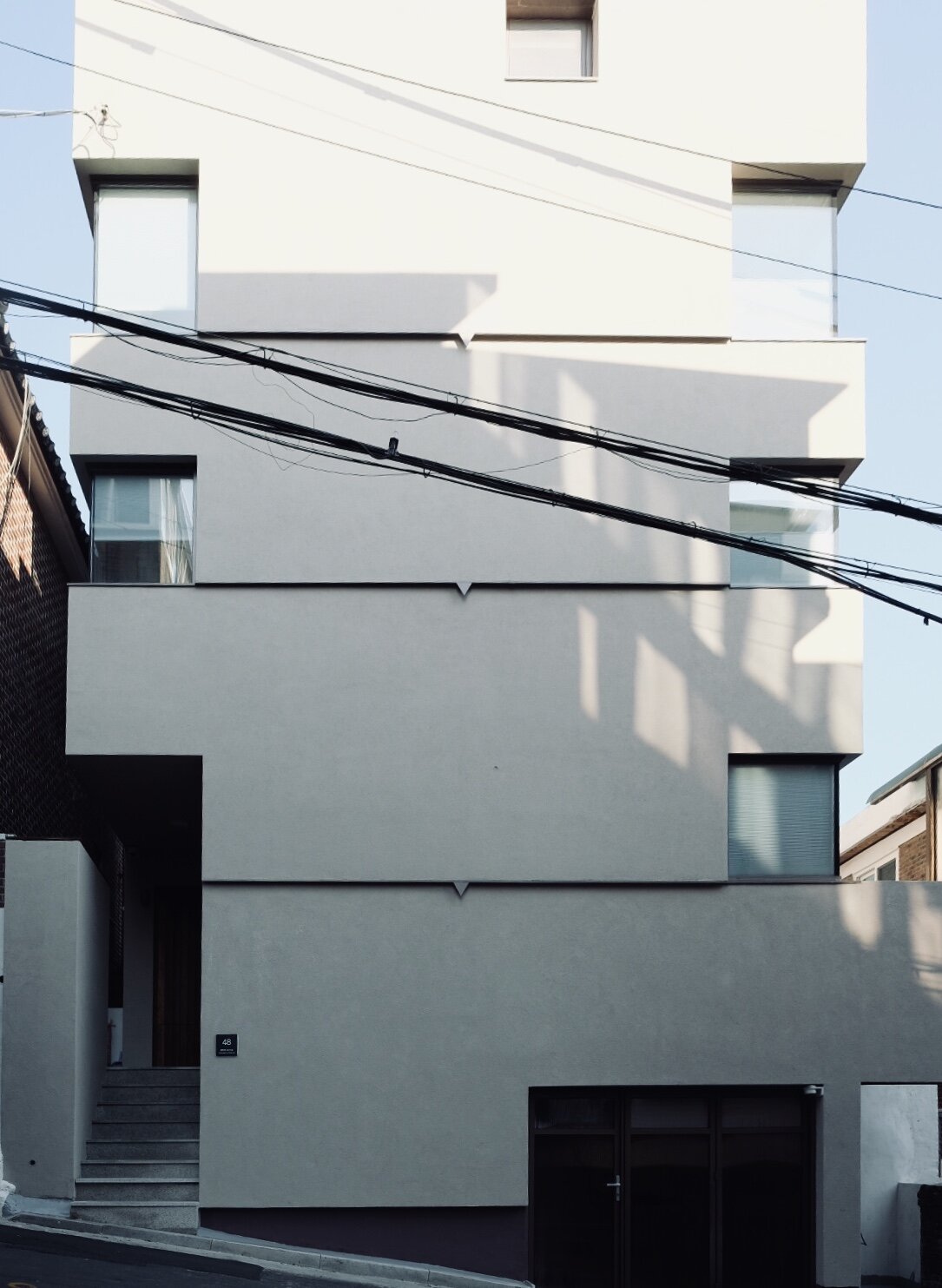
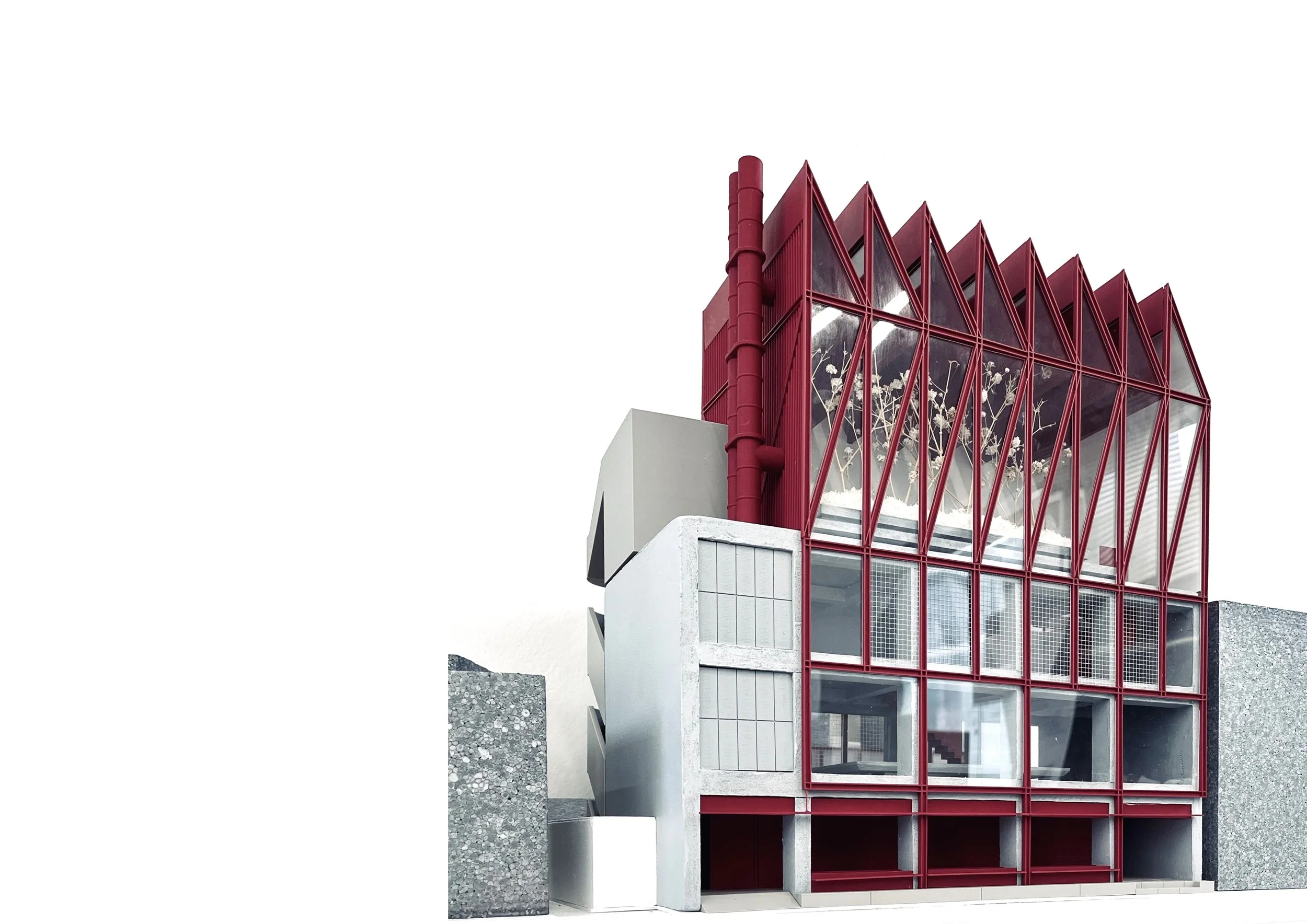
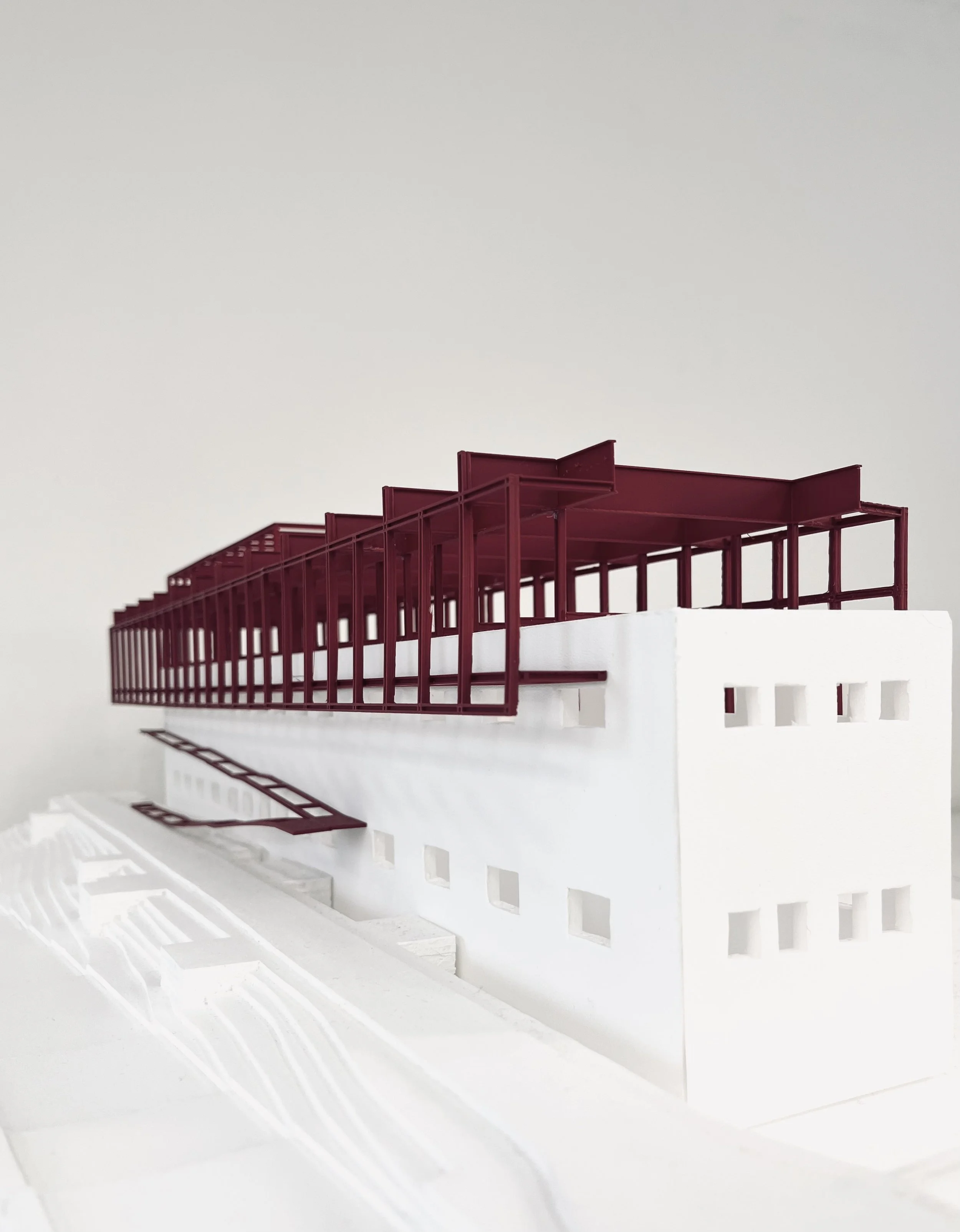
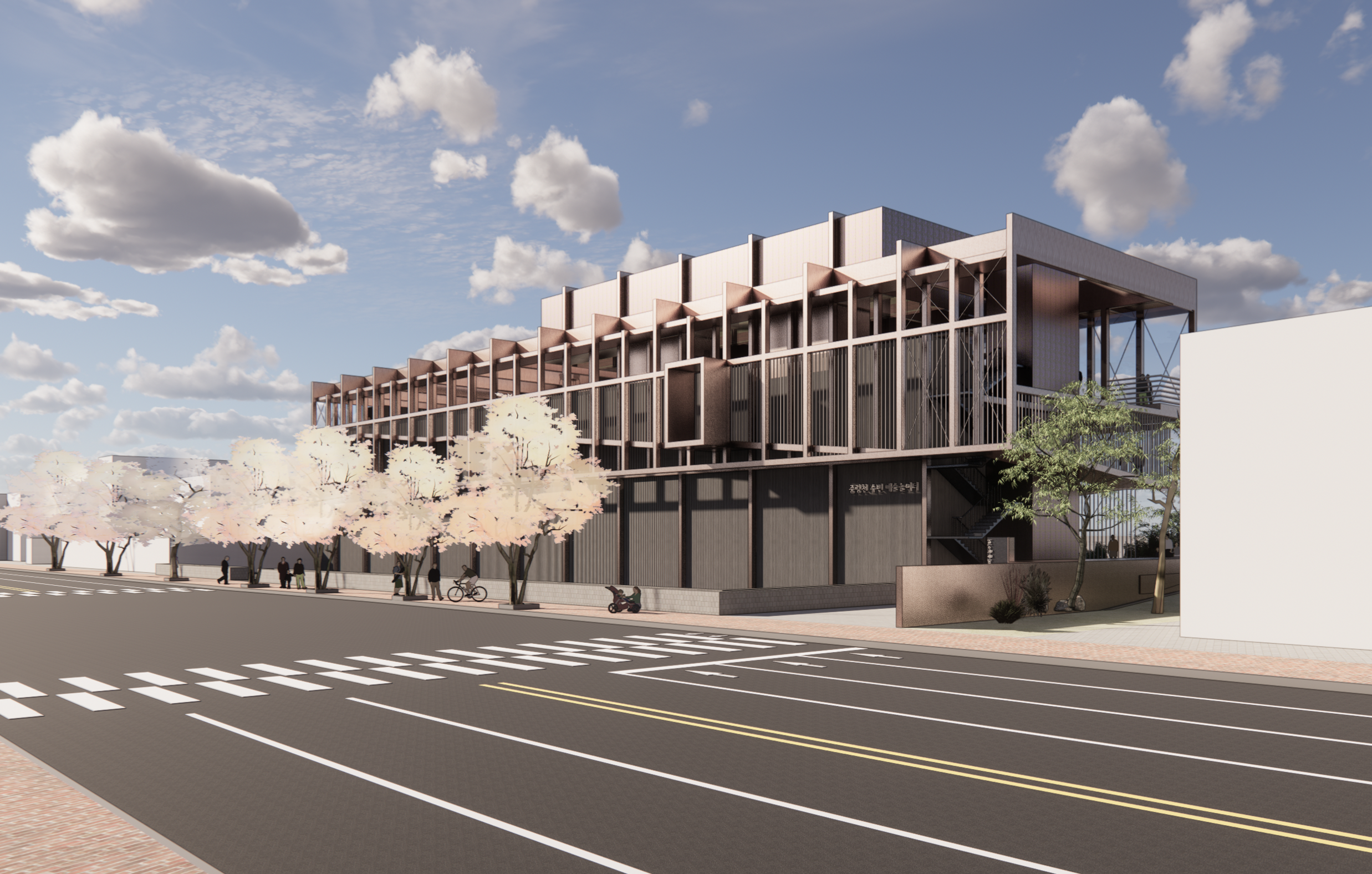
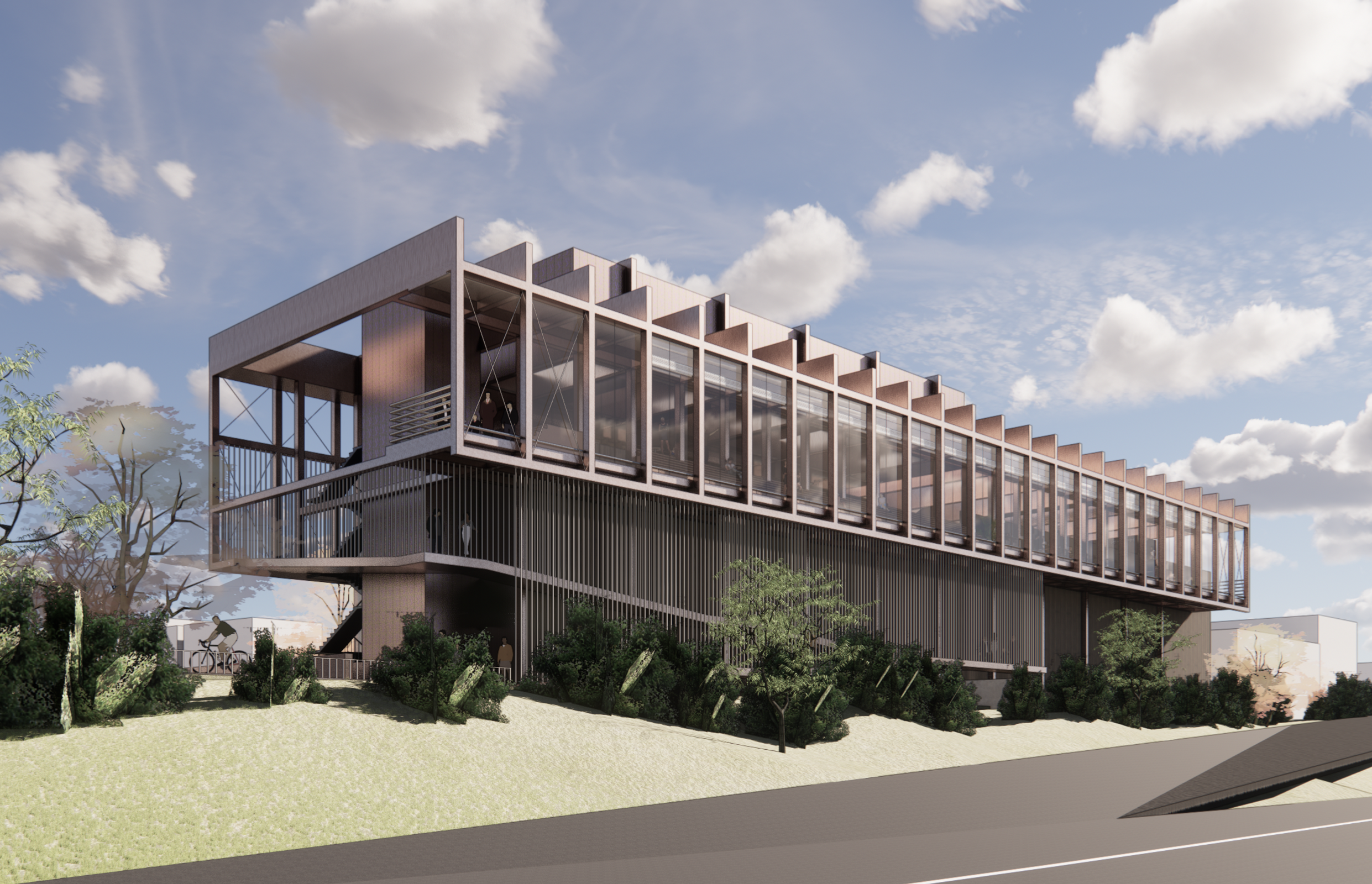
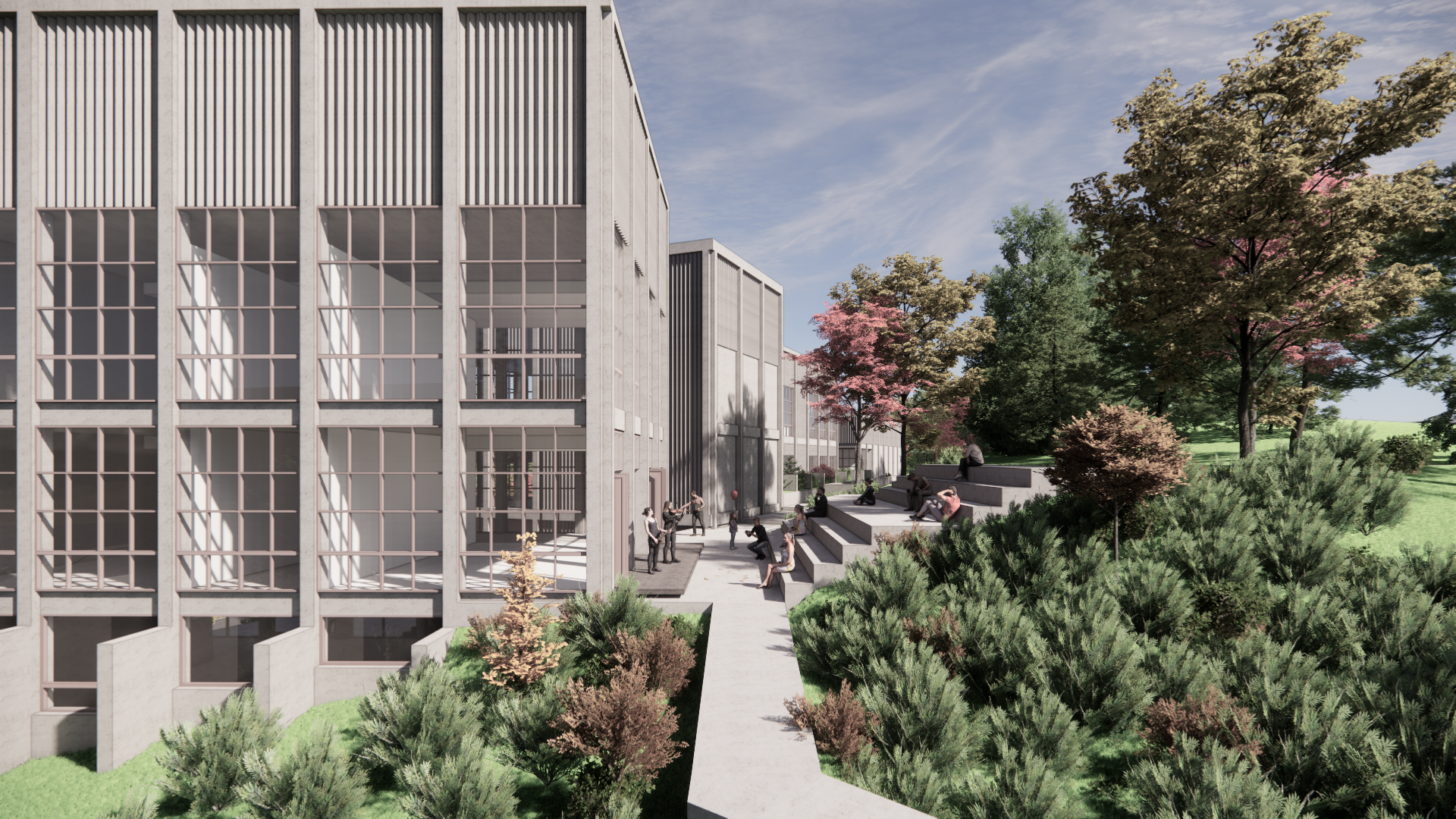
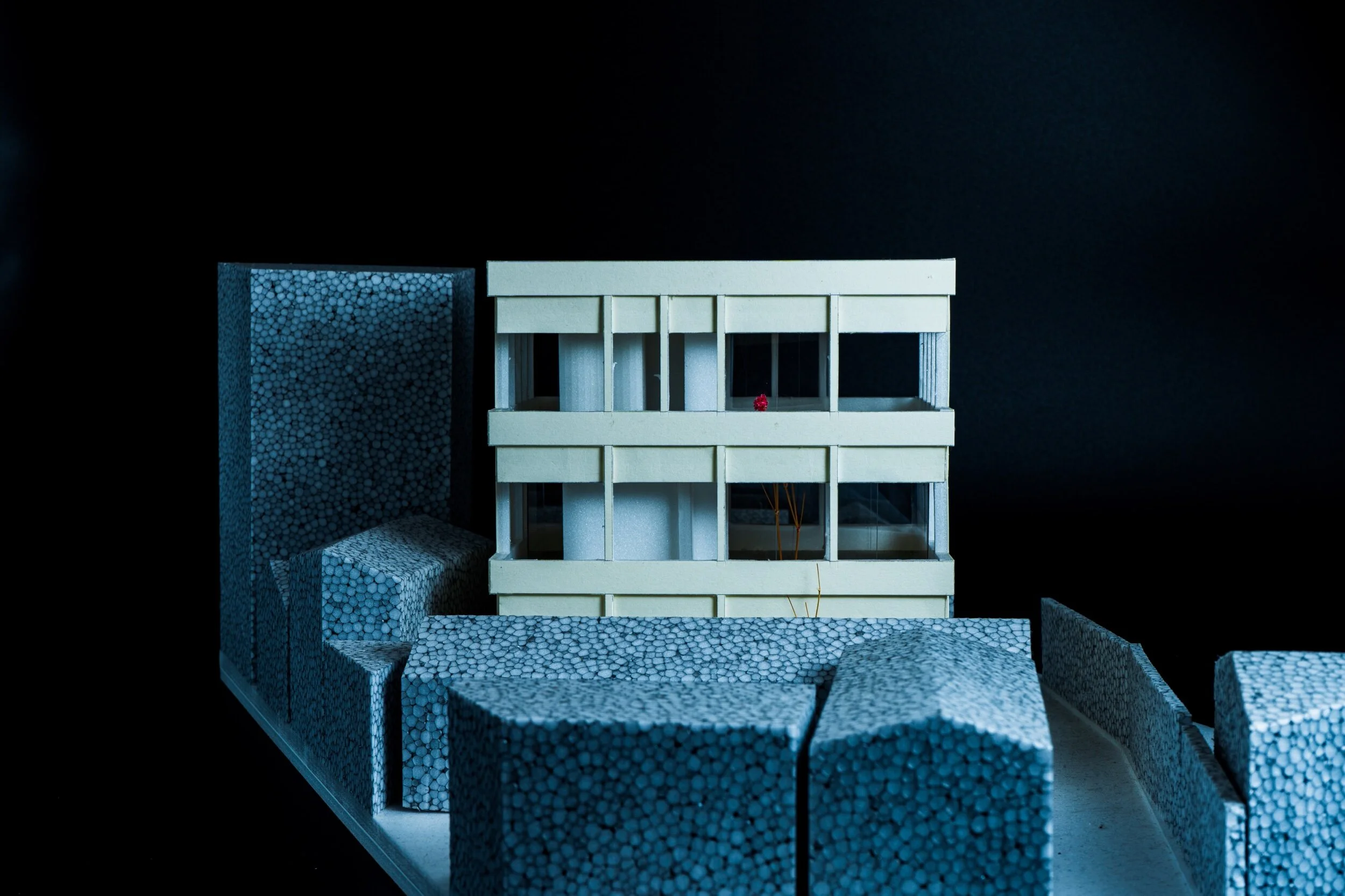
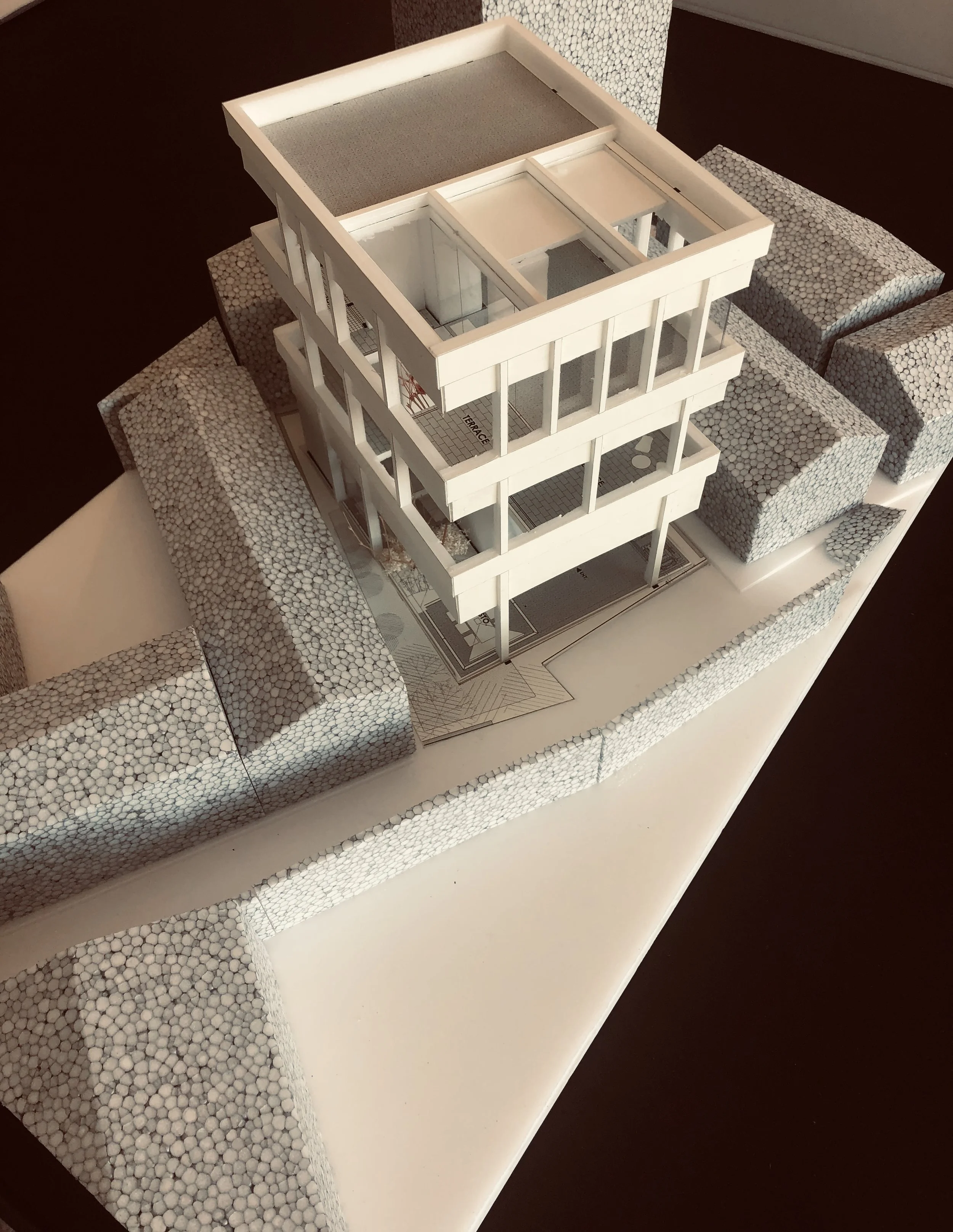
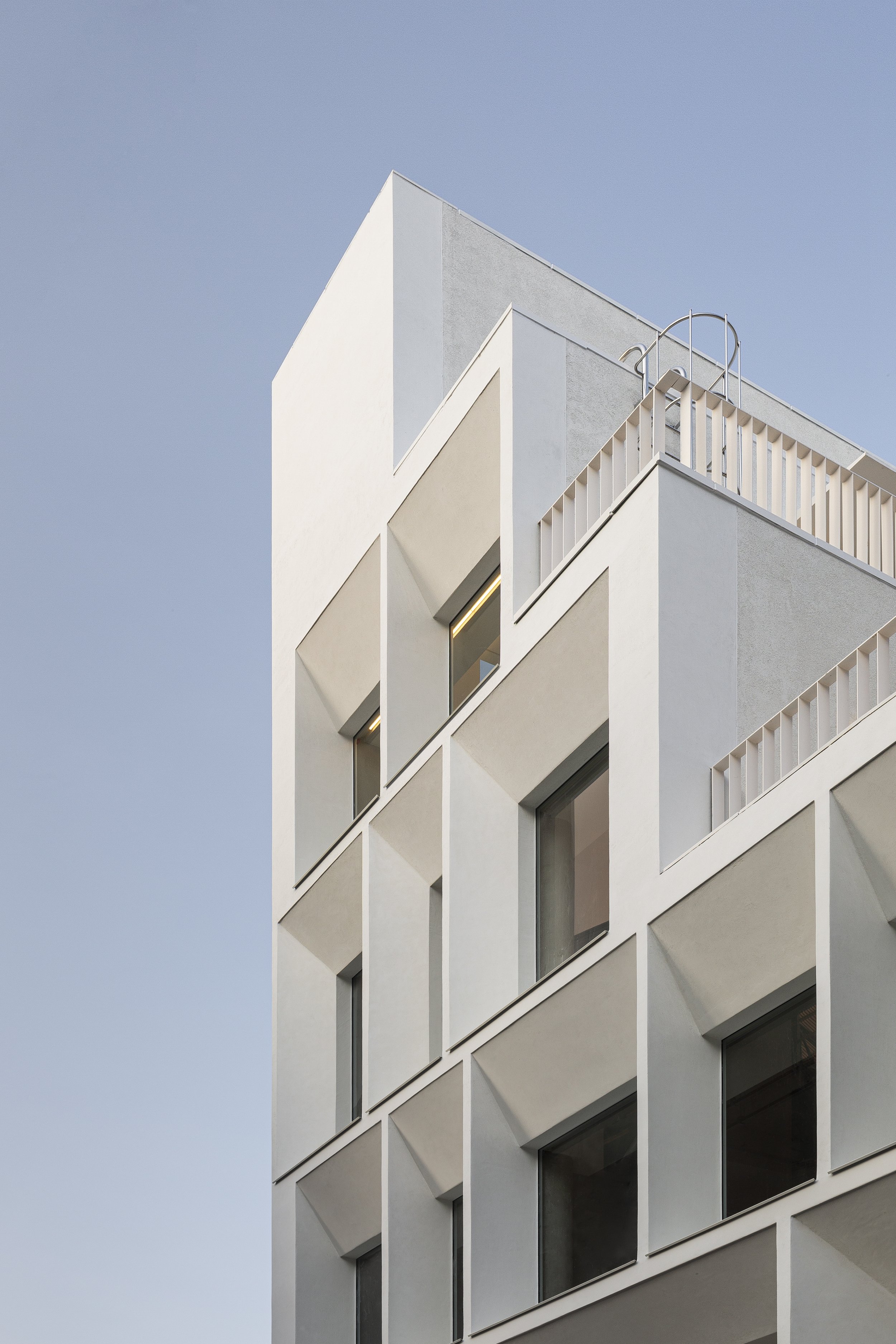
Structural columns were aligned with this diagonal edge, and their rotated geometry extends across the entire elevation. The constraint of the site becomes a structural direction; the structural arrangement becomes the building’s expression. The tilted columns are not devices for producing an image, but a method of interpreting given conditions. Form here is not an automatic outcome, but the visible expression of an order deliberately chosen within constraint.
Light & Surface
The 35mm Office Building is conceived around light and shadow.
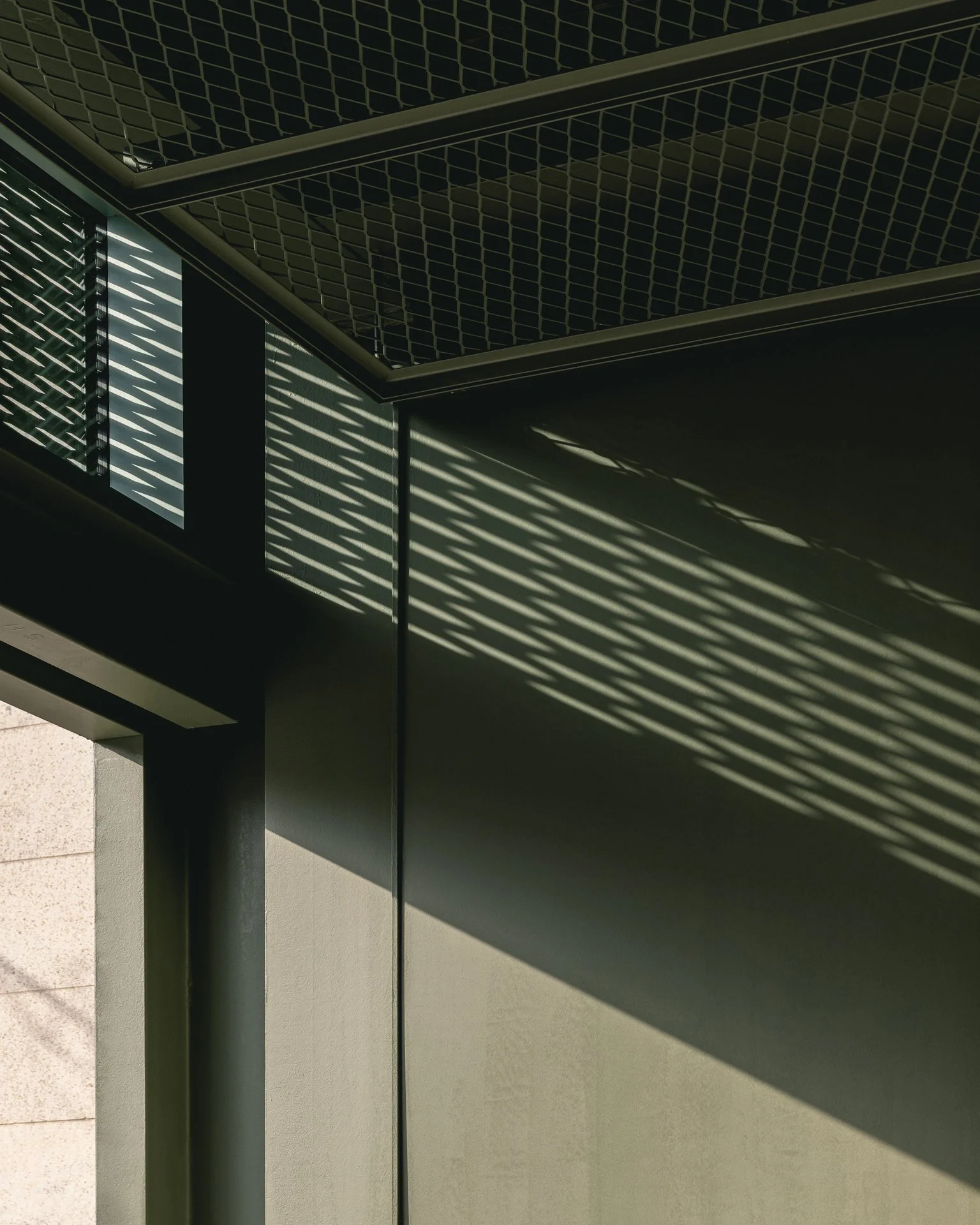
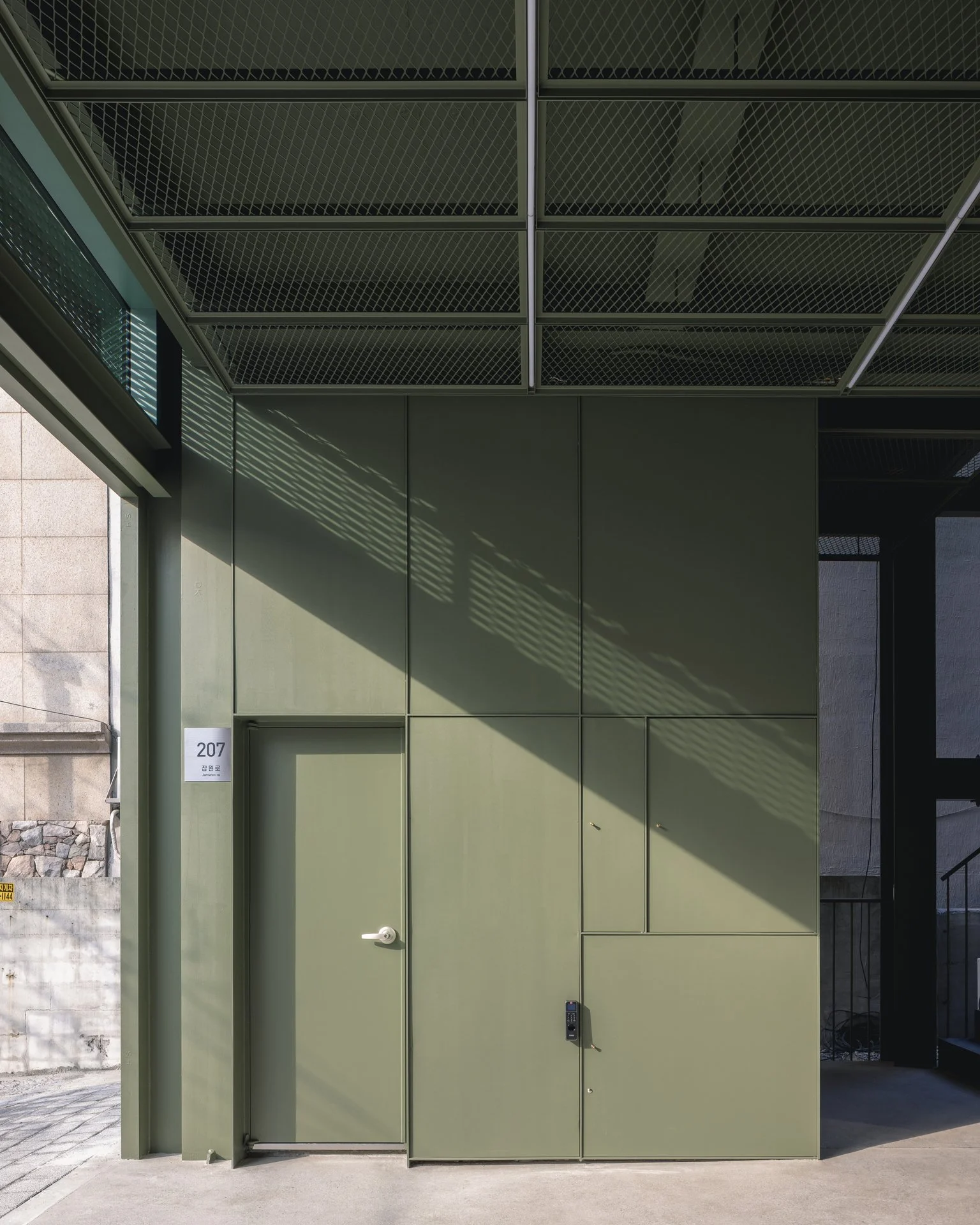
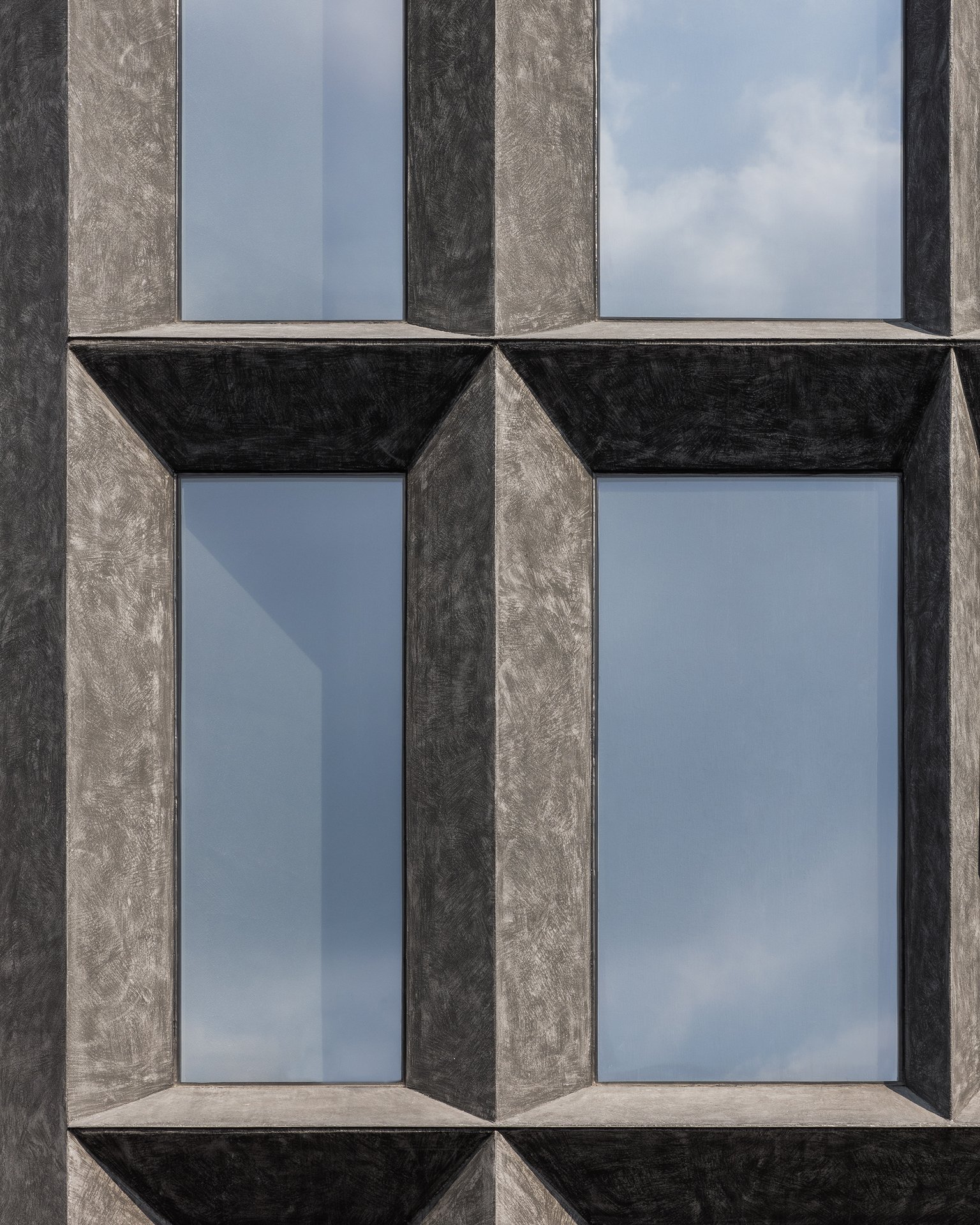
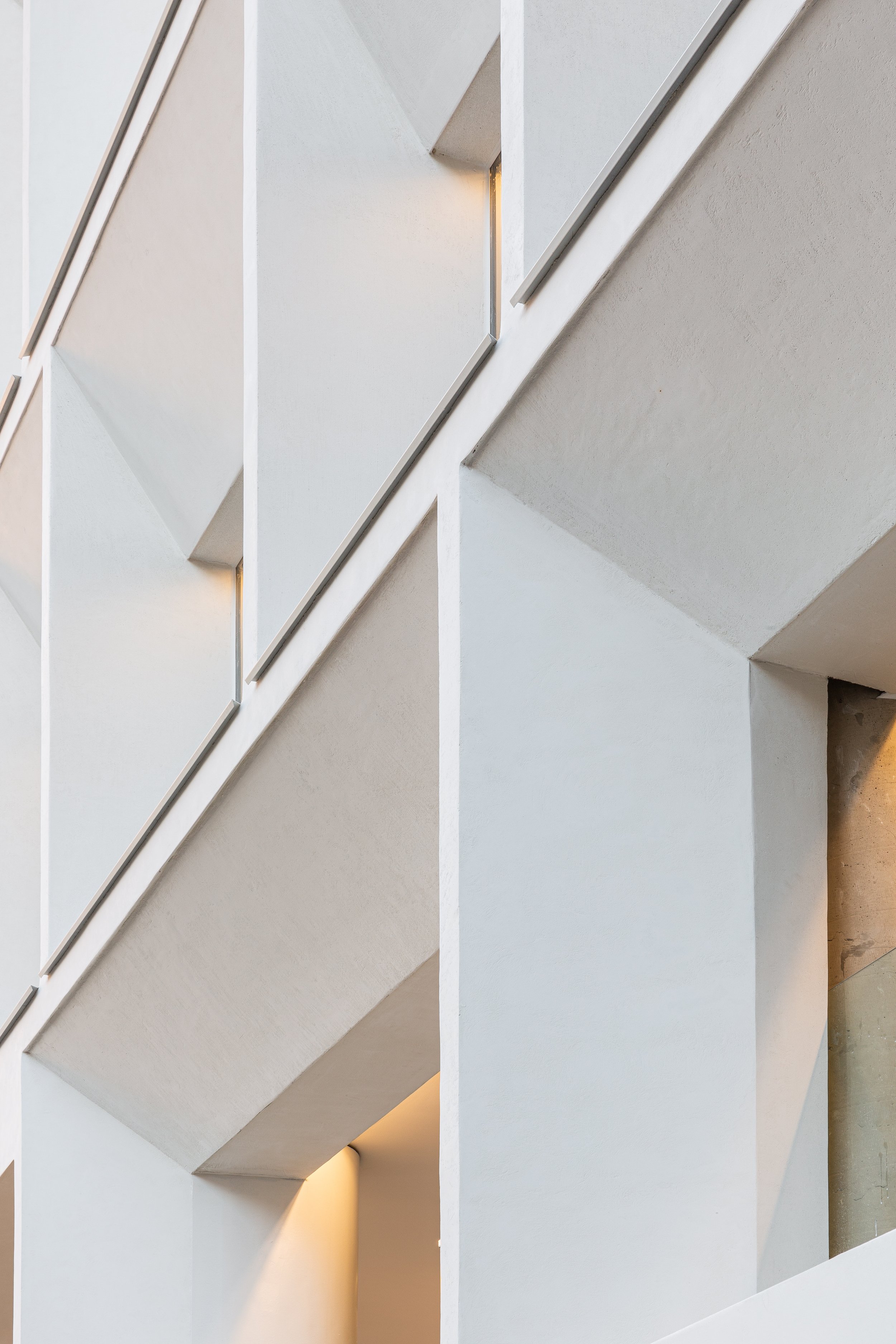
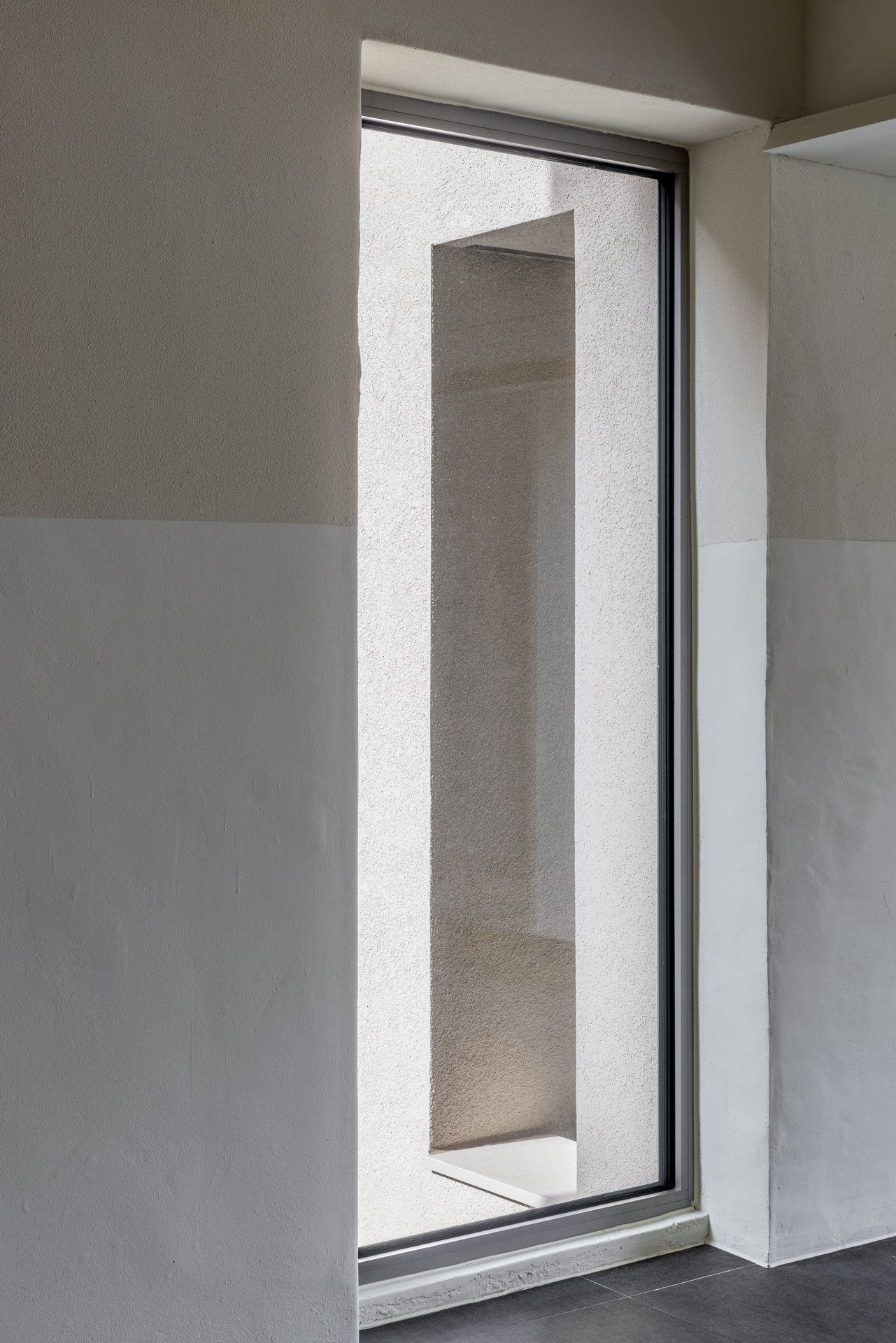
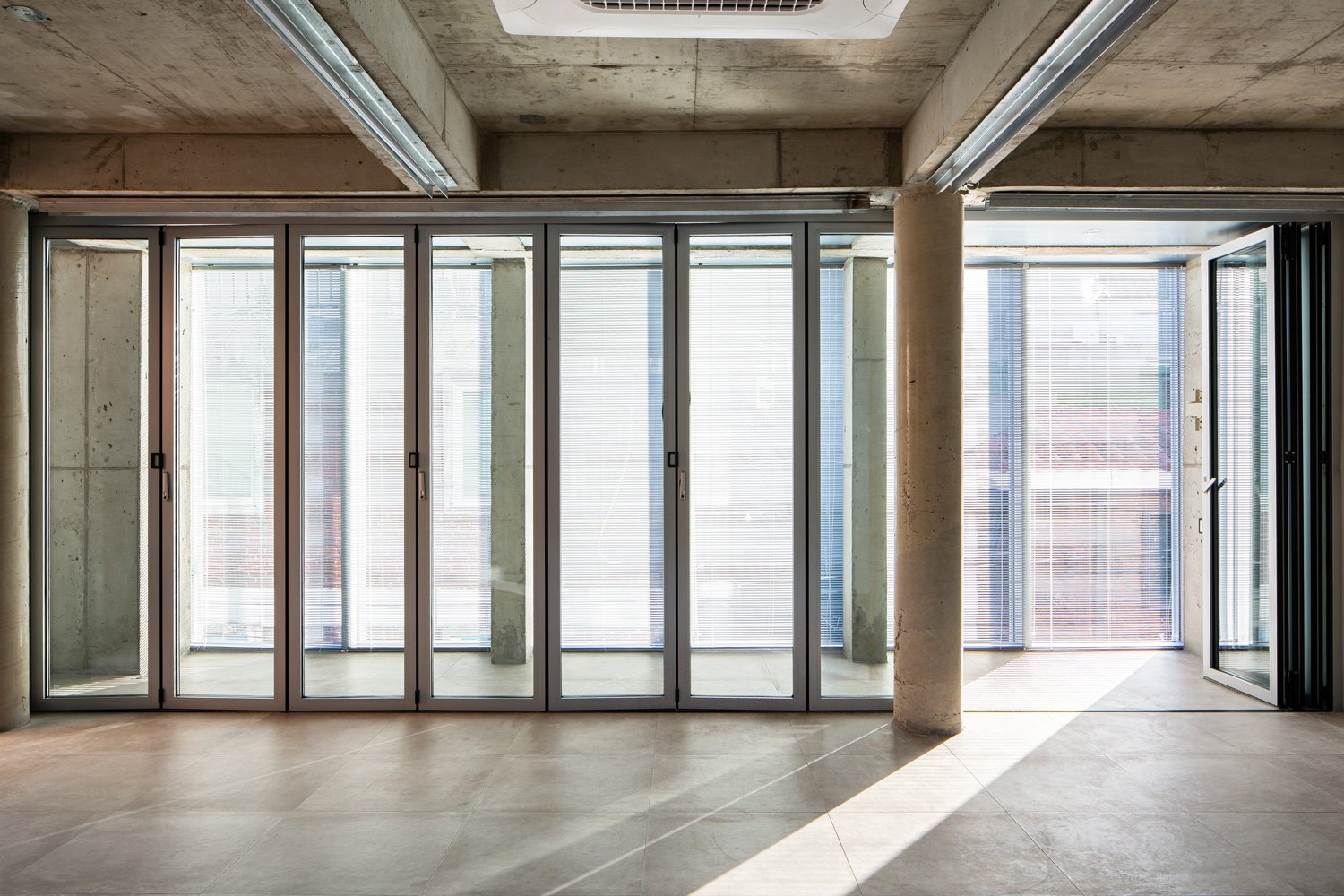
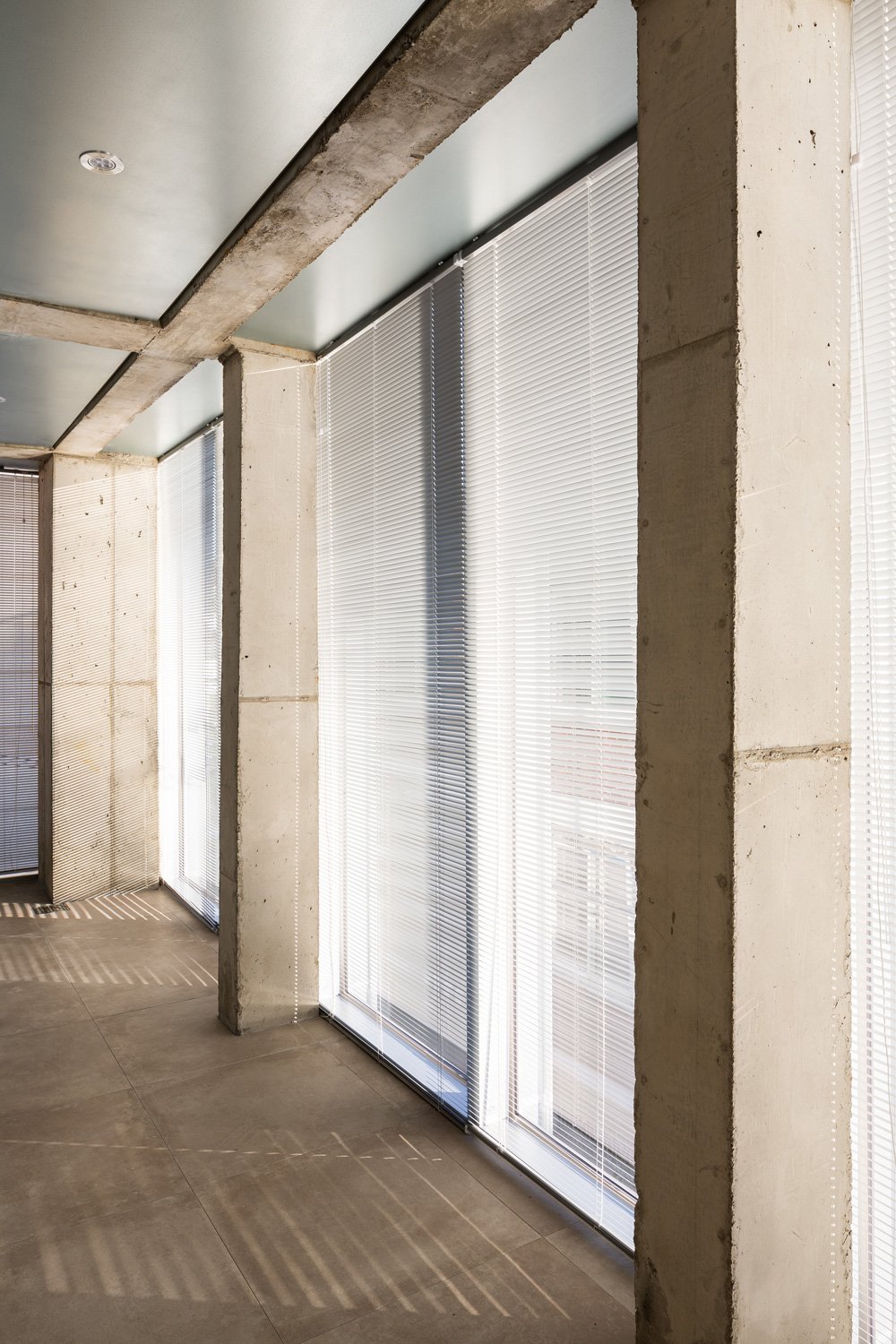
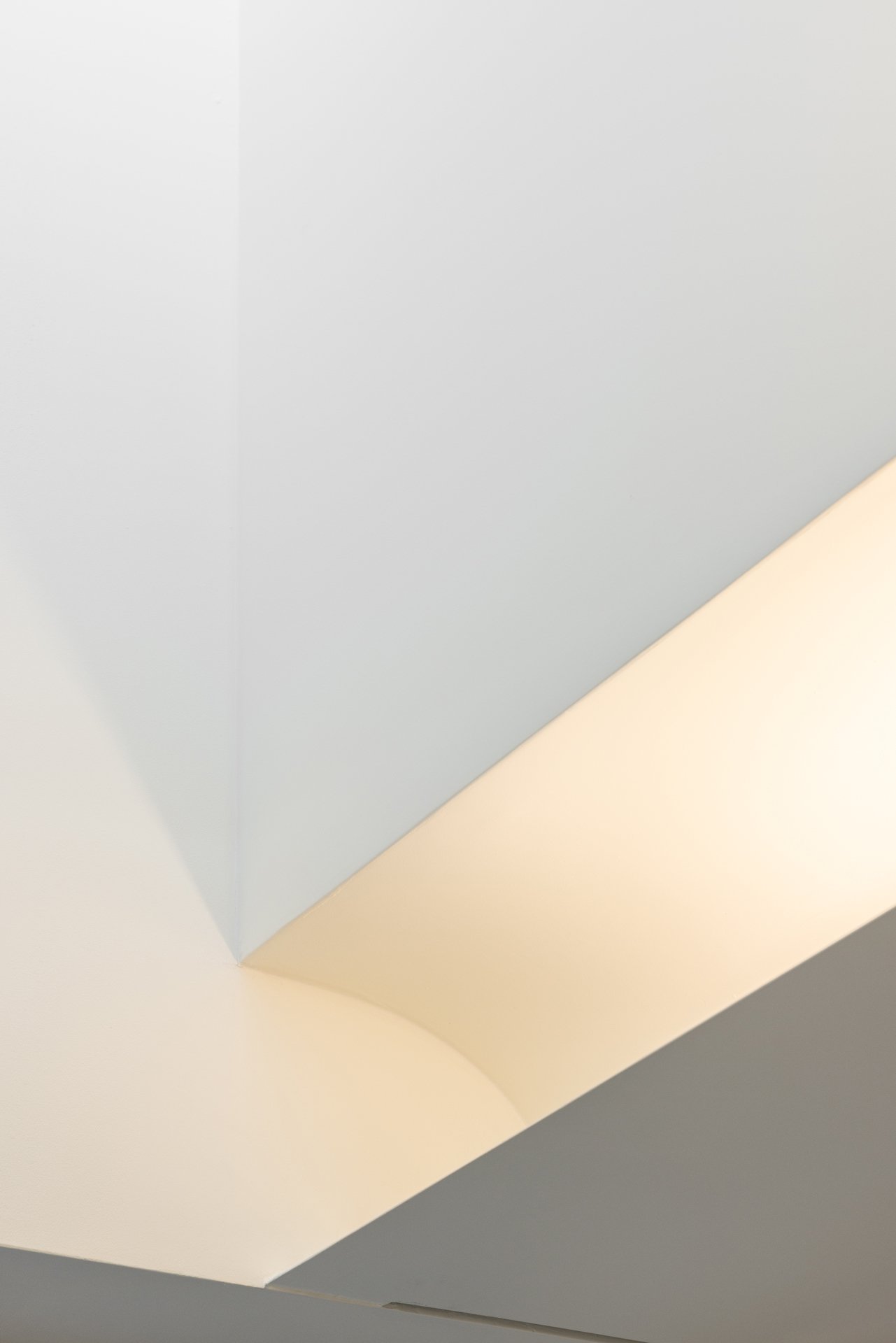
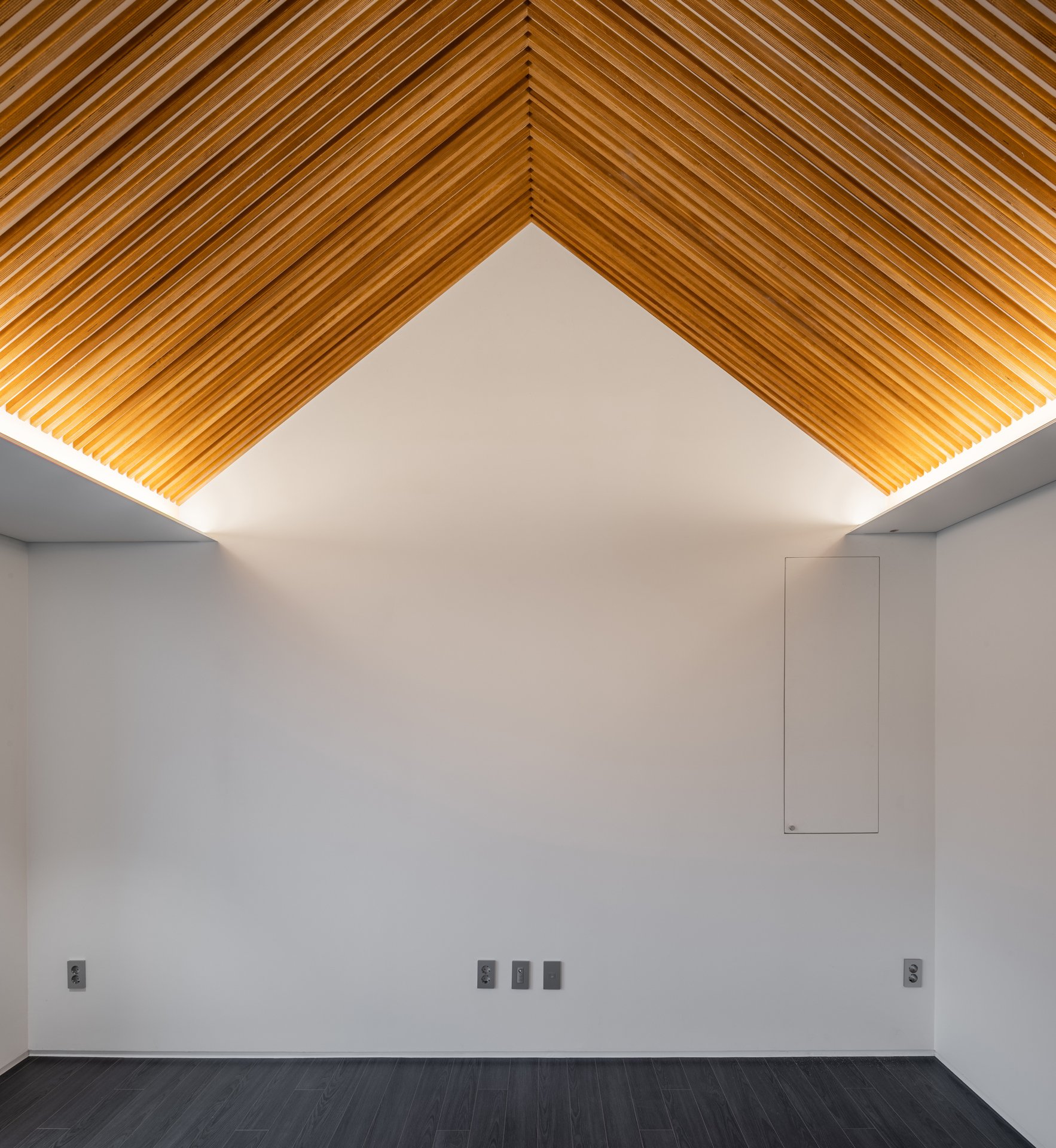
Light reveals form, defines surface, and constructs spatial depth. In this project, form and surface are inseparable. Form exists to receive light; surface modulates its density.
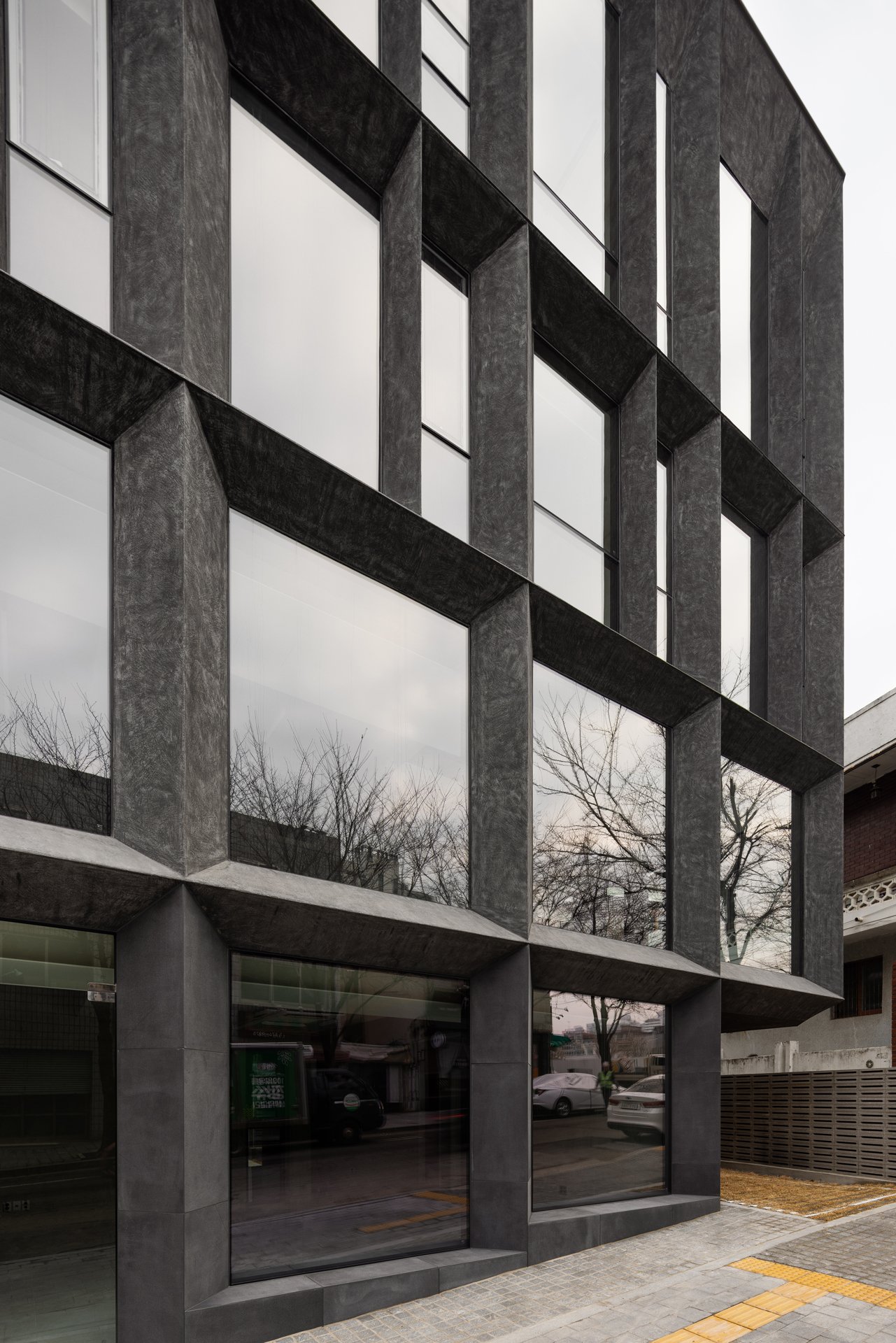
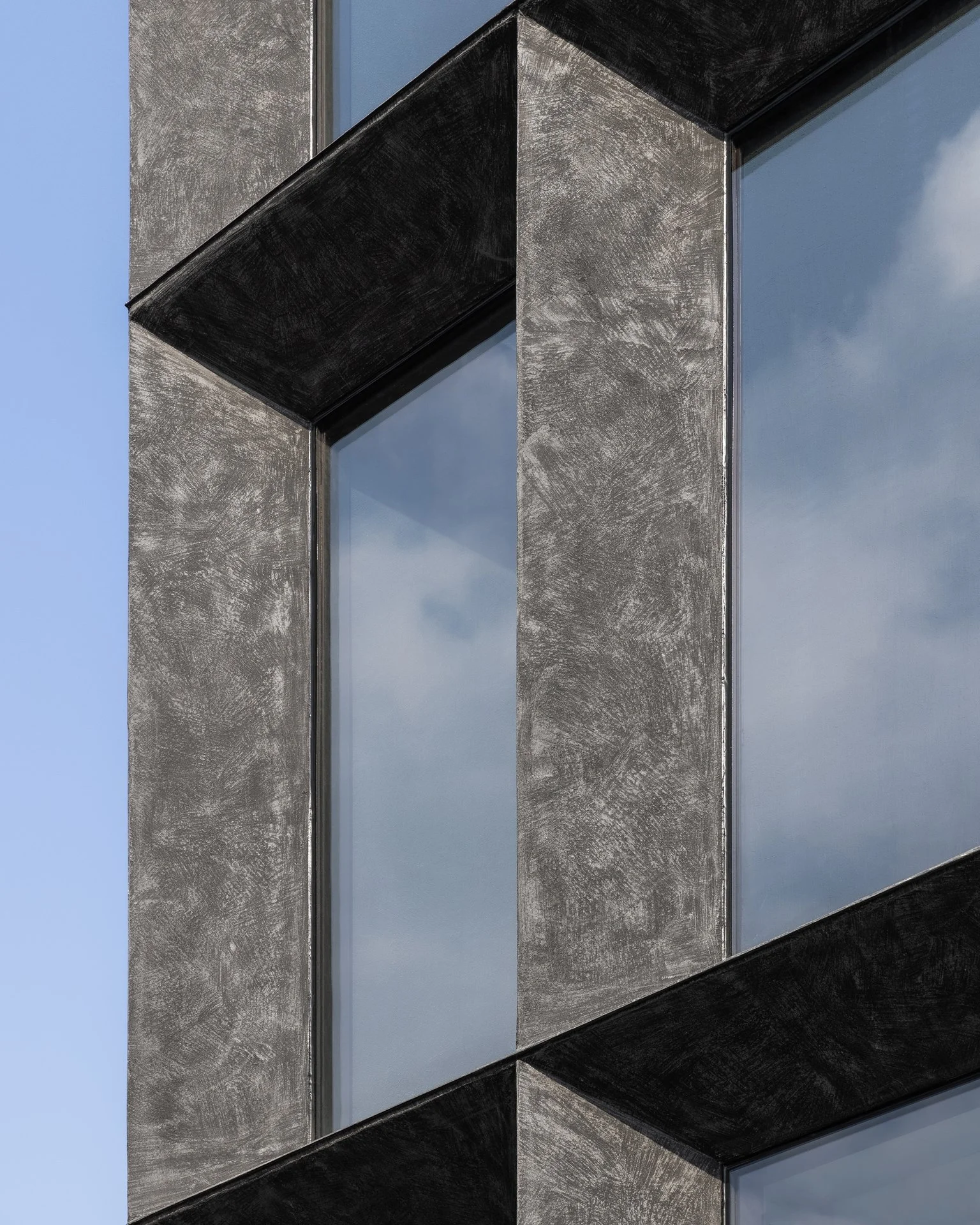
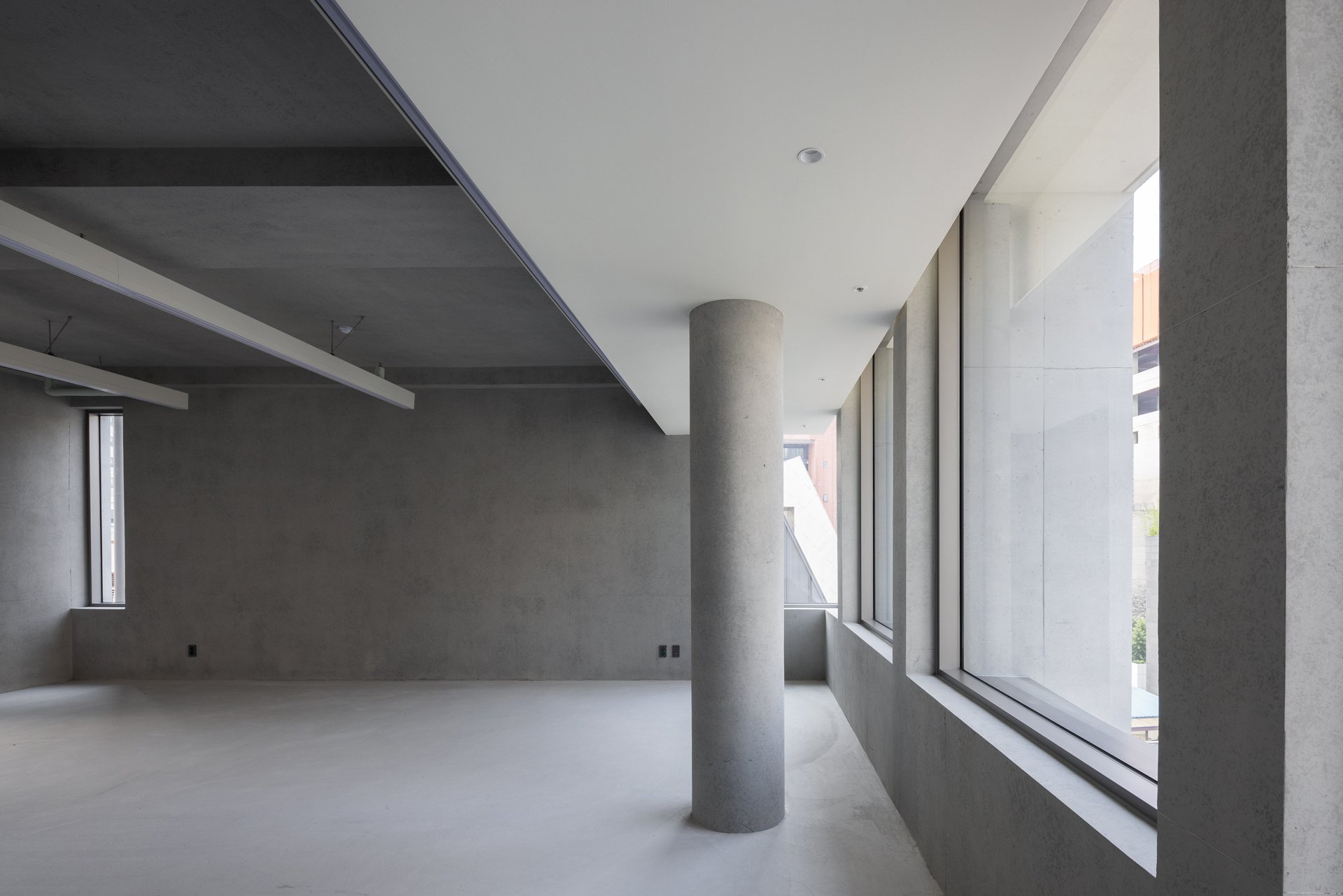
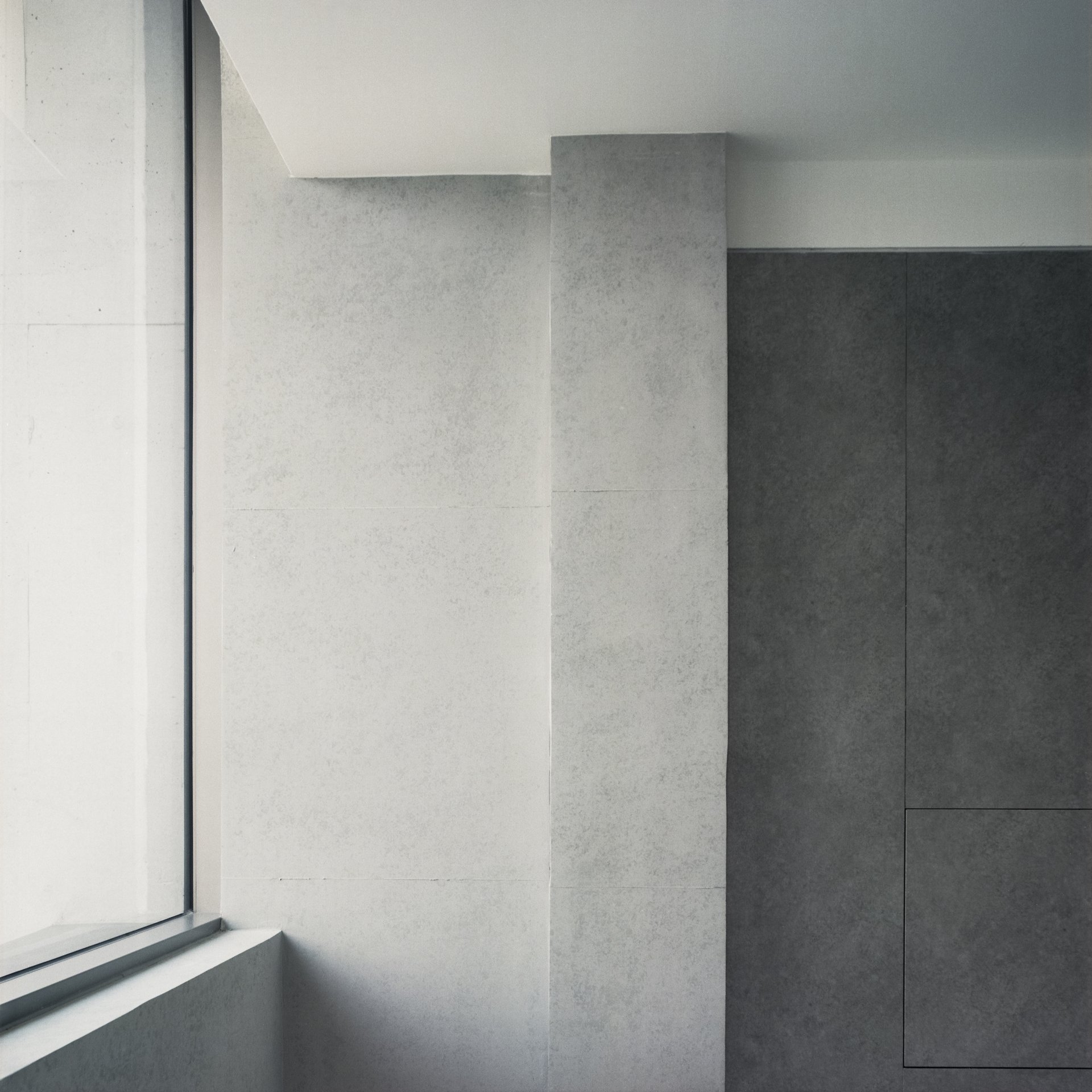
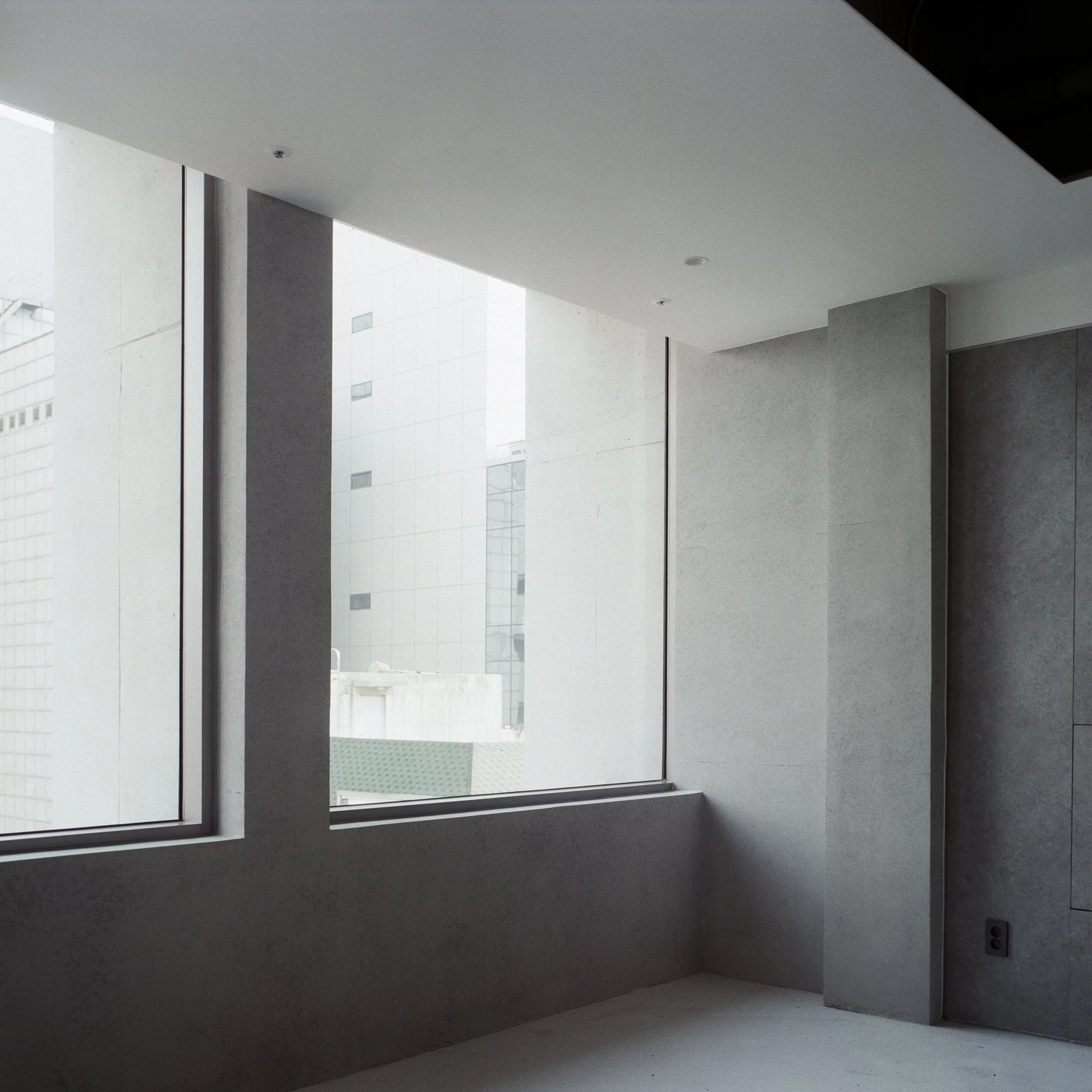
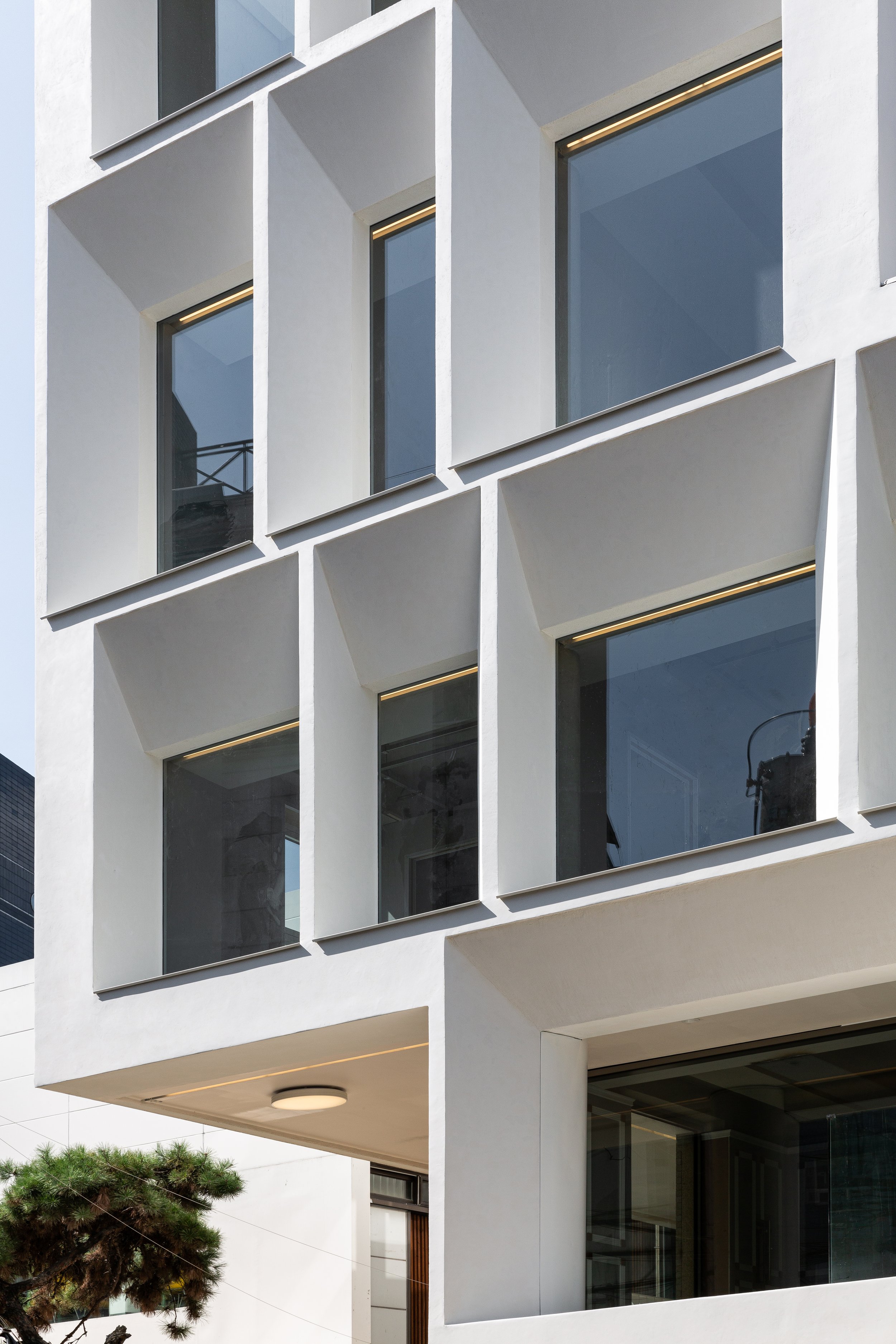
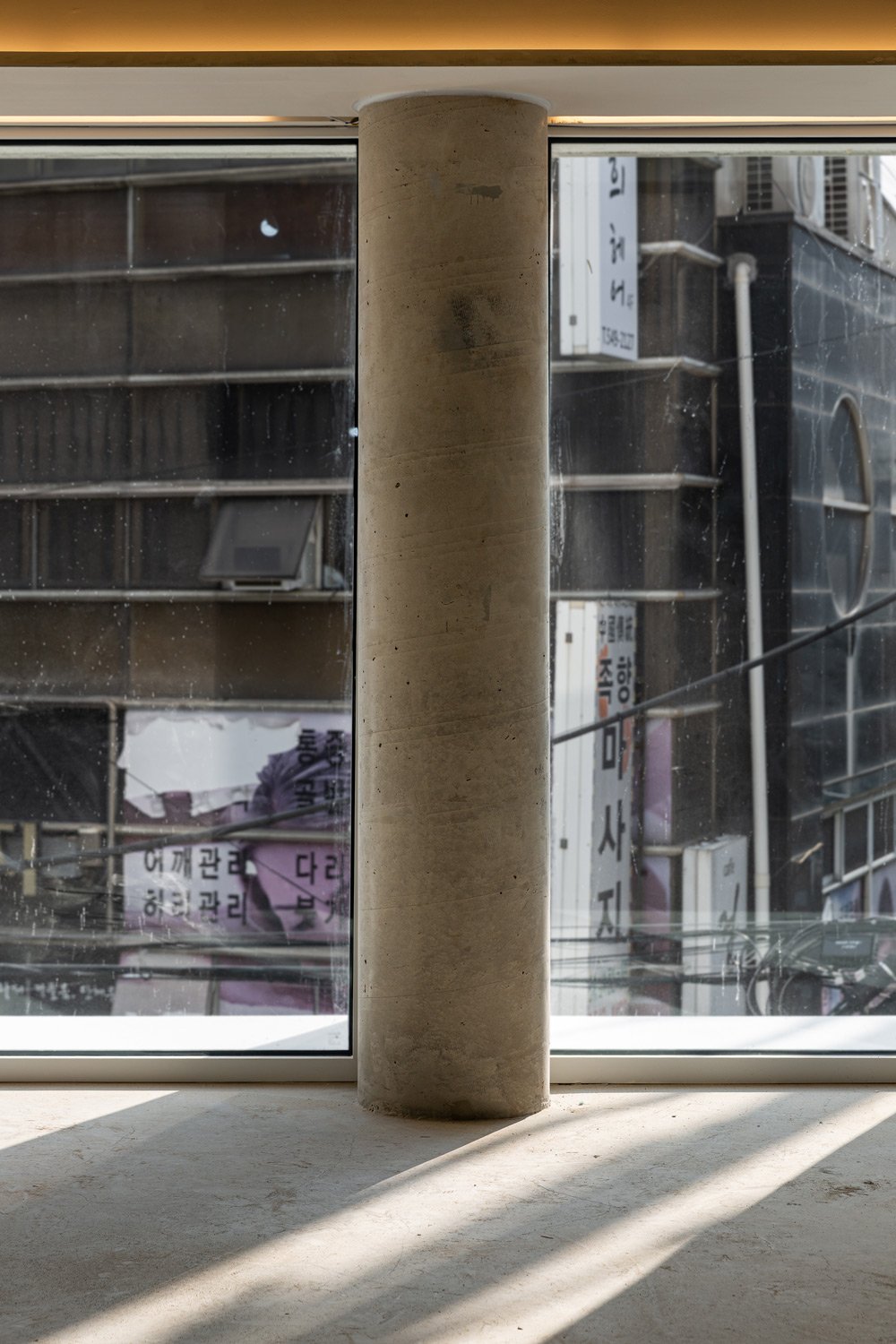
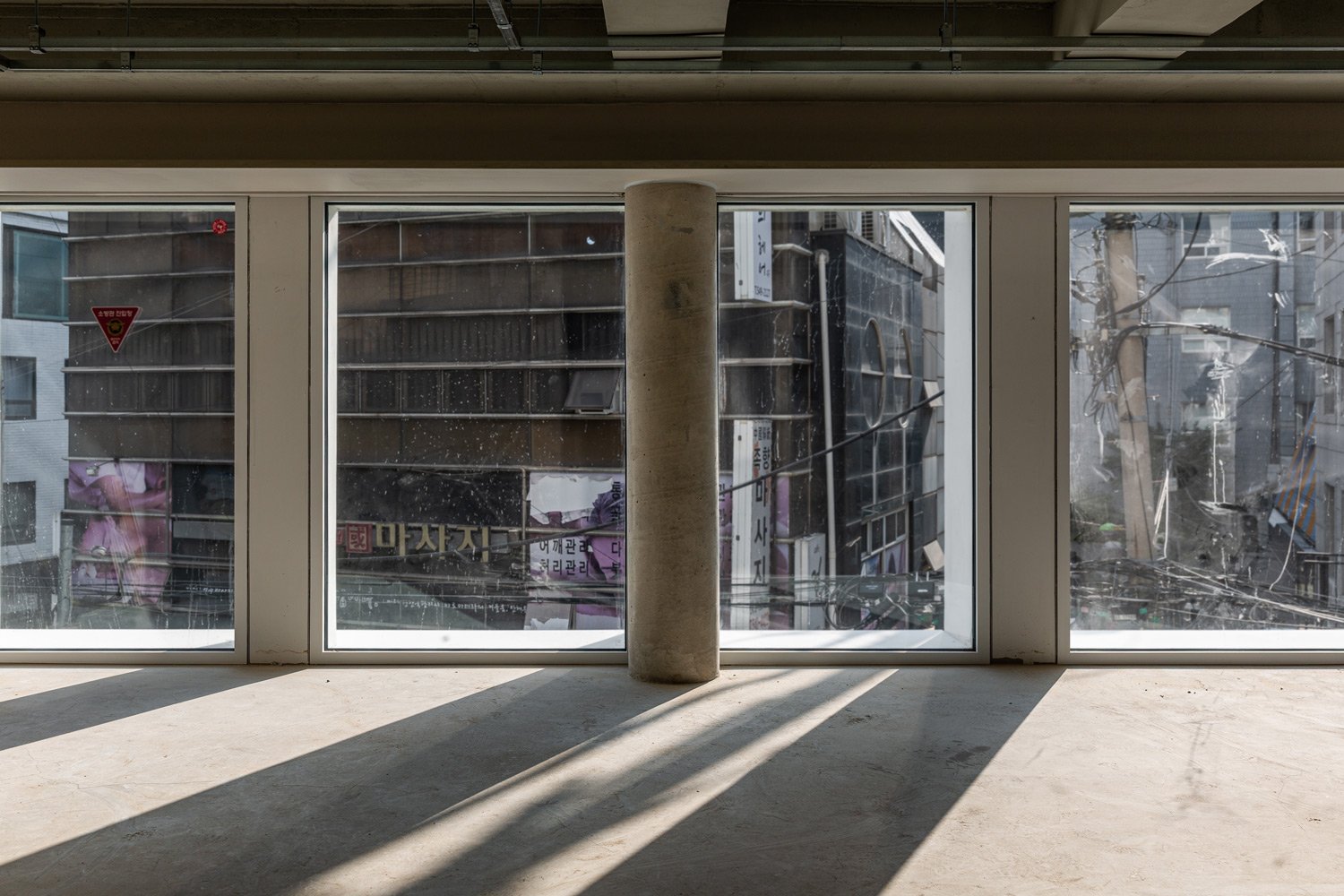
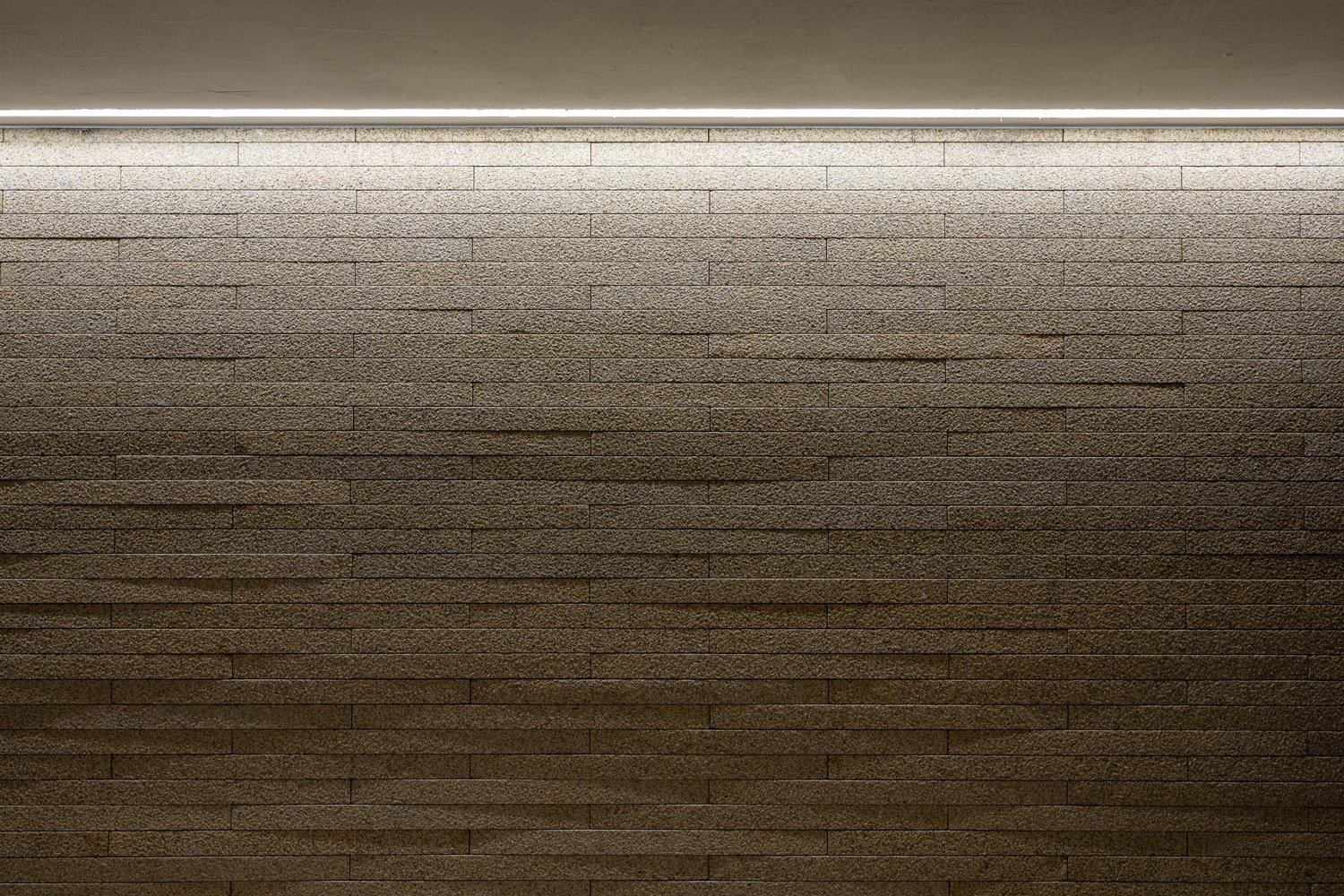
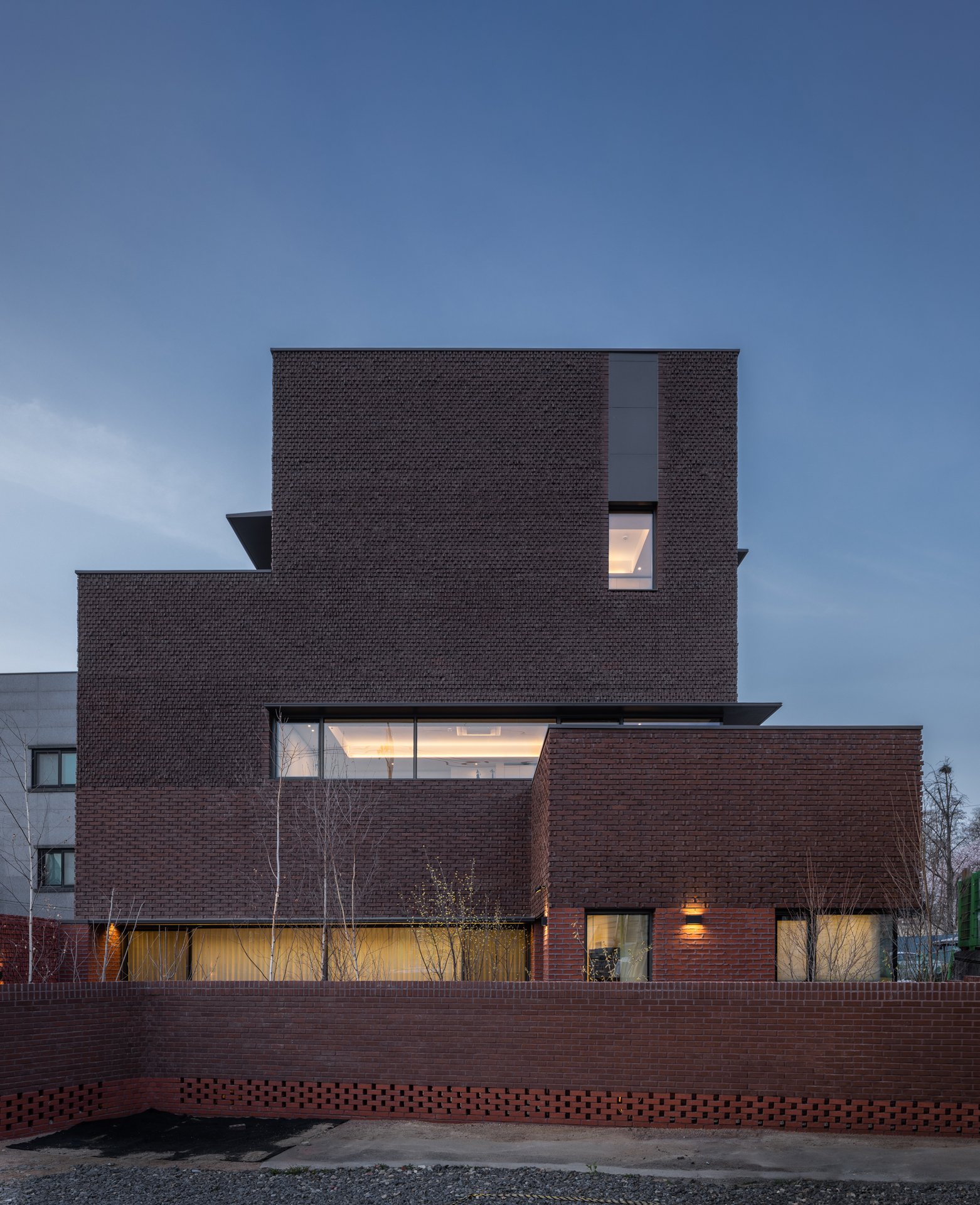
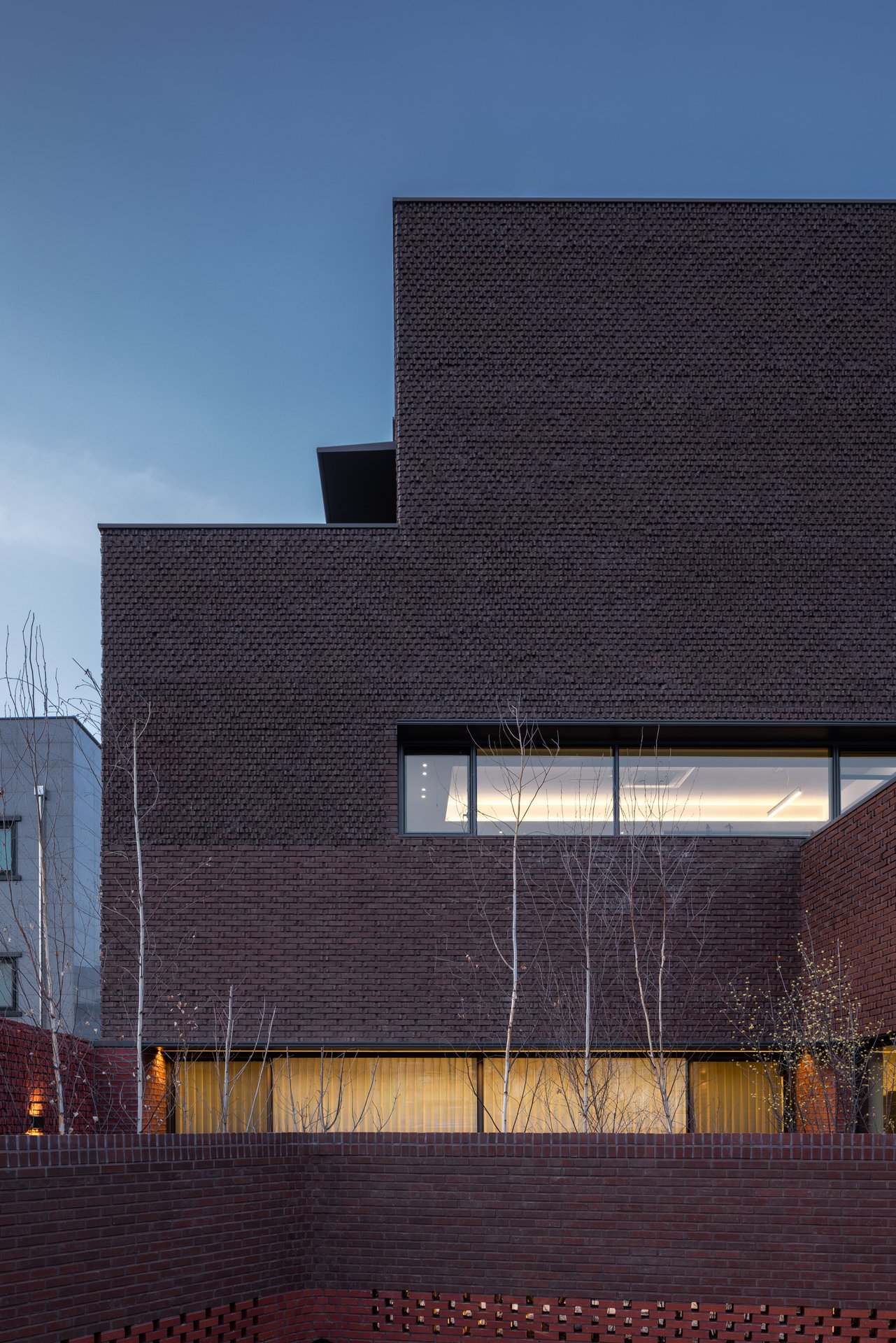
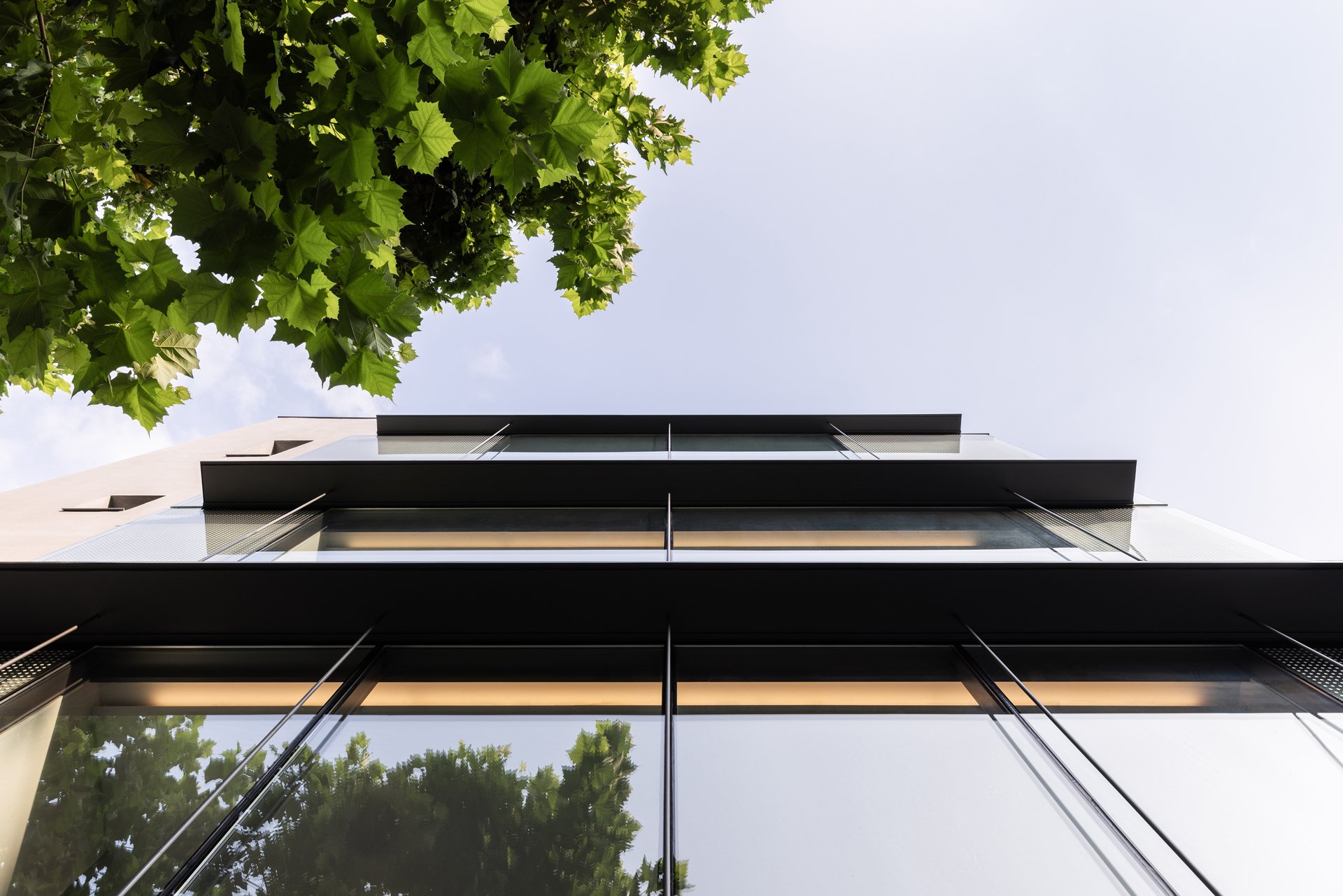
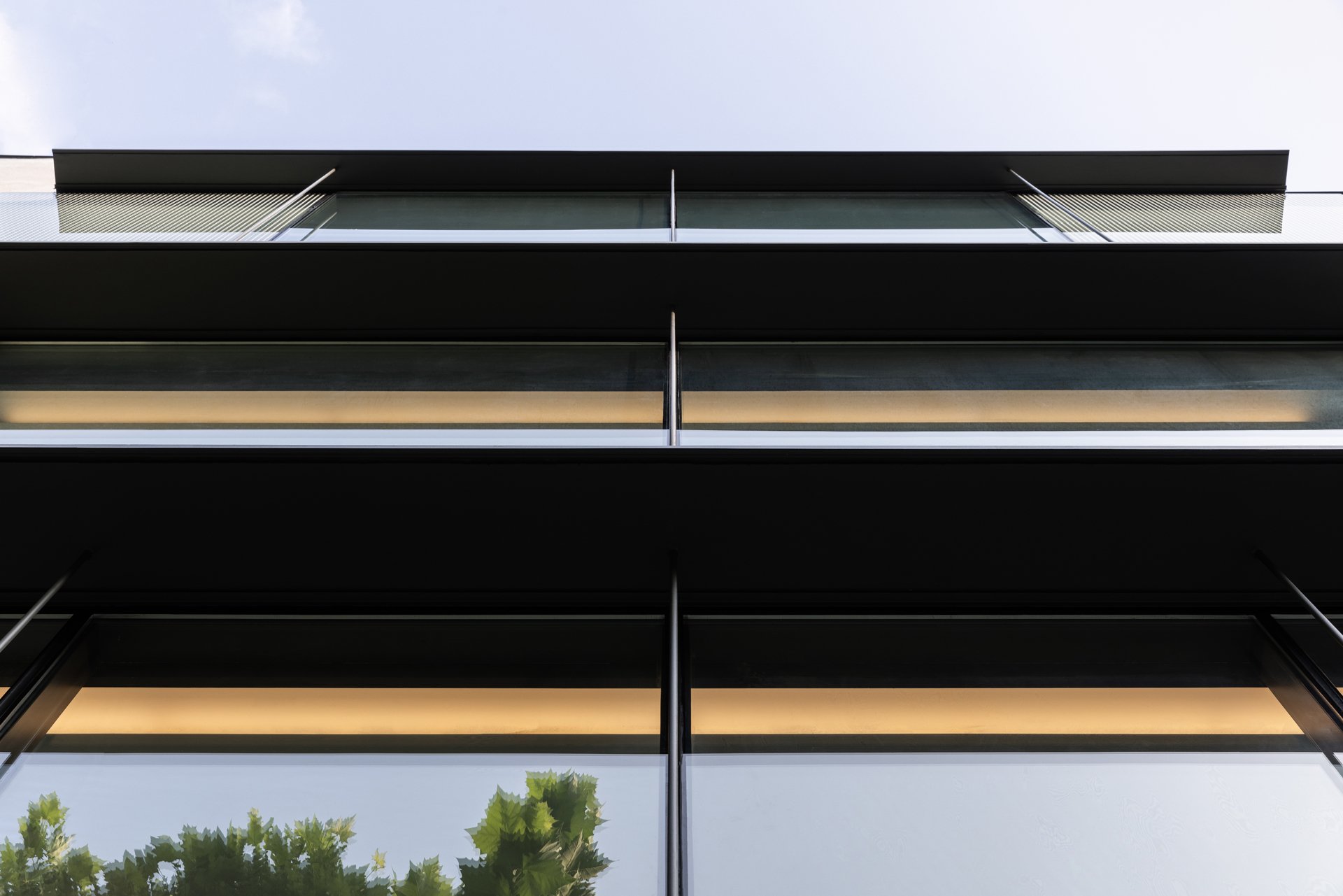
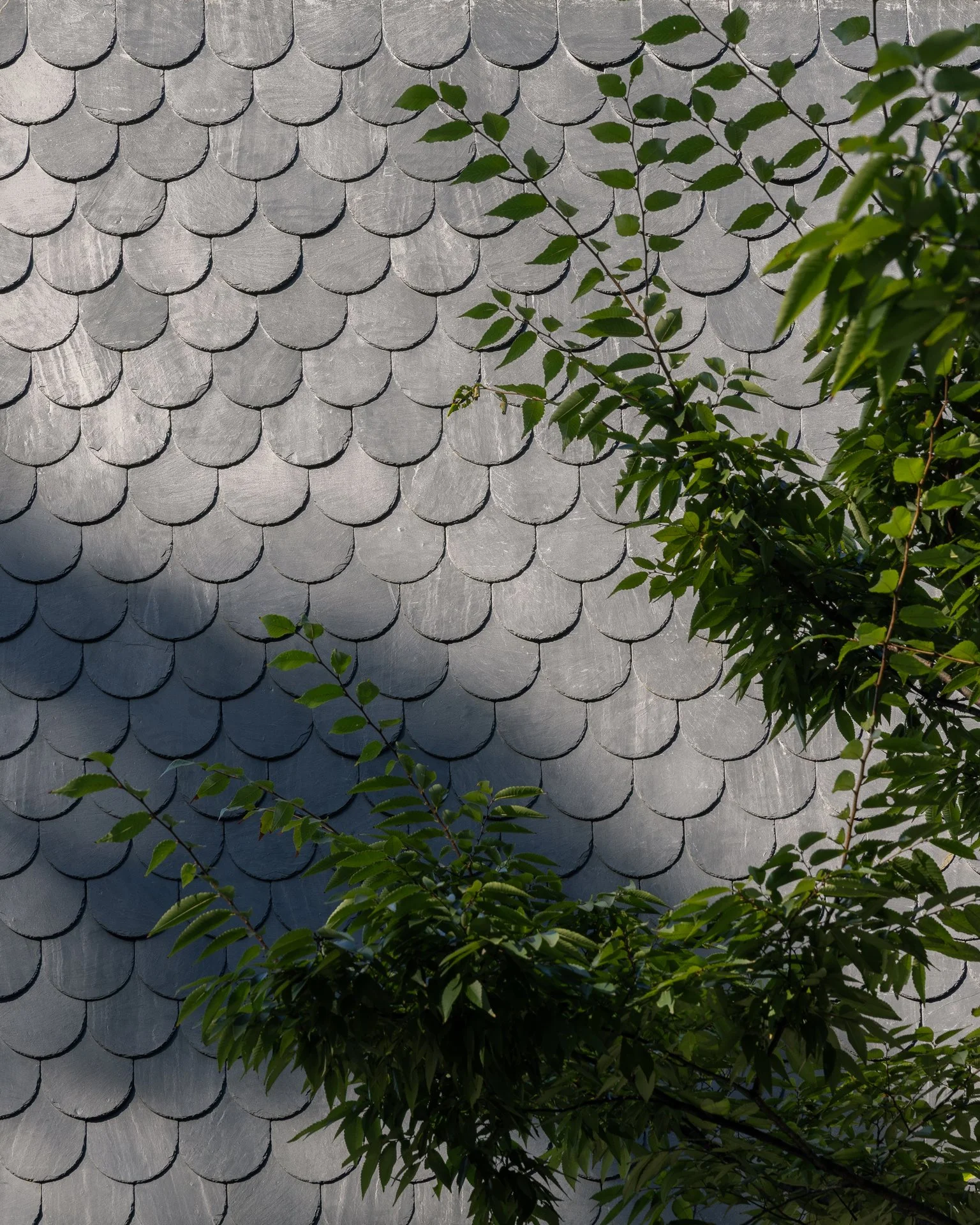
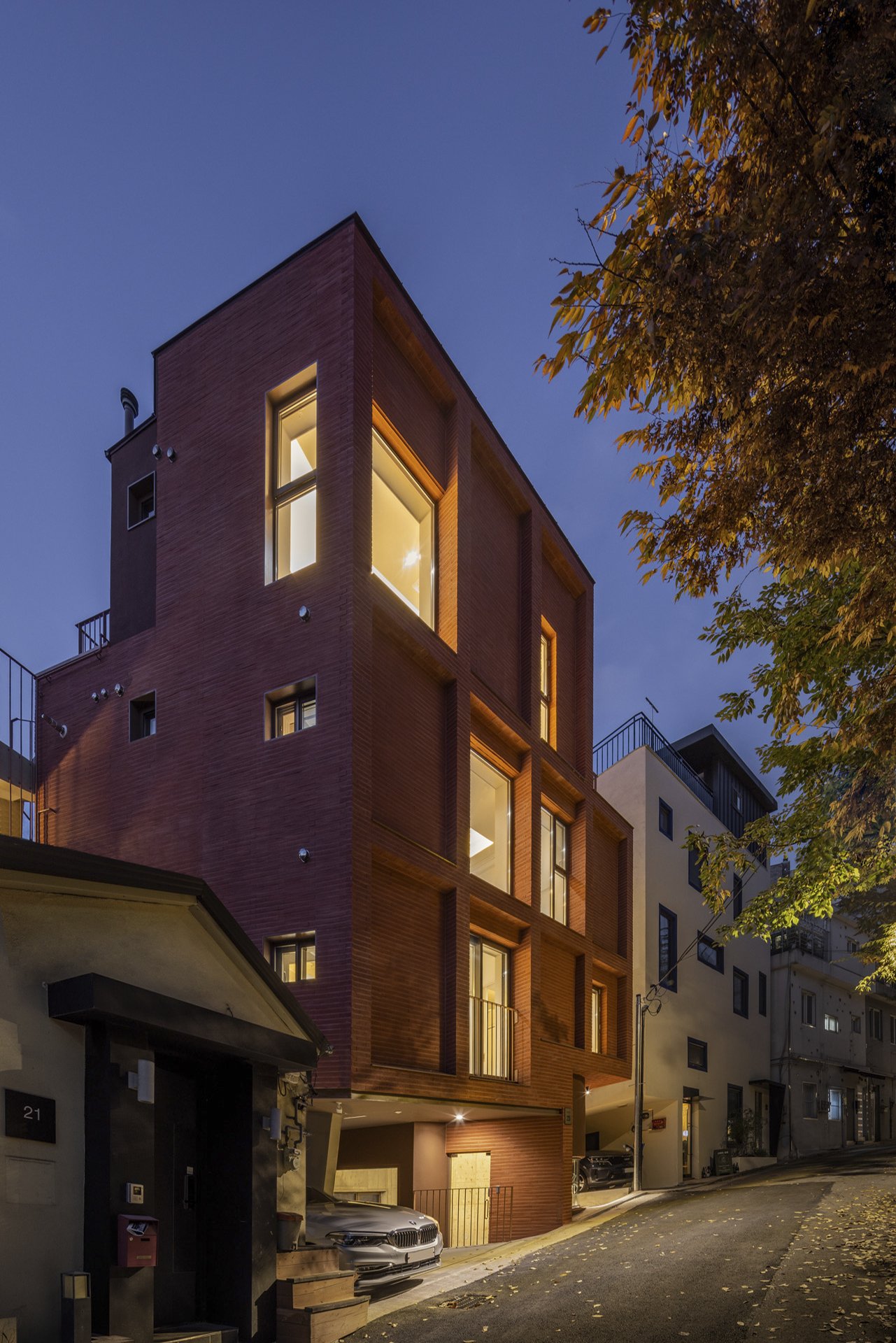
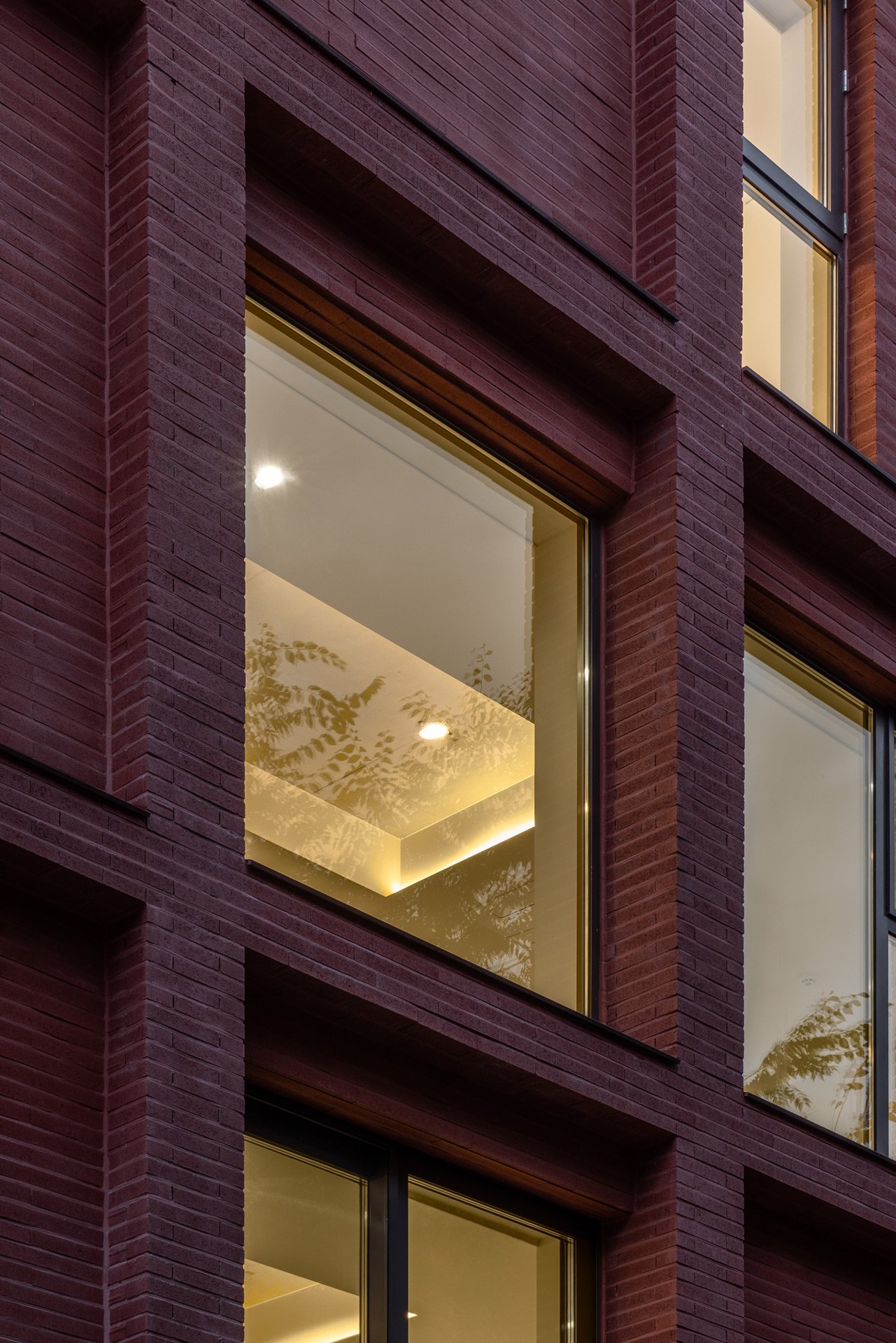
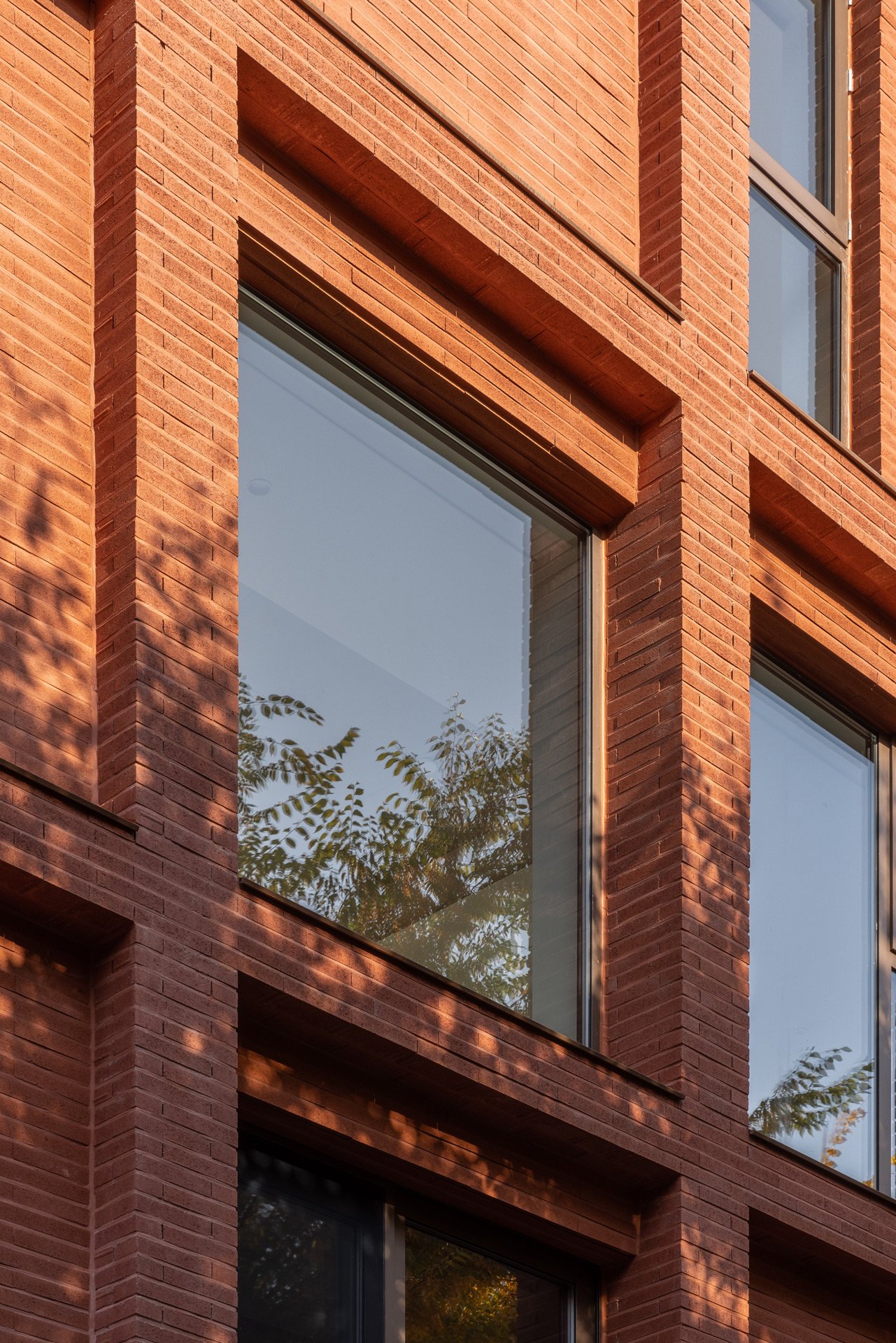
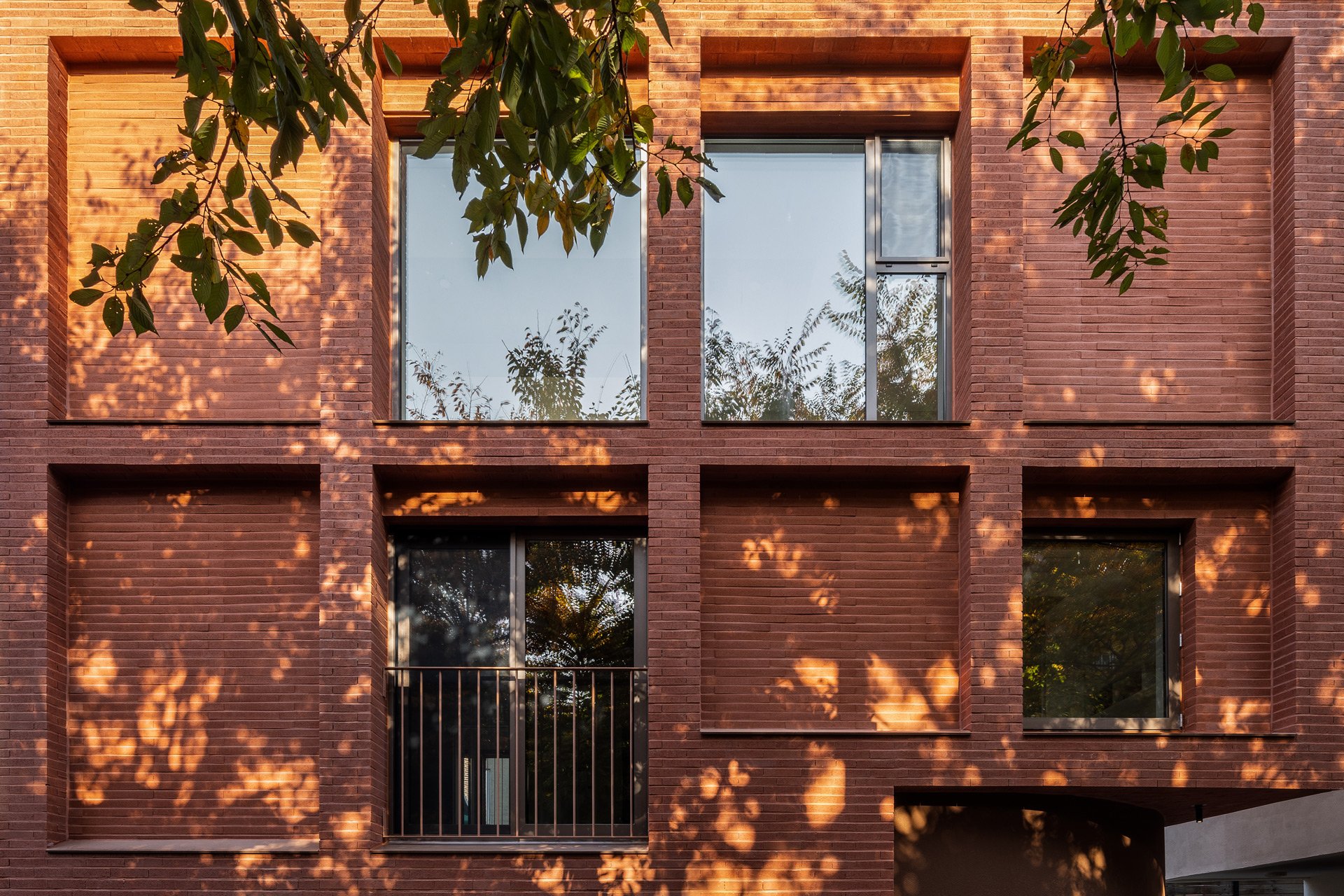
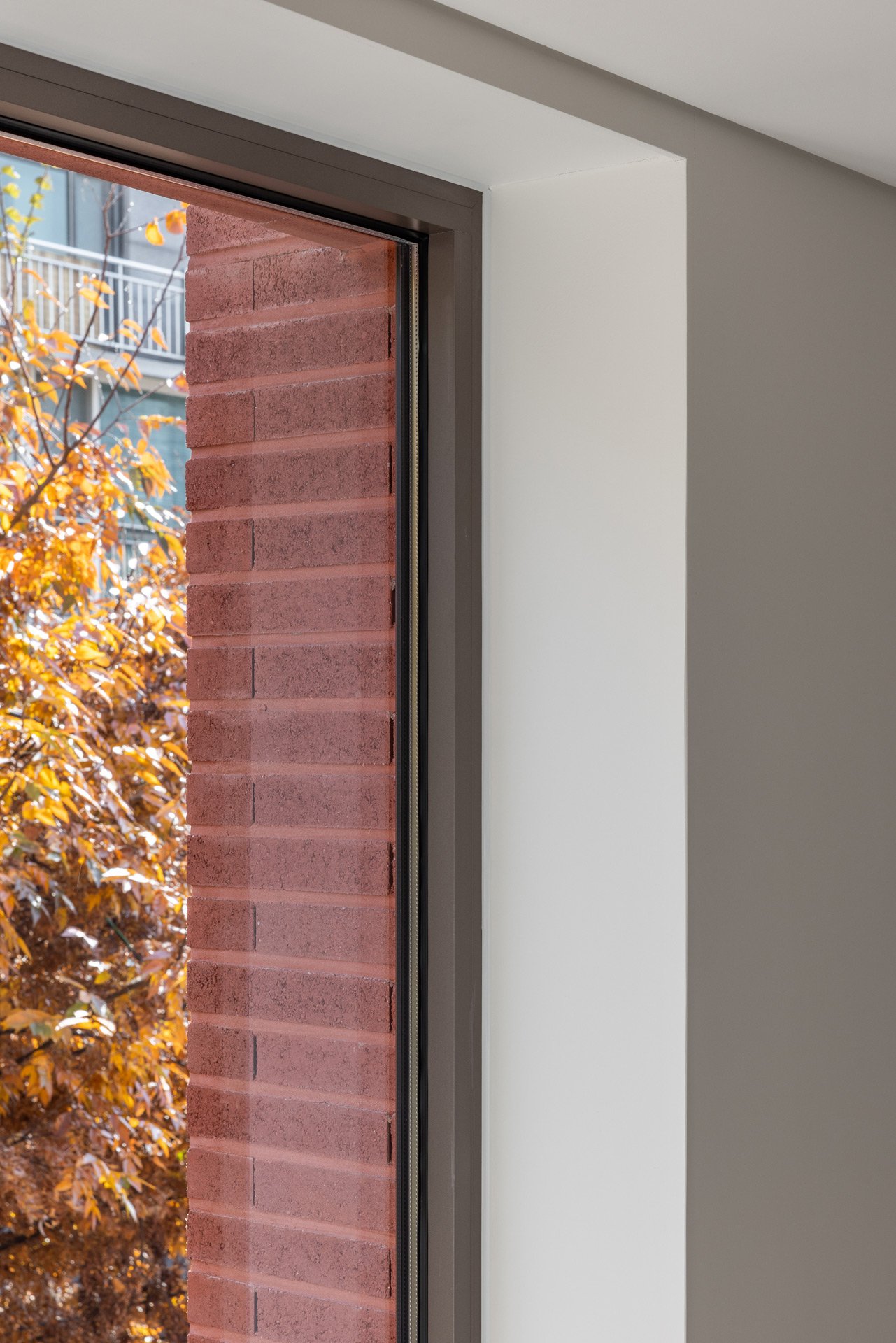
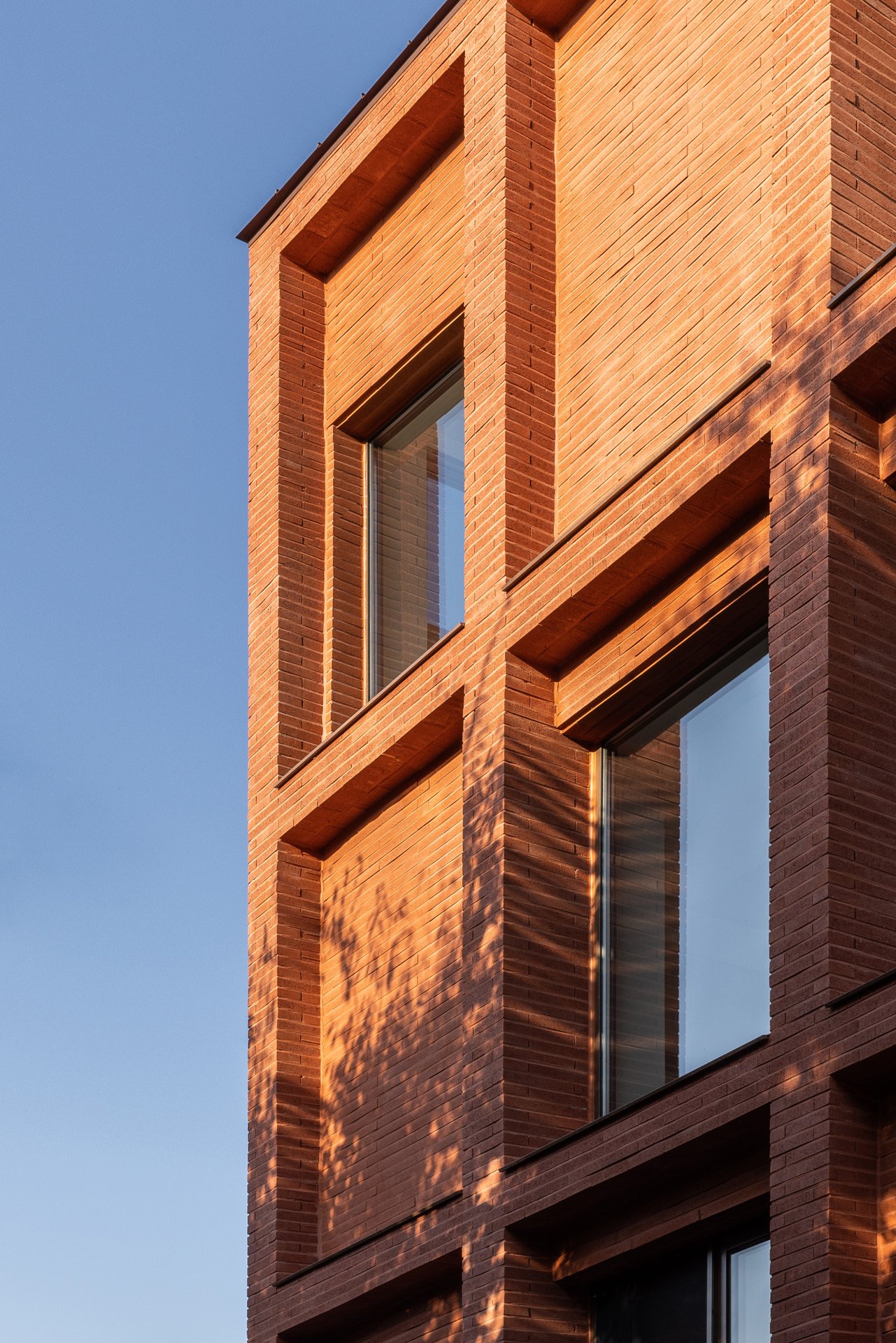
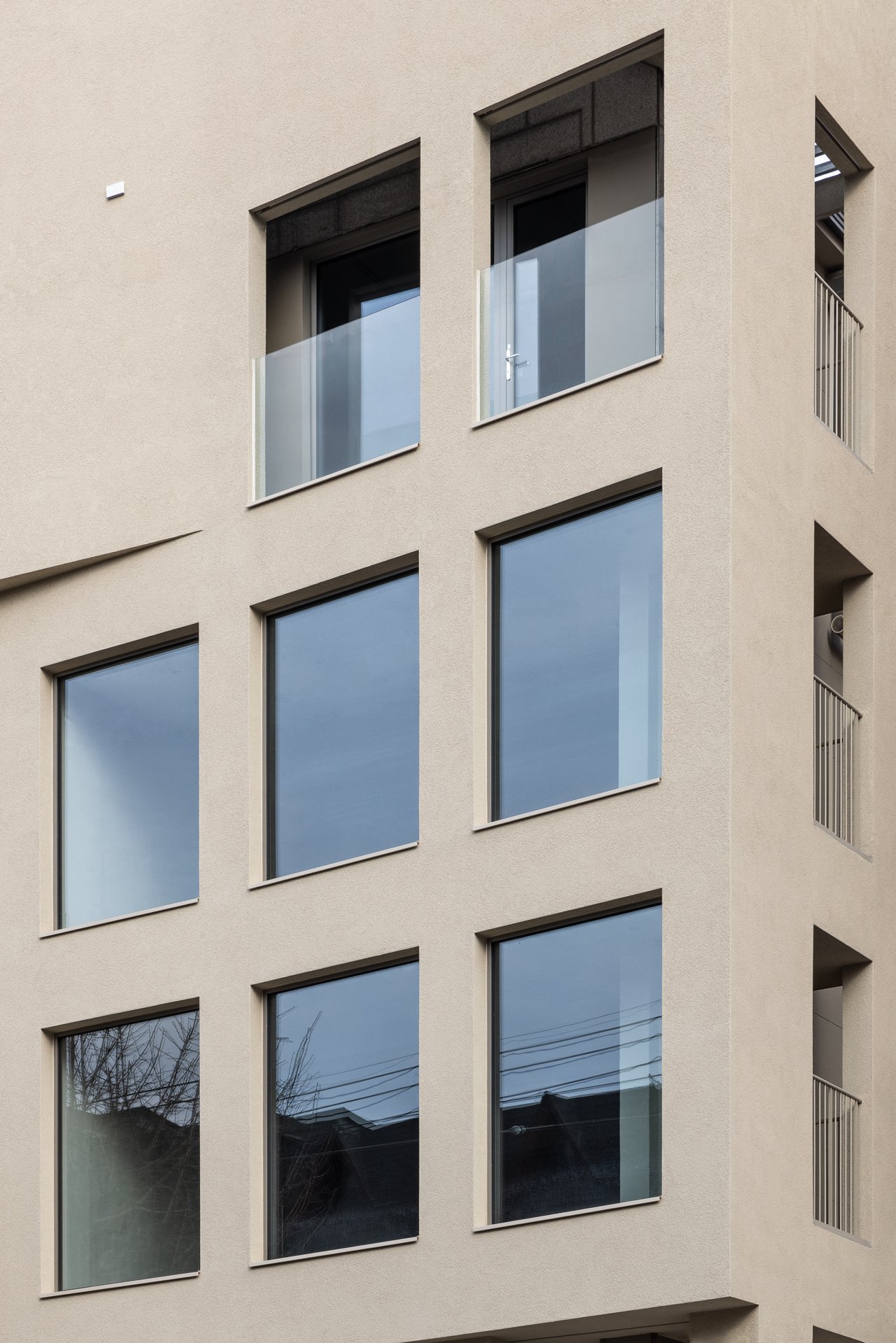
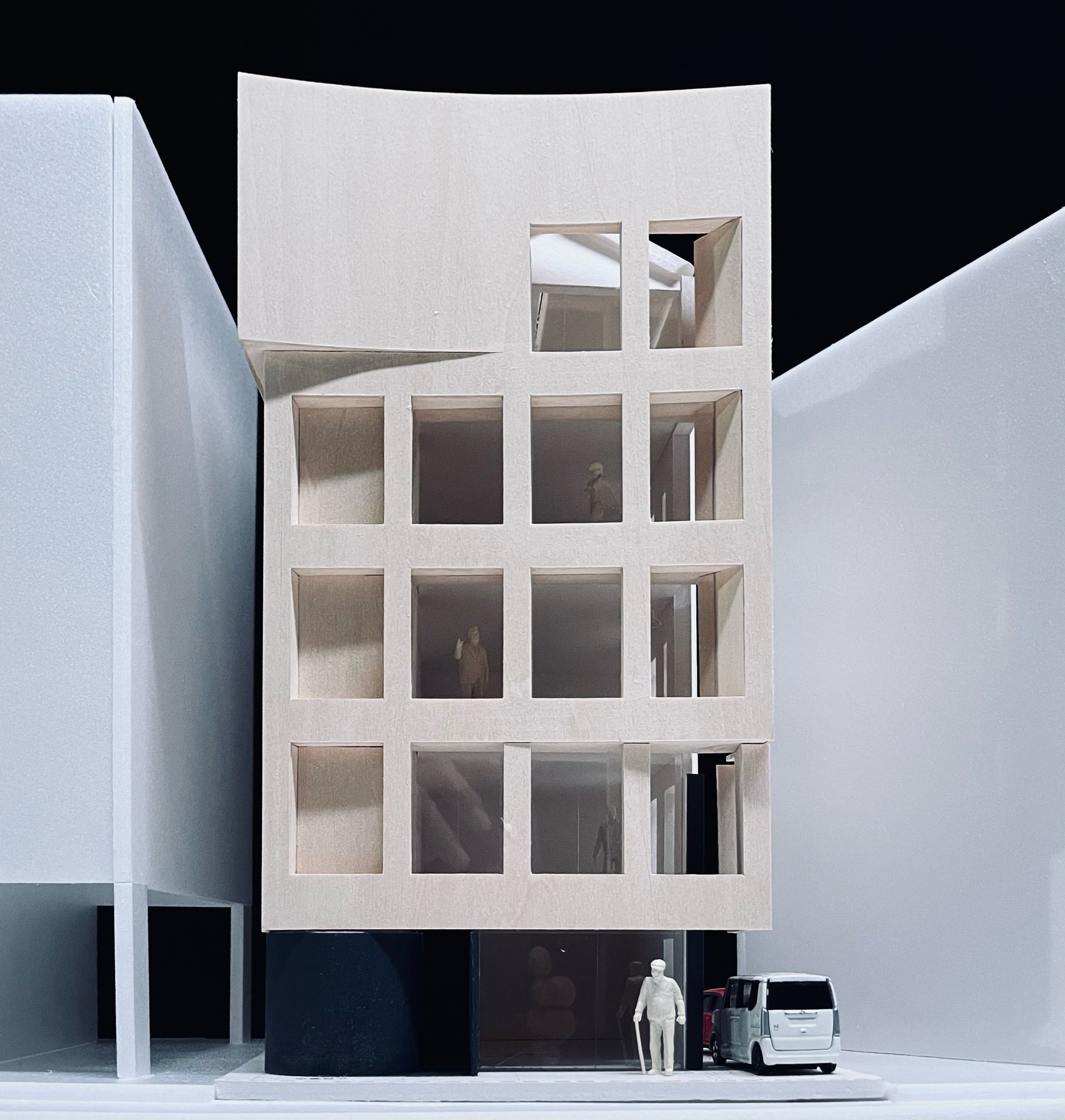
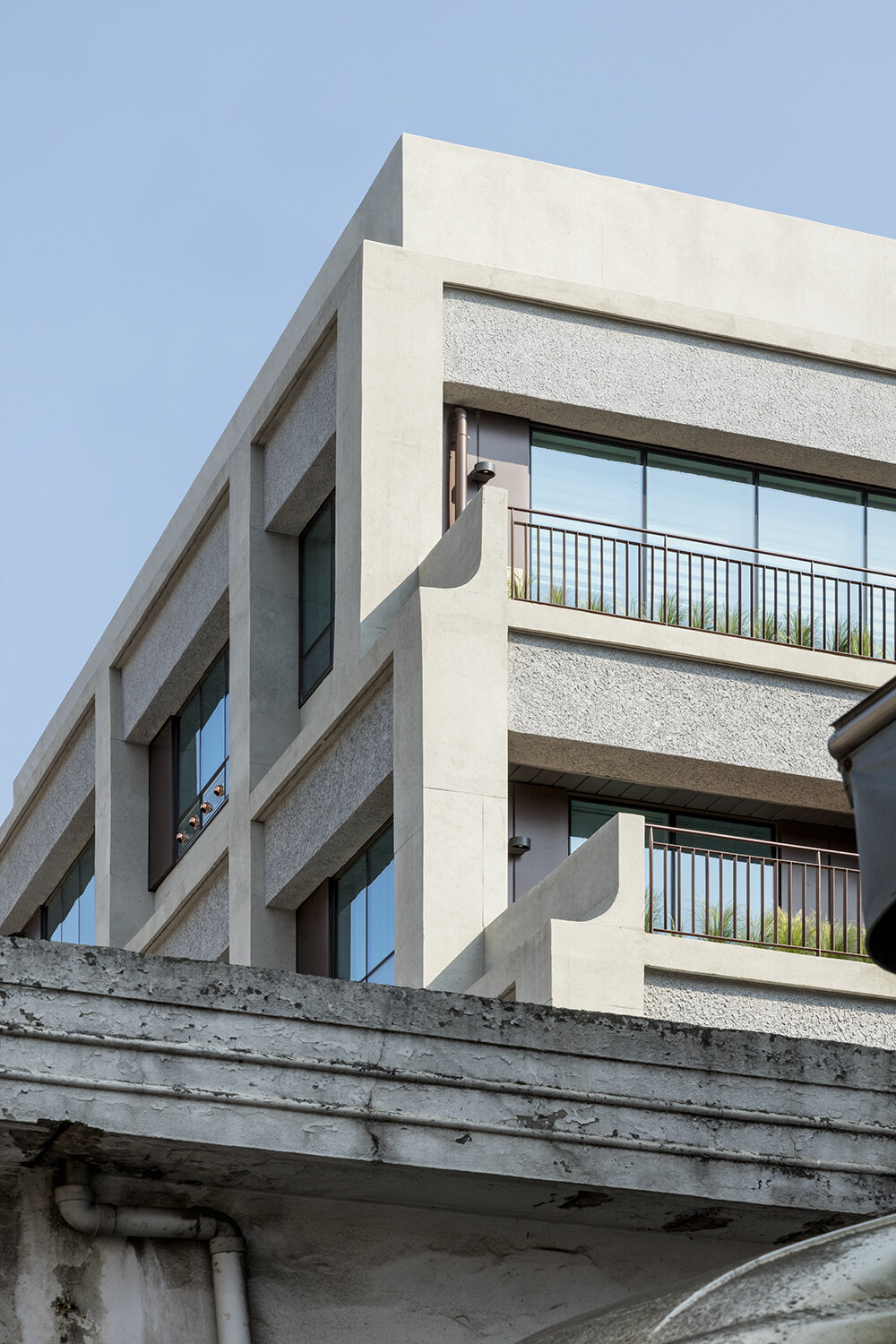
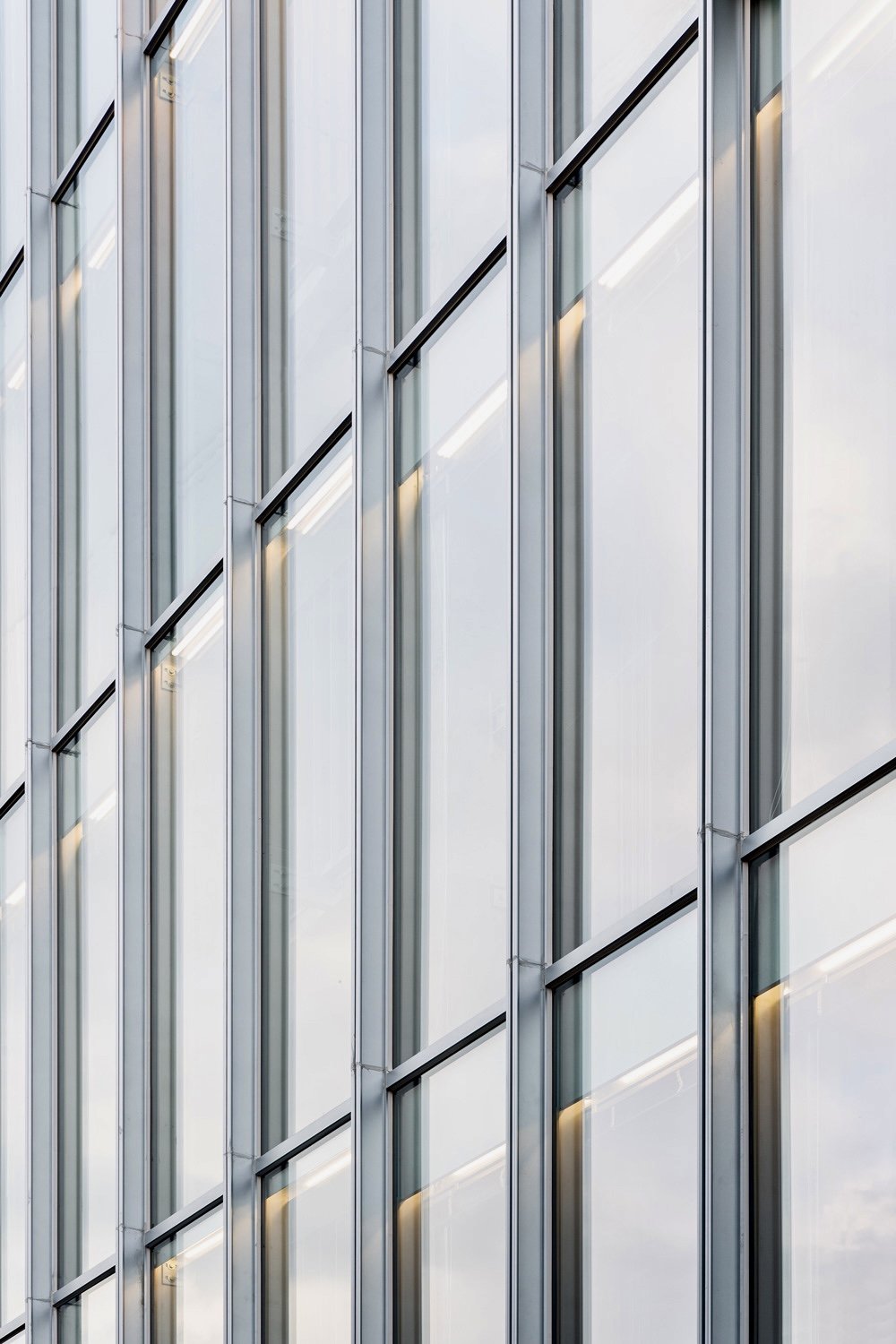
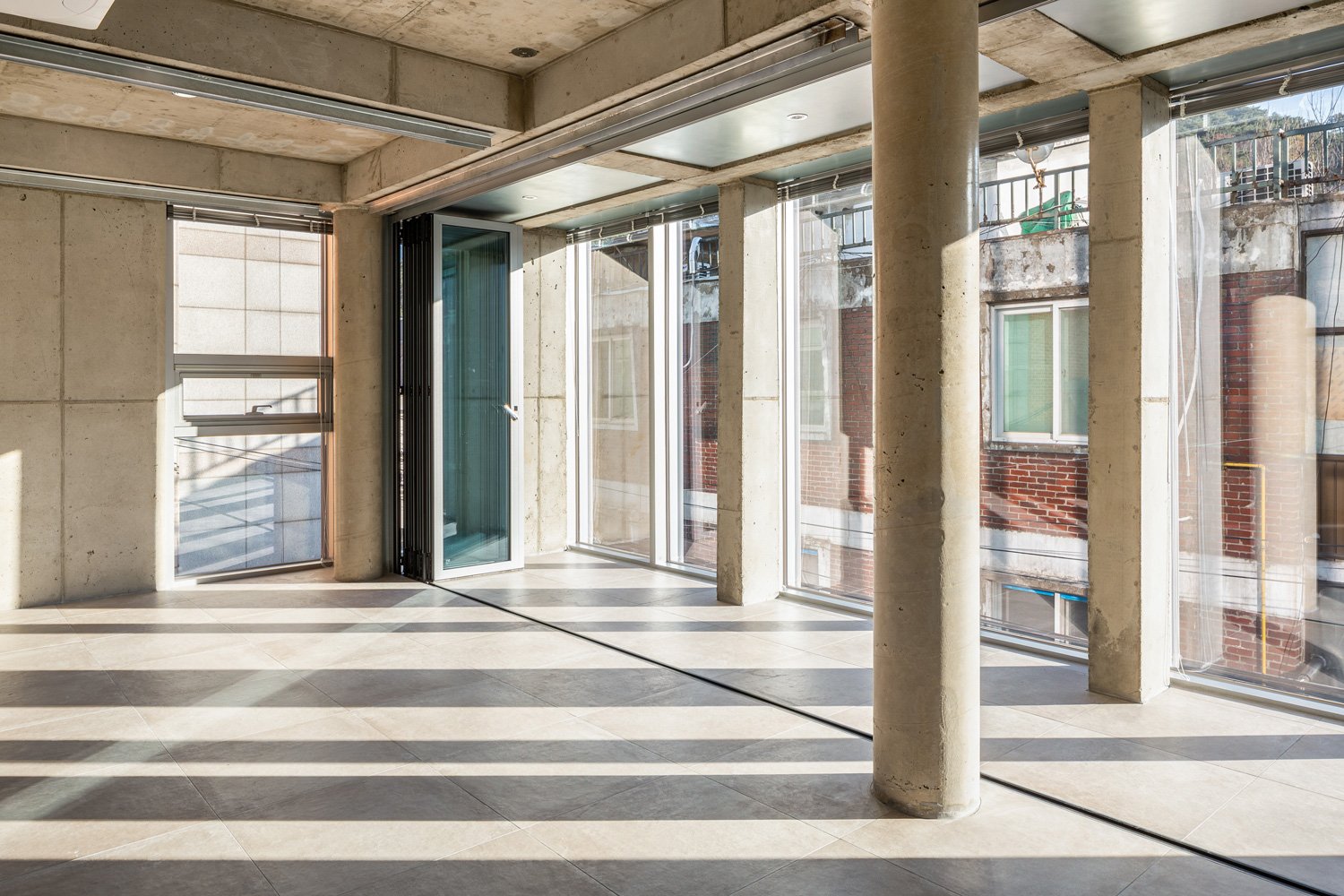
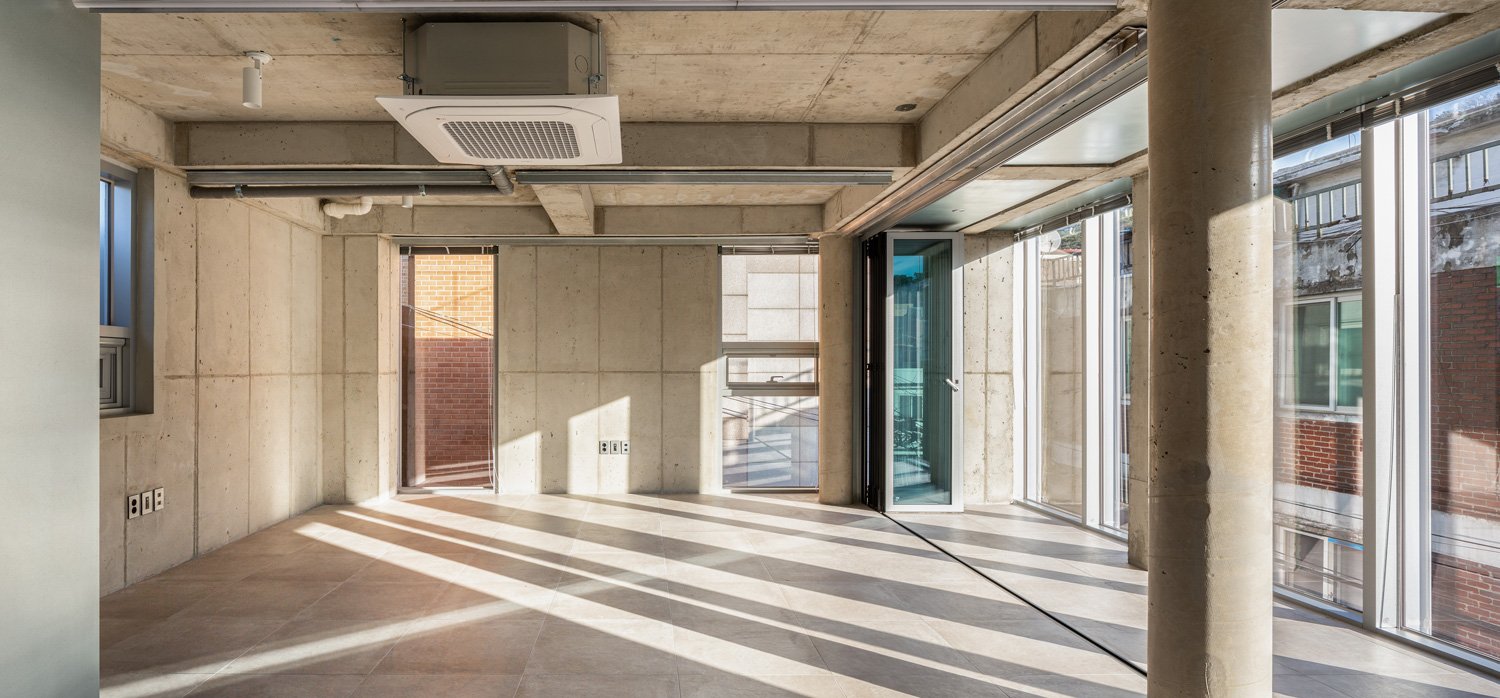
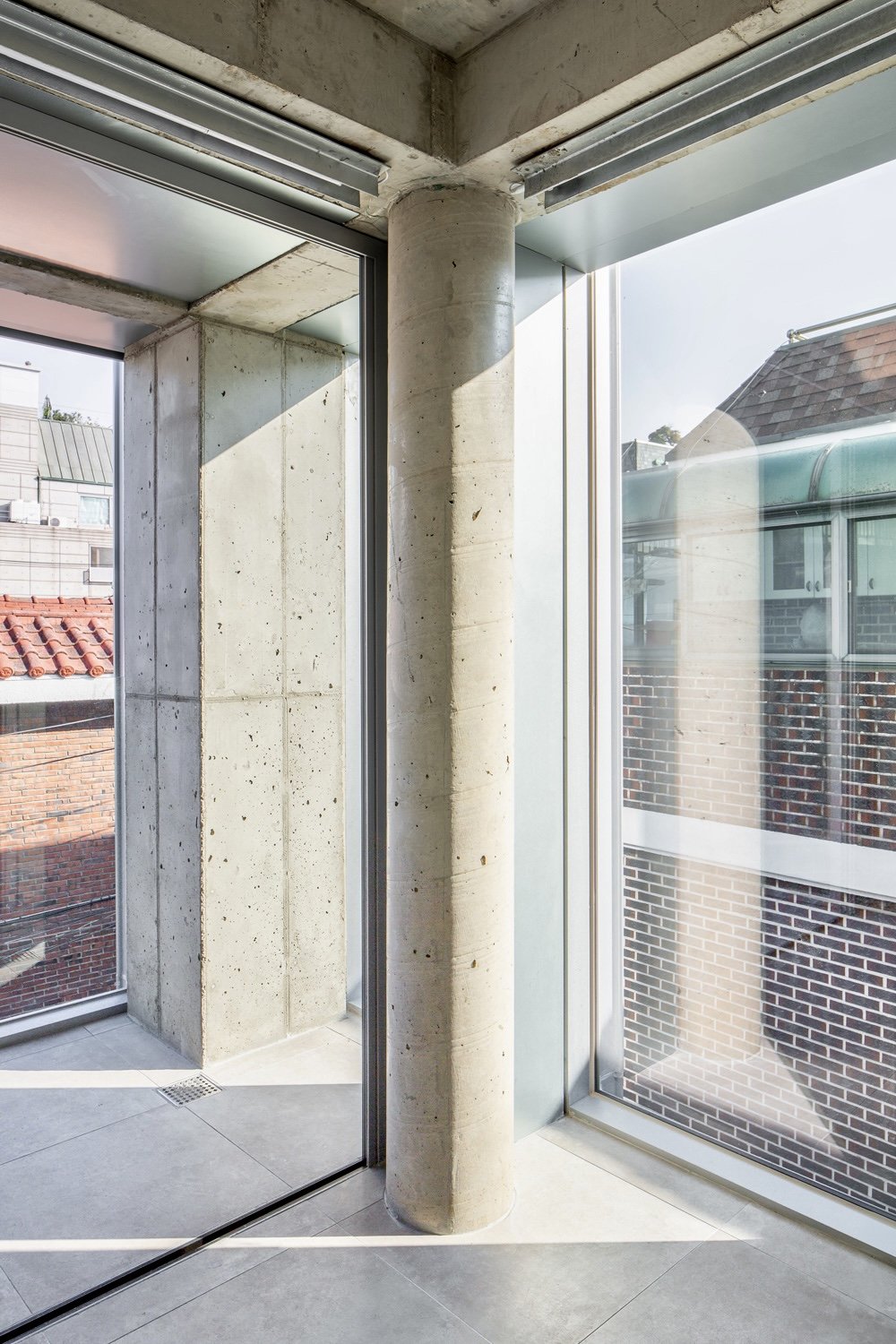
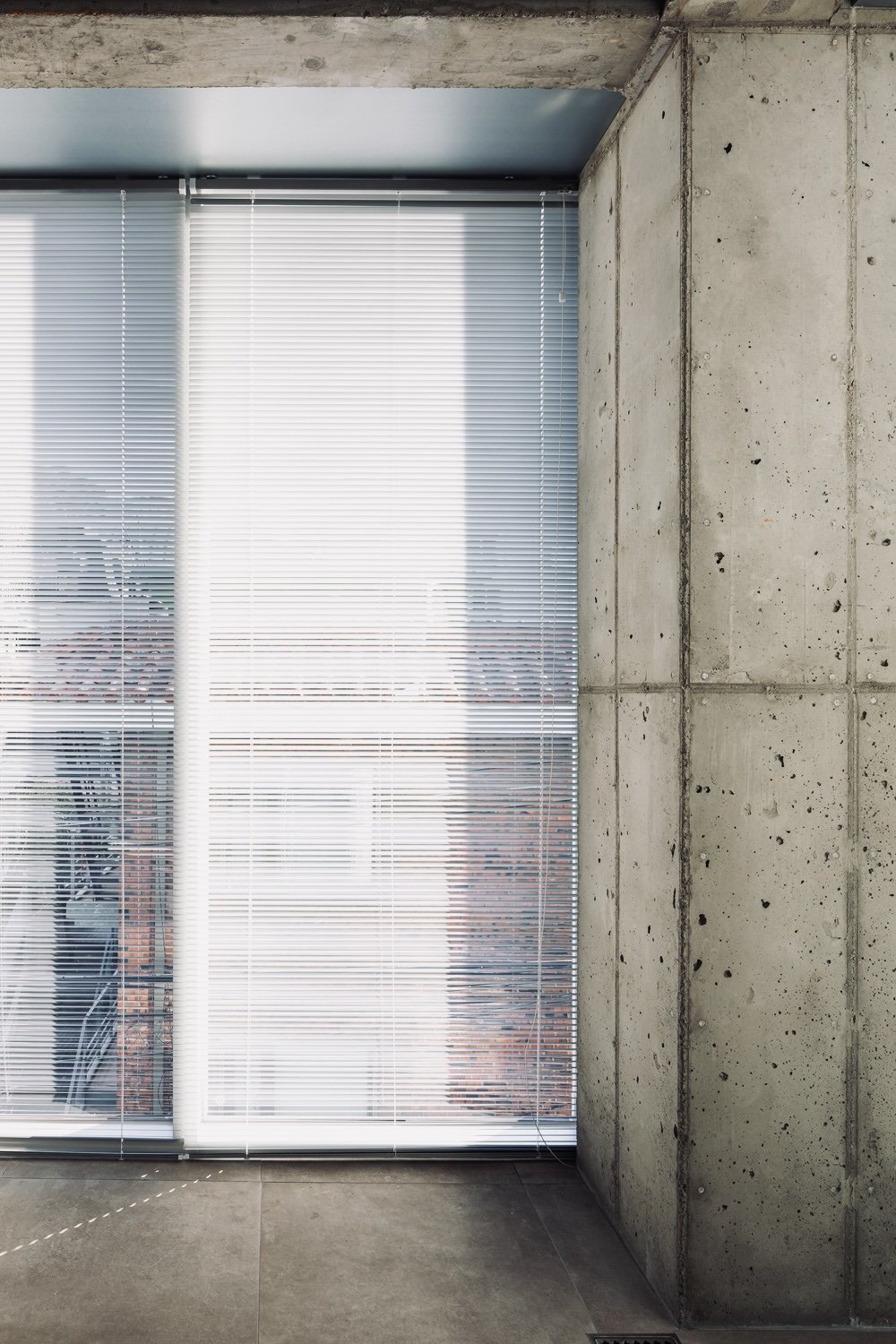
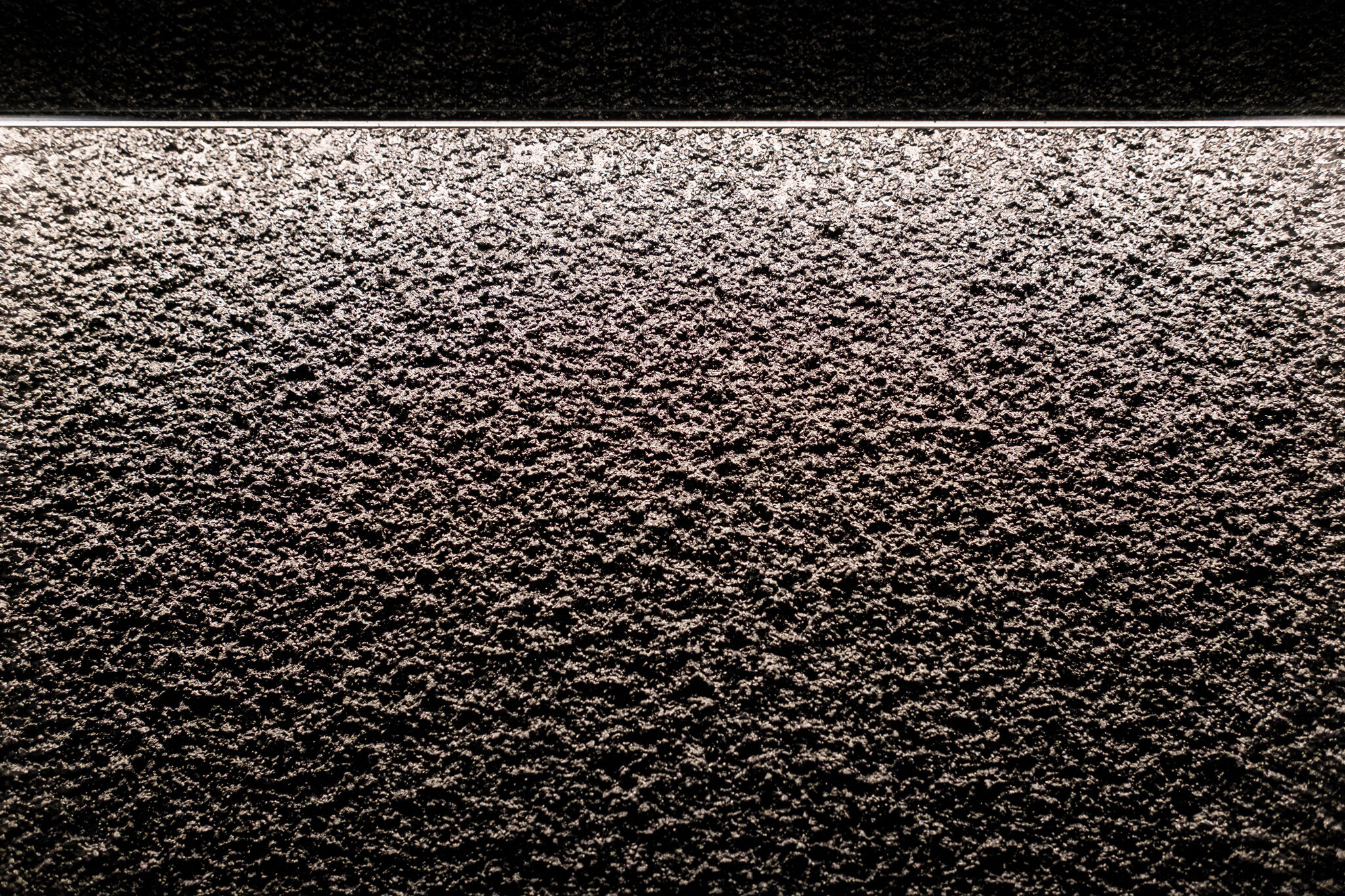
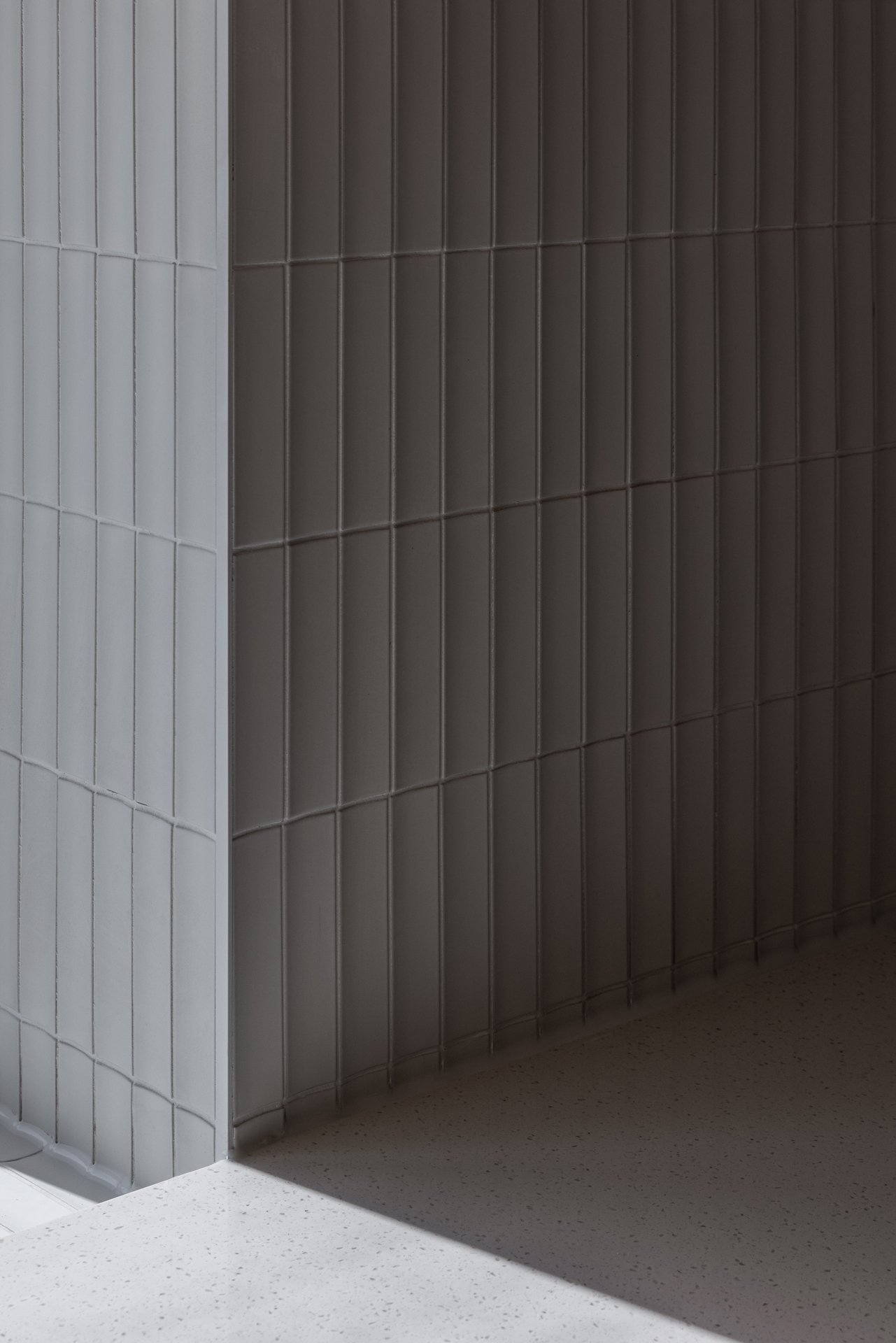
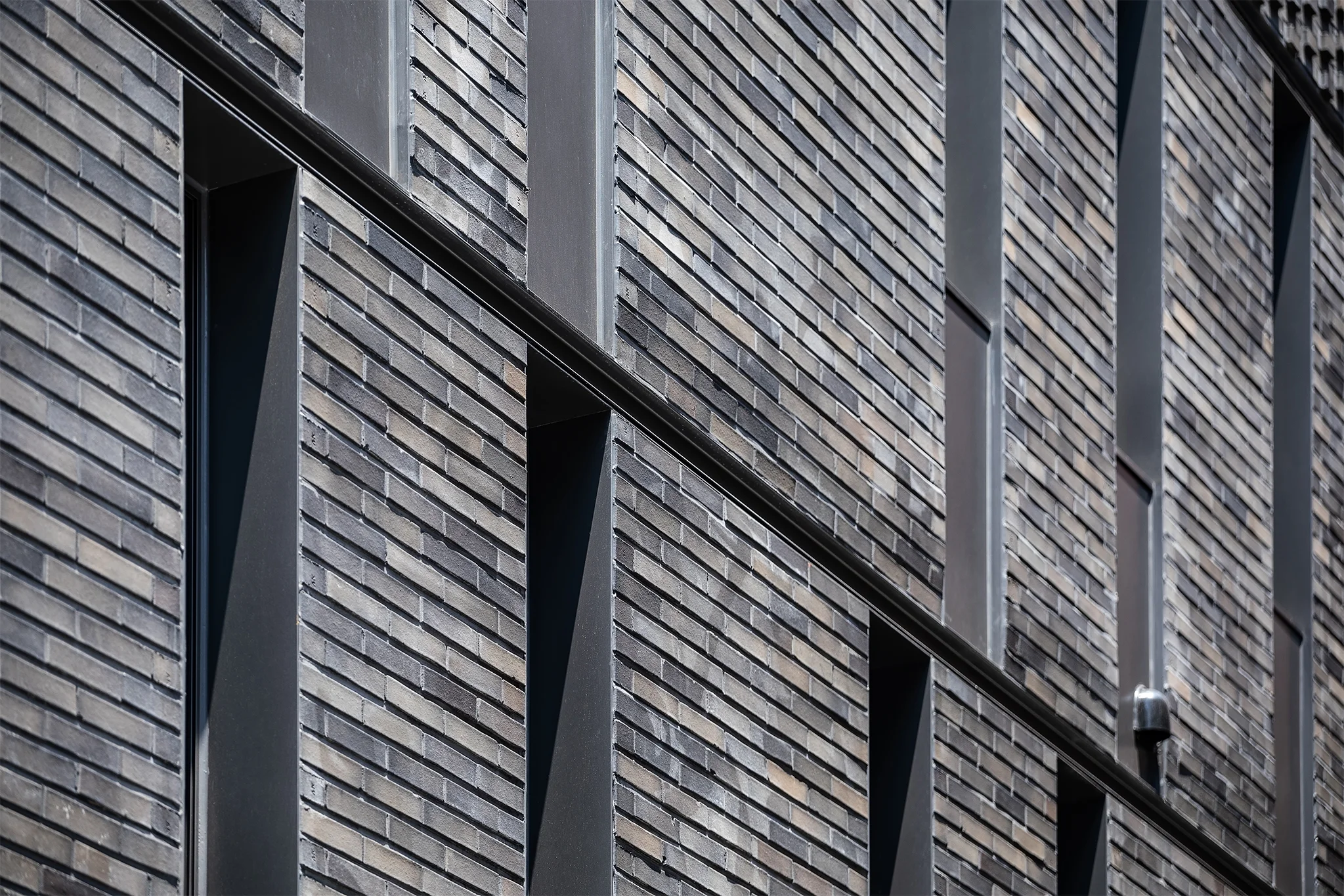
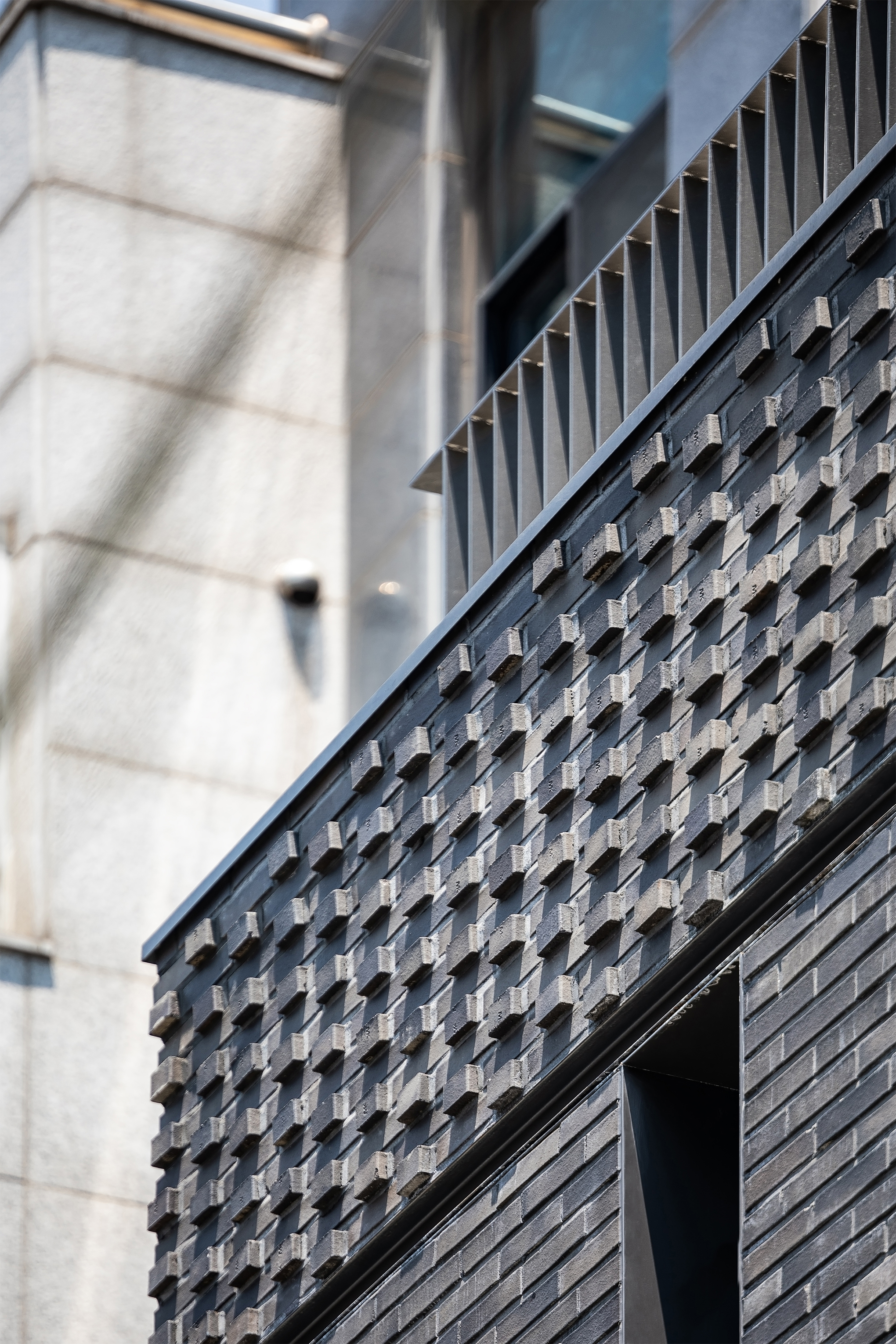
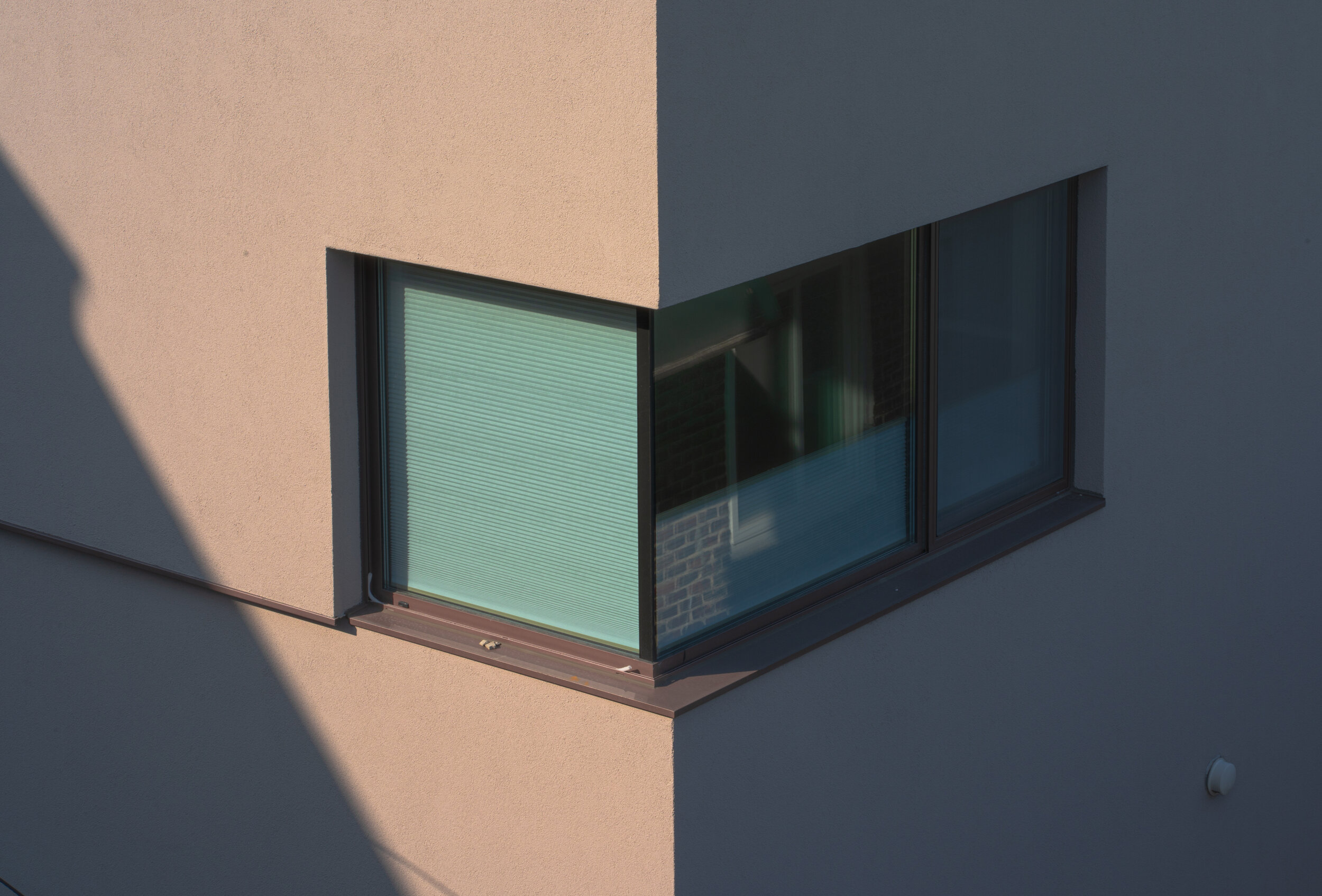
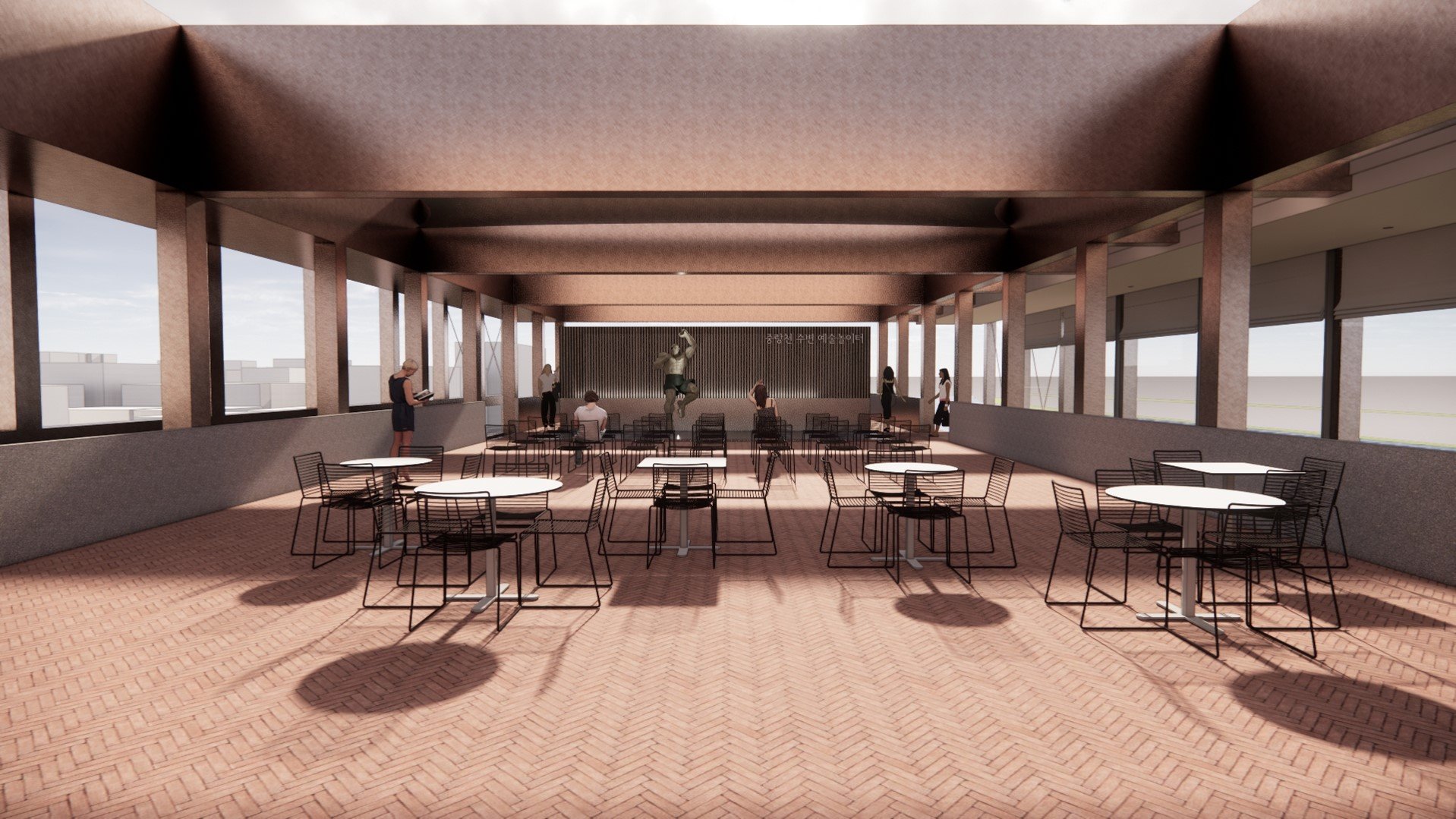
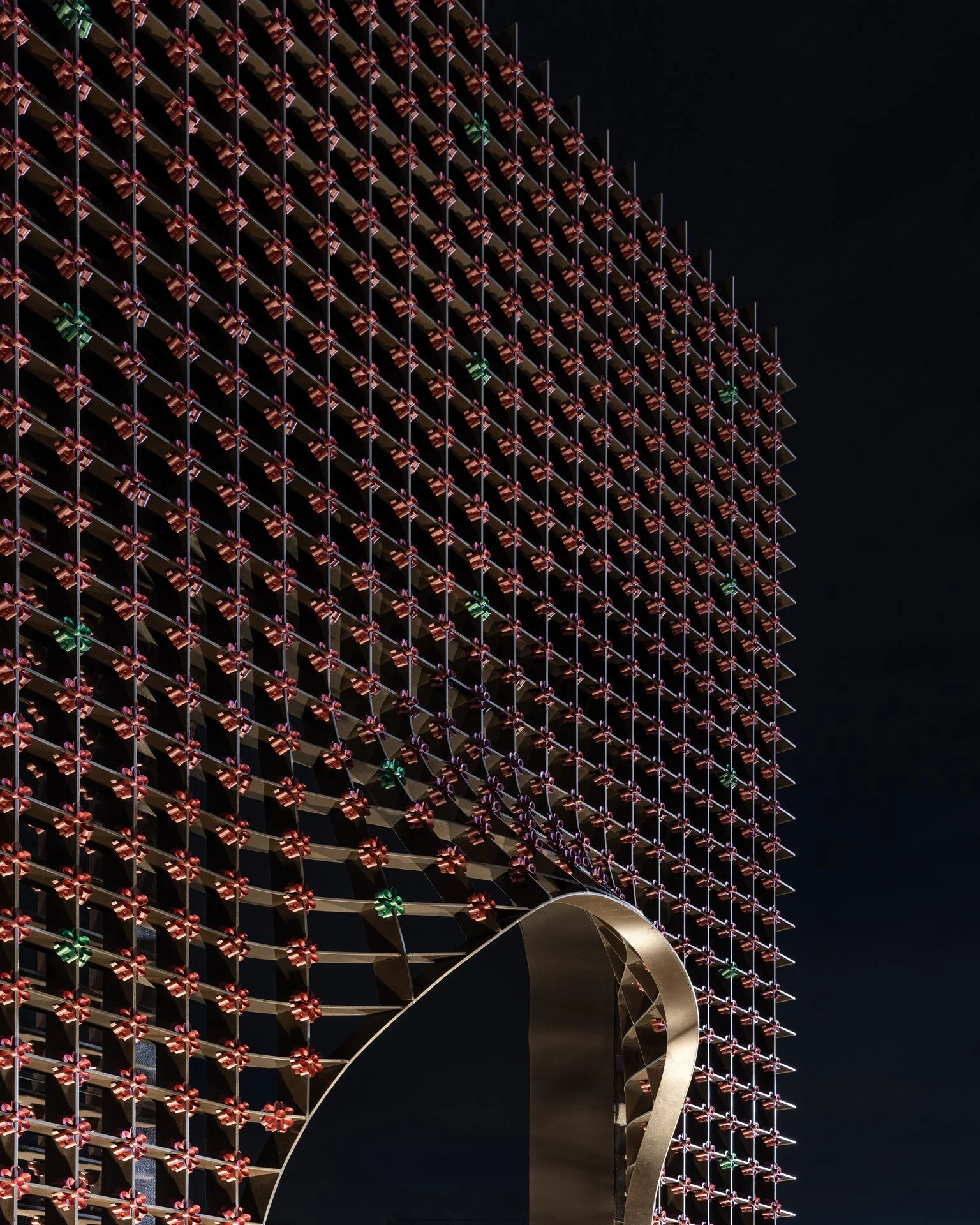
At the corner, the repeated and layered columns generate shifting shadows throughout the day. Their textured surfaces scatter light, allowing subtle tonal variations rather than sharp contrasts. Light does not strike and bounce away abruptly; it lingers across the surface, producing nuanced gradients of shadow.
Material & Mass
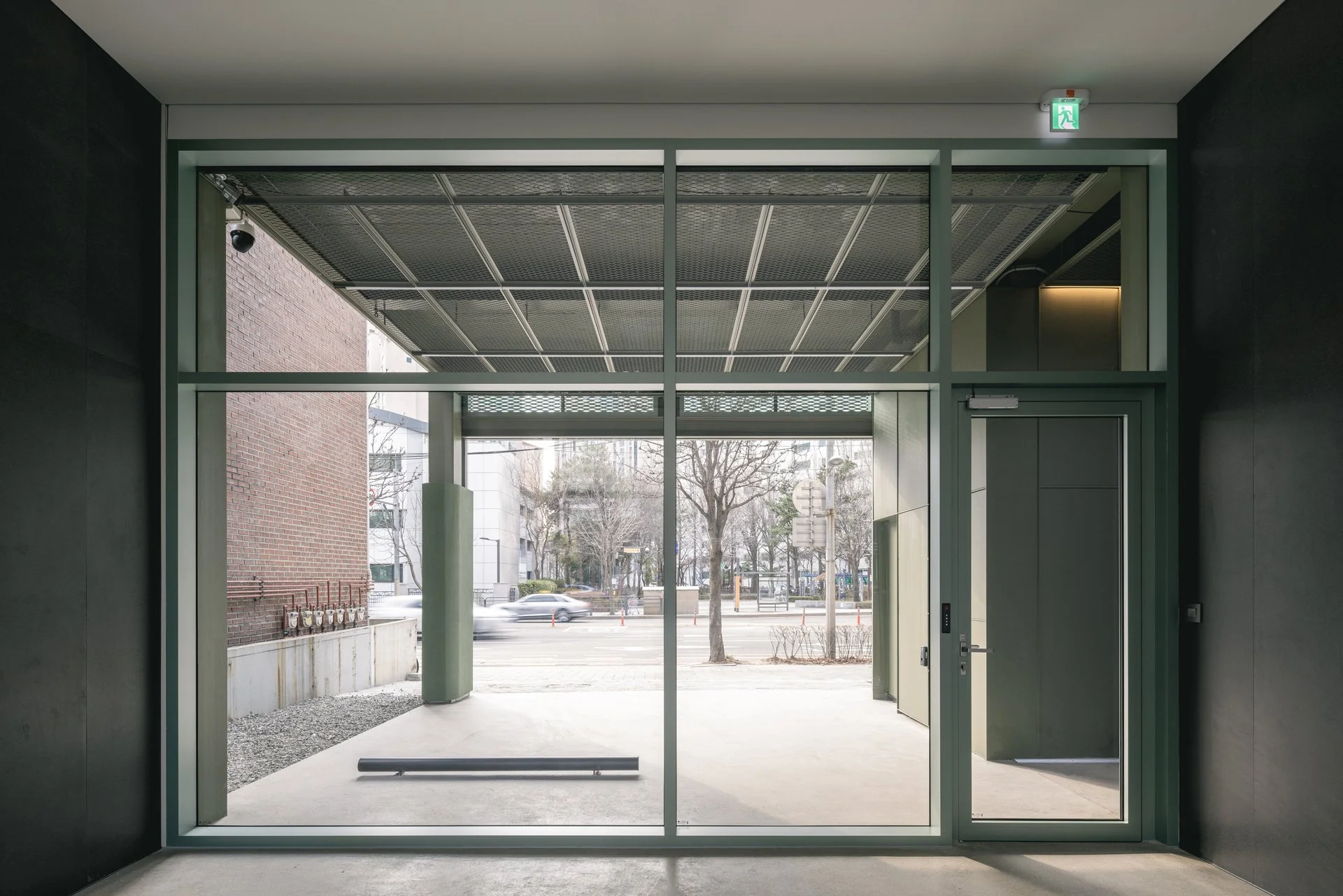
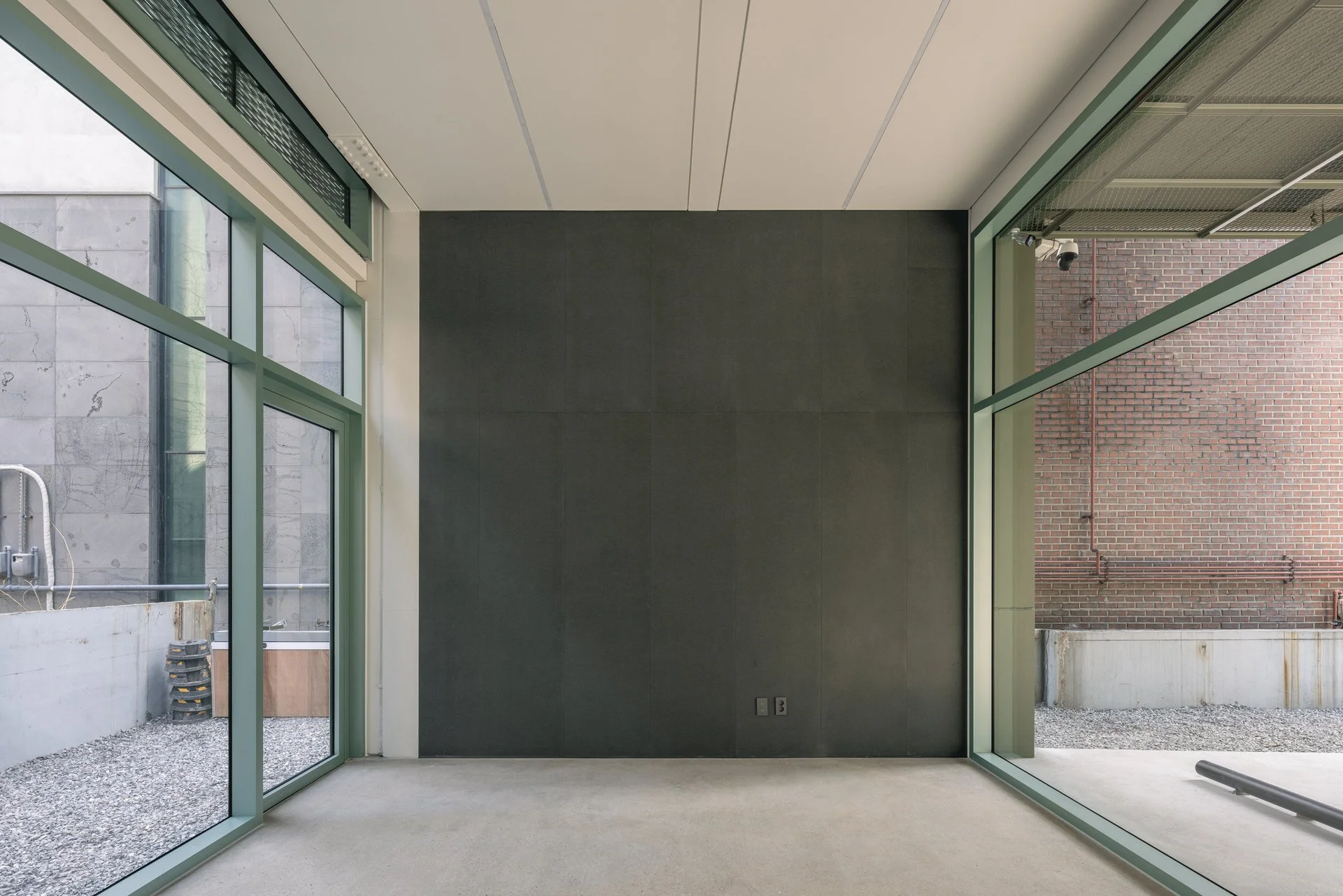
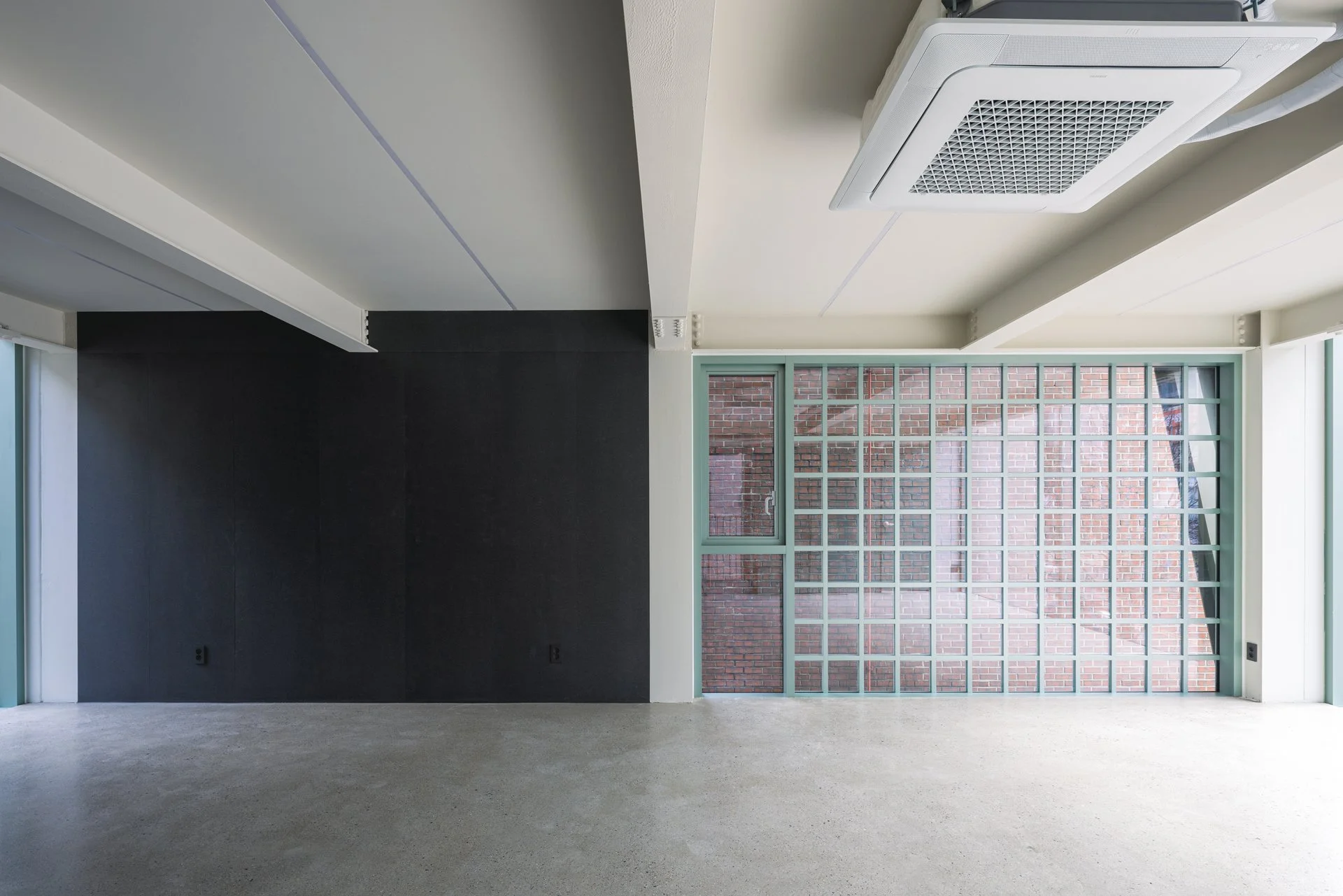
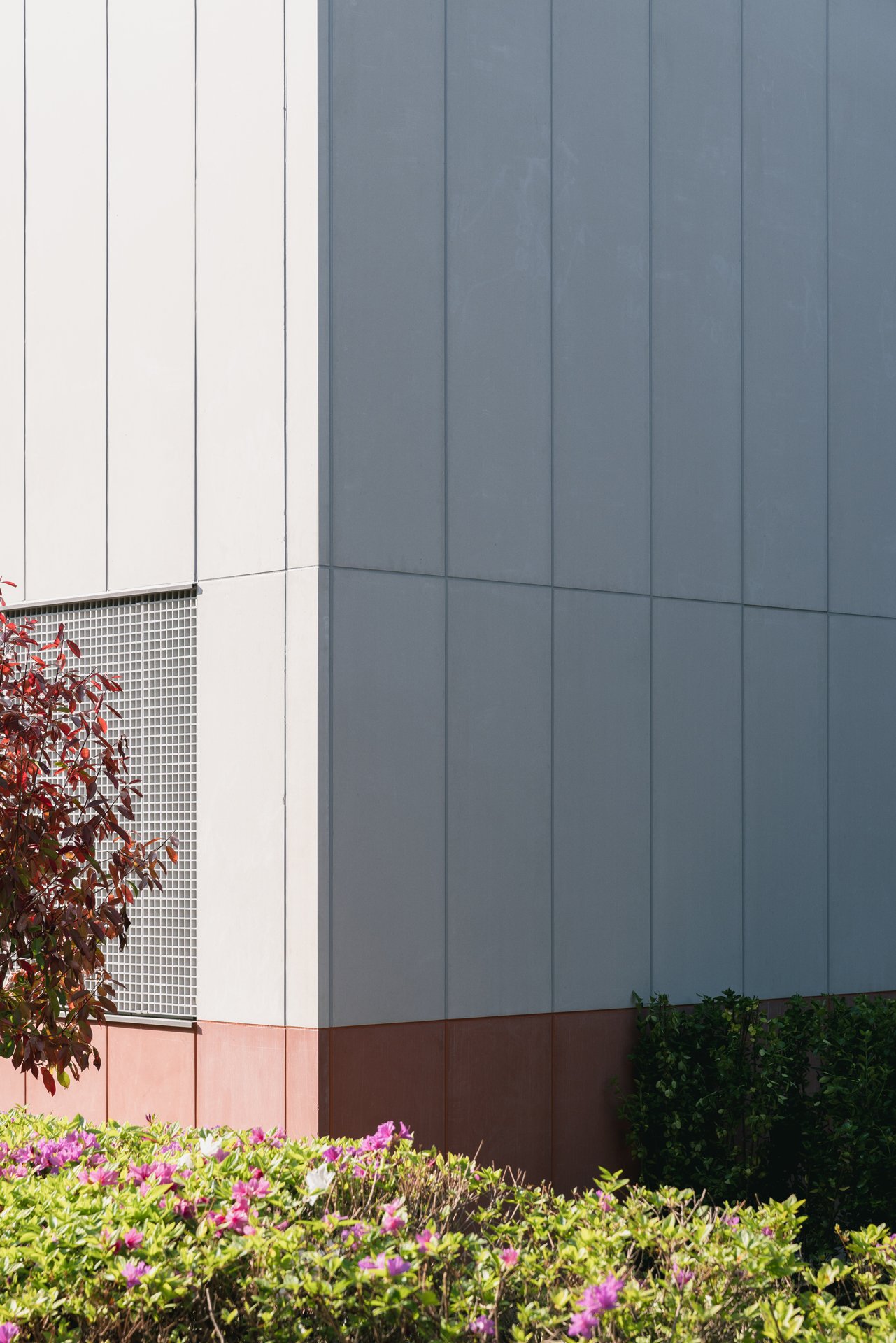
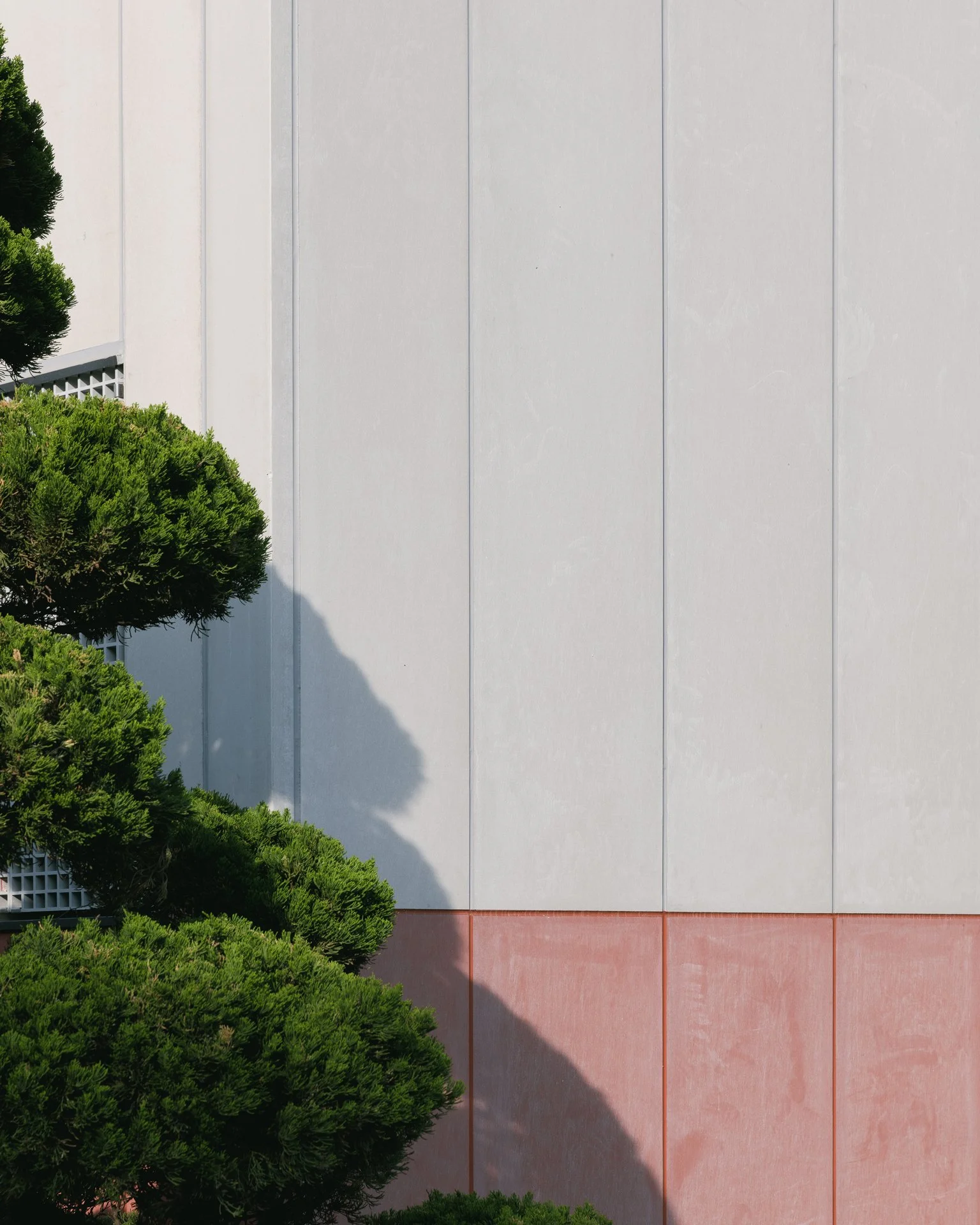
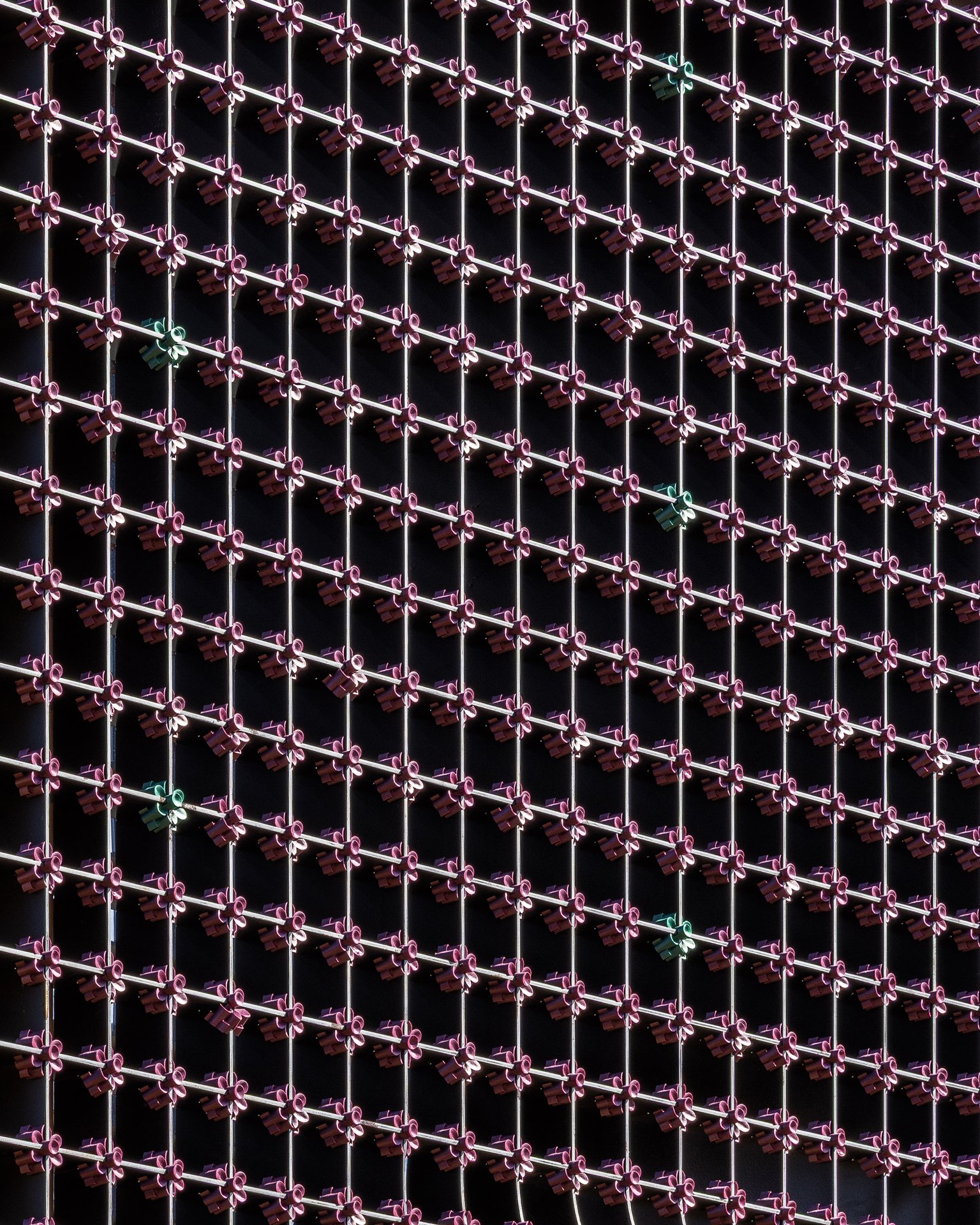
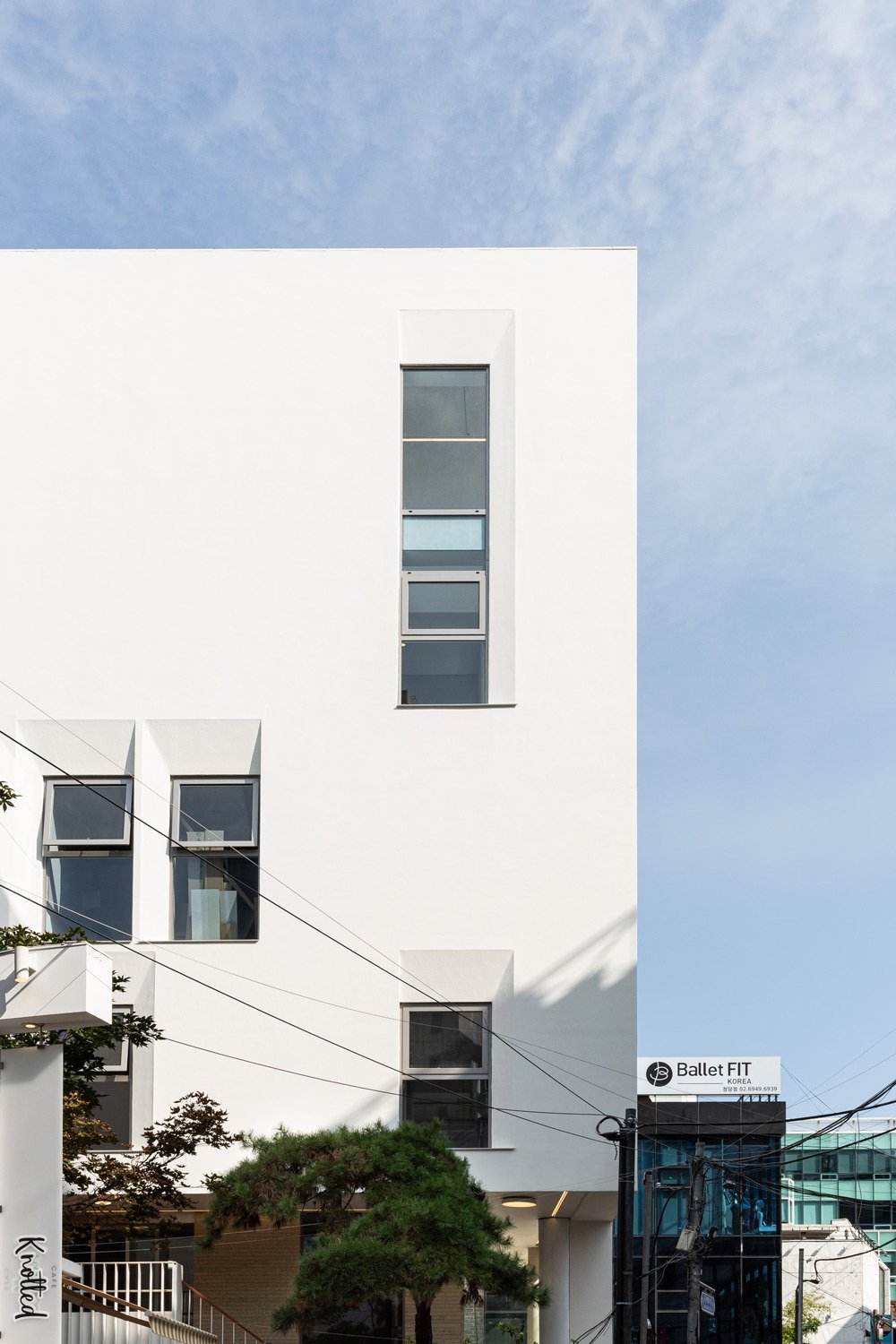
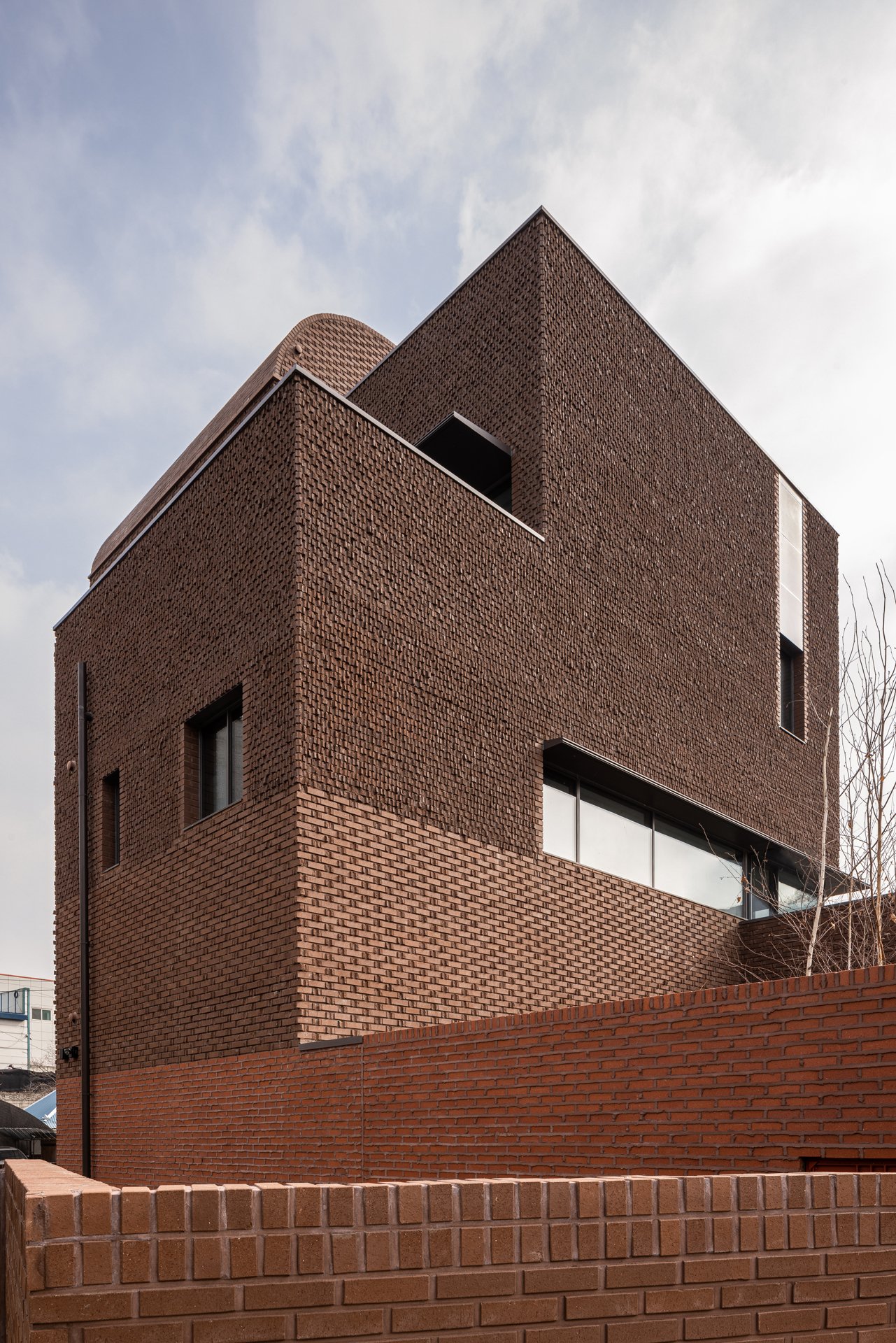
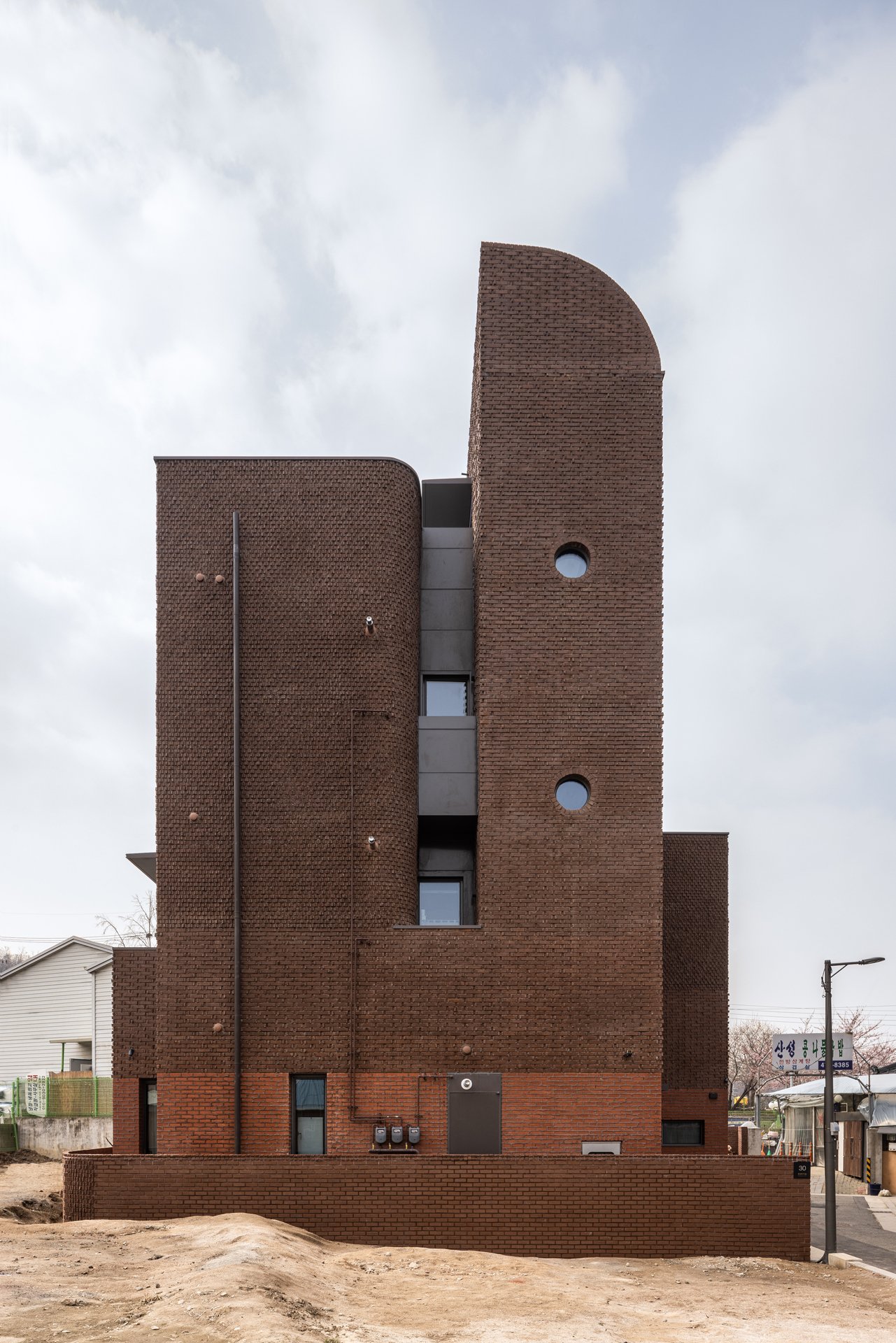
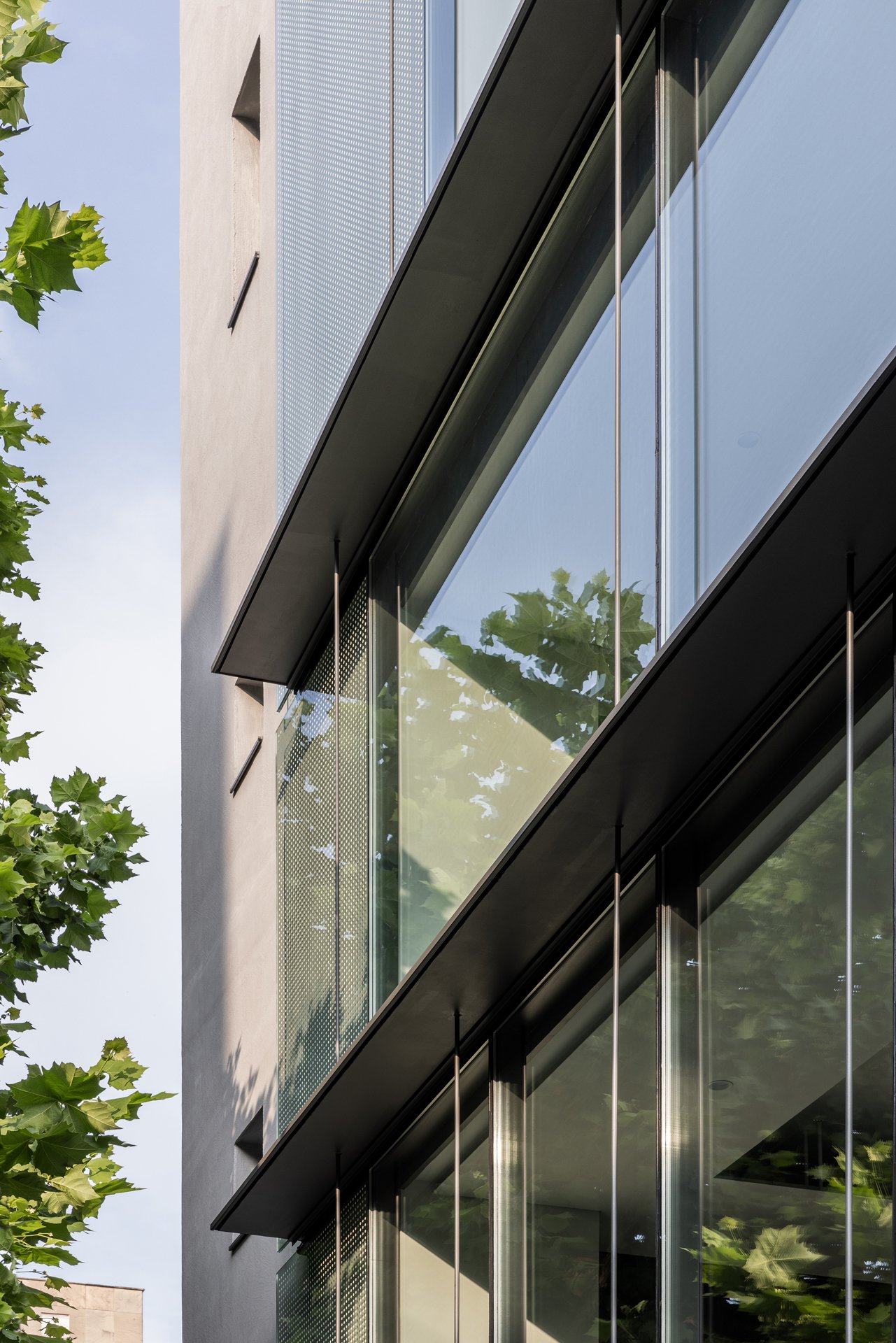
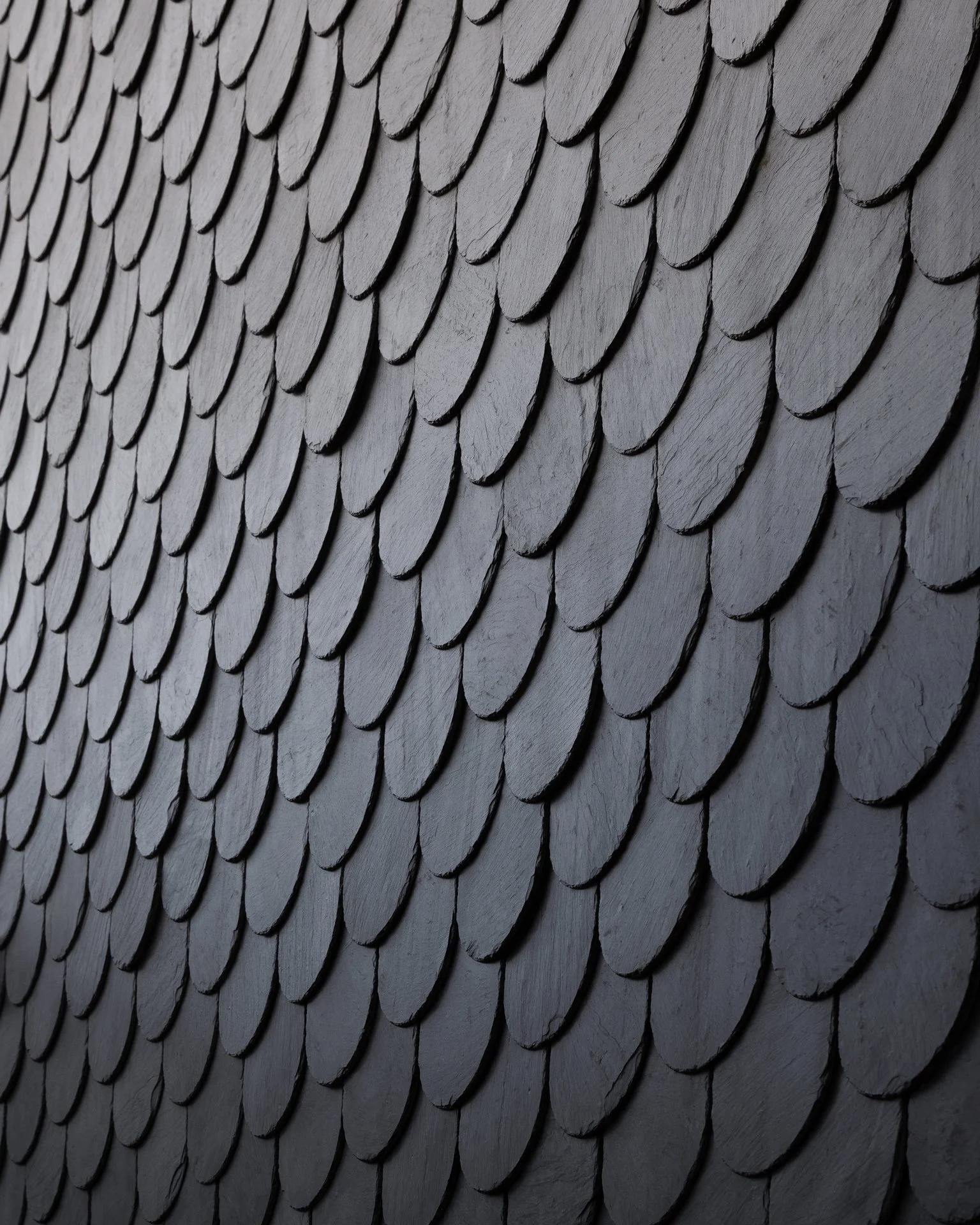
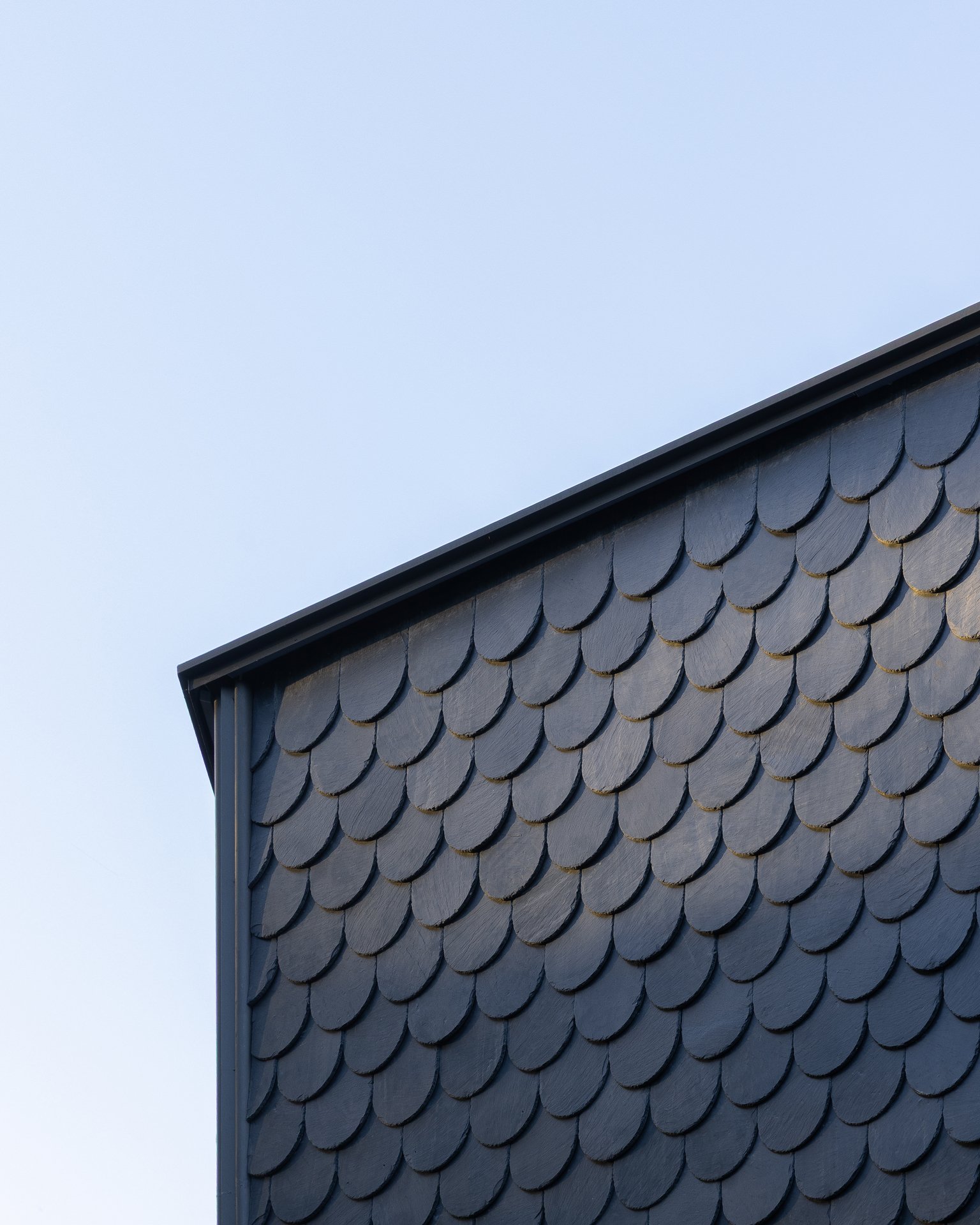
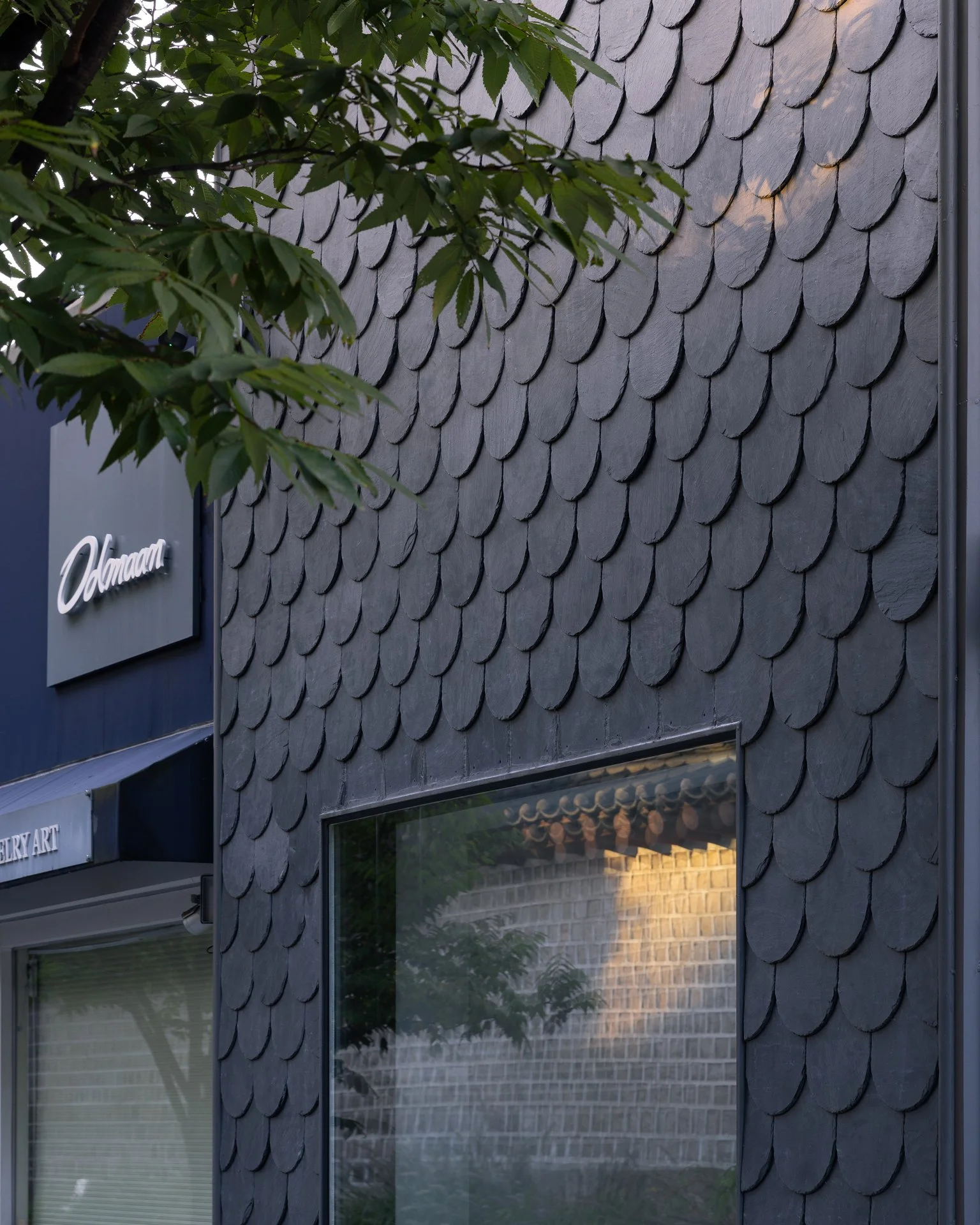
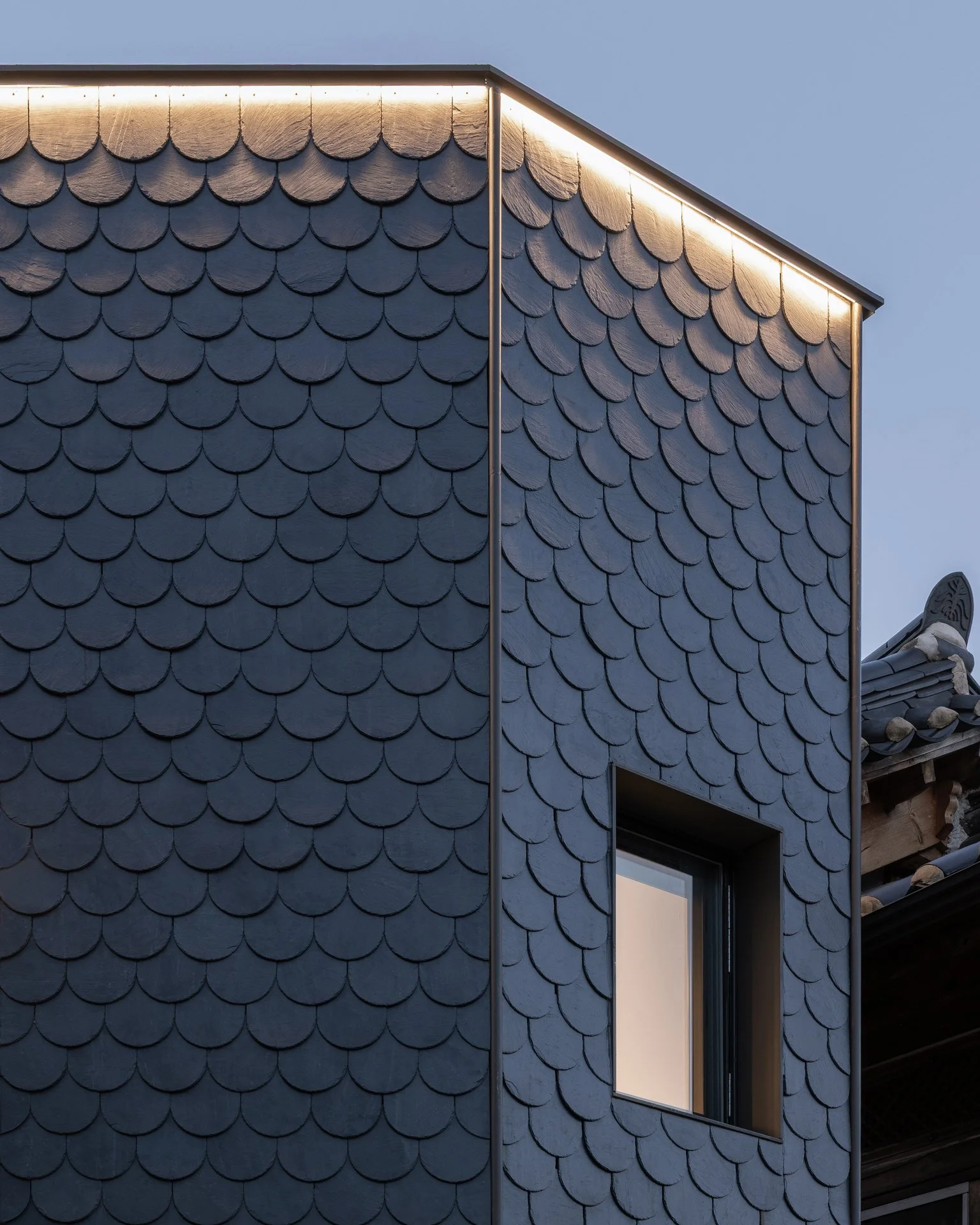
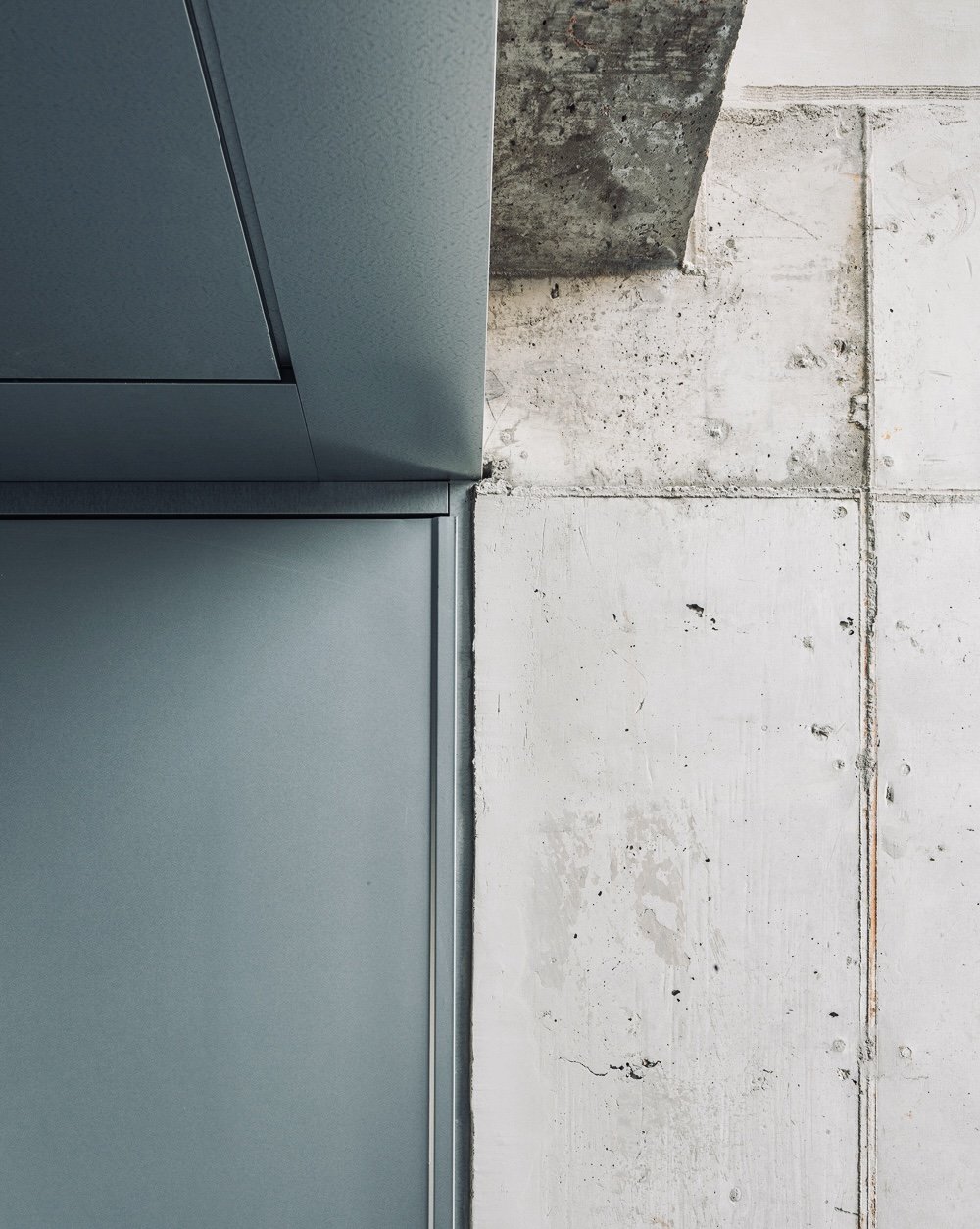
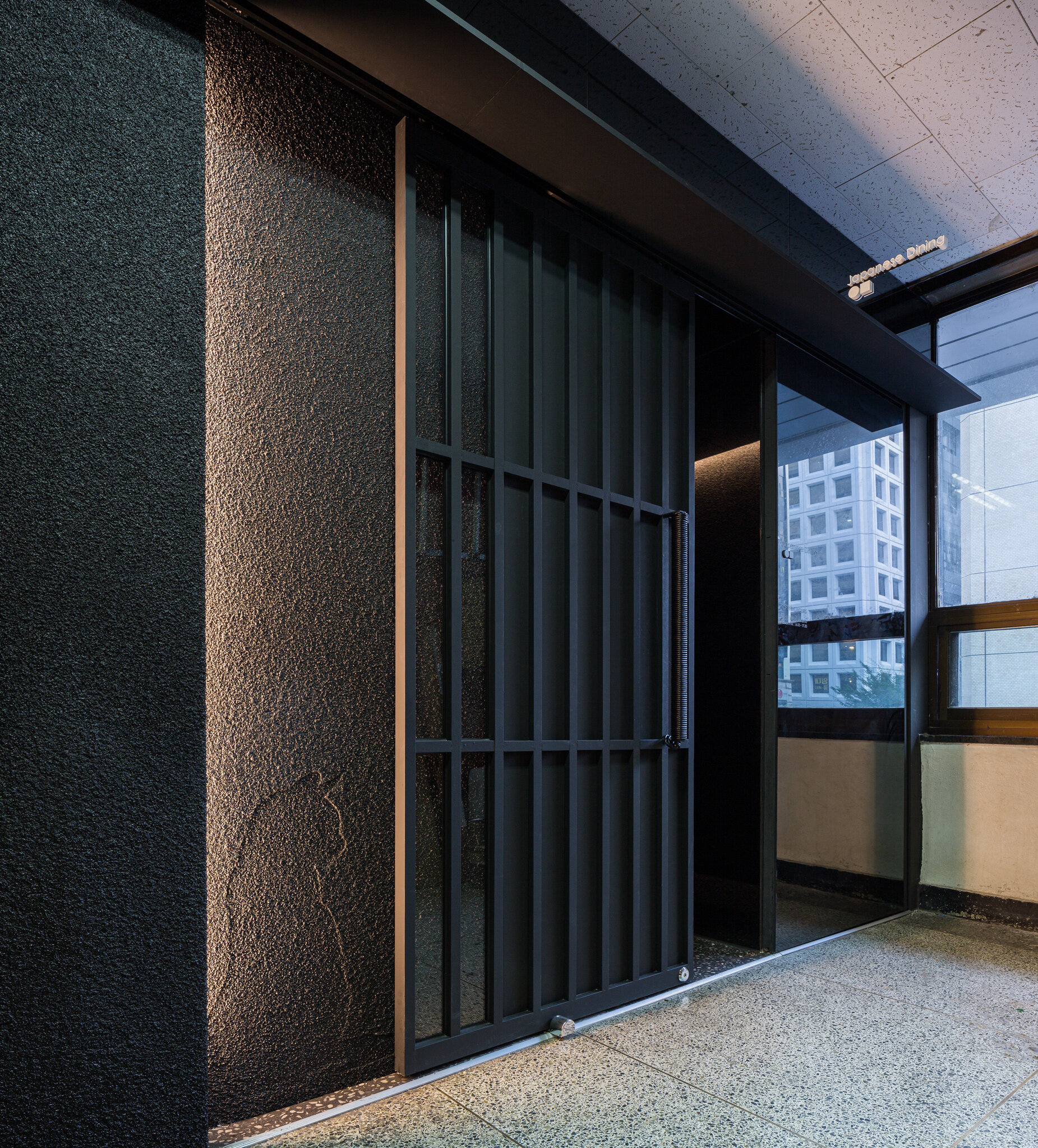
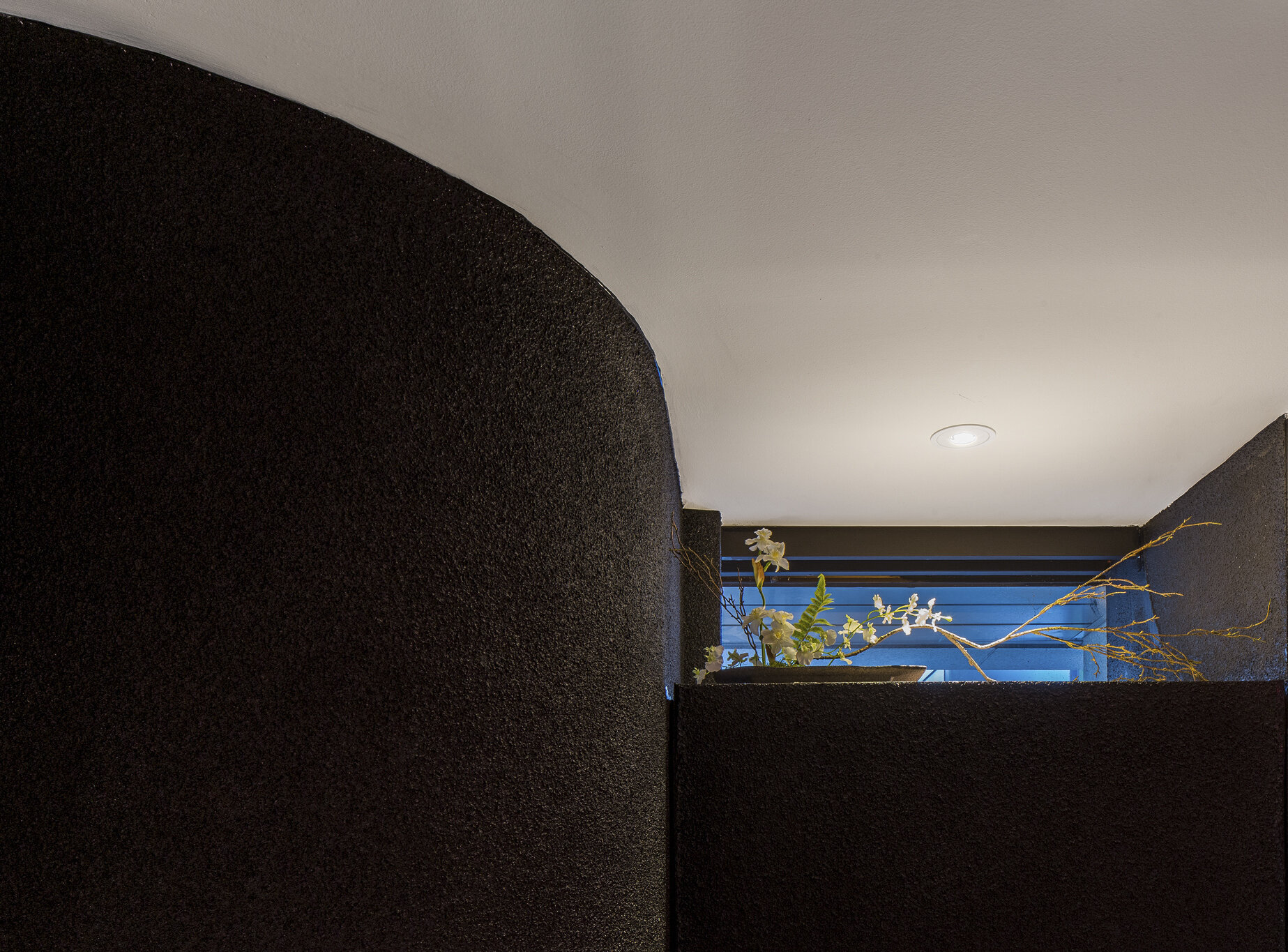
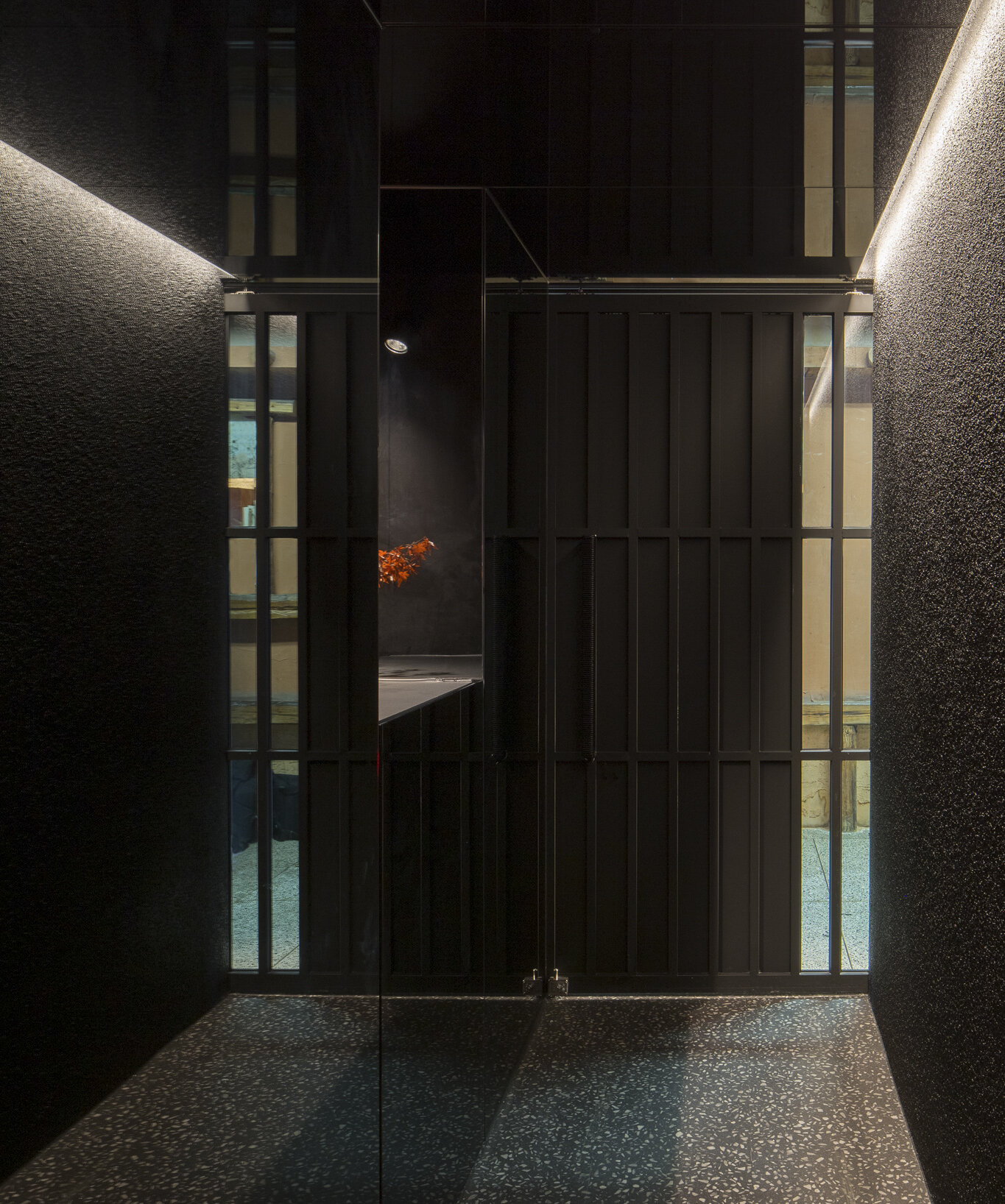
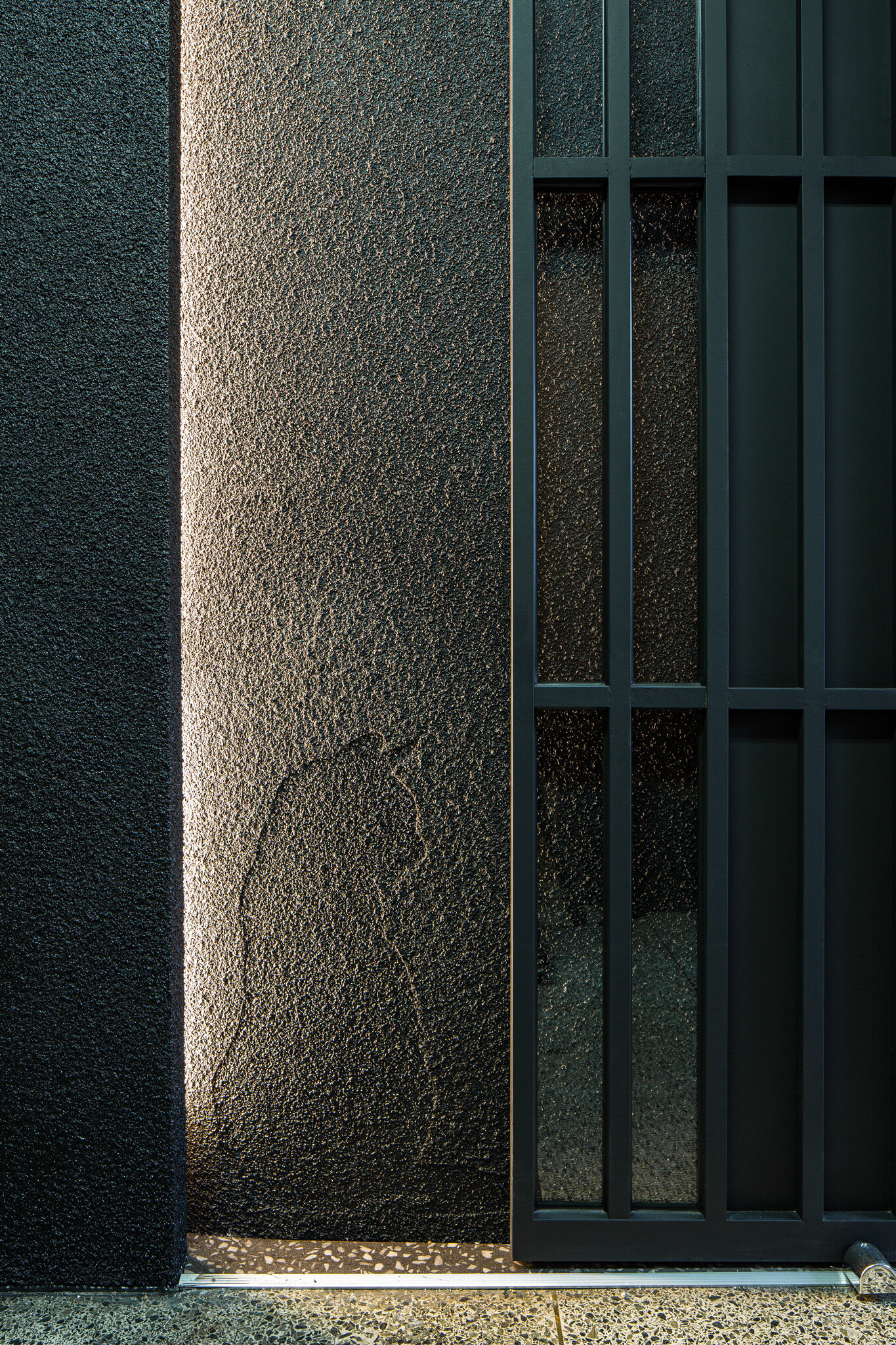
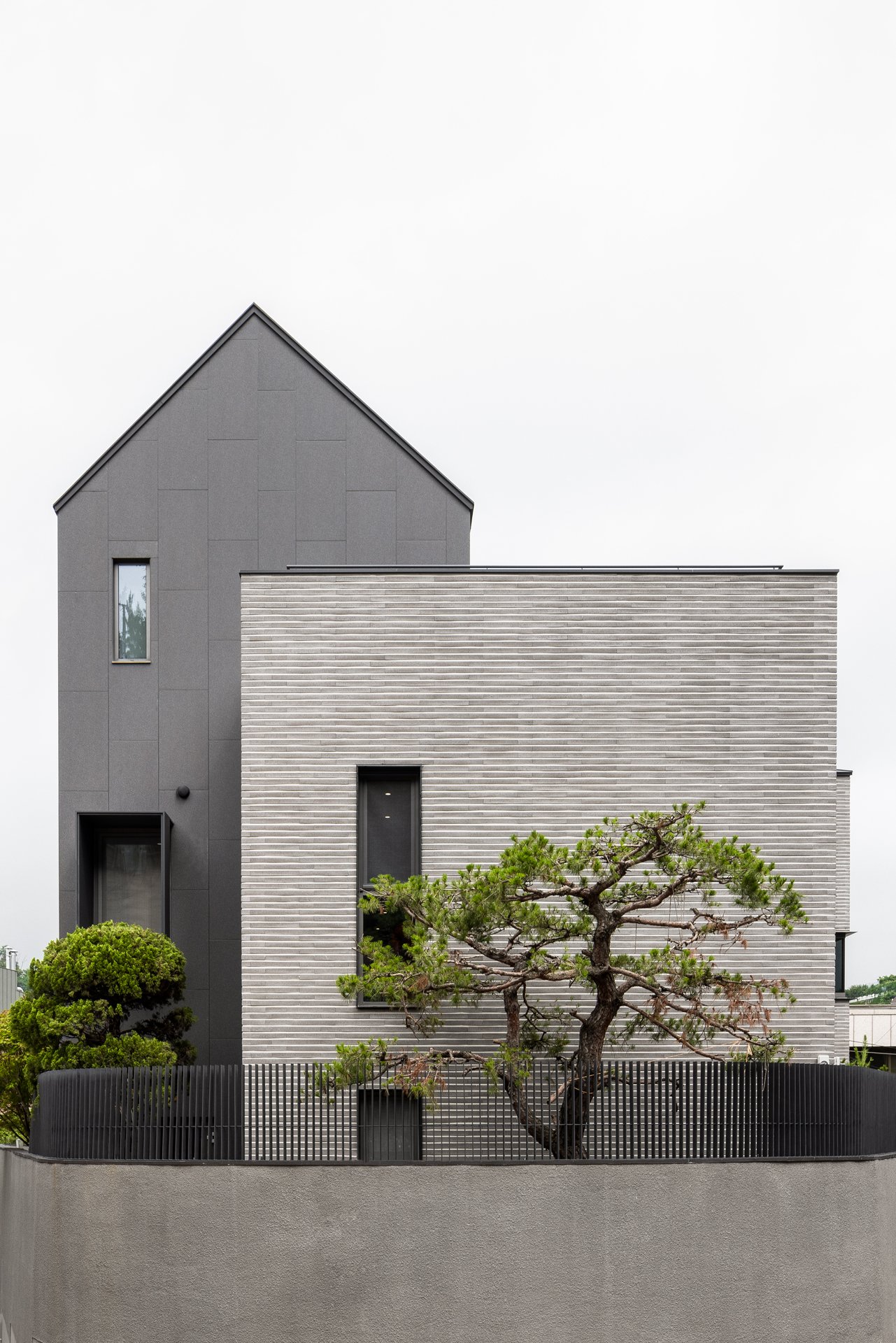
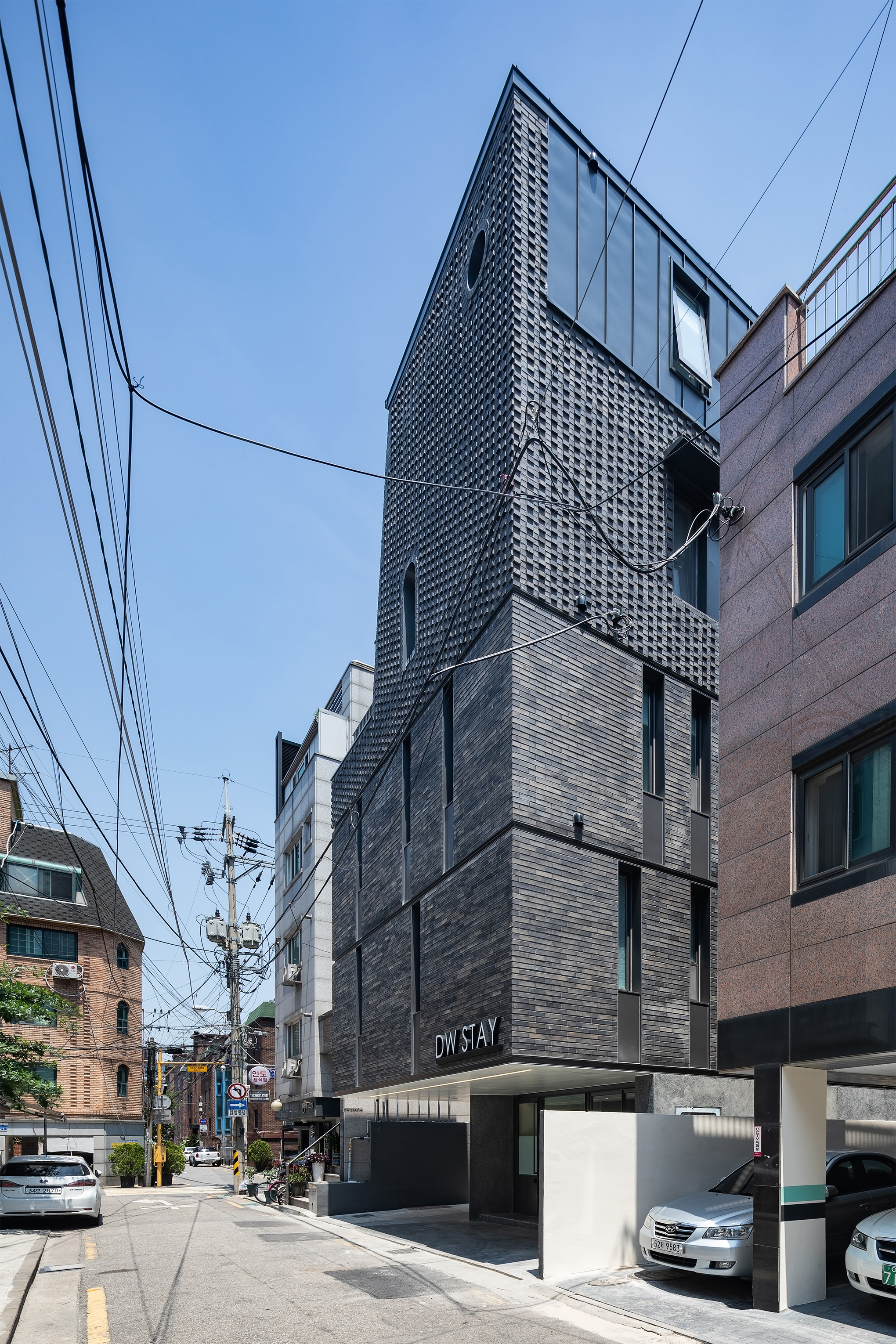
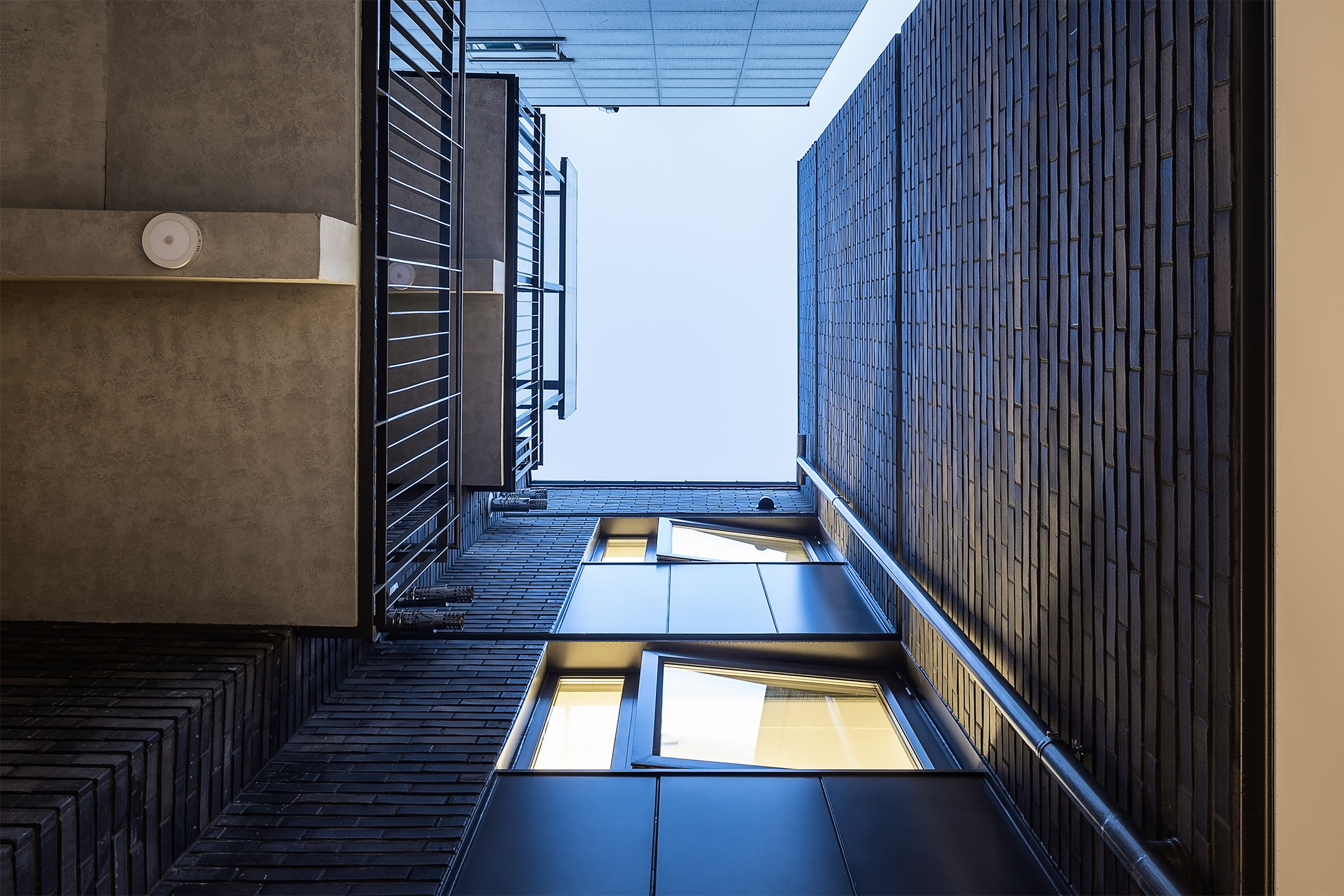
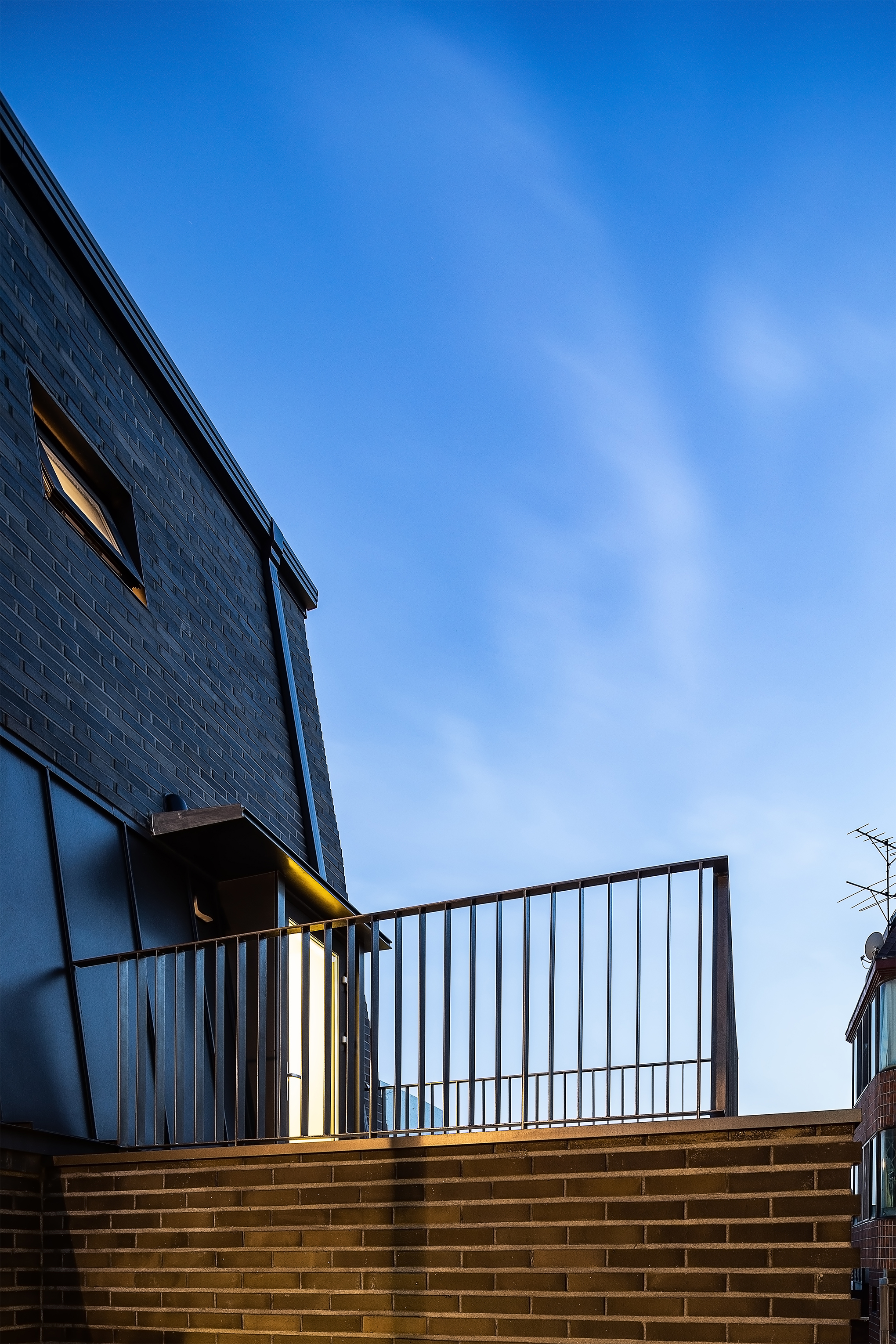
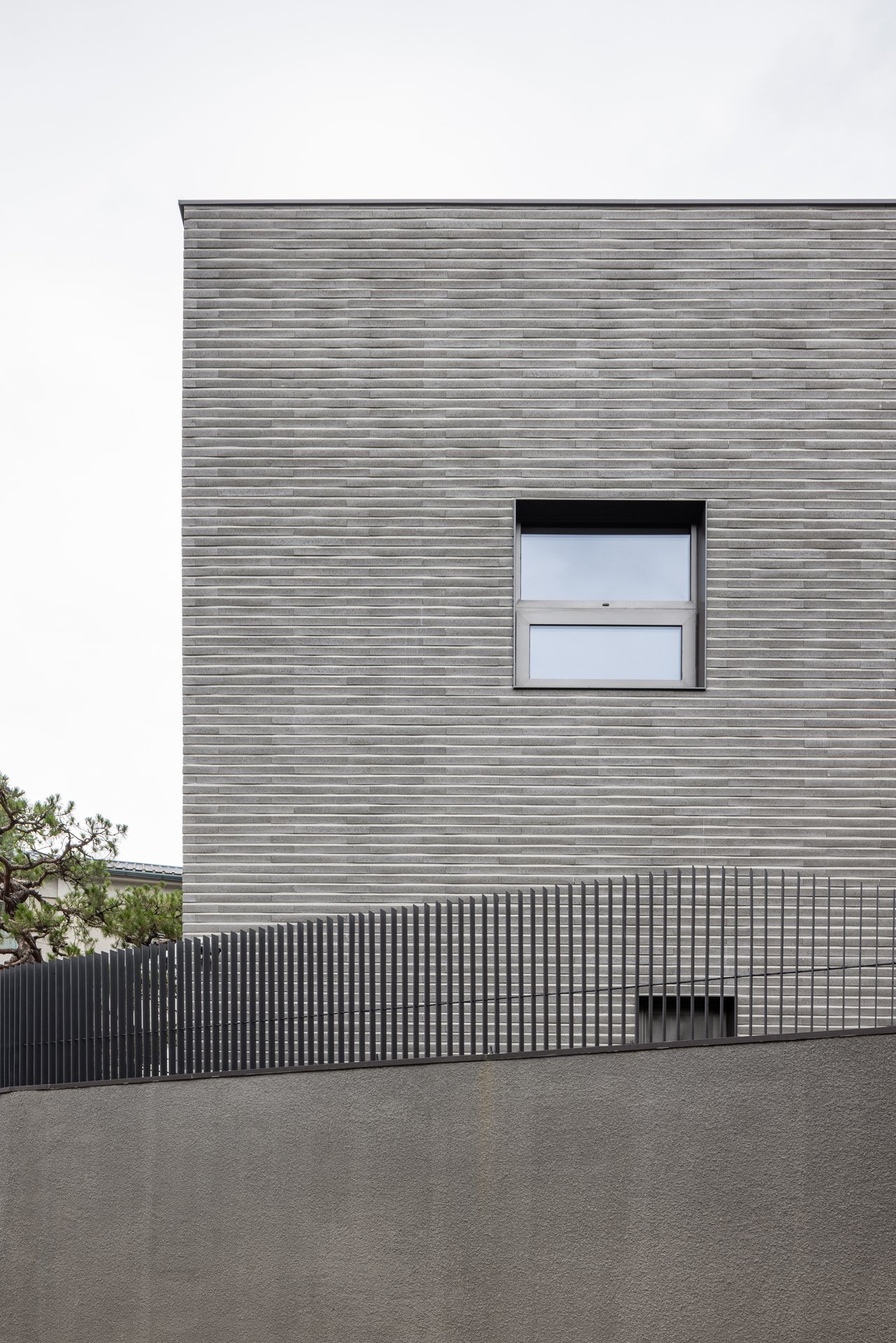
The upper mass is conceived as a monolithic volume, finished without visible joints to emphasize its solidity. STO Venetec R plaster was applied and repeatedly sanded to calibrate the texture of the black surface, allowing depth to emerge under changing light conditions.
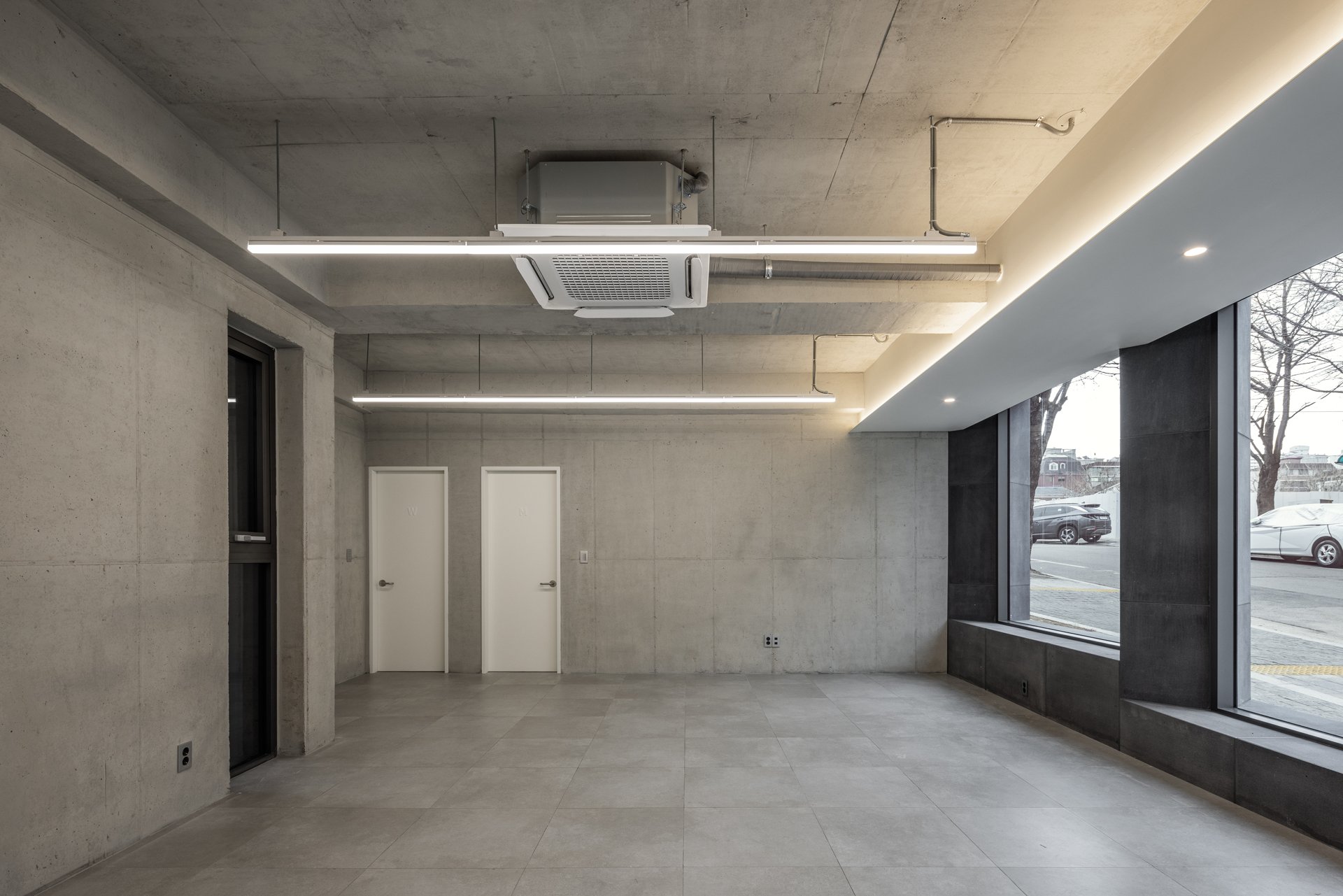
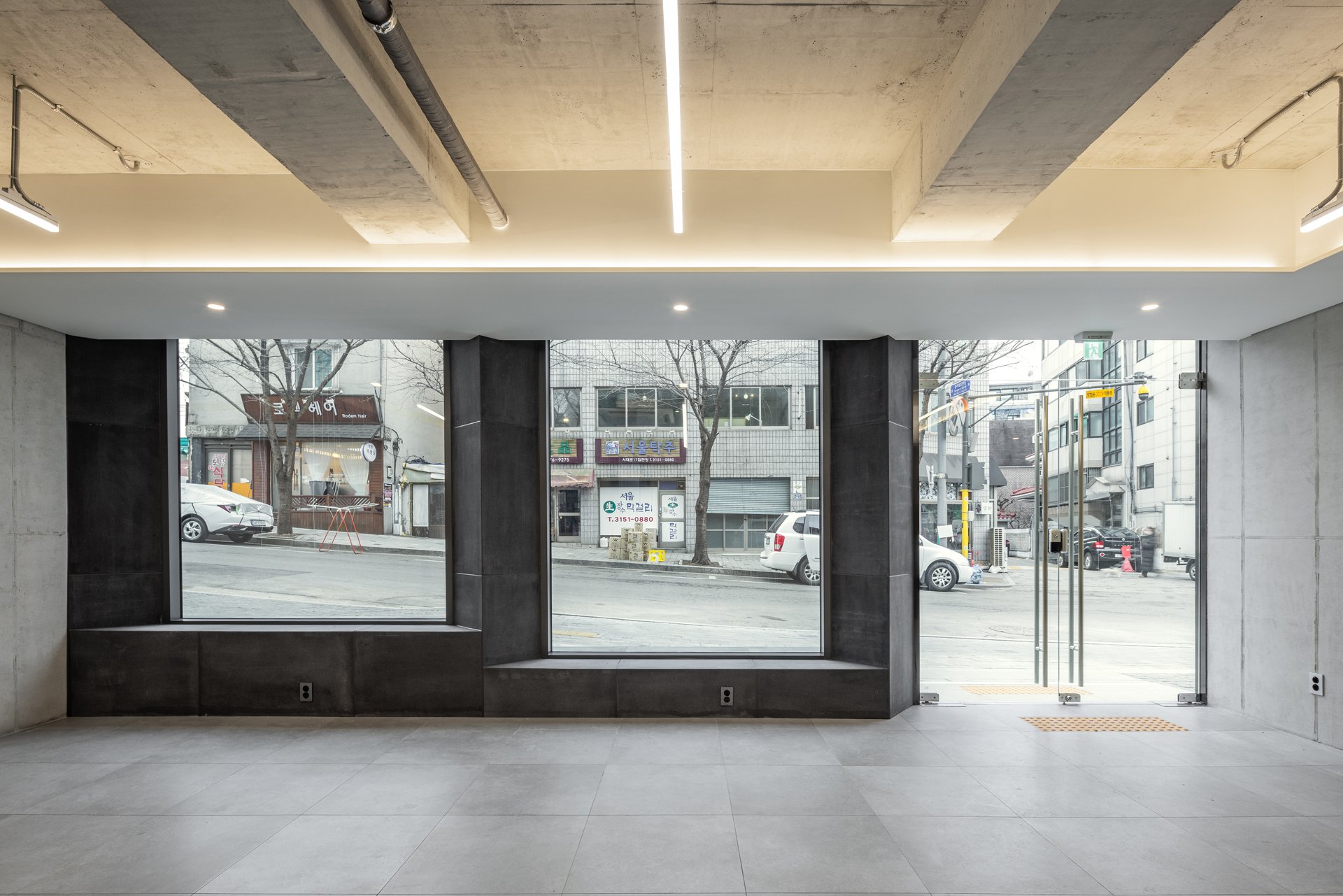
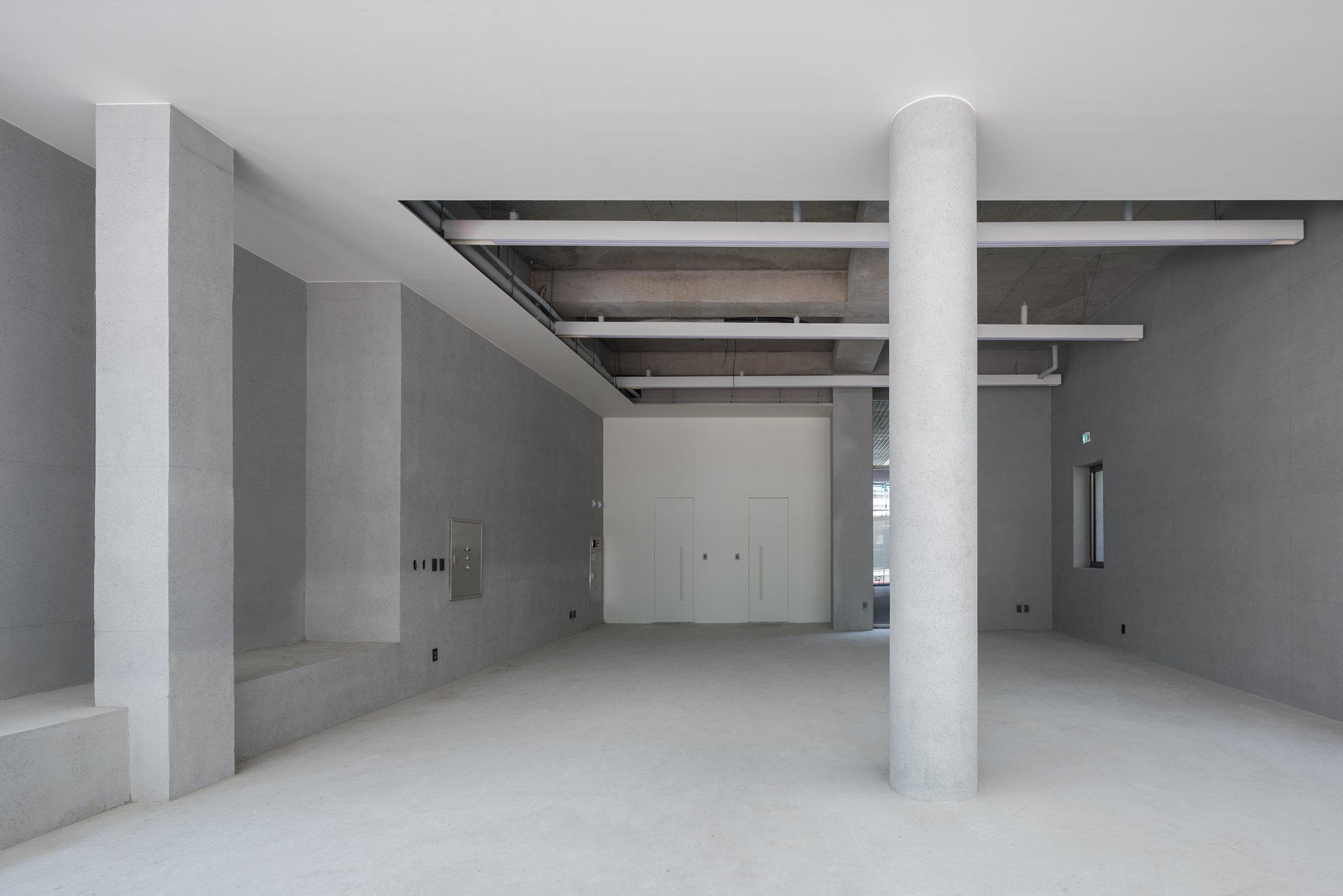
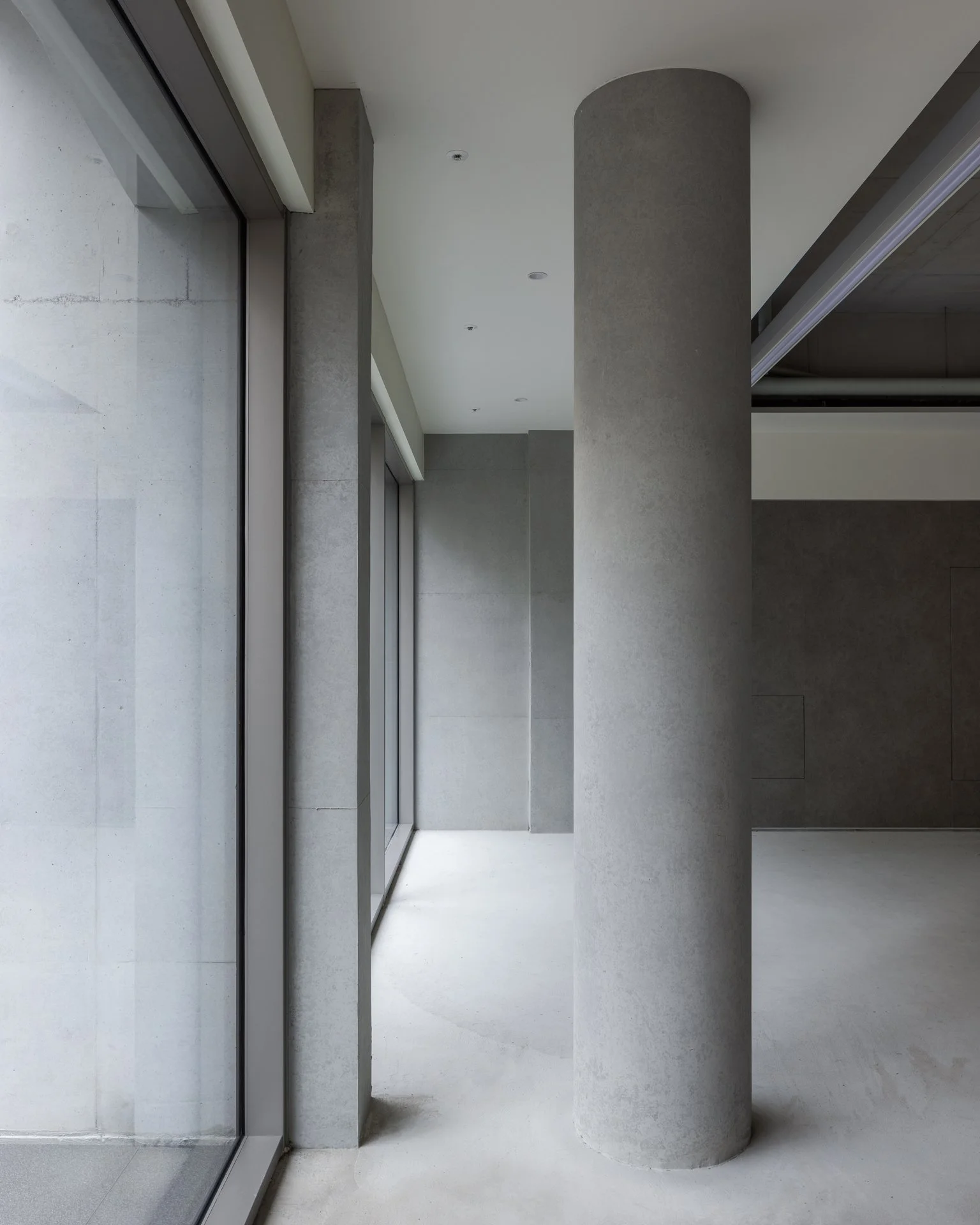
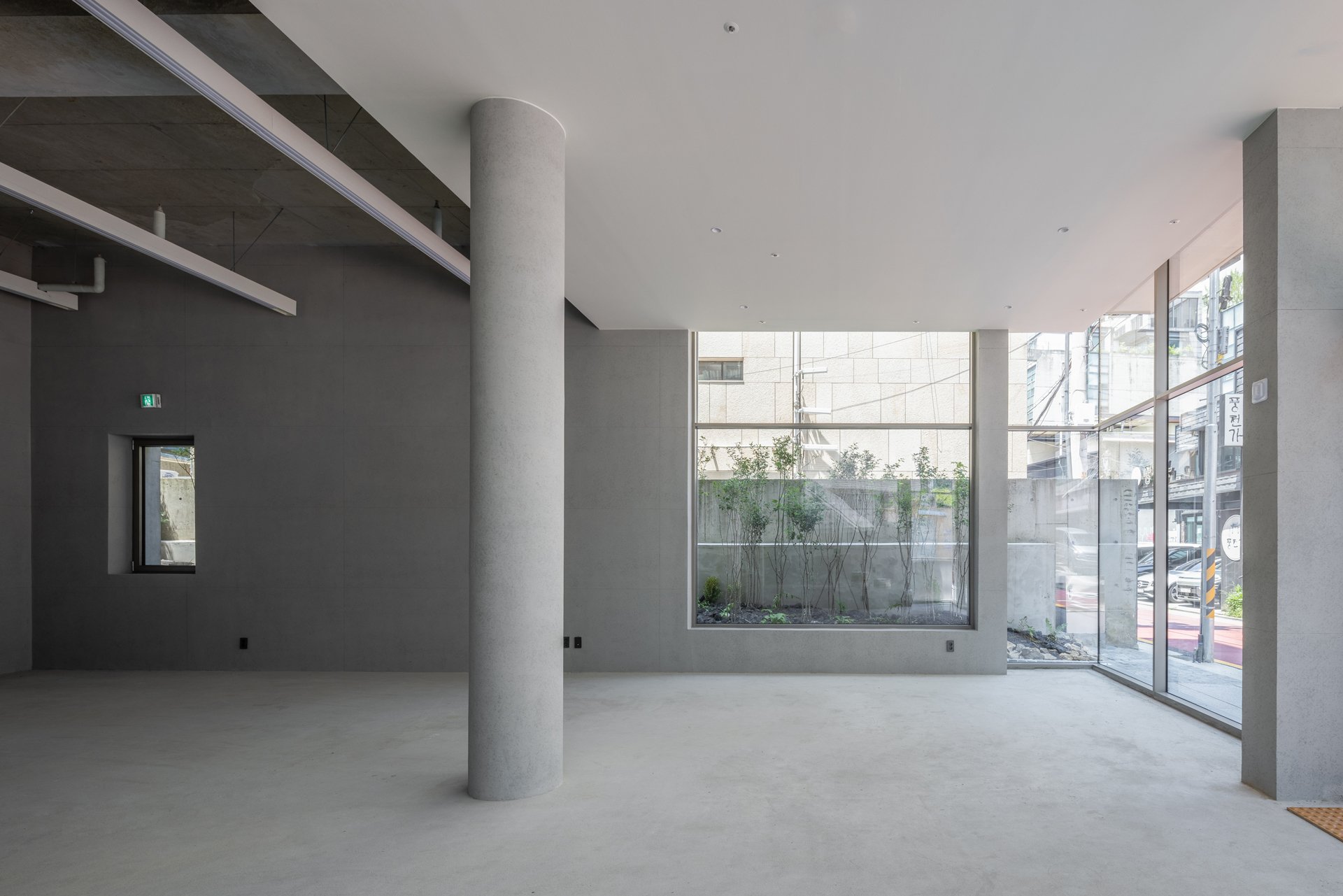
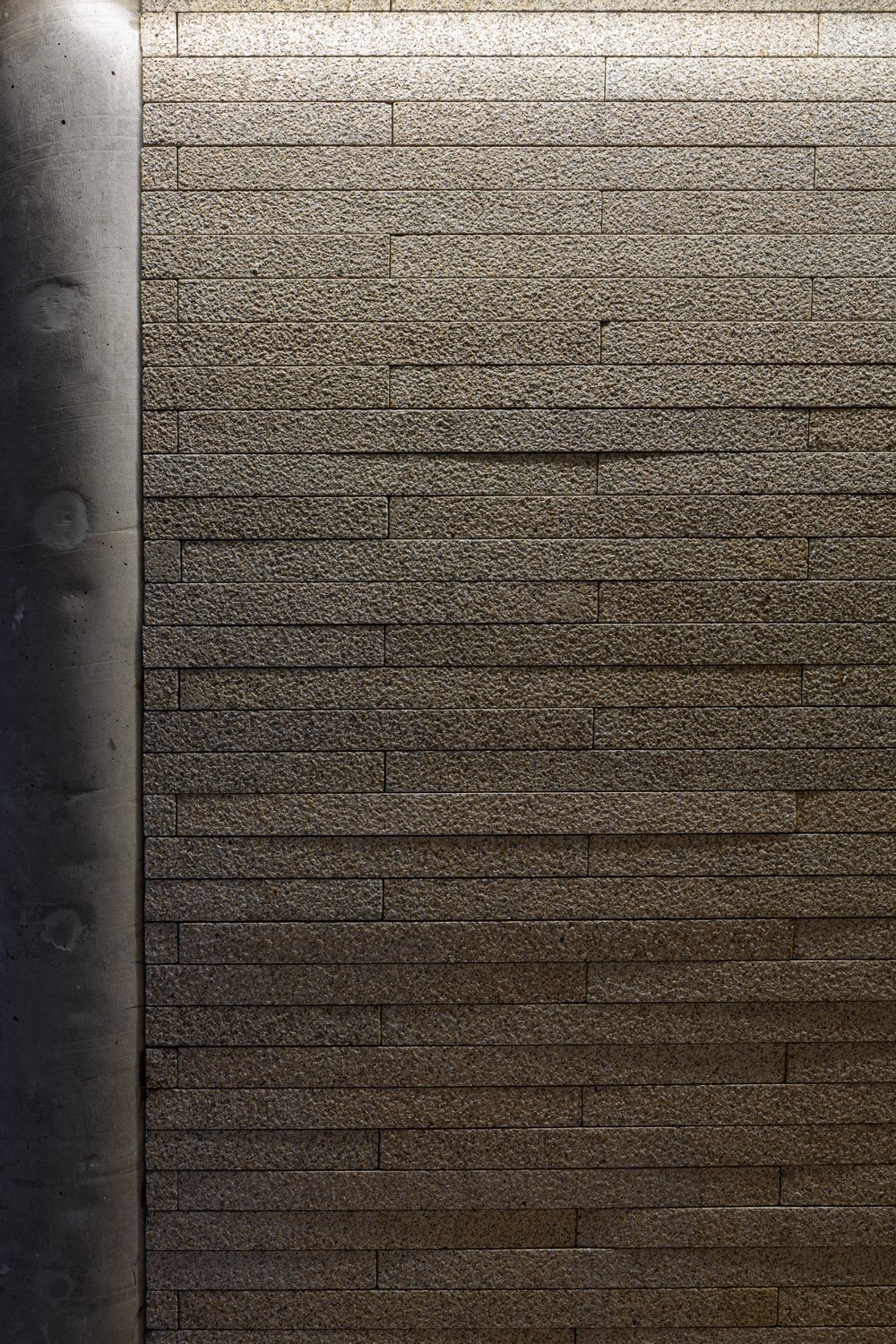
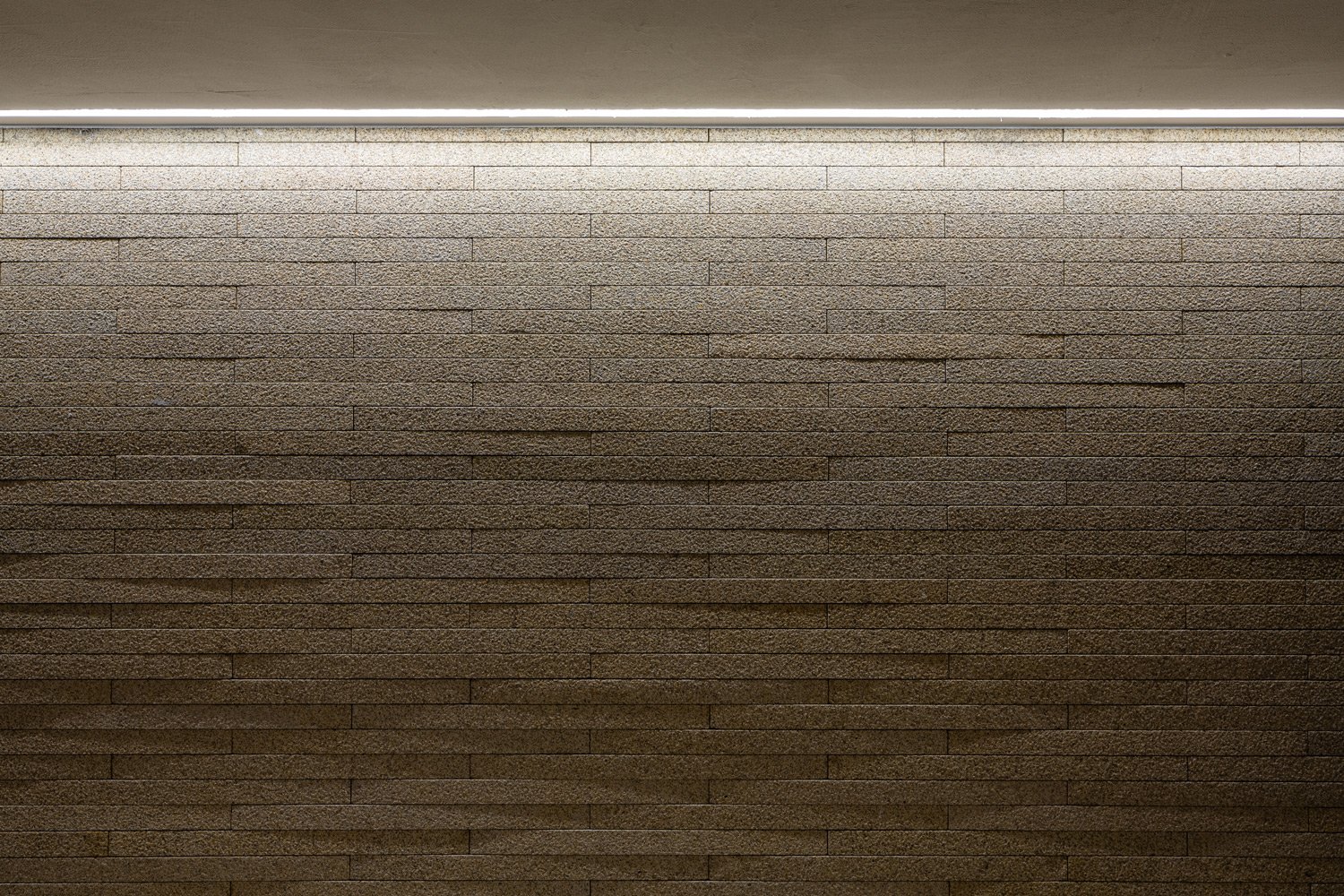
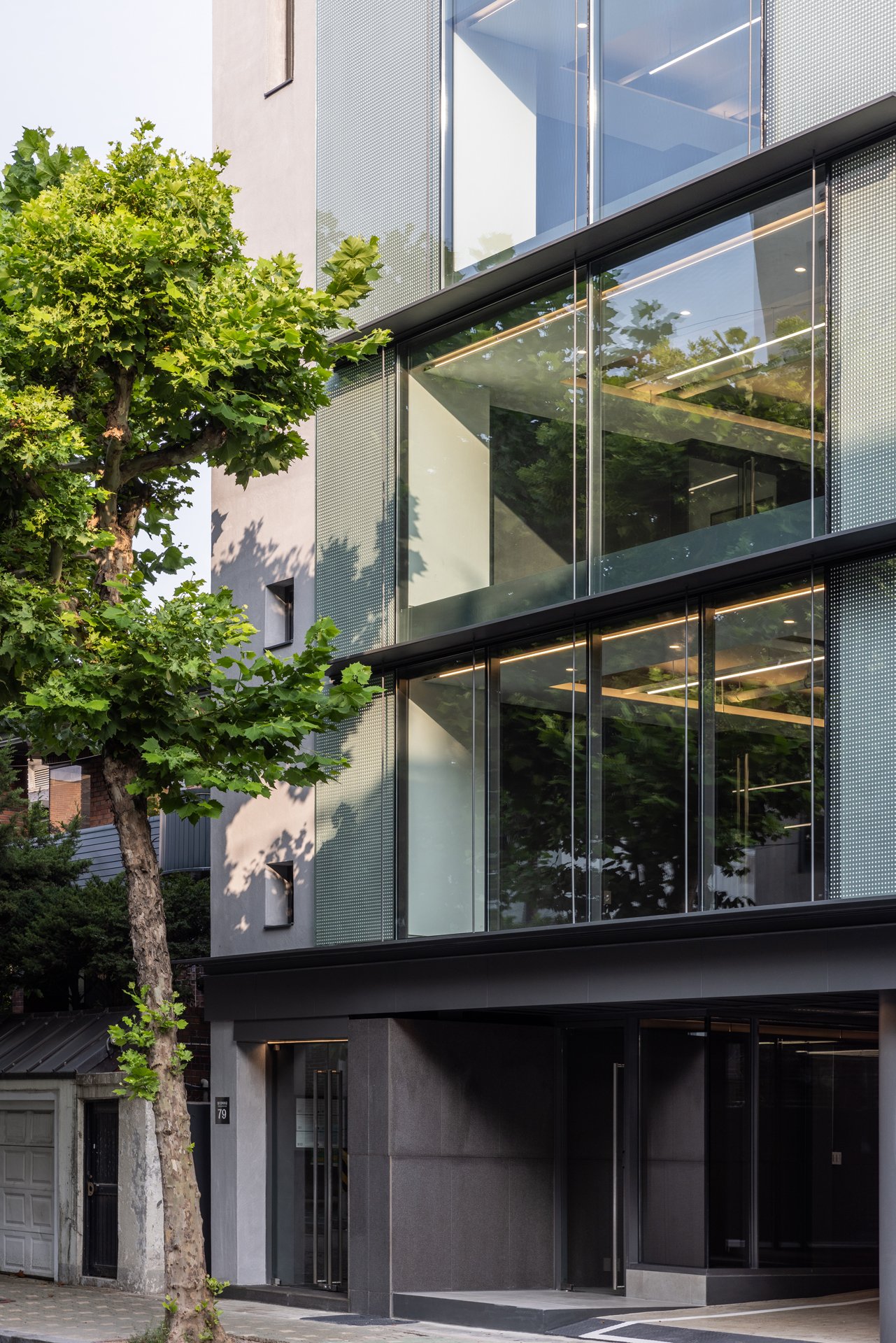
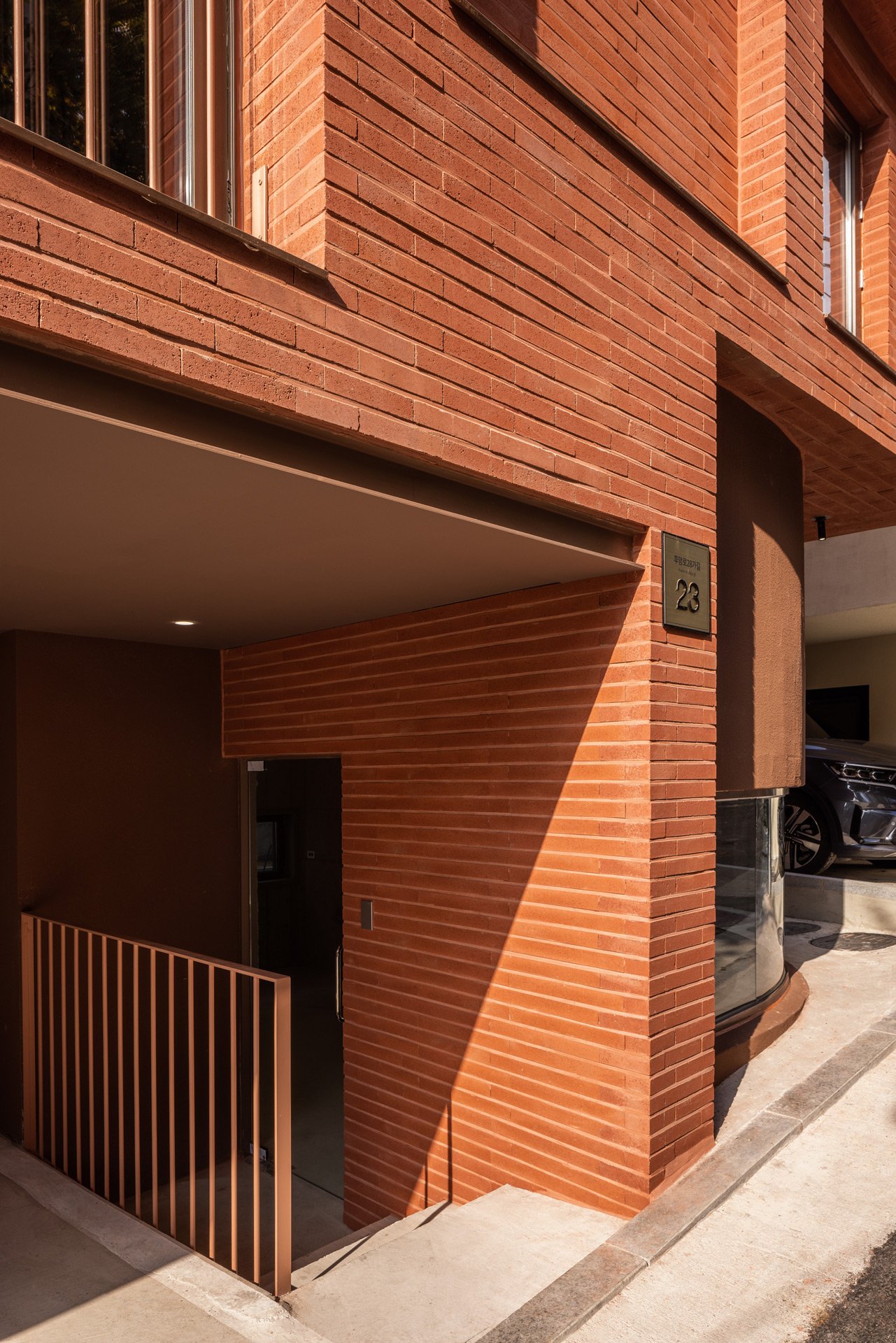
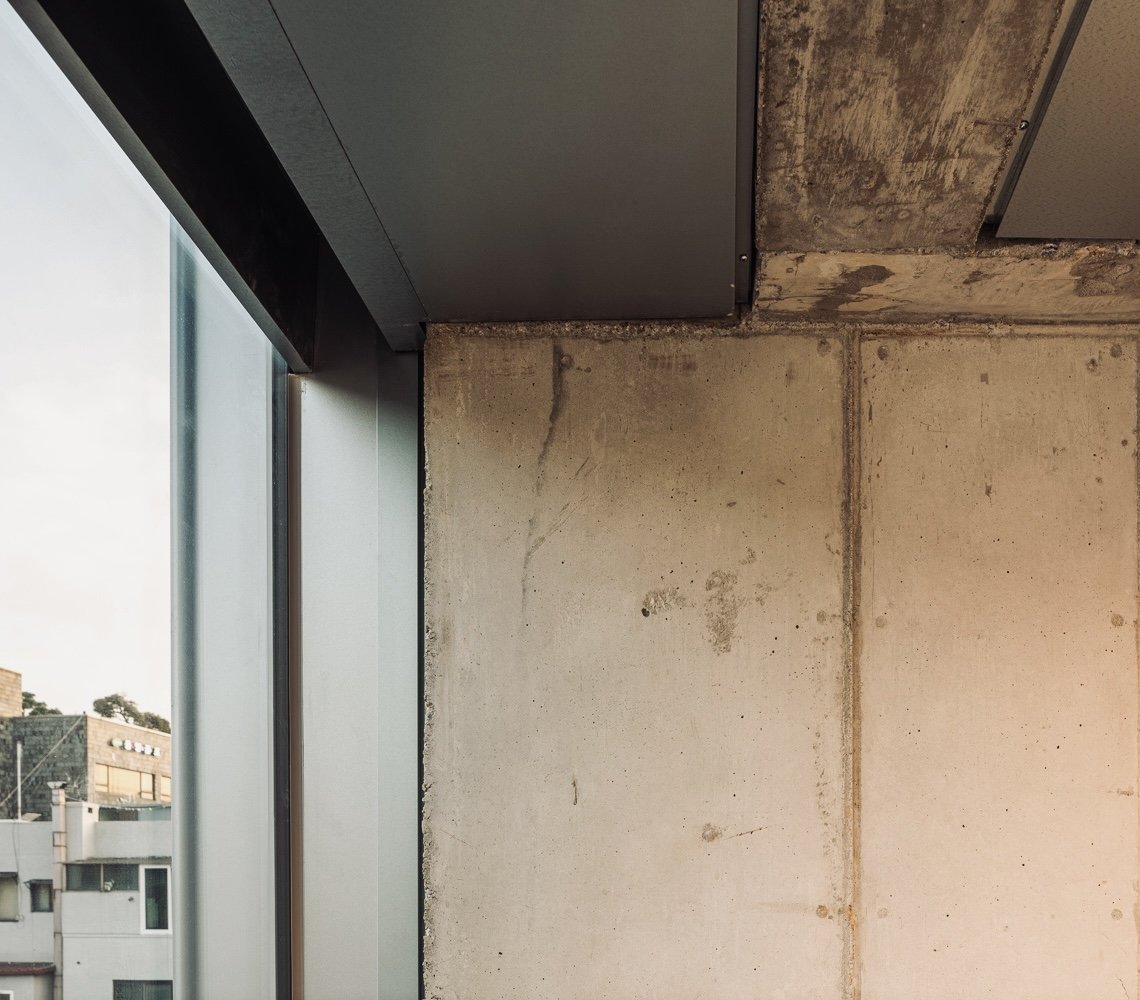
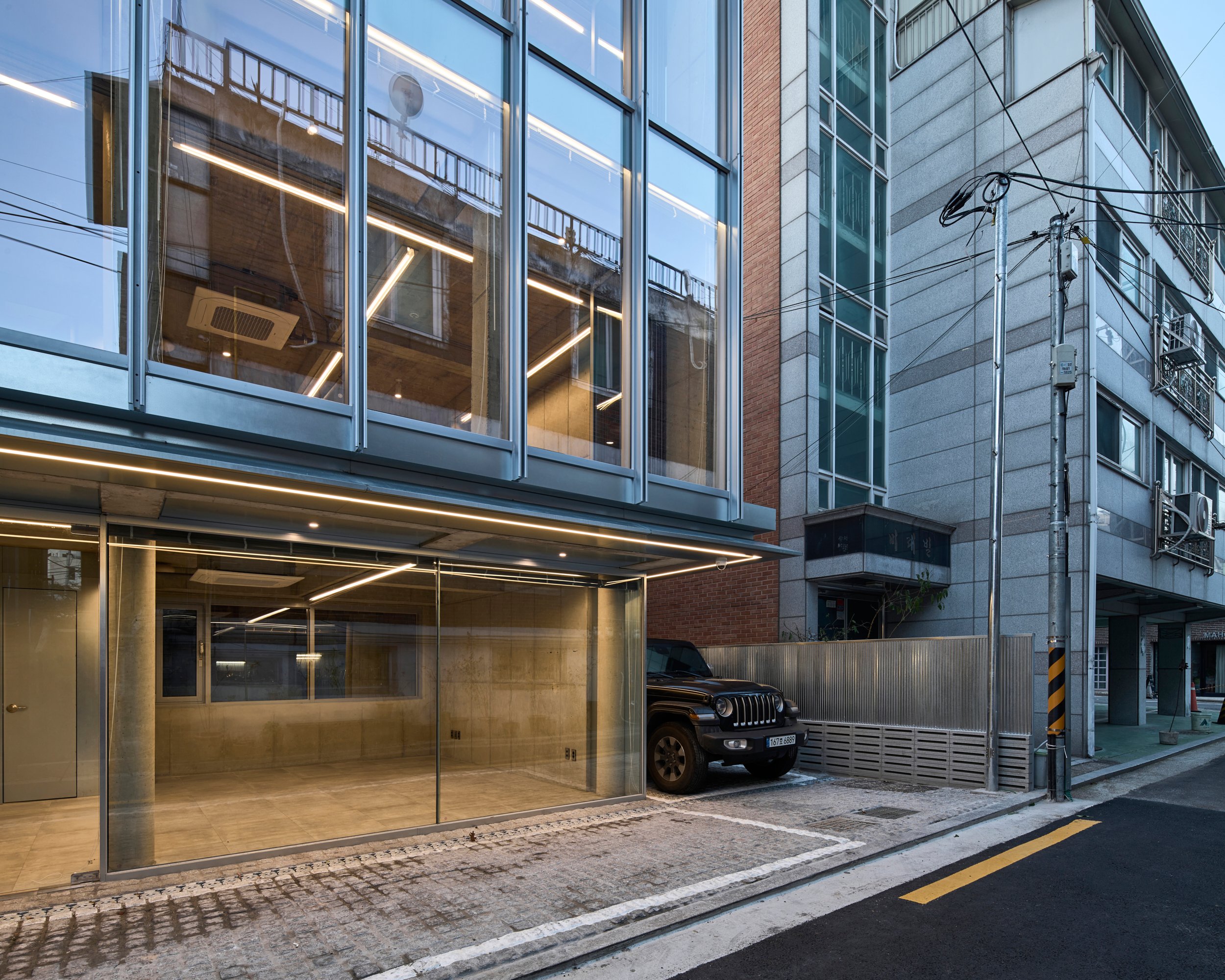
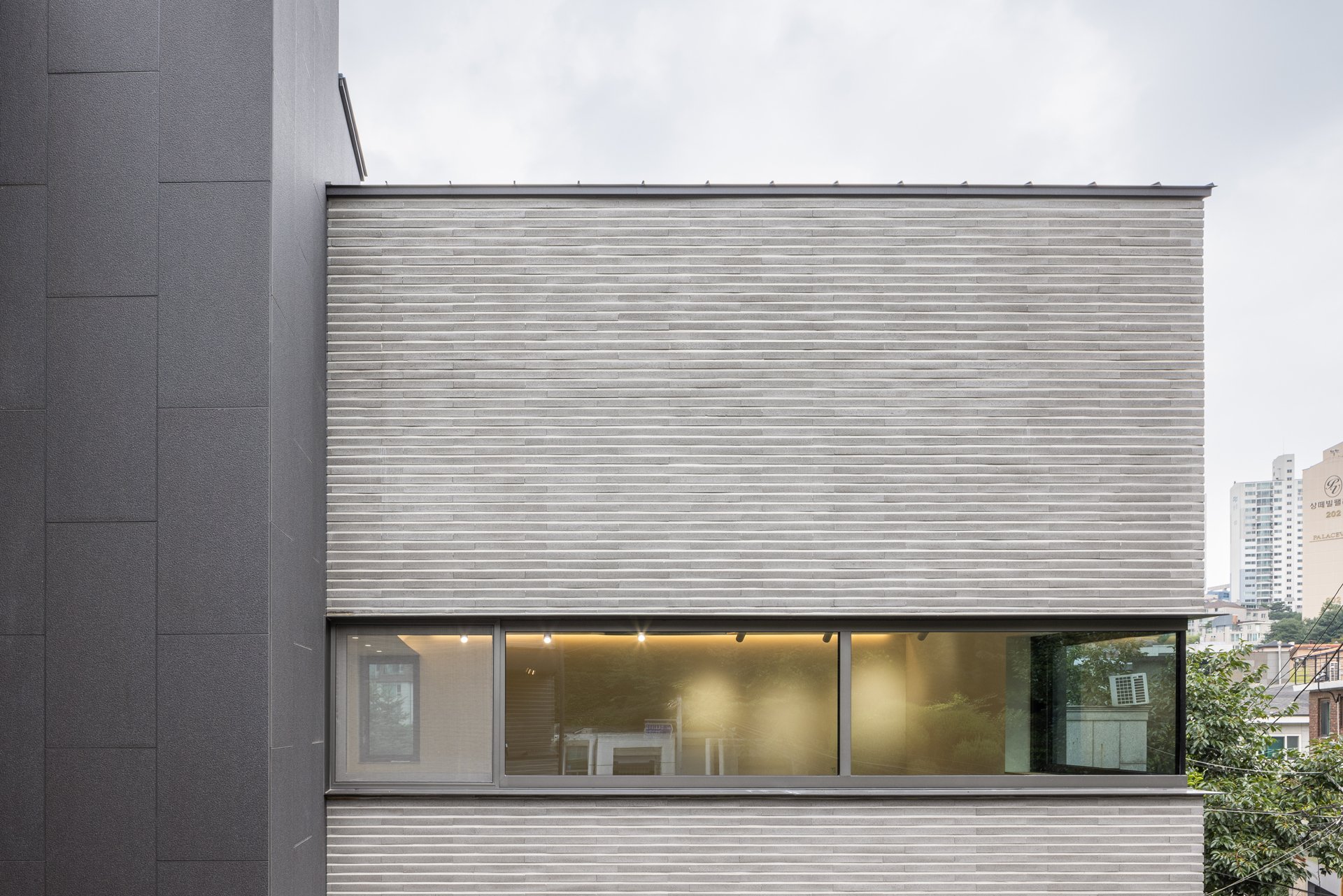
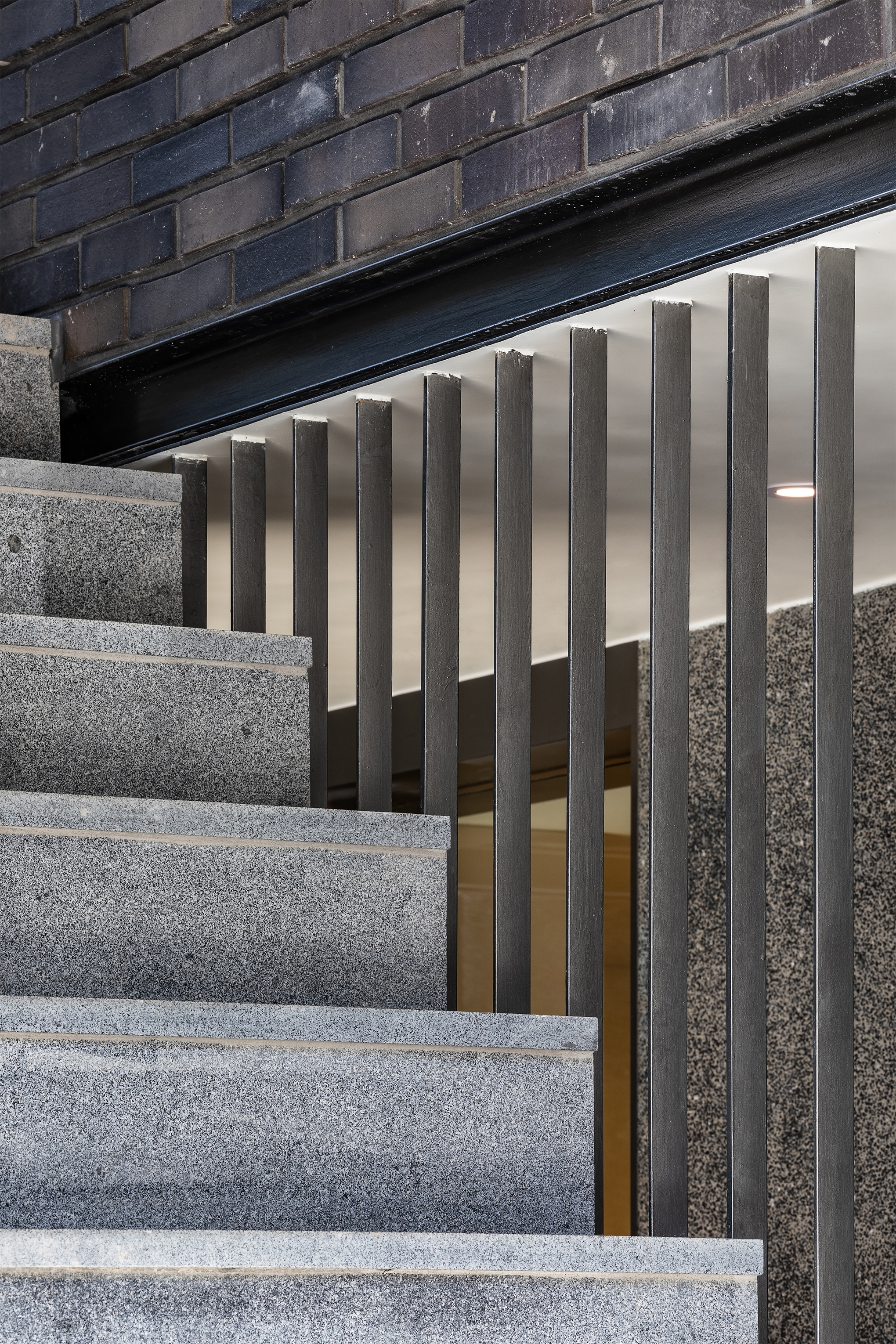
The ground-level plinth is clad with UHPC concrete panels treated with sandblasting. Although materially distinct from the upper volume, the density of texture was carefully adjusted to maintain continuity. Different materials converge under a single light condition, forming a unified field of shadow and tone.
Elevation & Stair
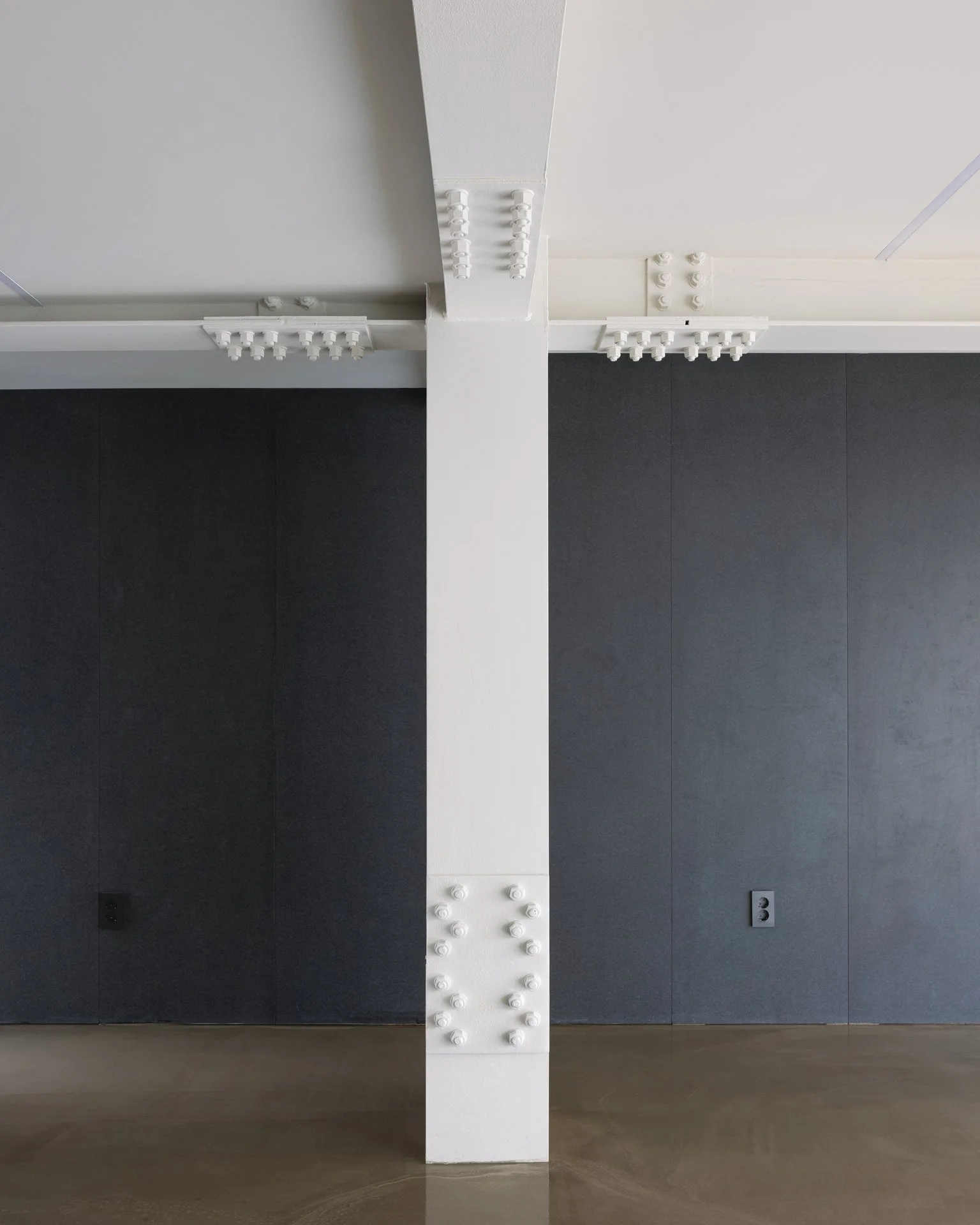
The building is constructed upon a simple order.
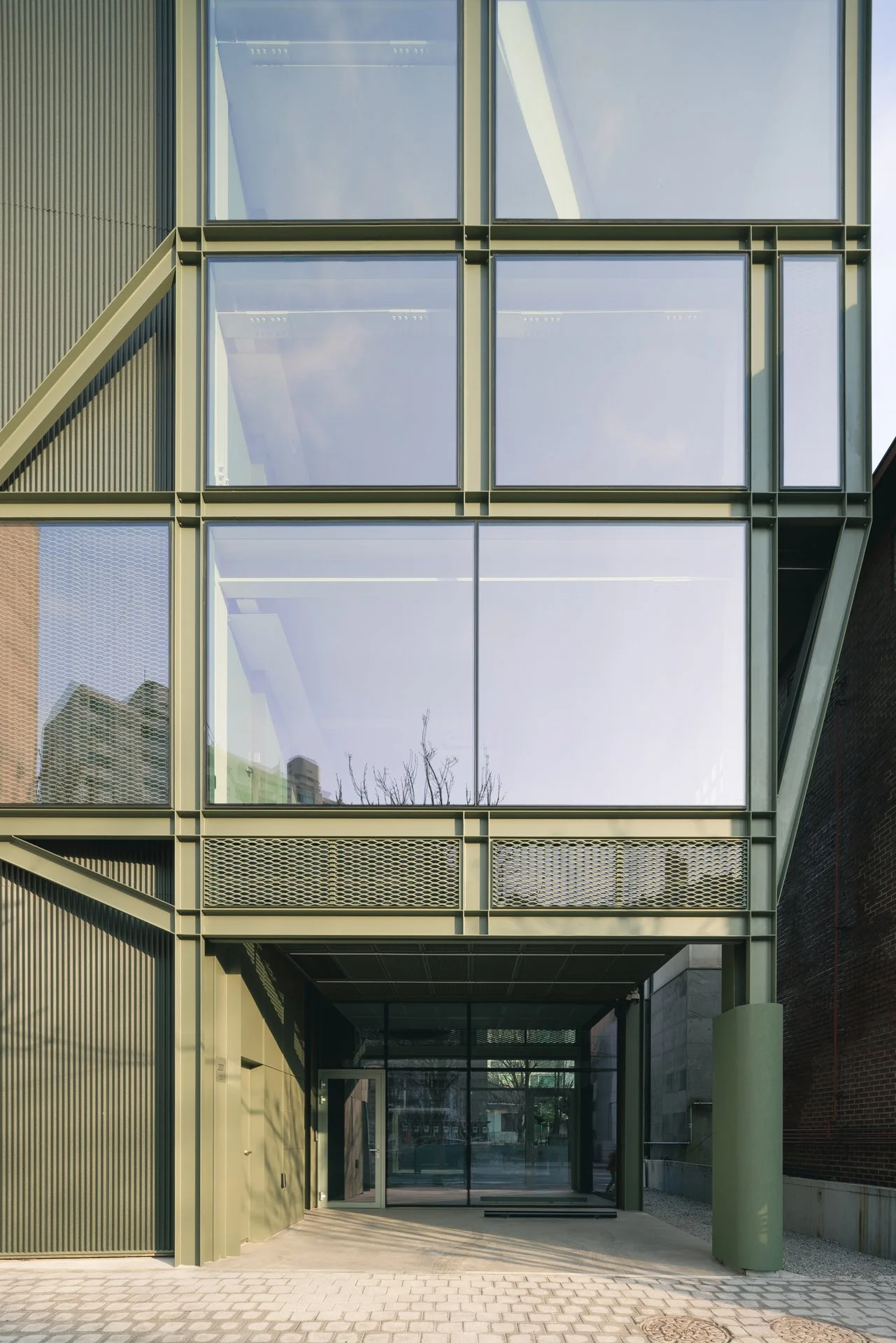
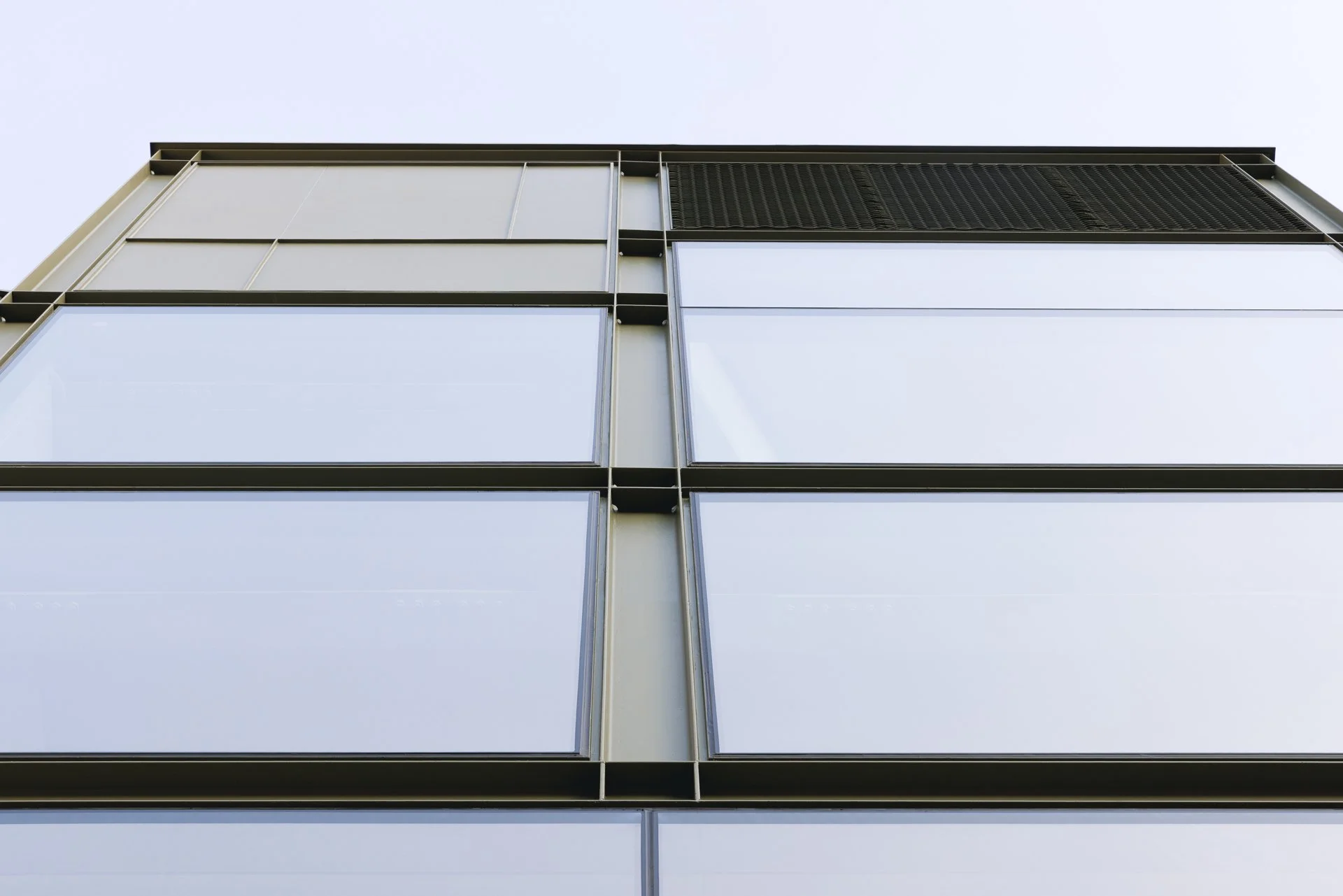
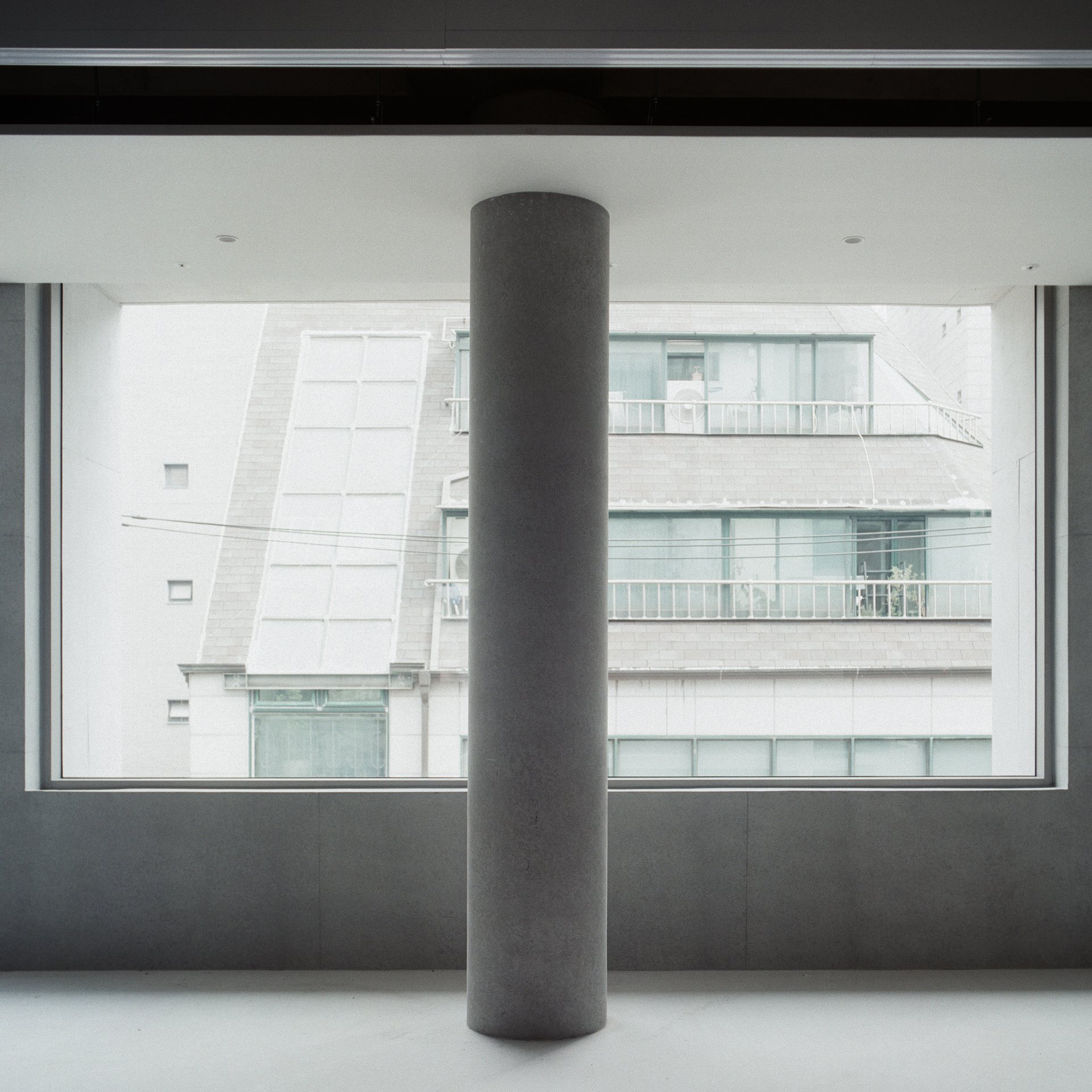
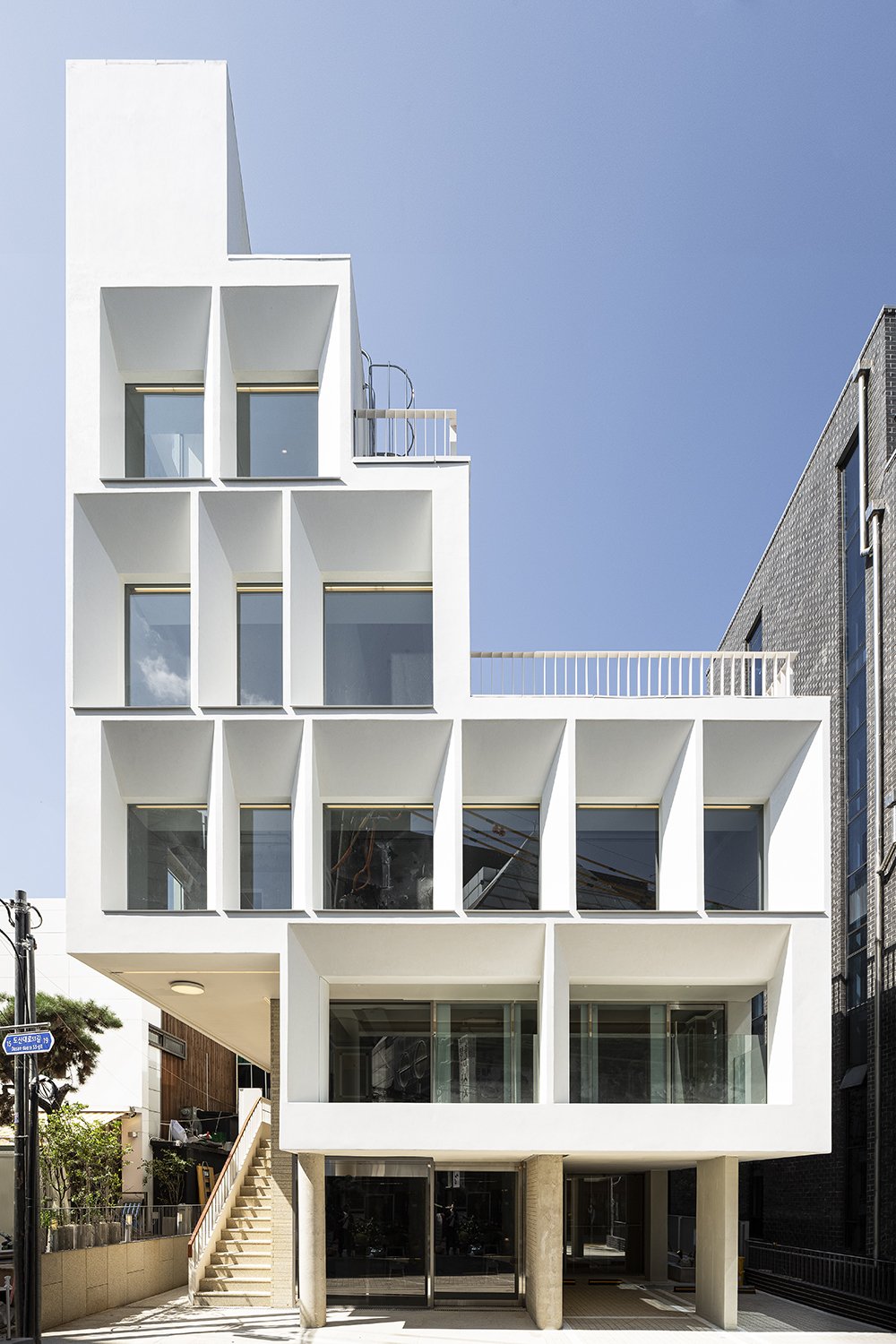
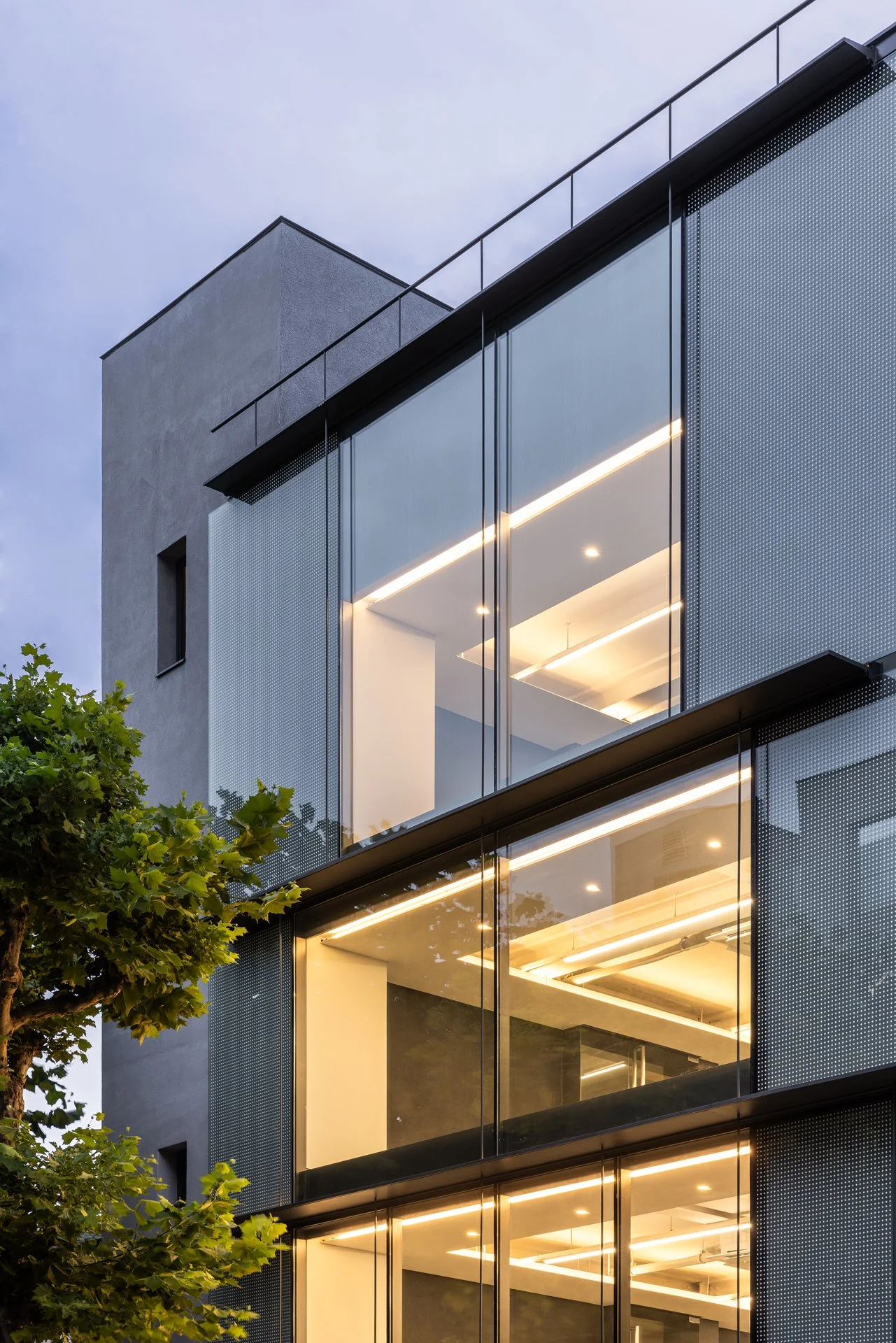
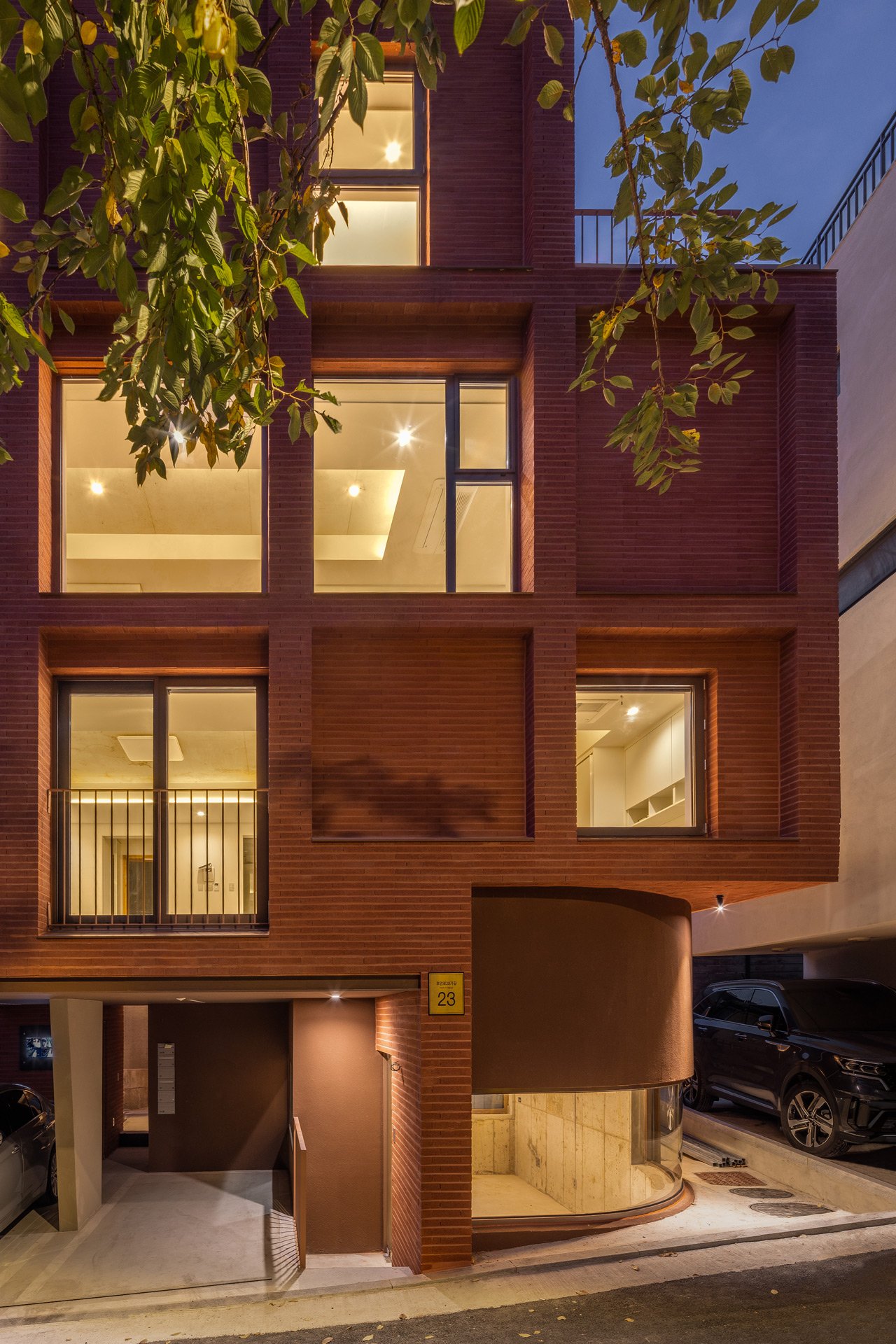
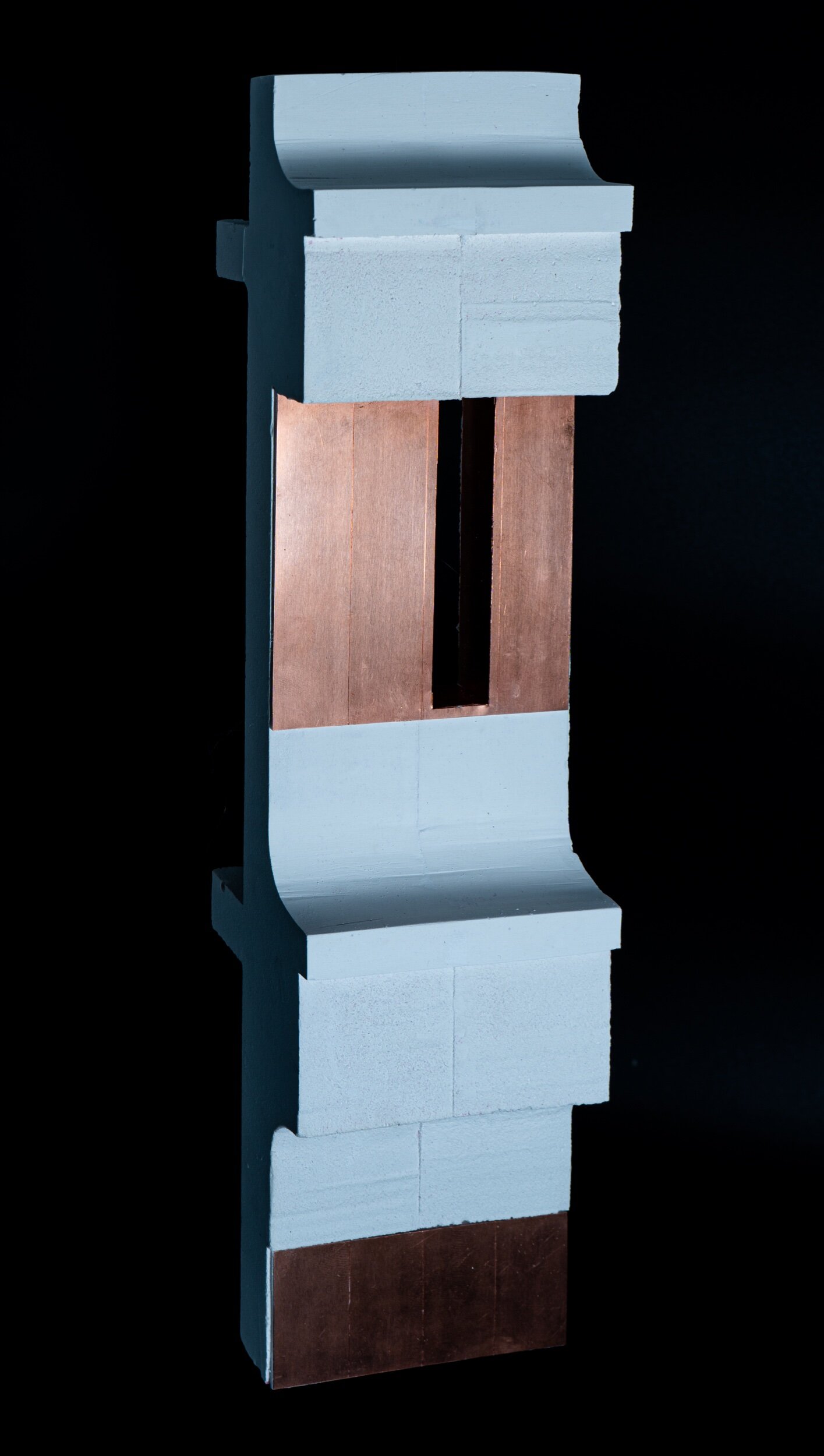
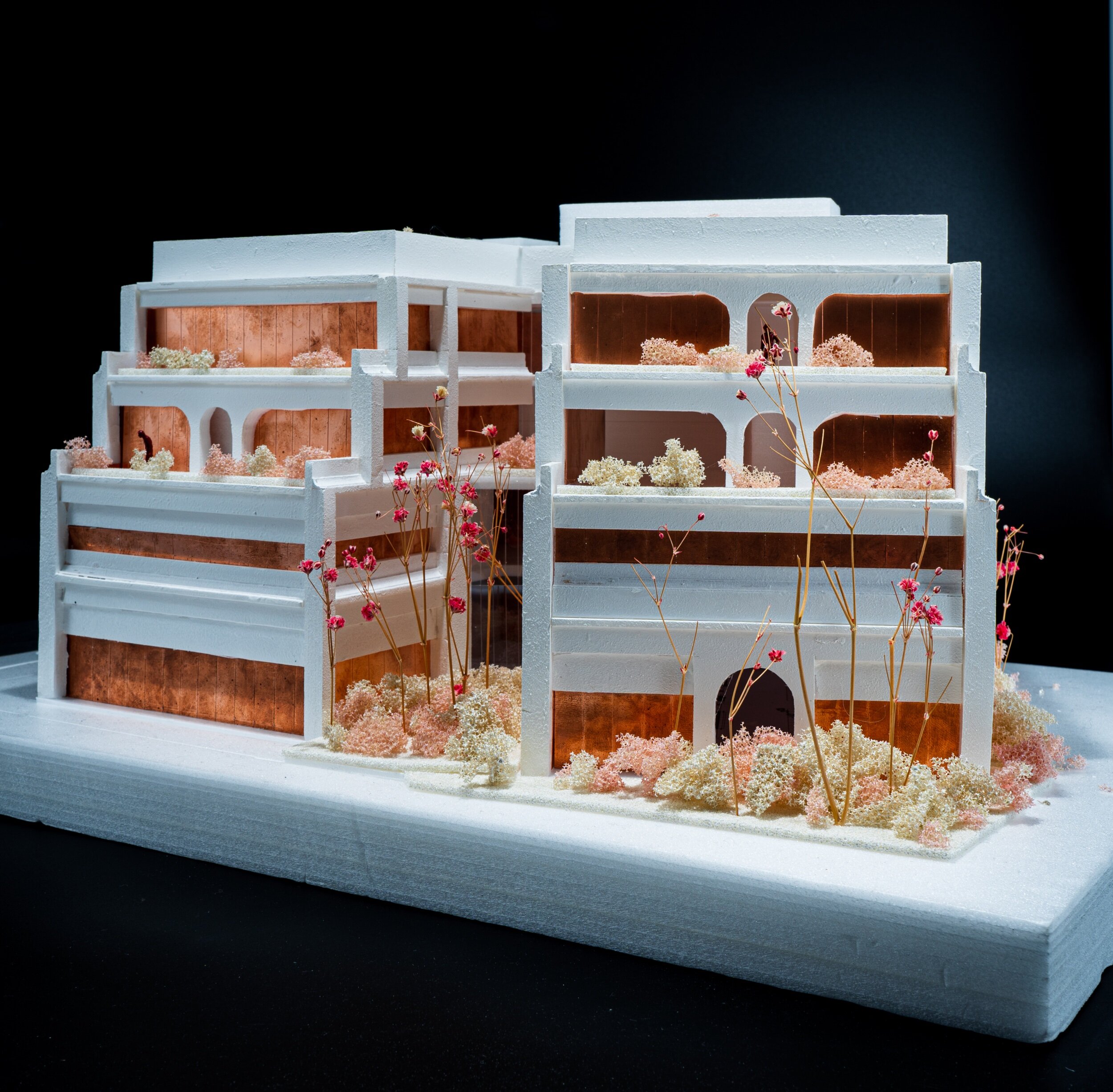
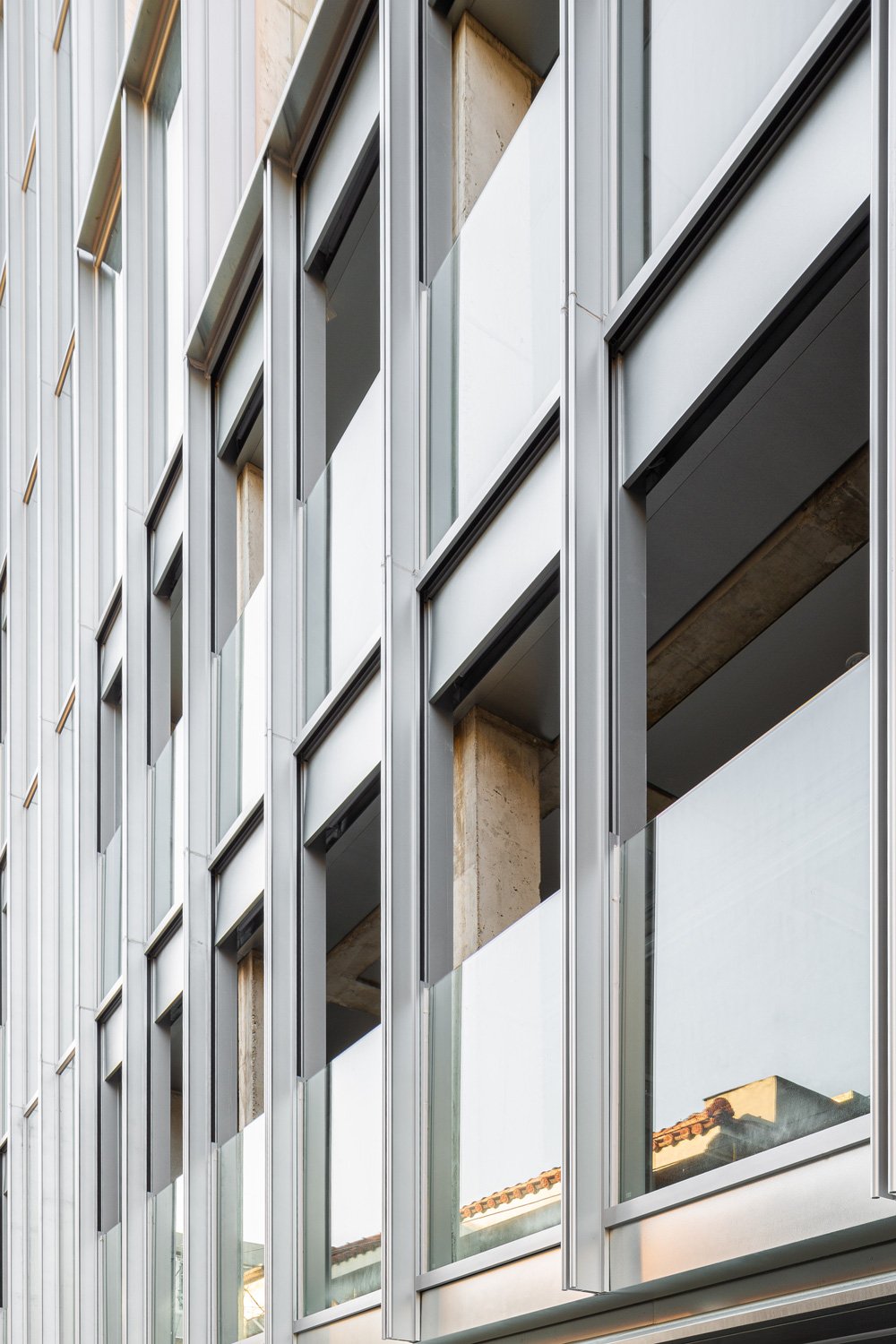
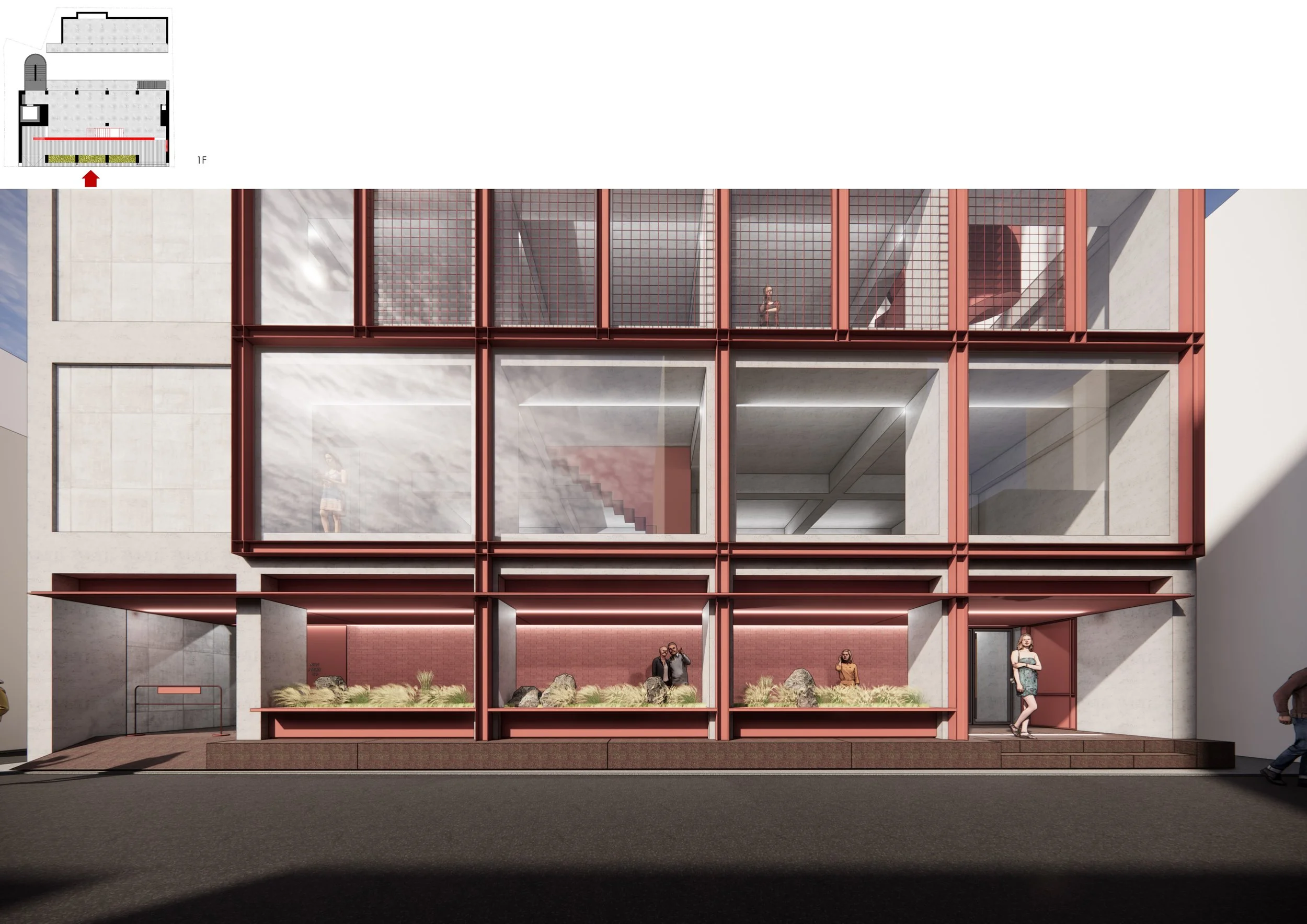
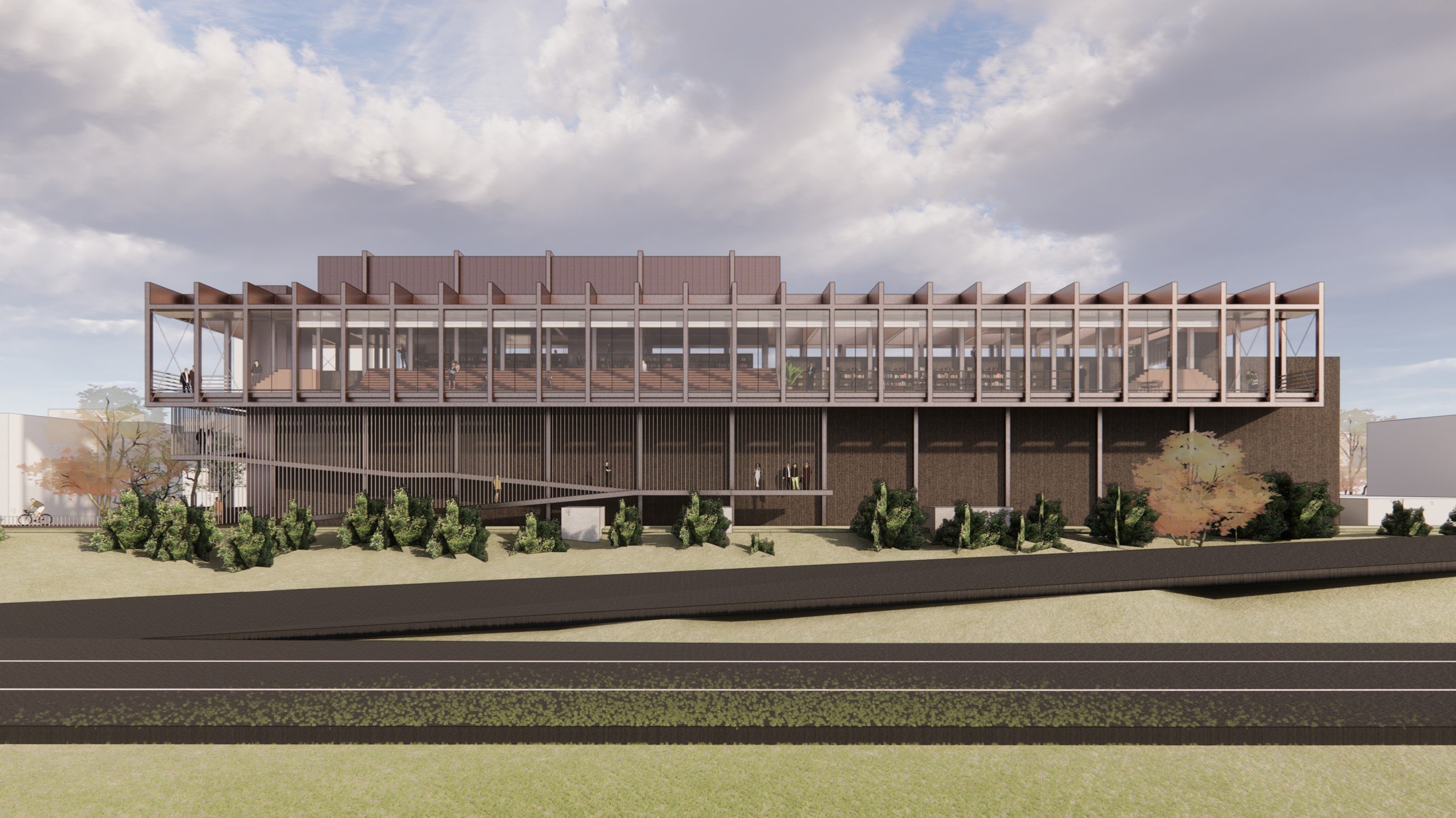
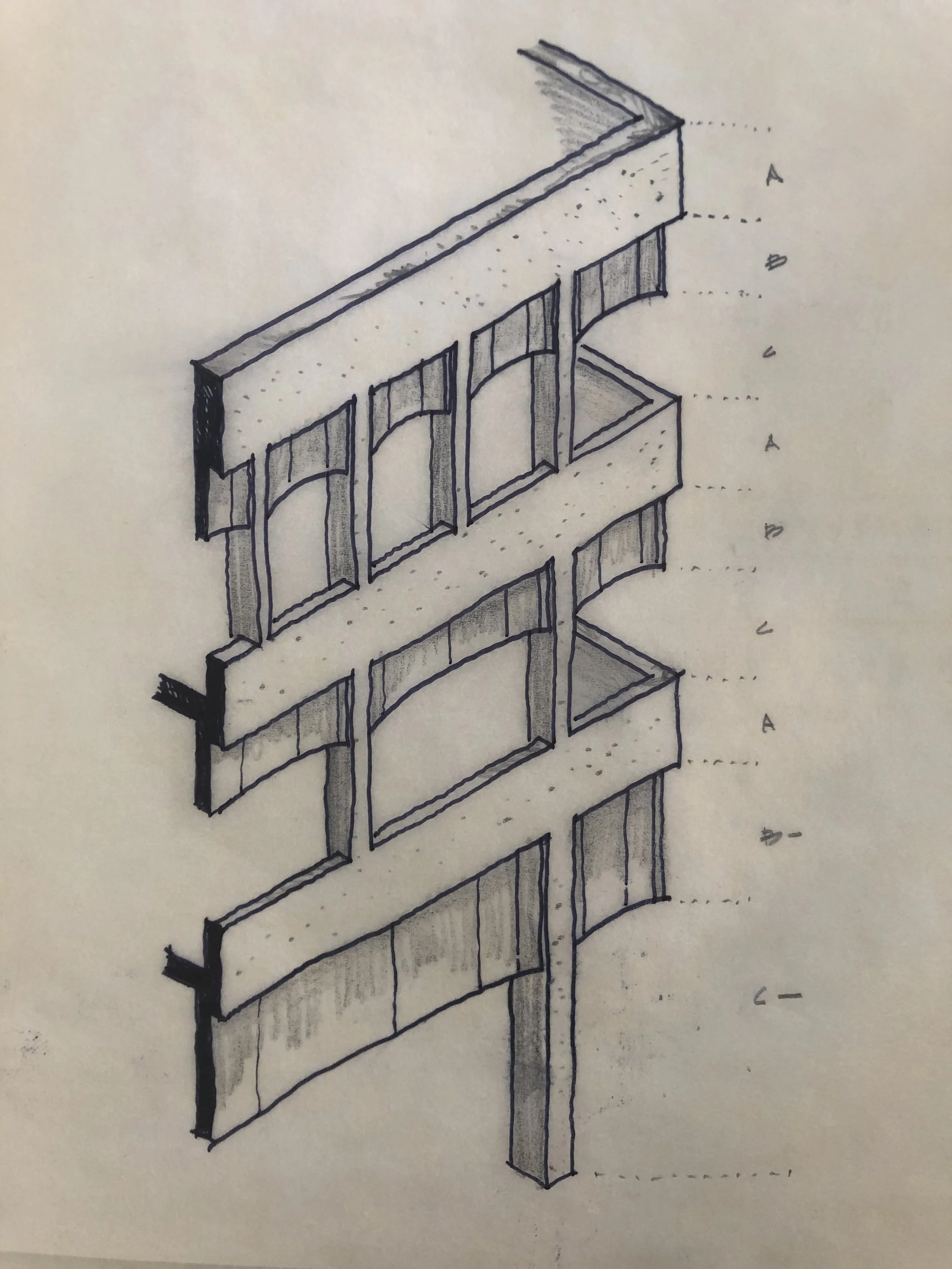
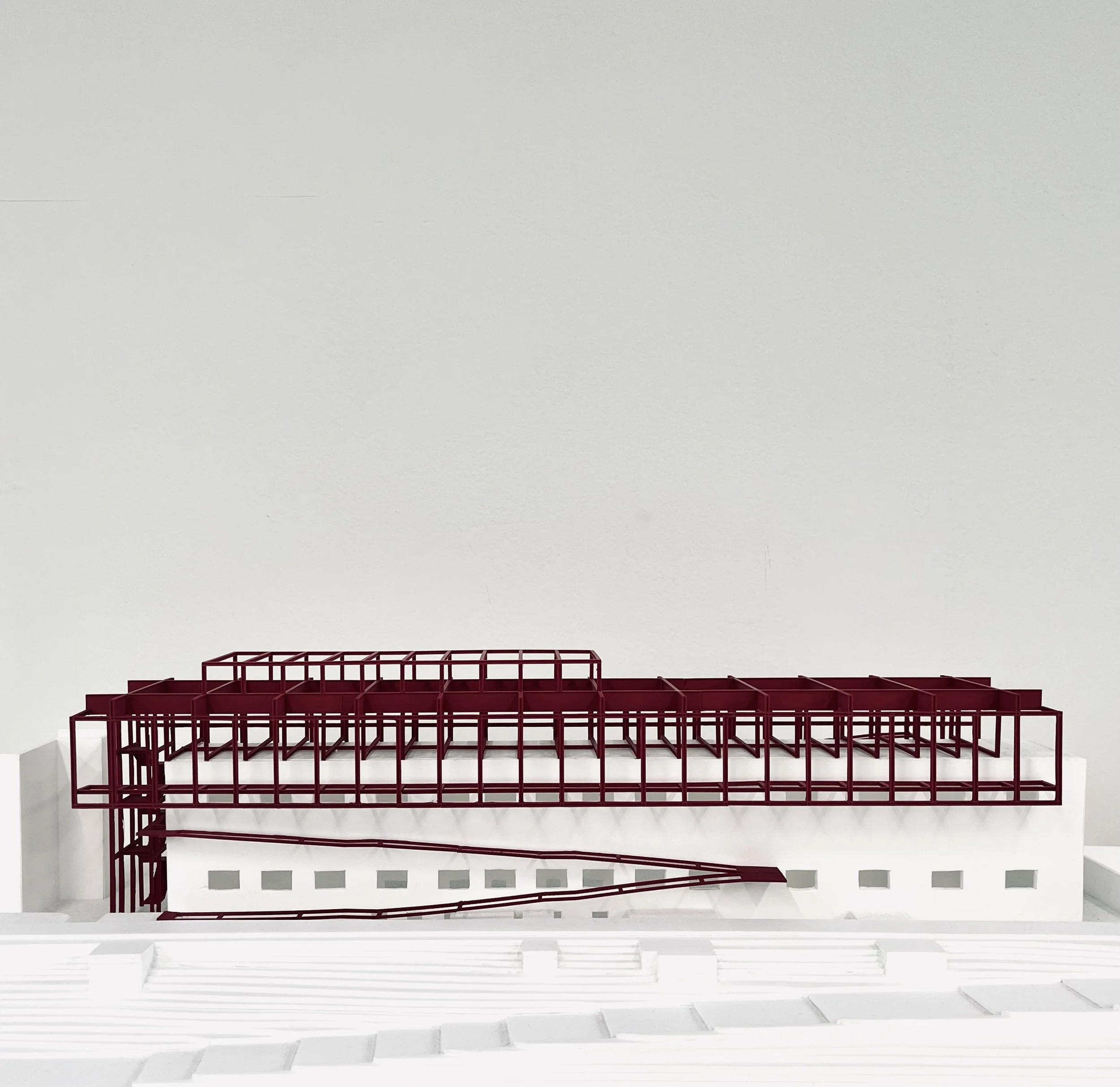
Columns arranged across the elevation follow a consistent rhythm, with subtle variations in proportion creating tension within repetition. The façade reads as a structured field rather than a singular gesture.
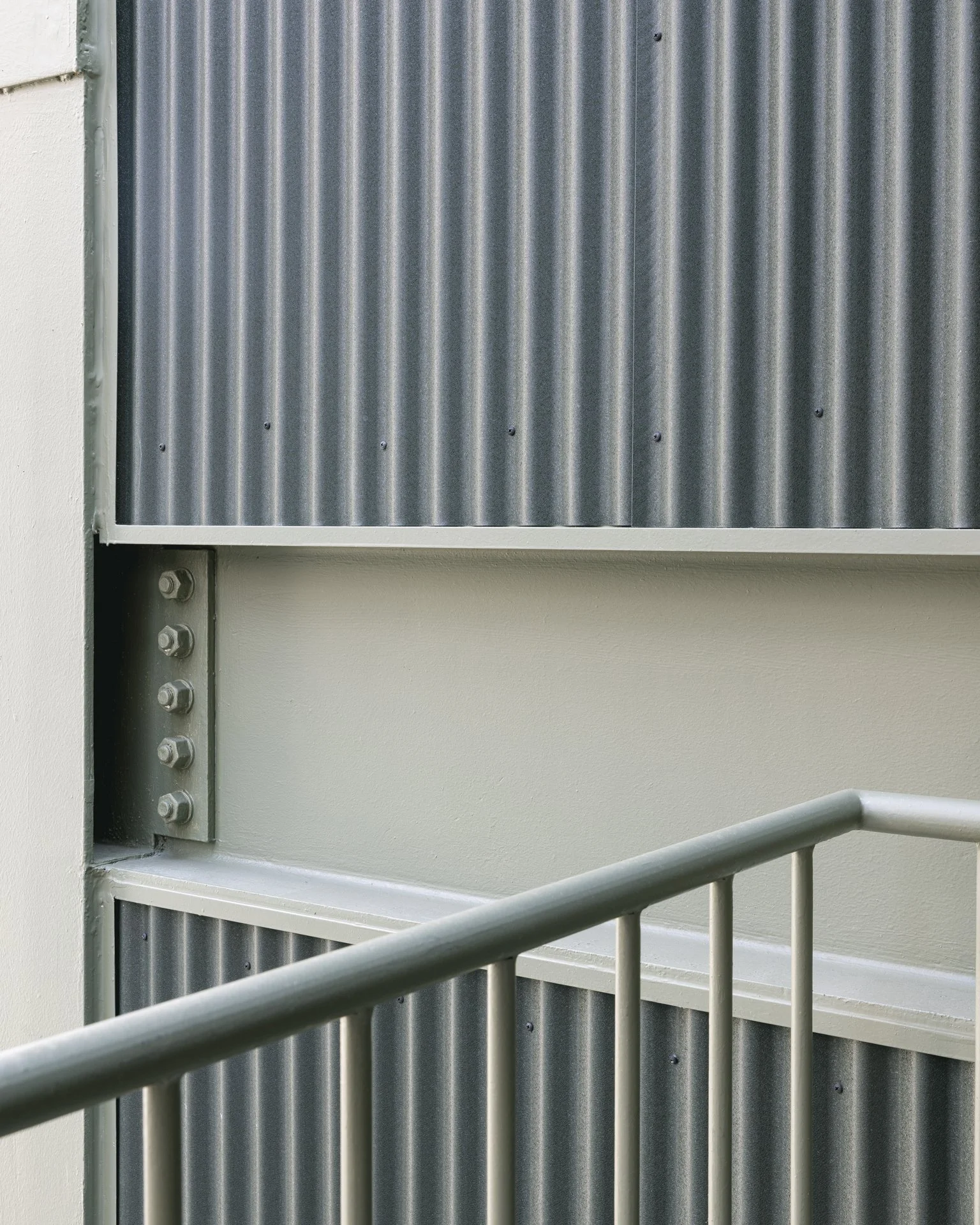
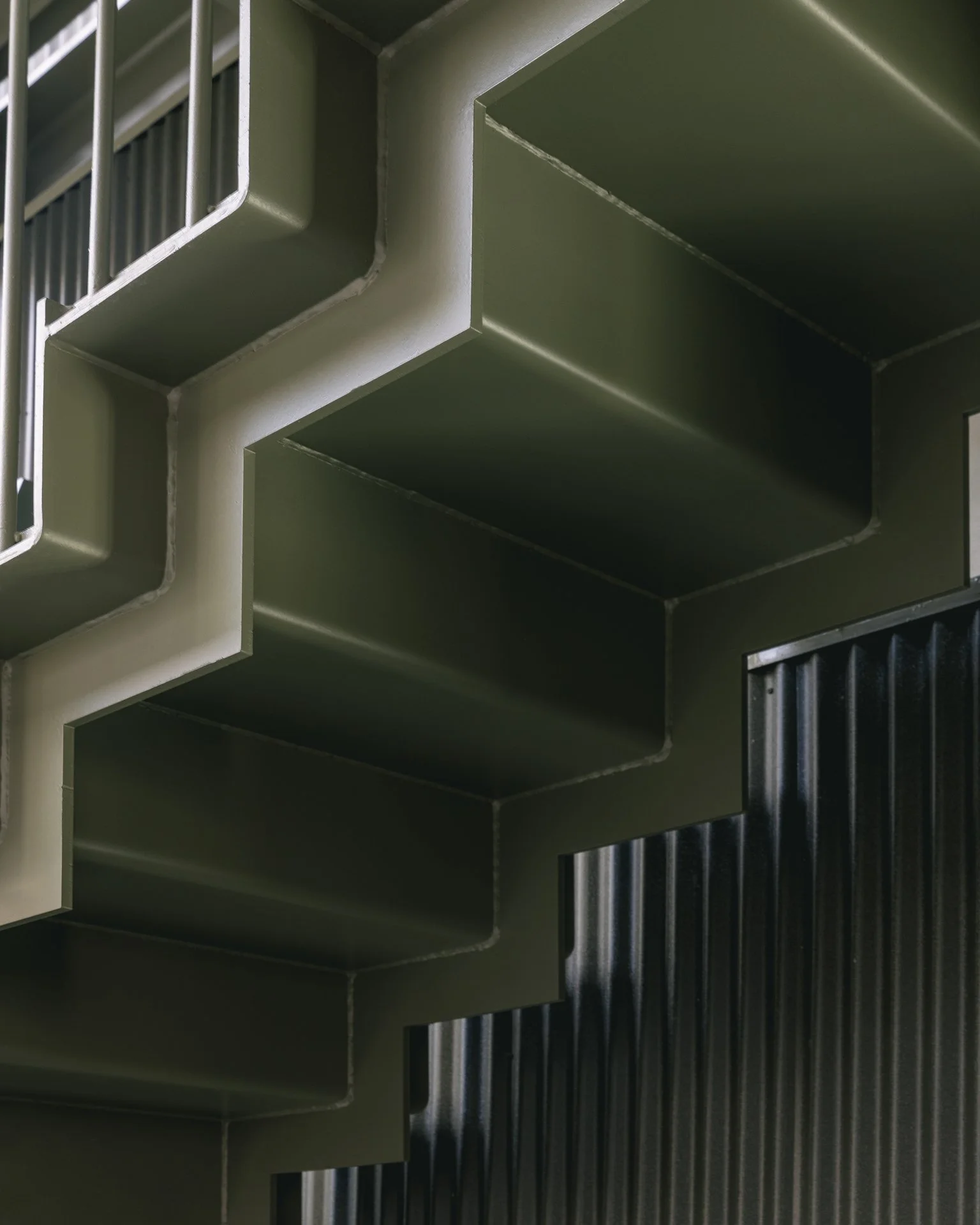
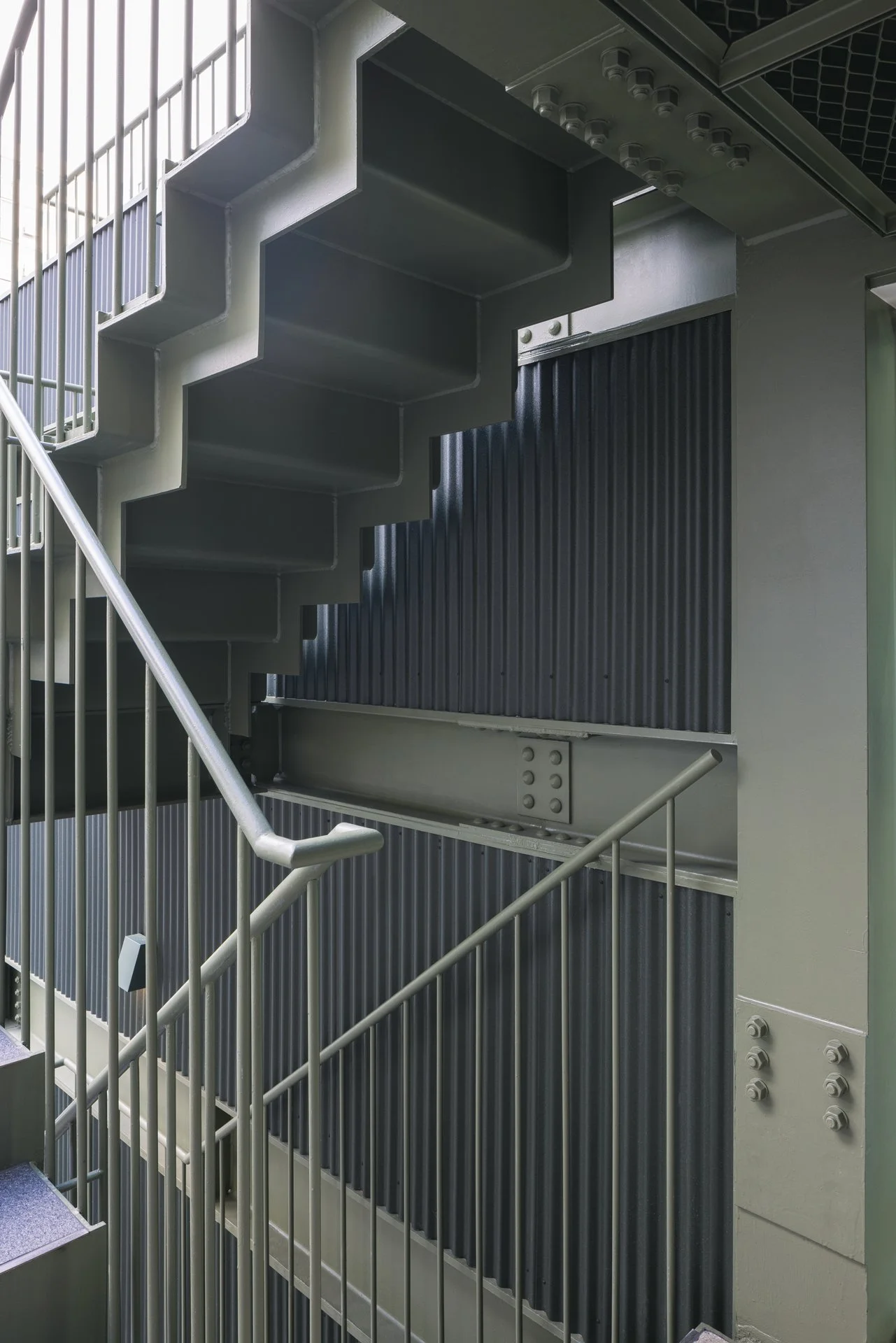
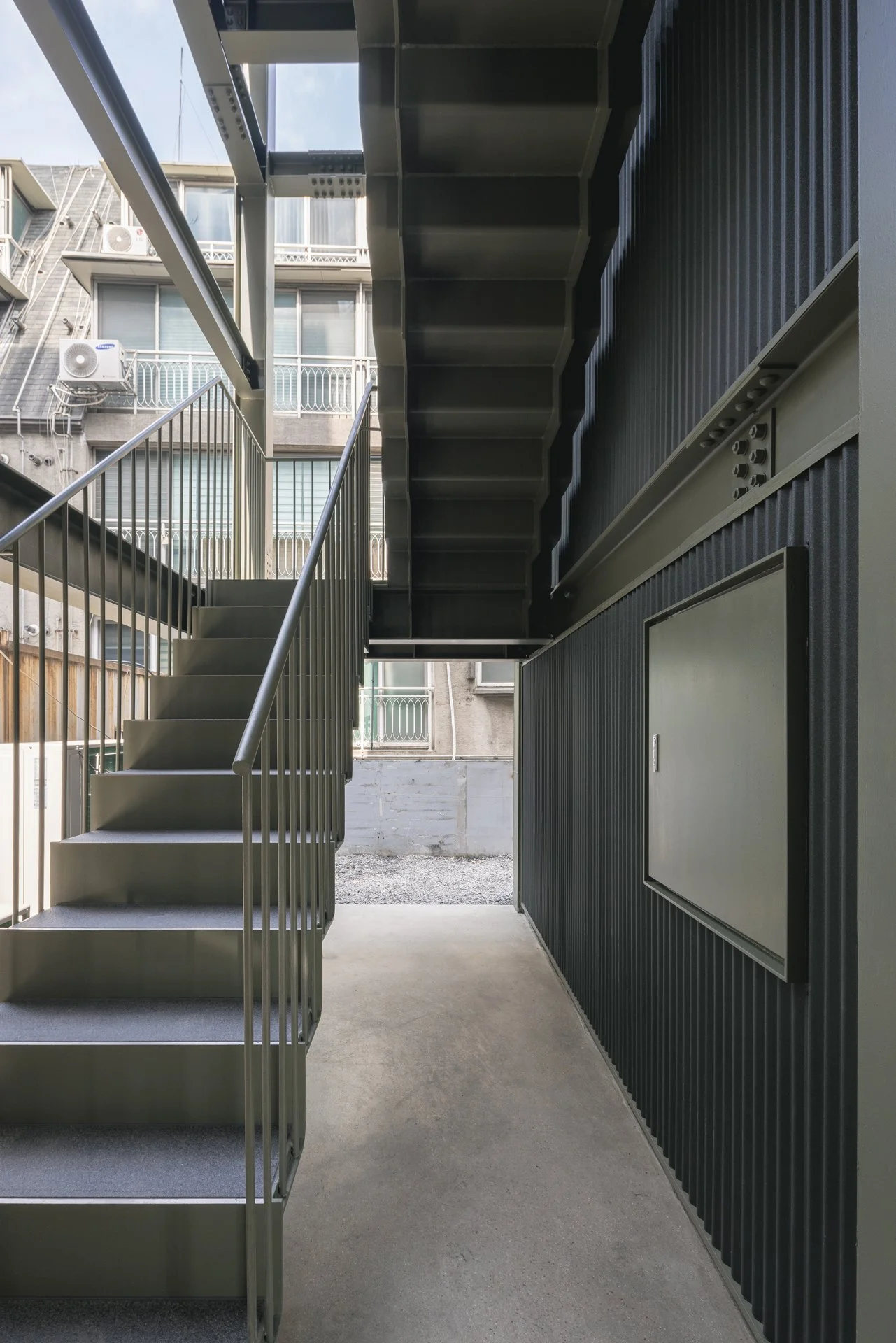
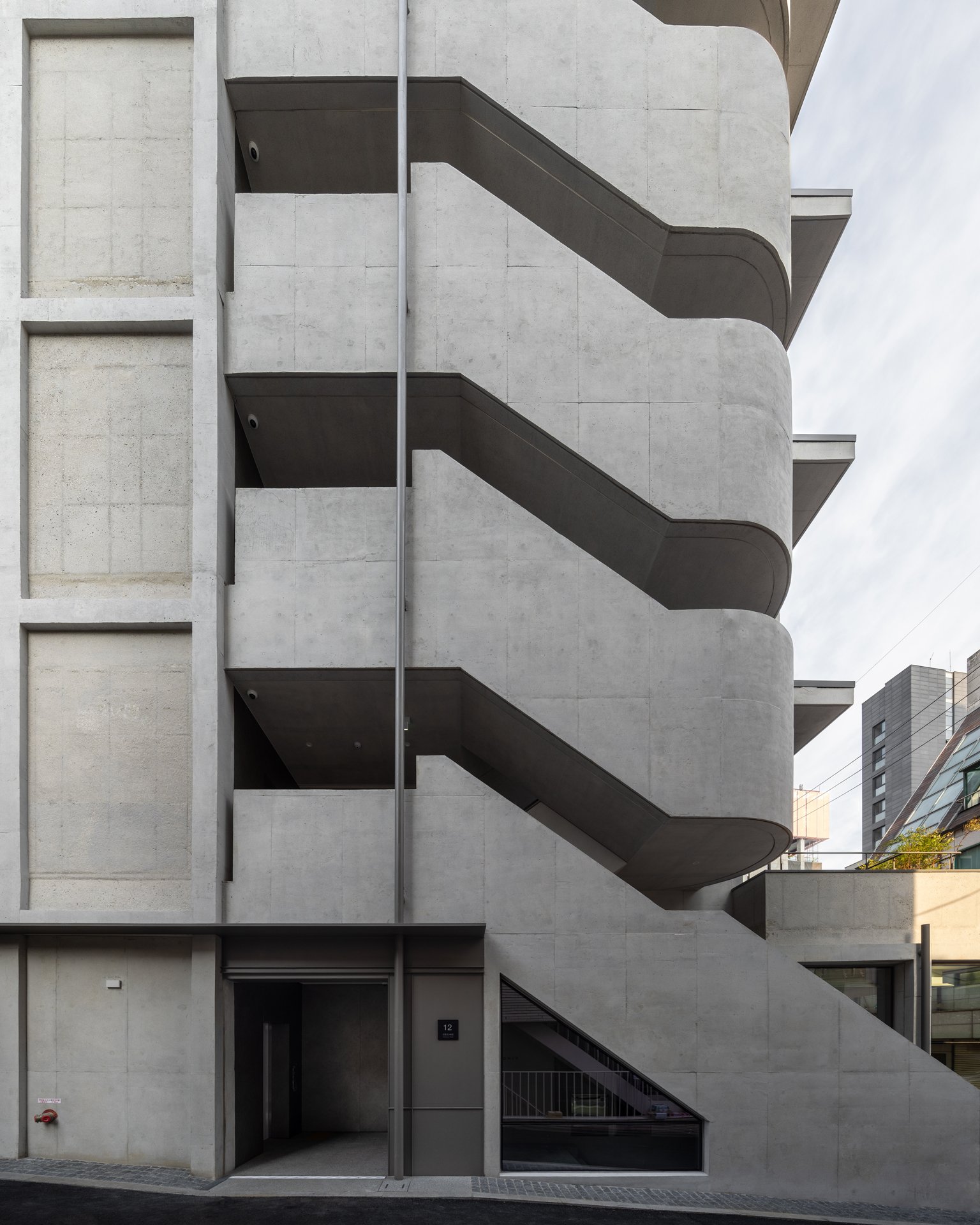
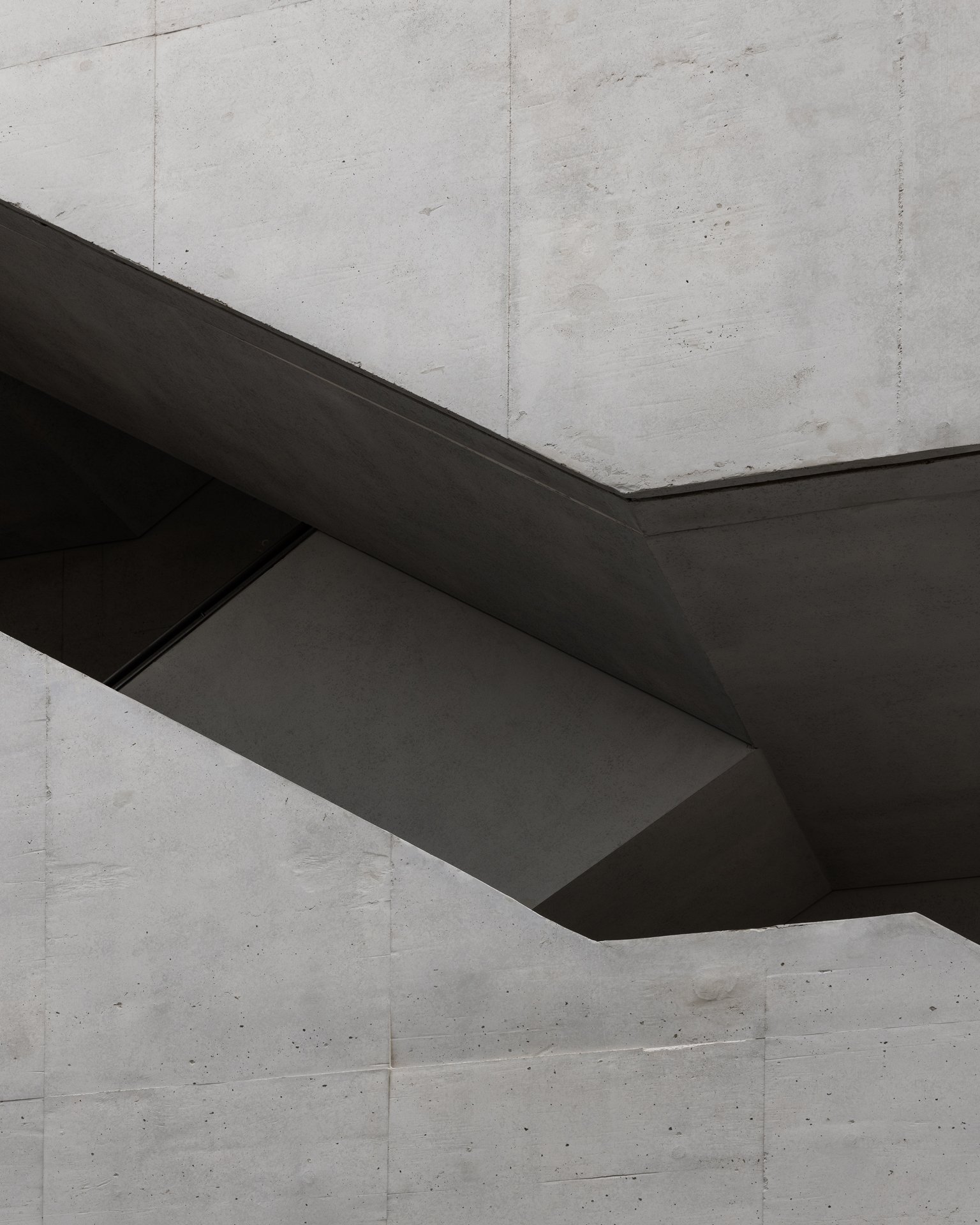
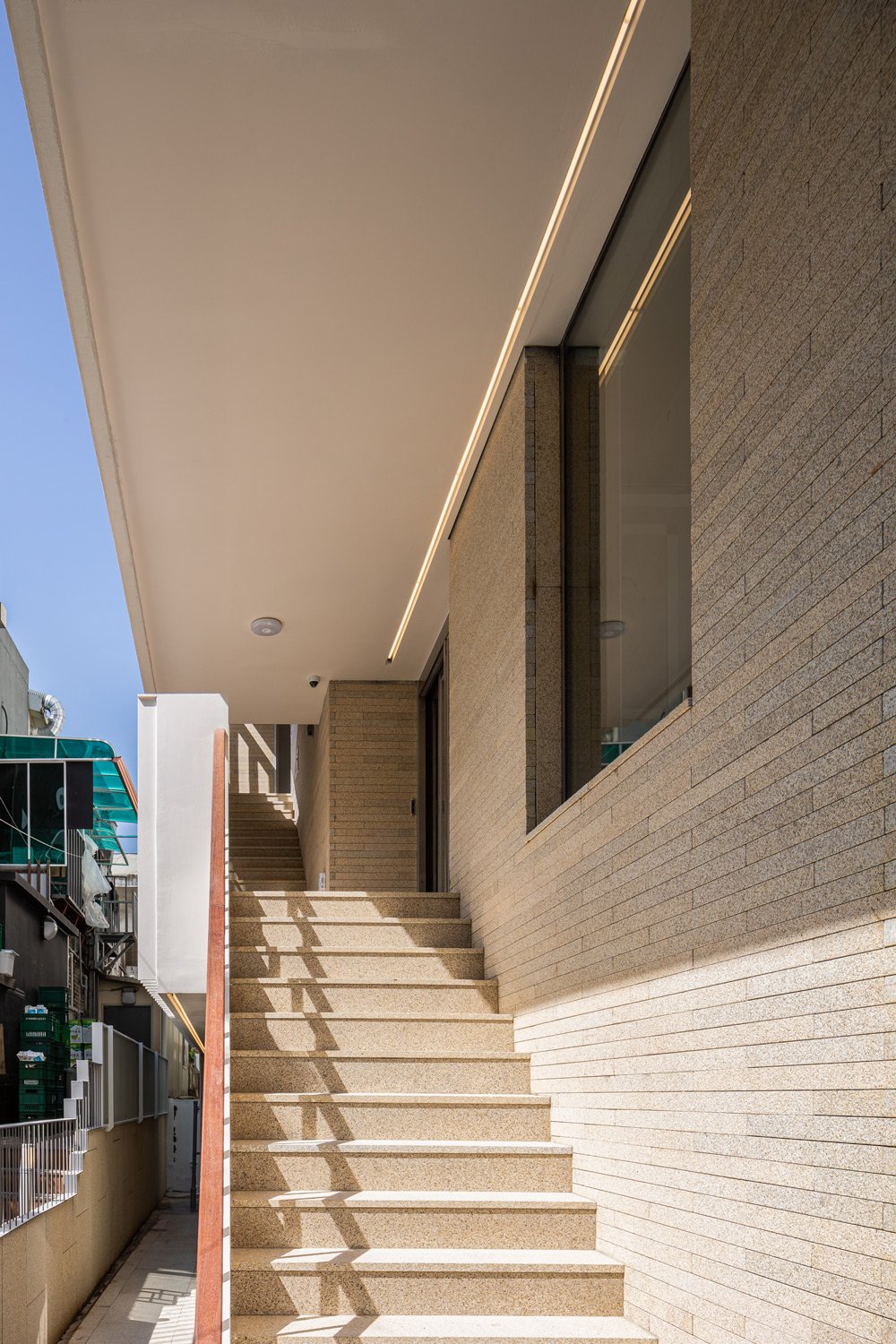
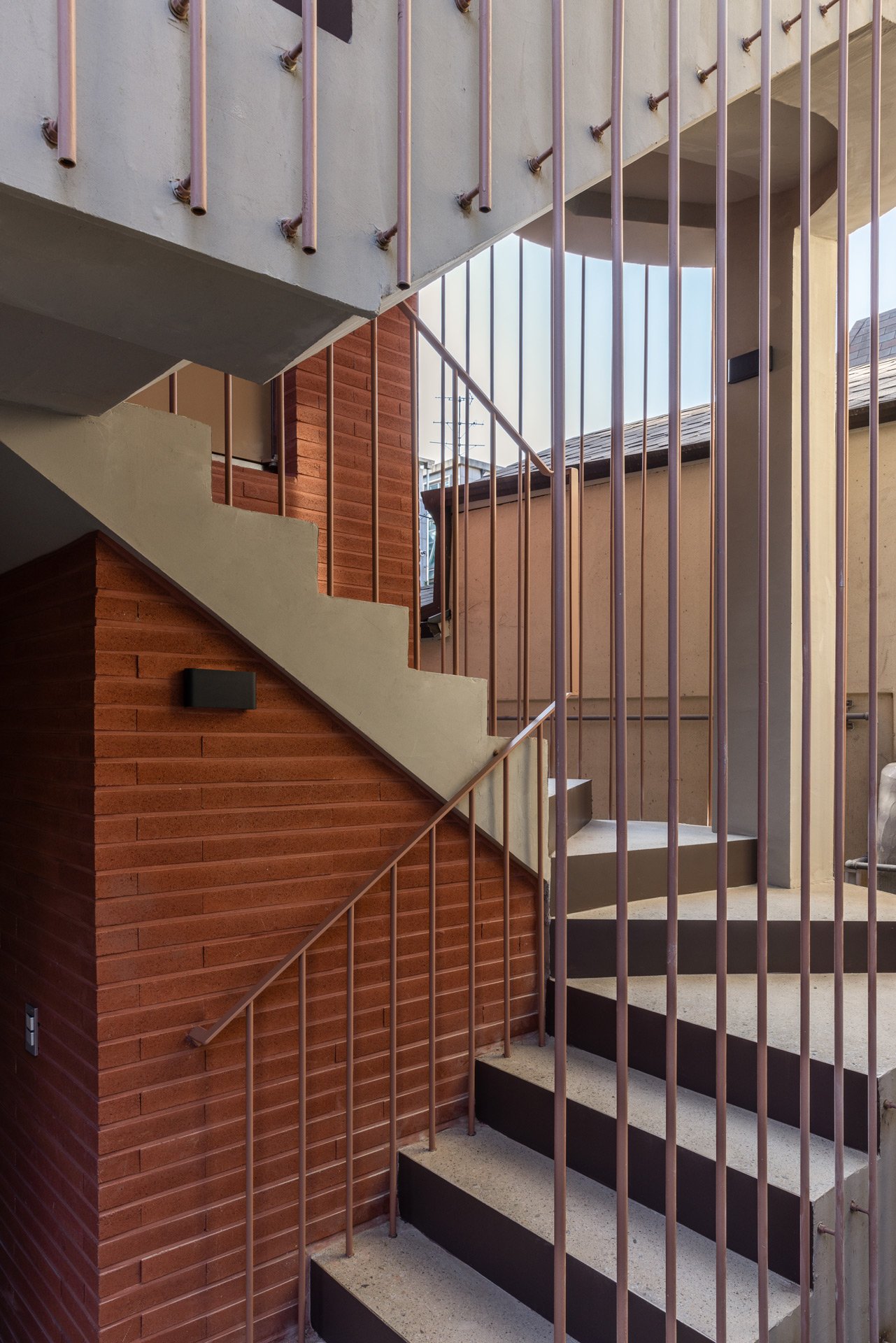
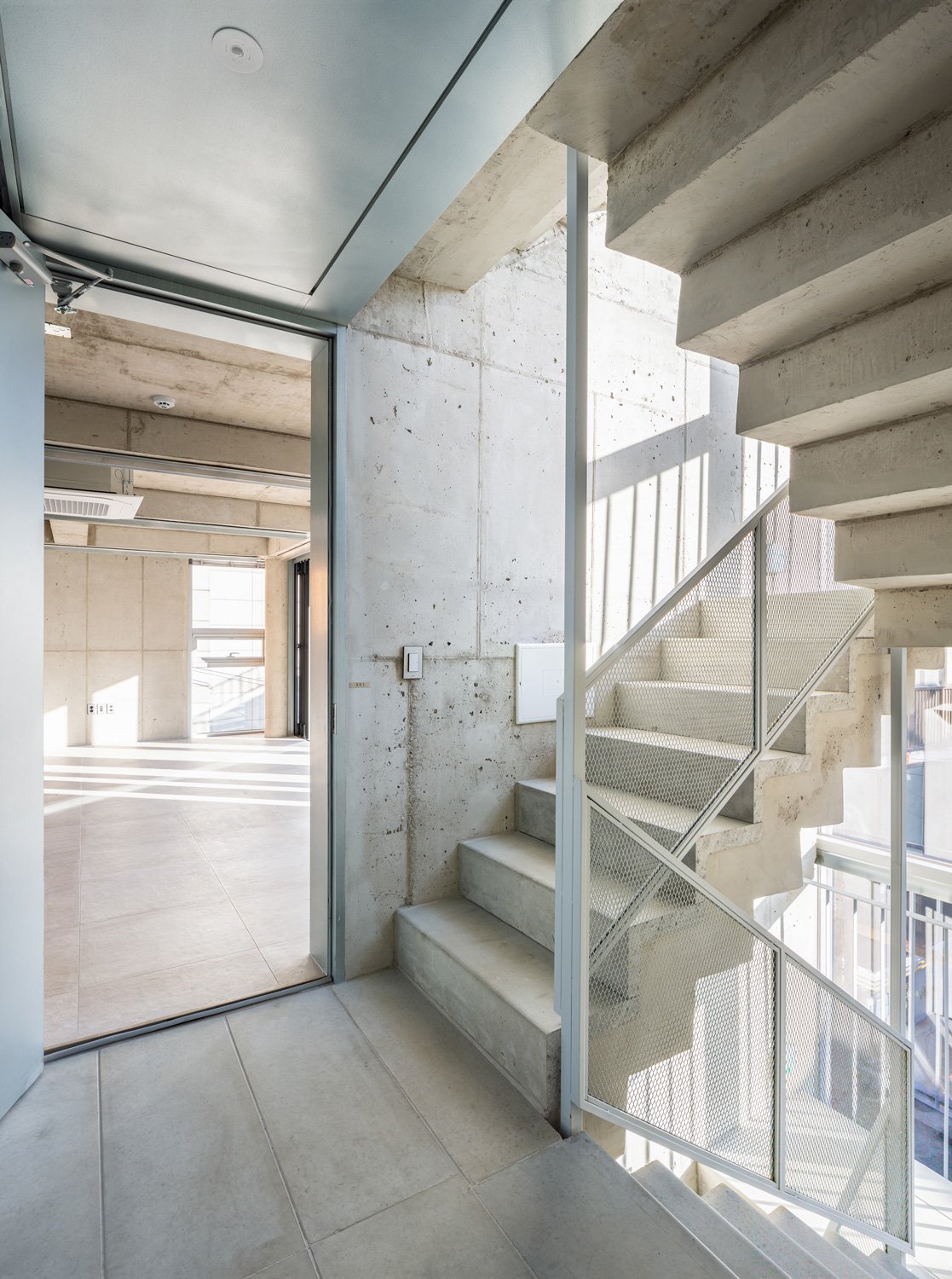
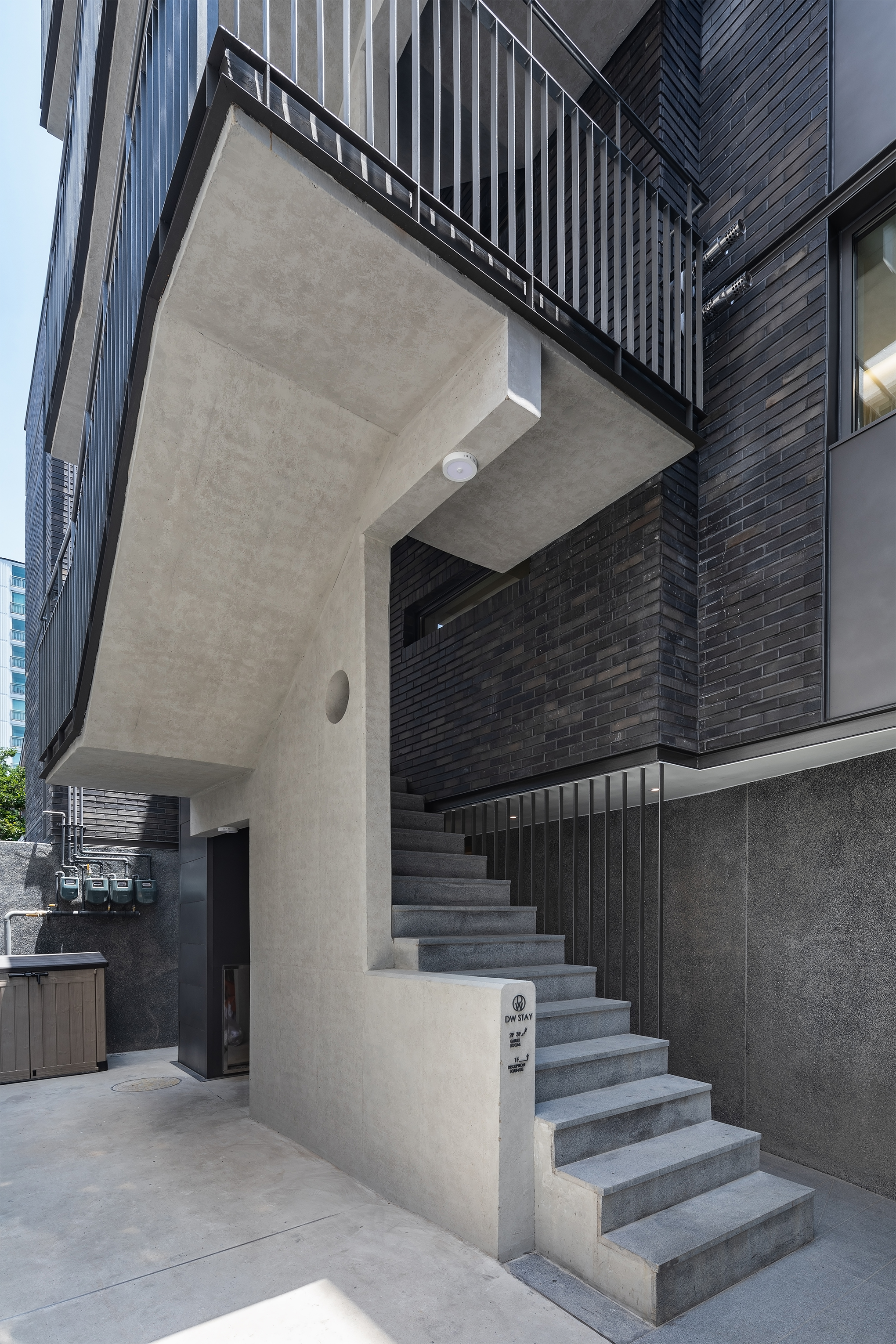
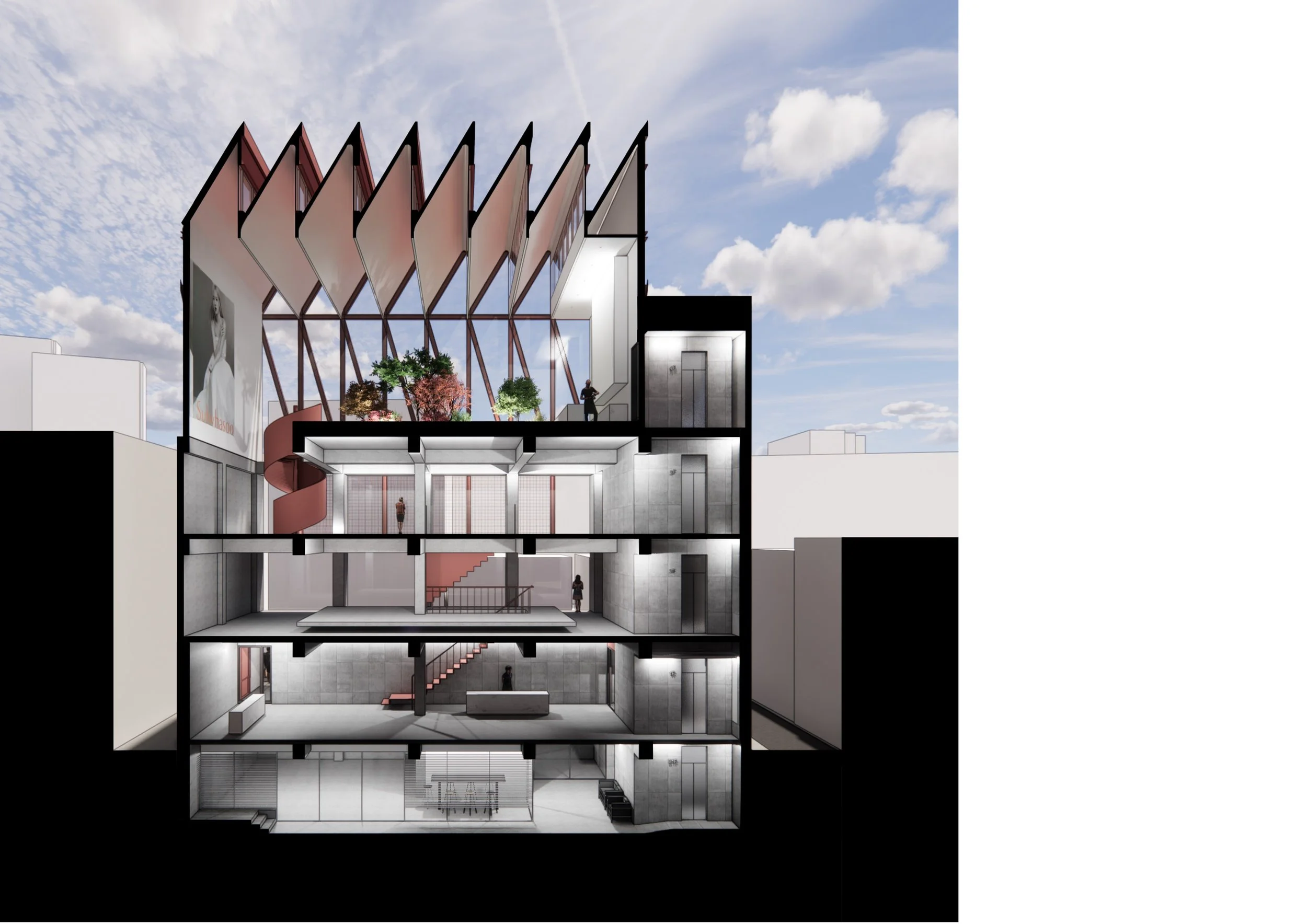
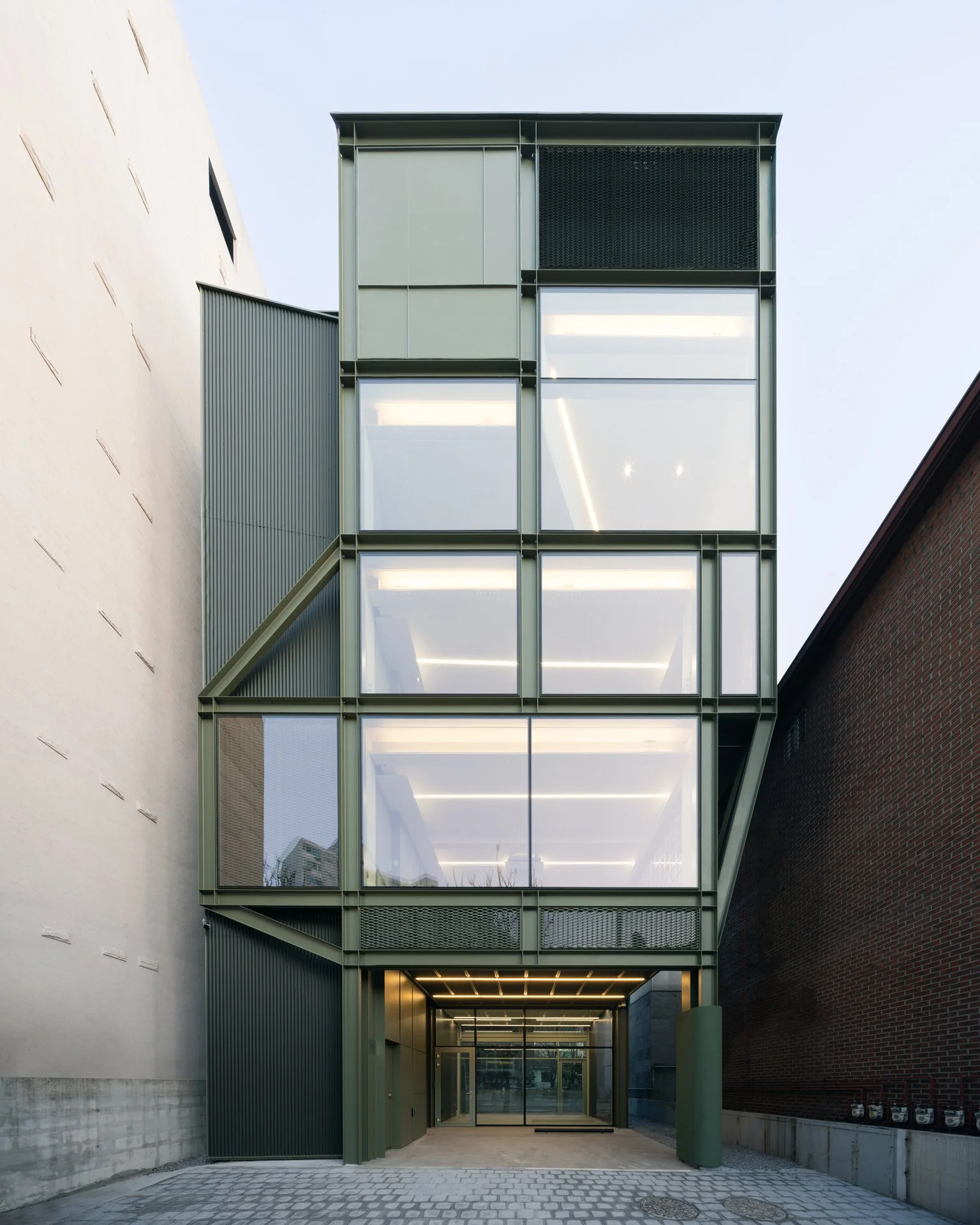
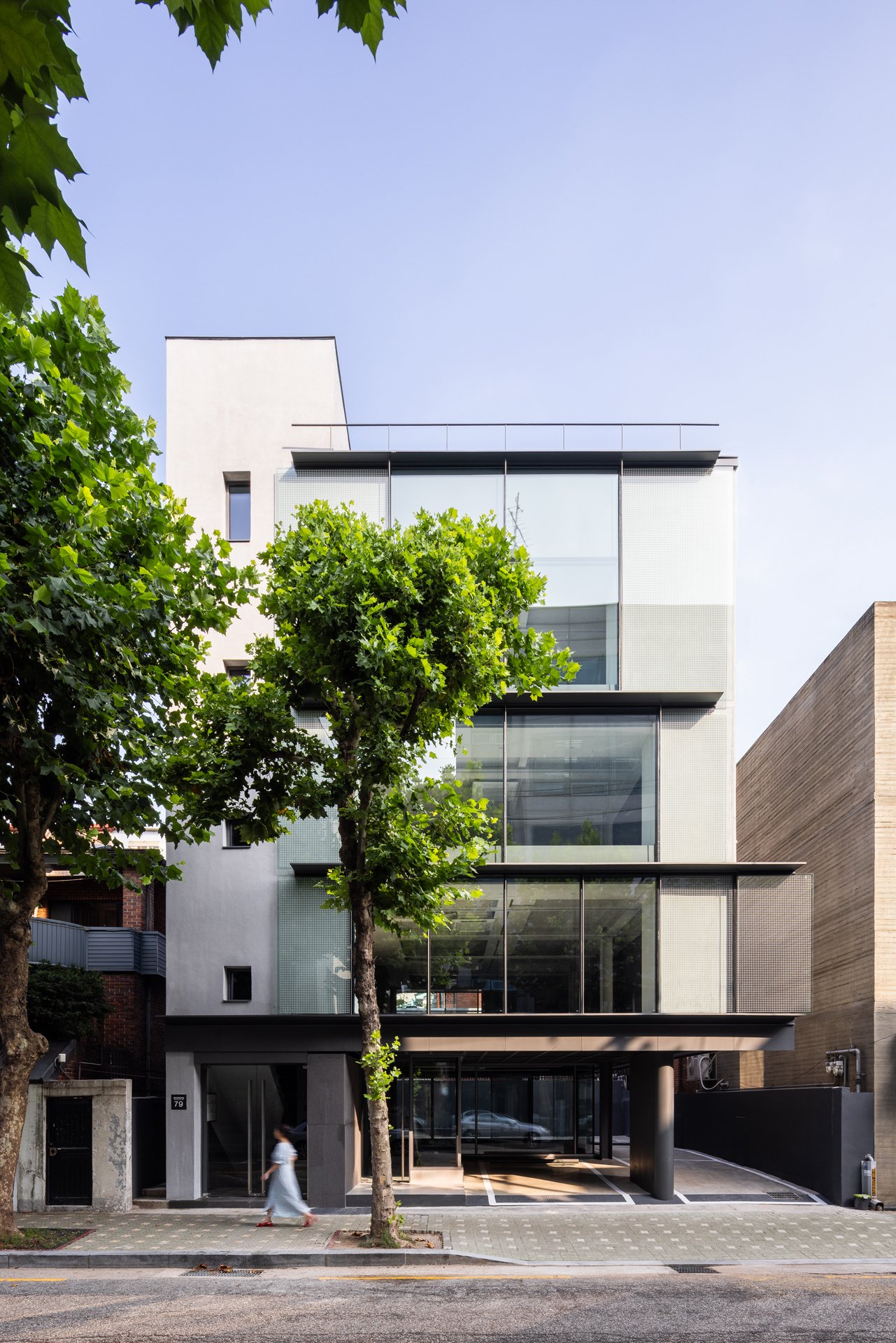
Vertical circulation is exposed to the exterior.
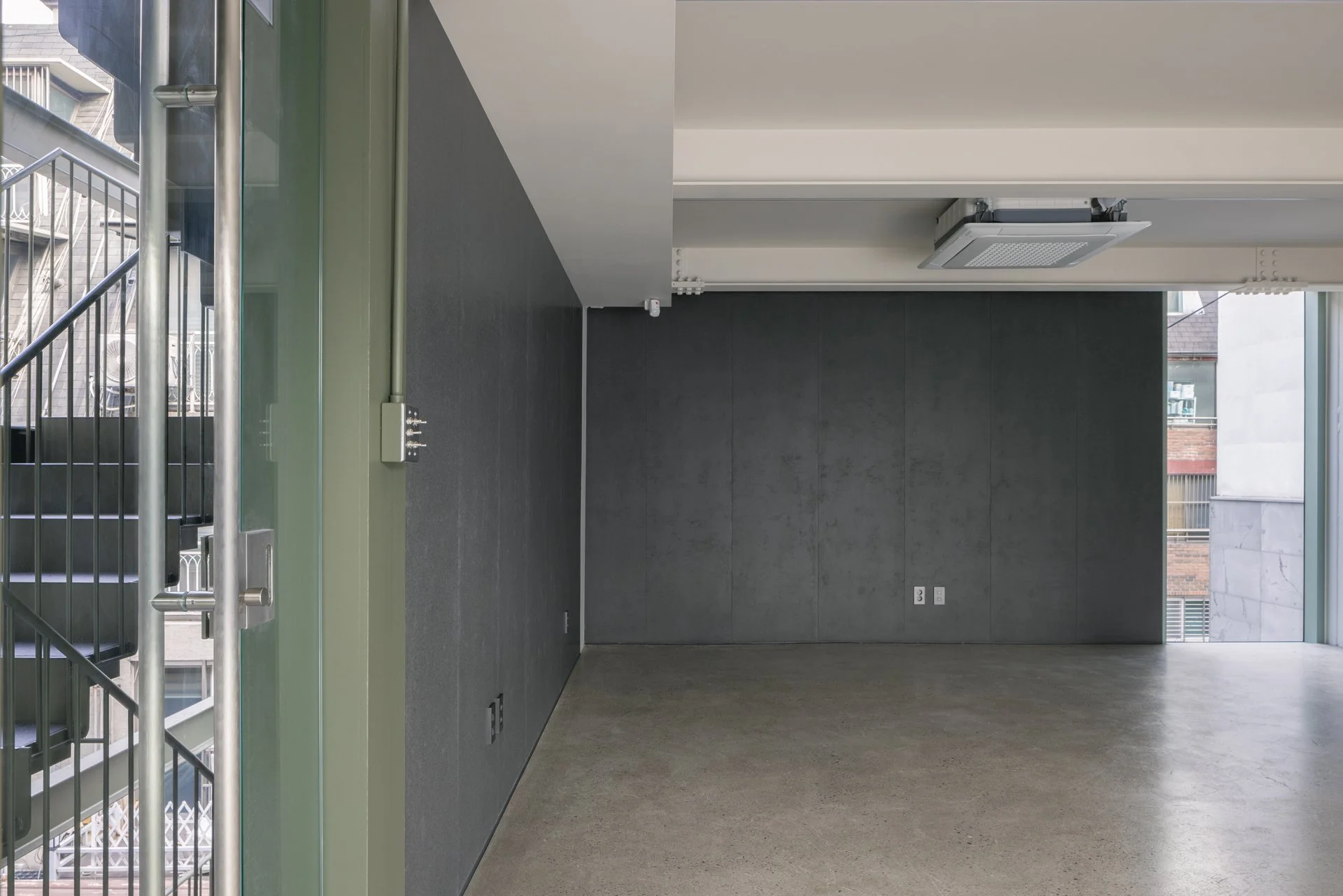
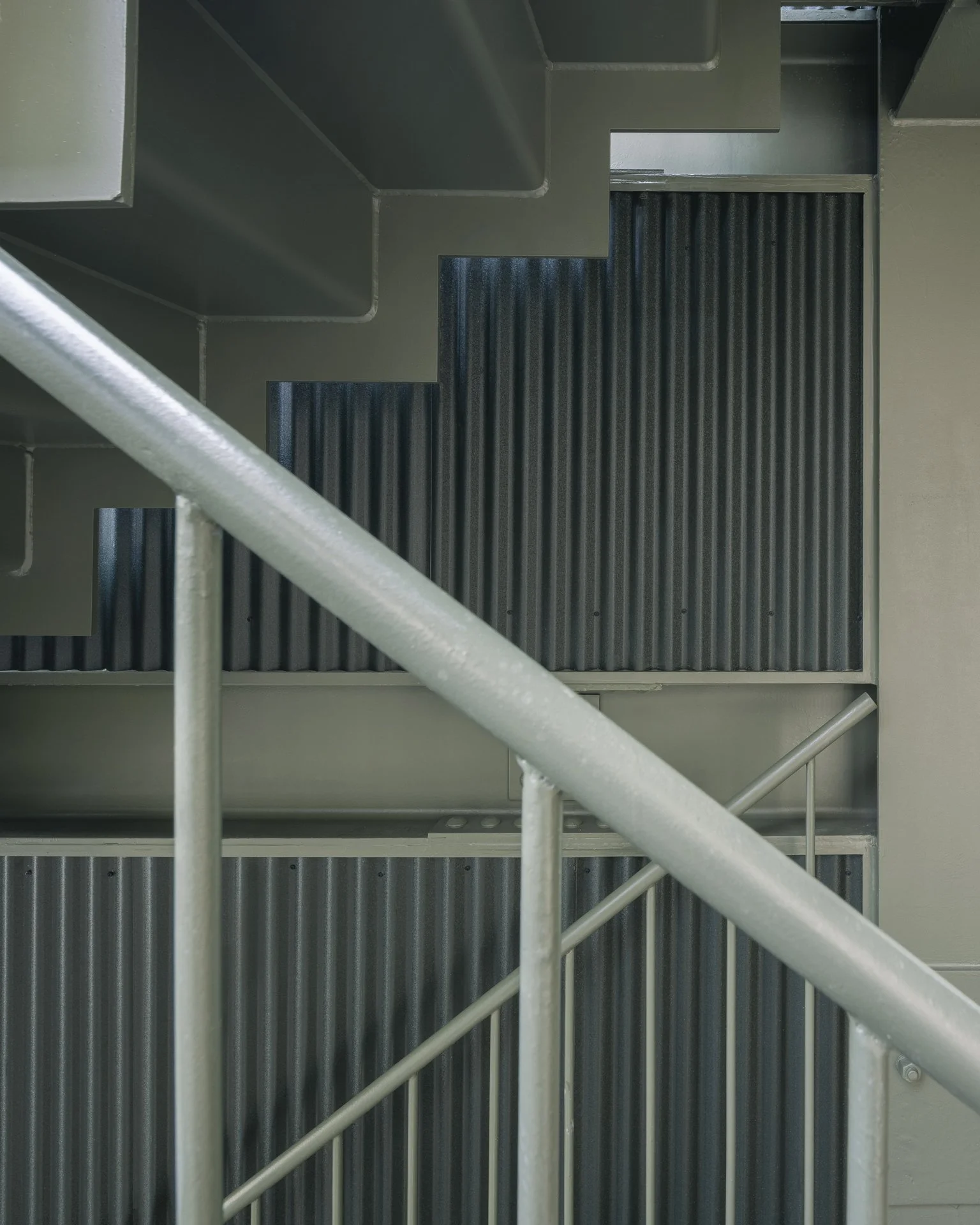
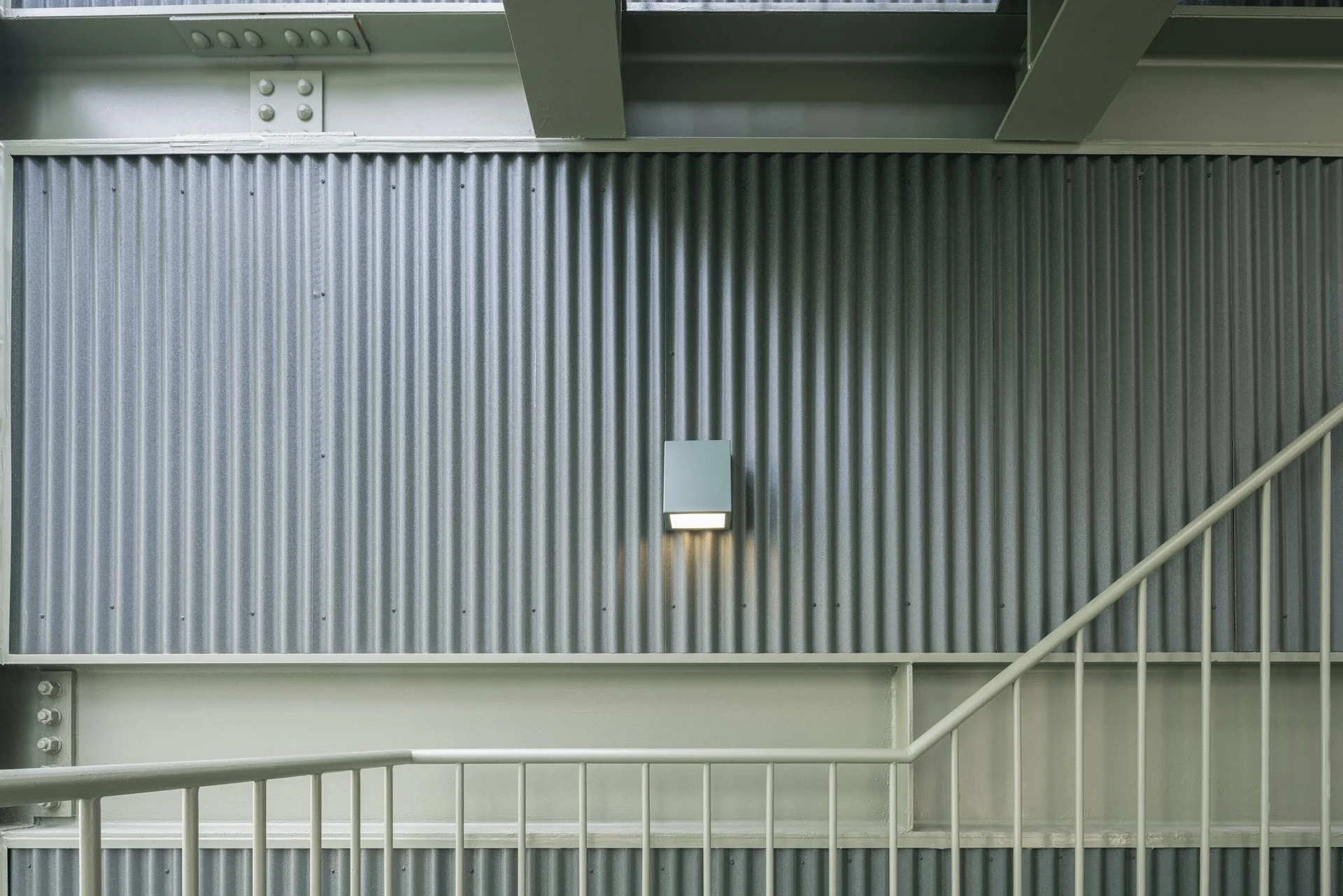
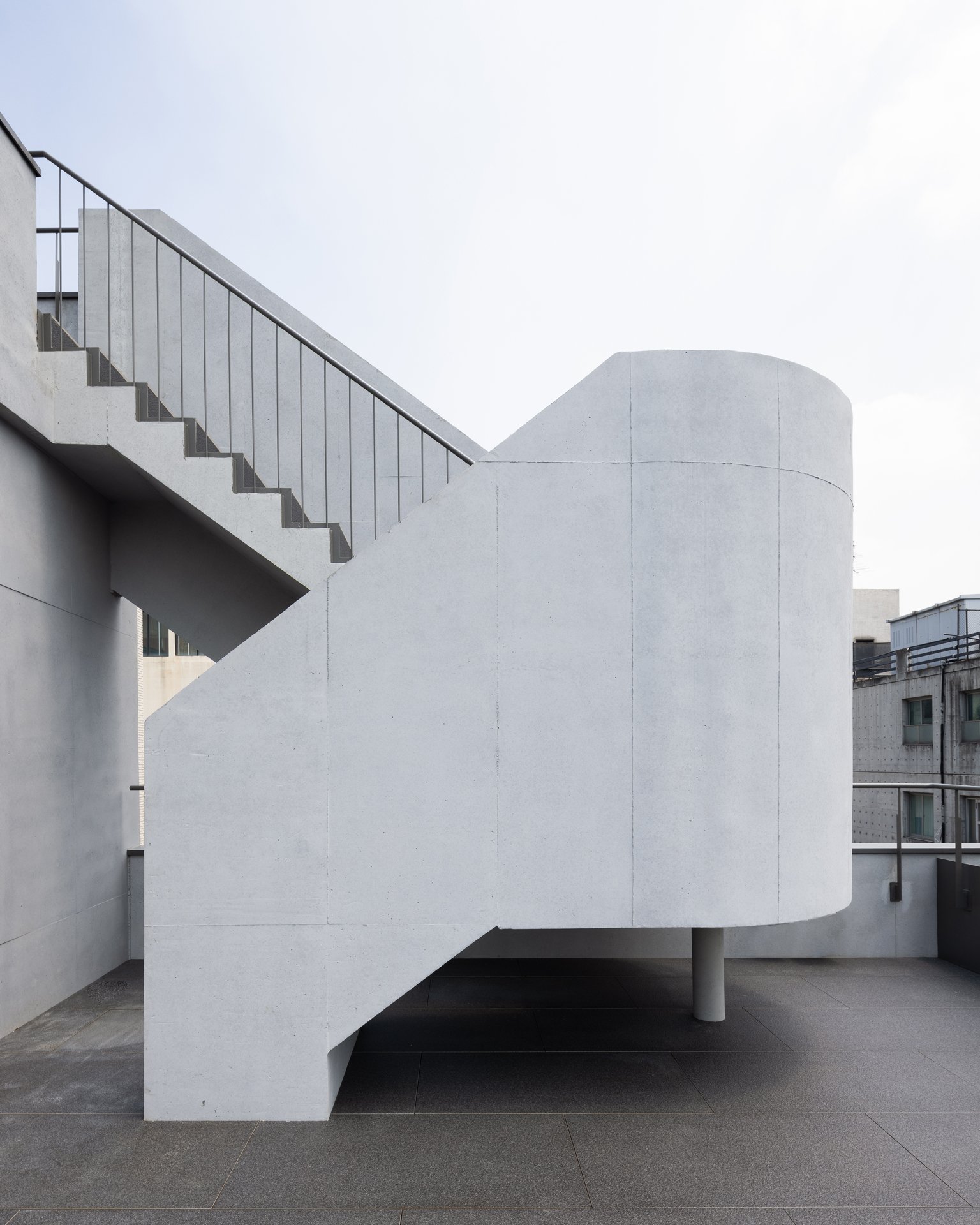
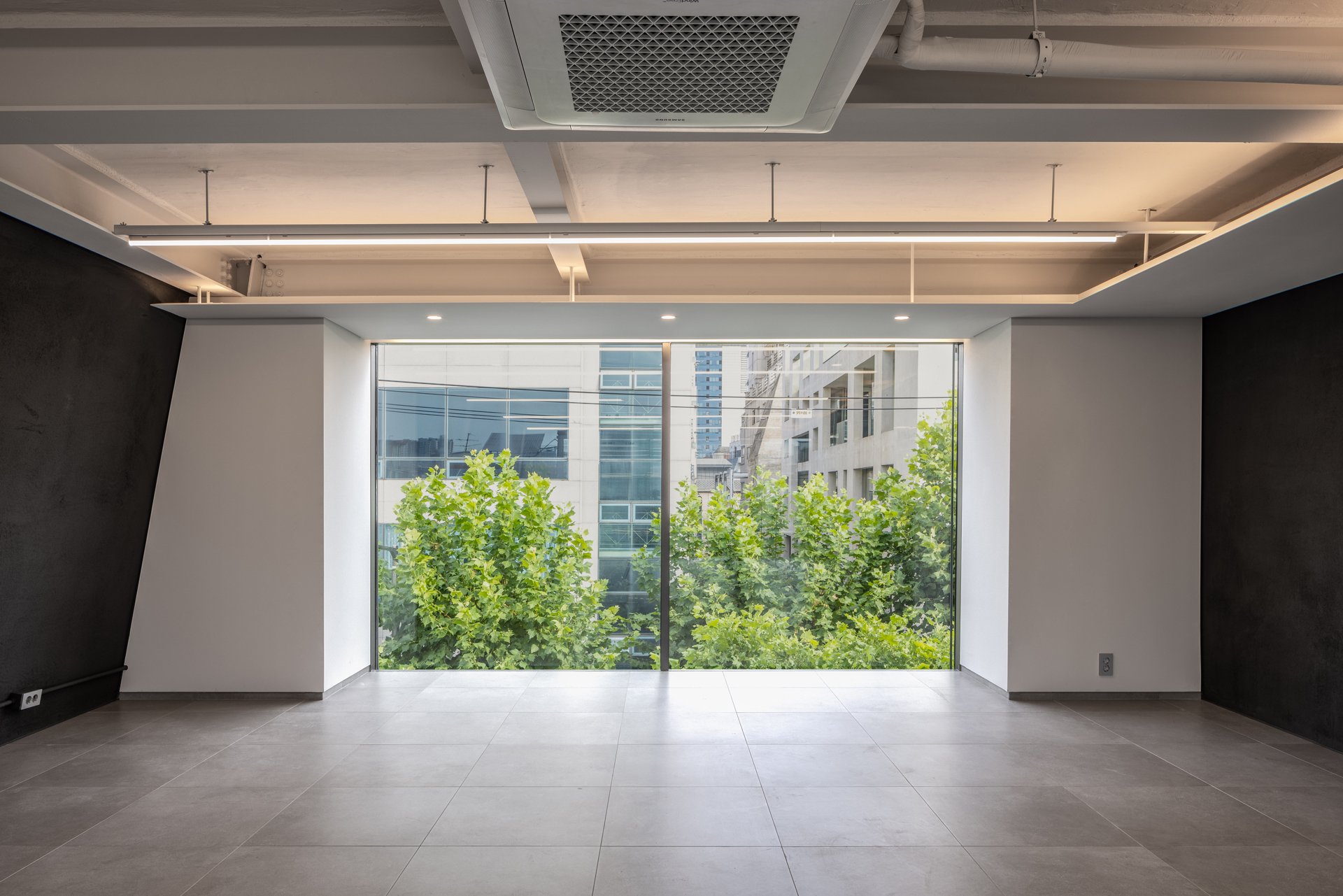
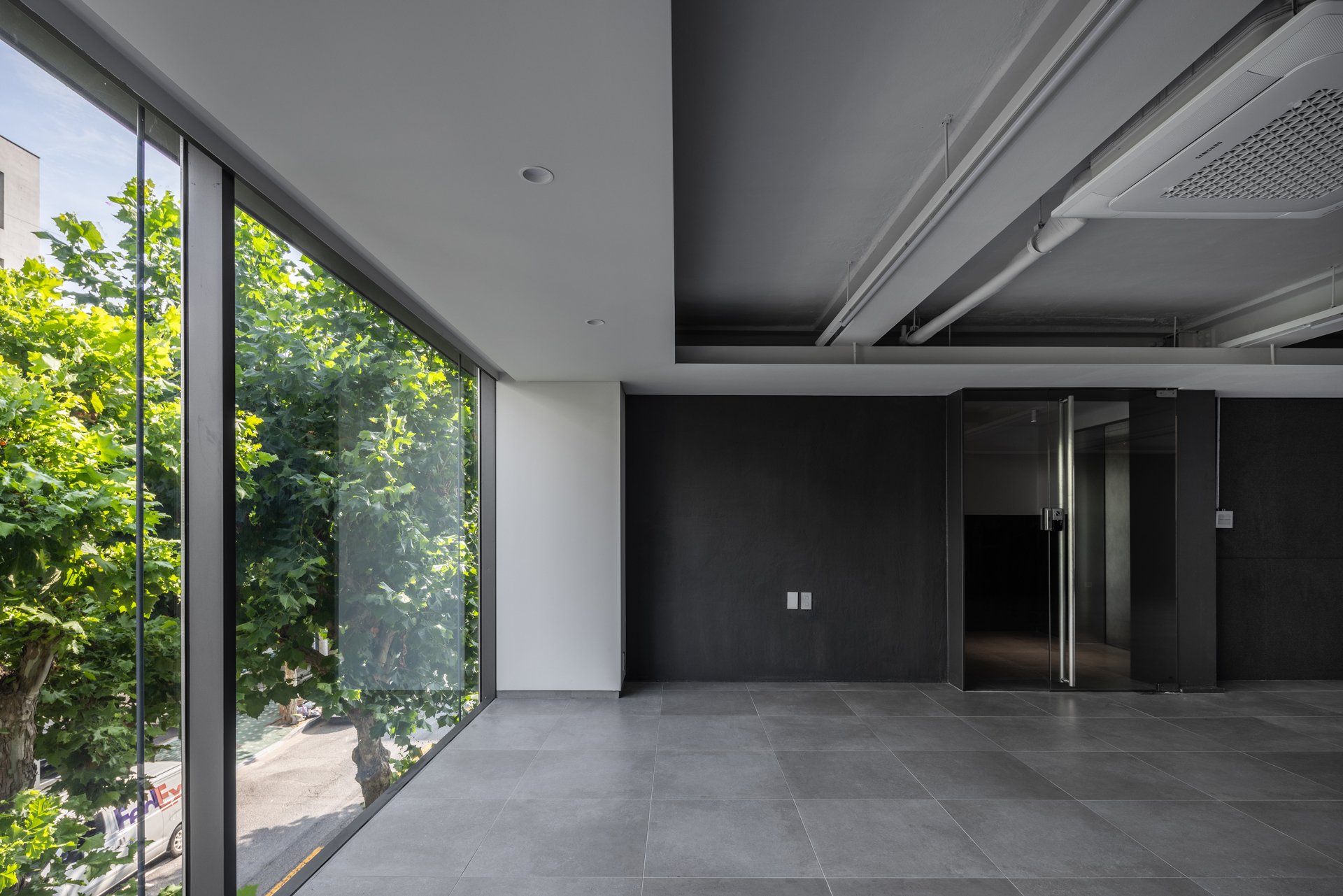
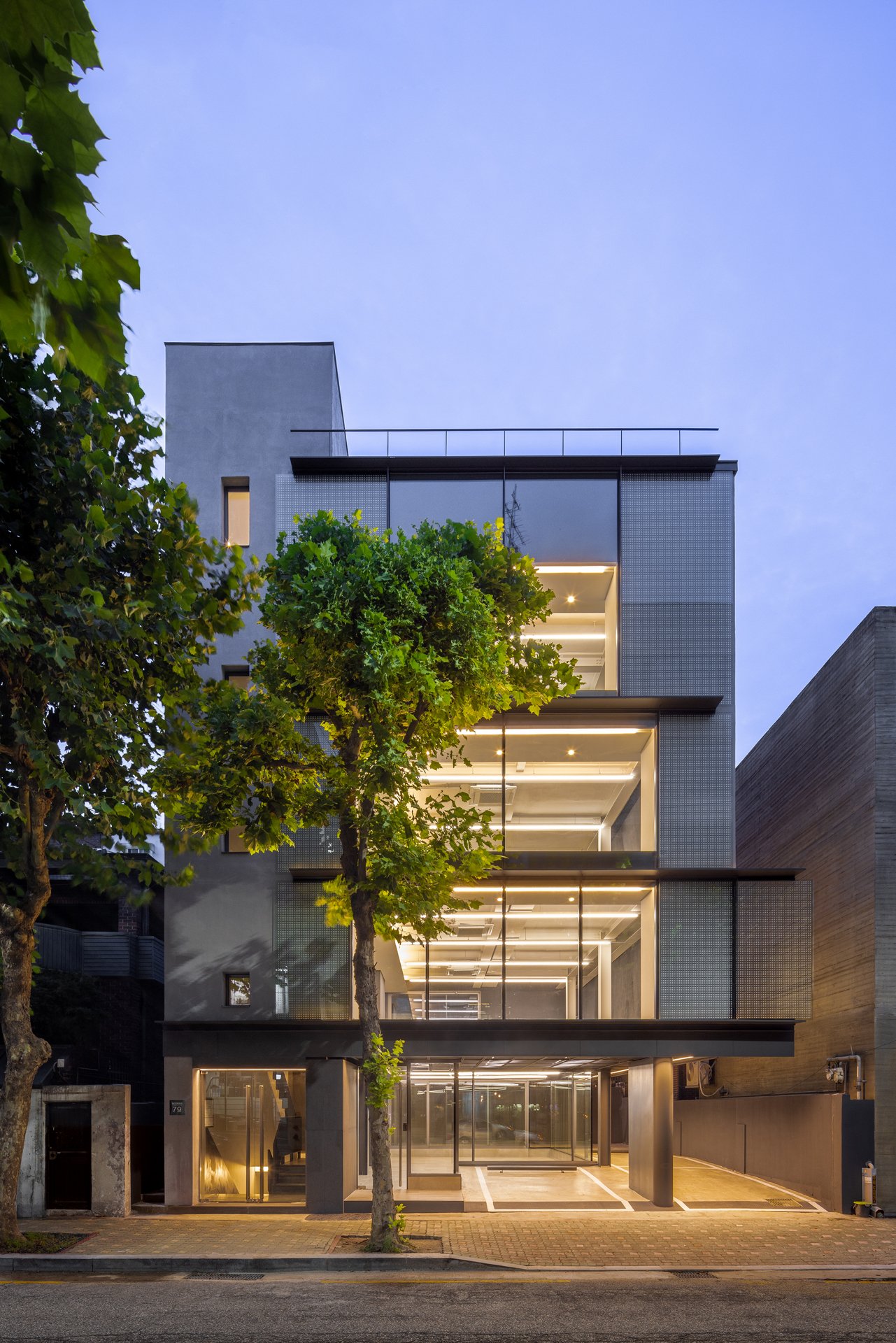
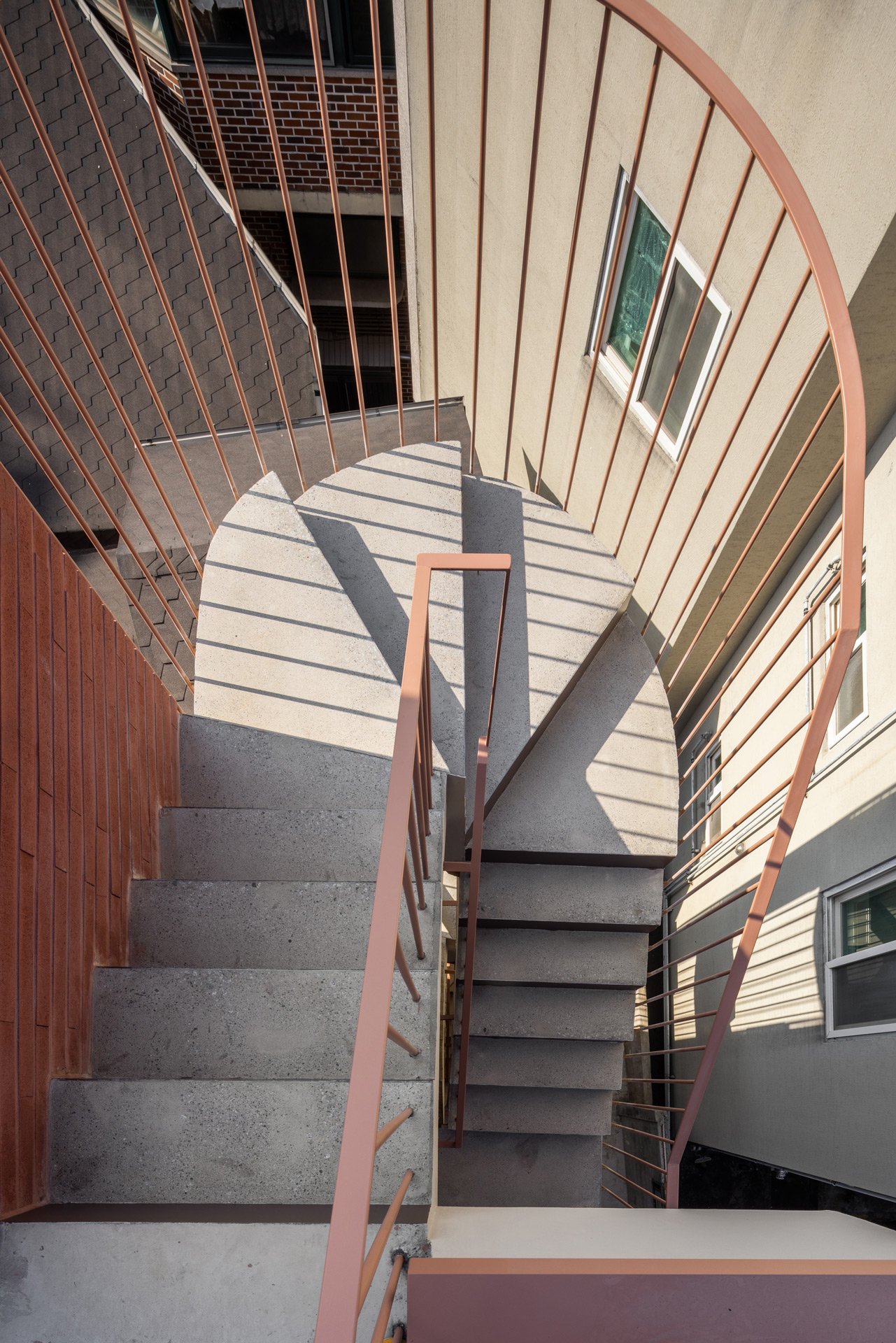
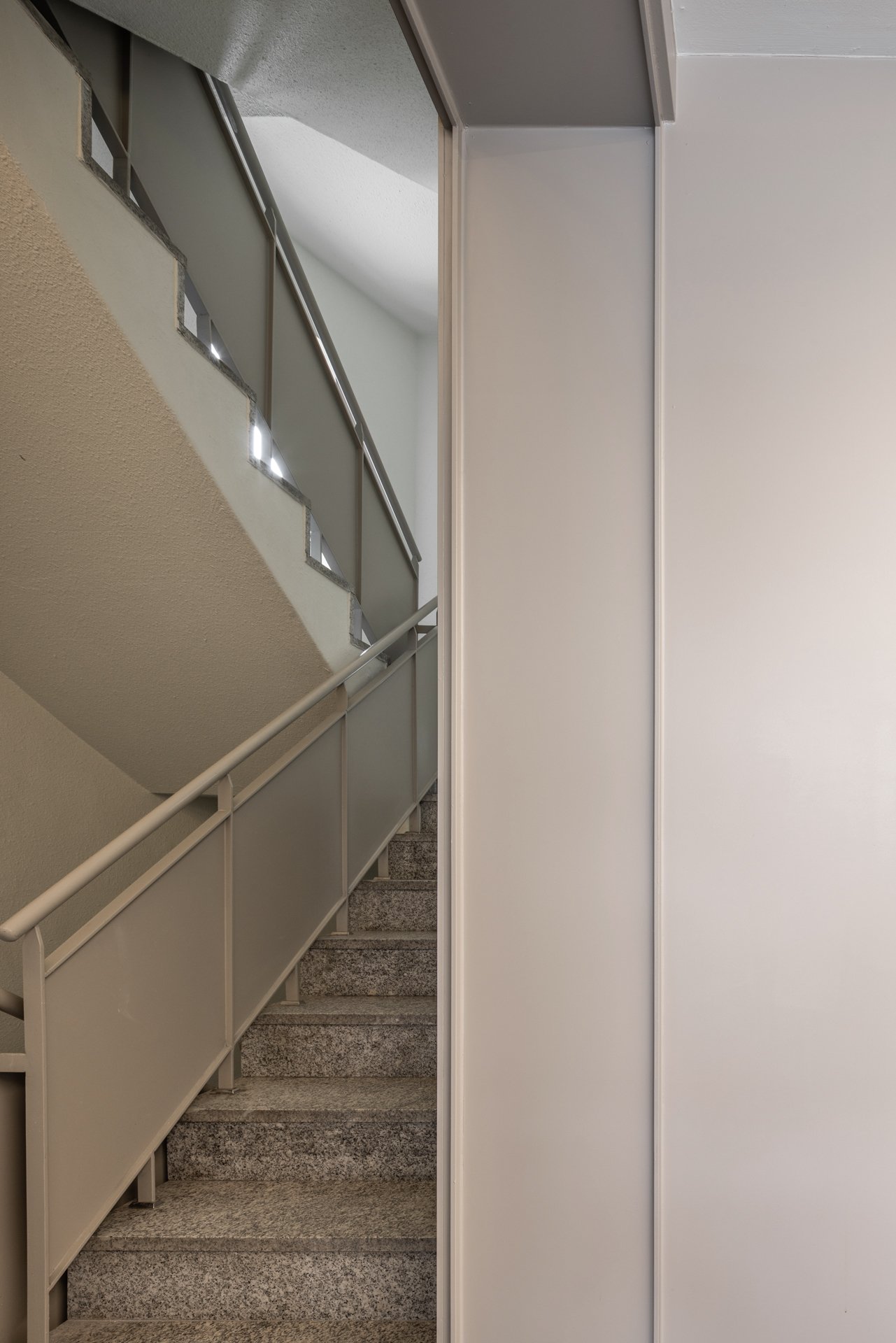
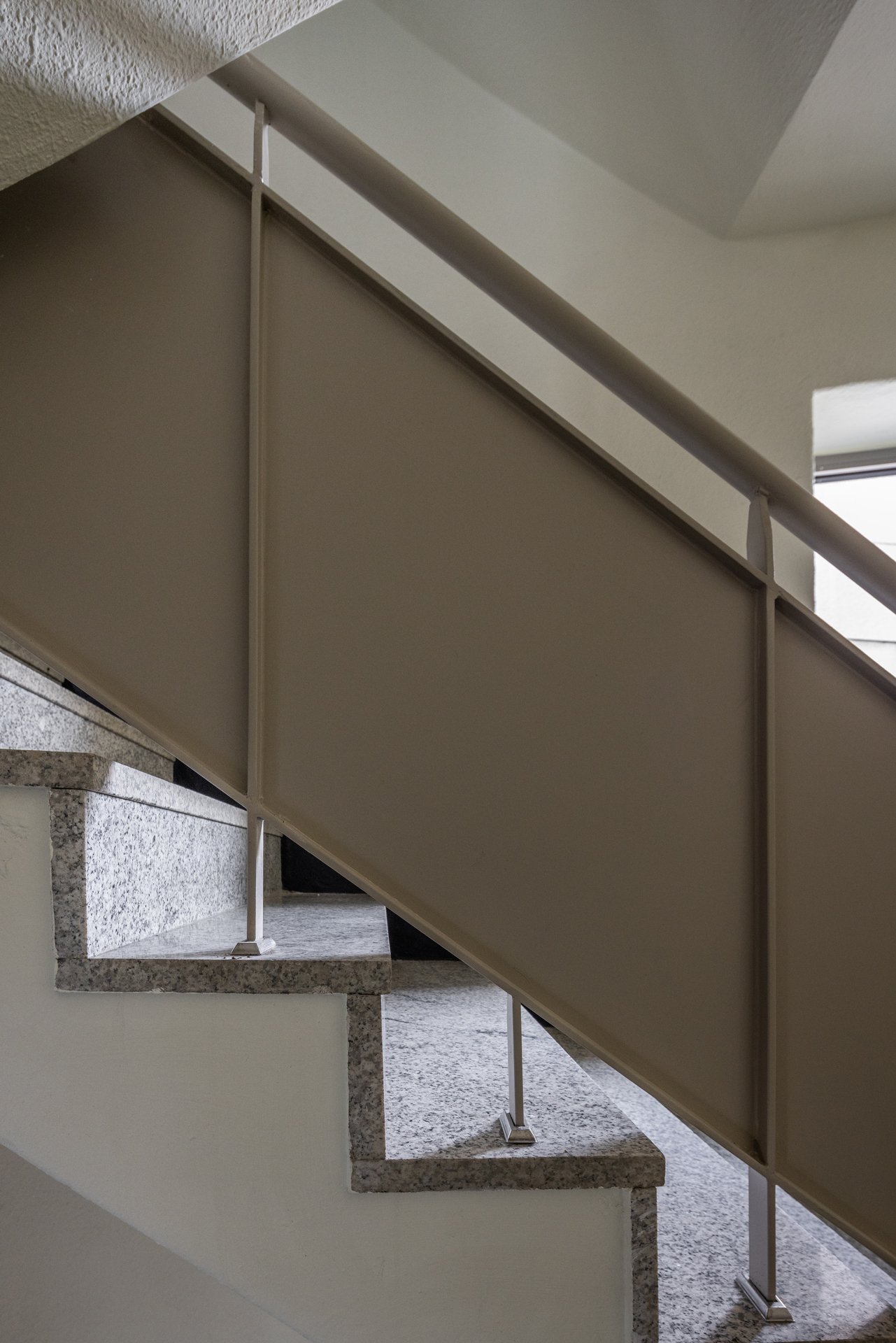
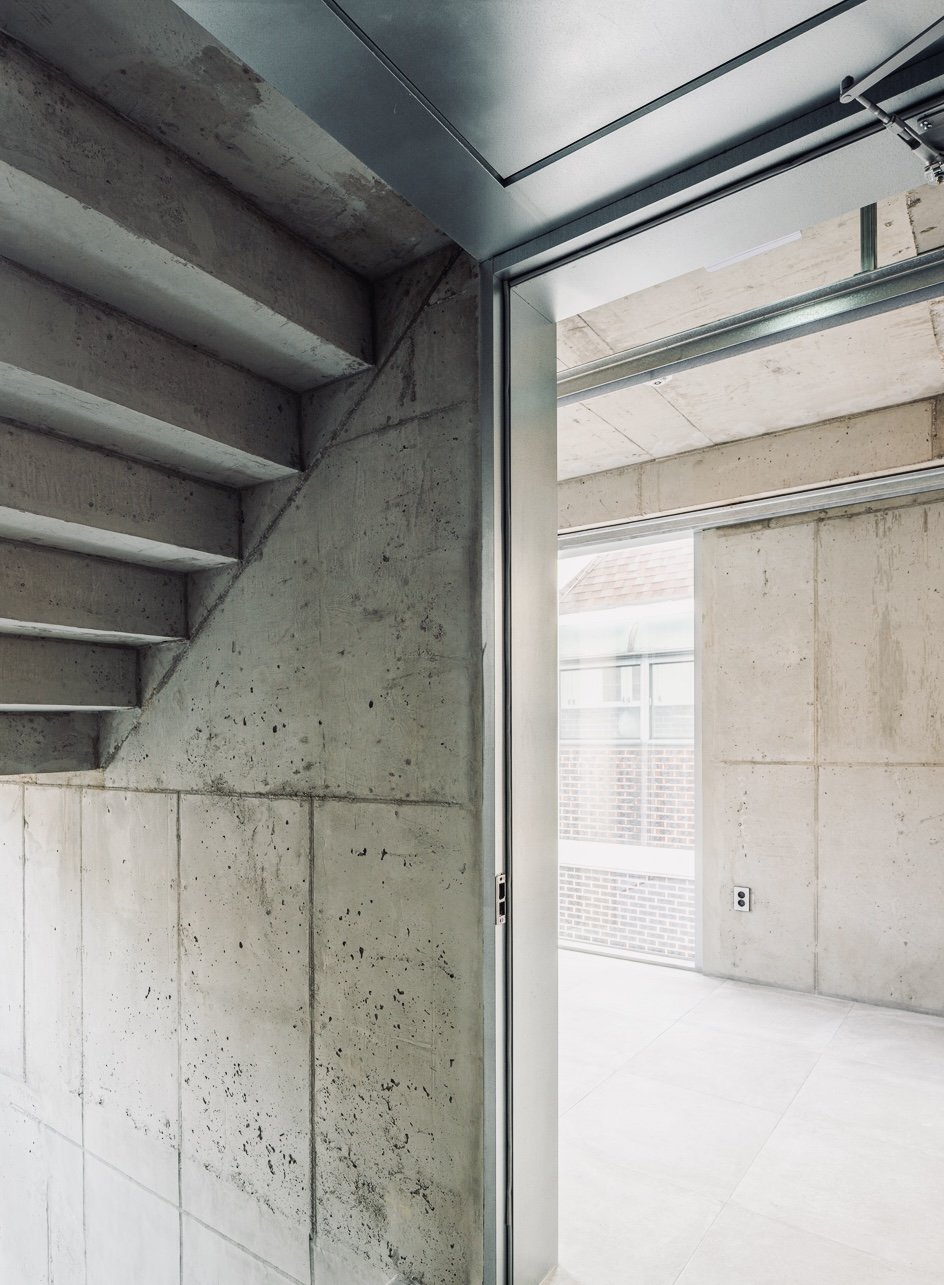
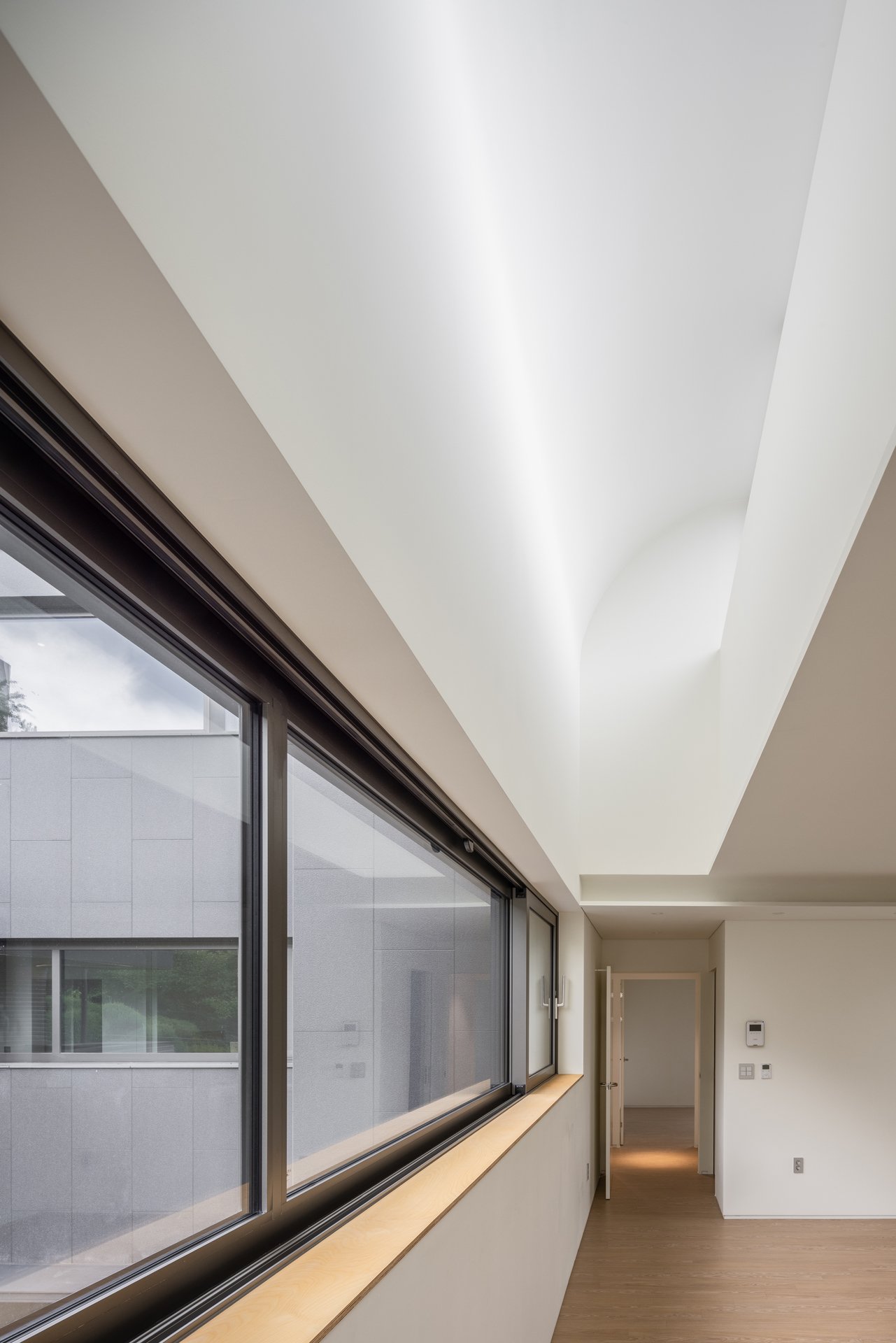
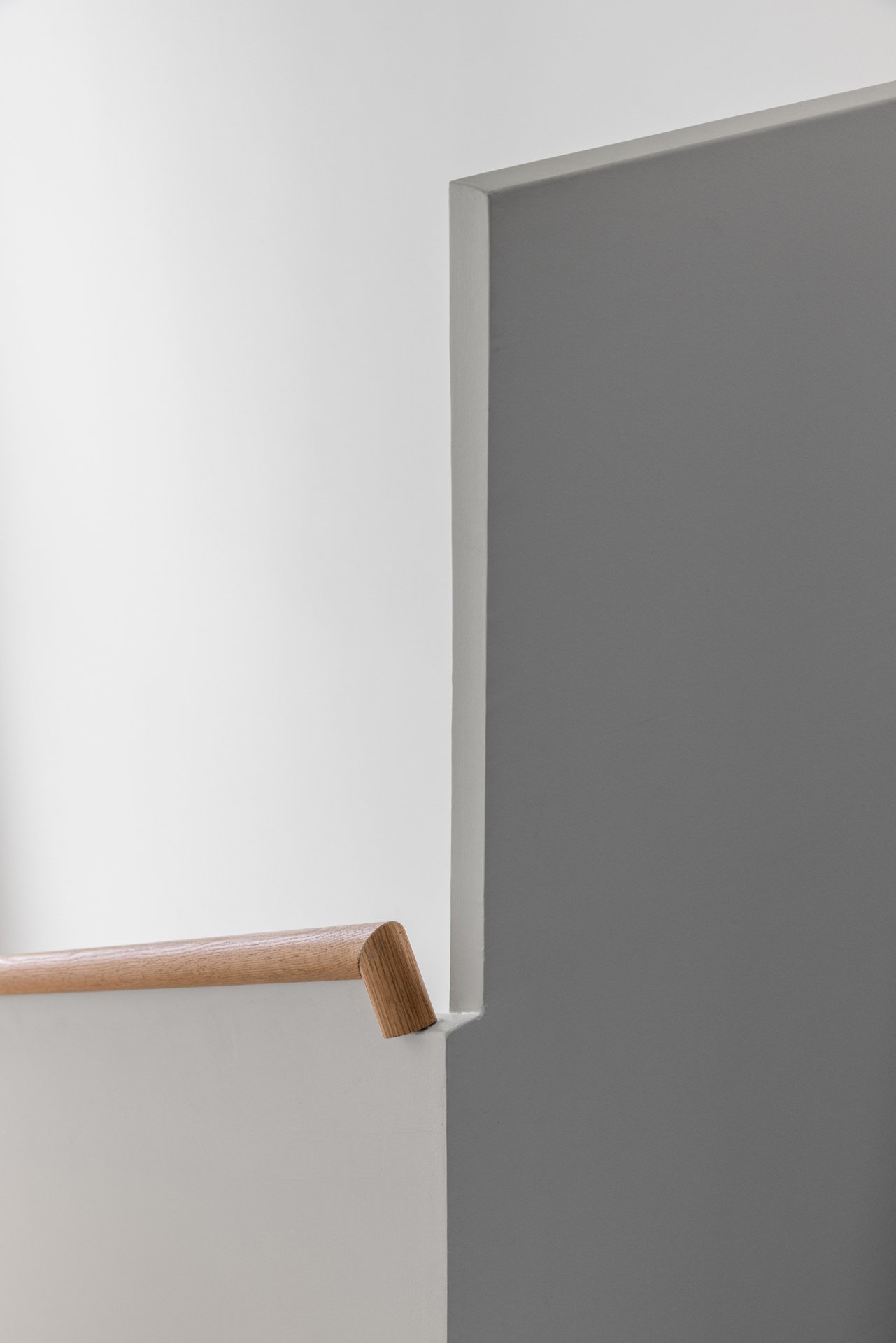
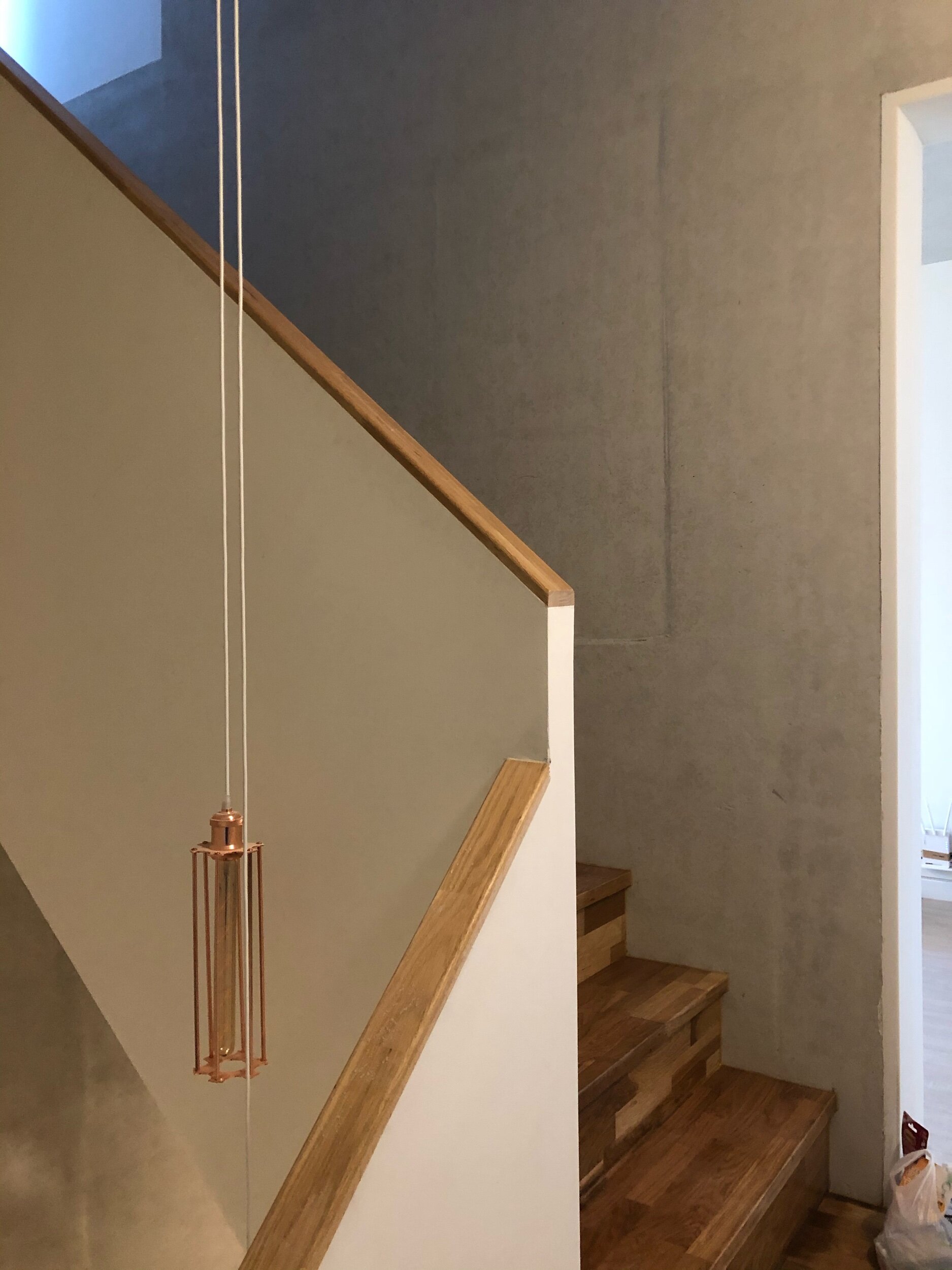
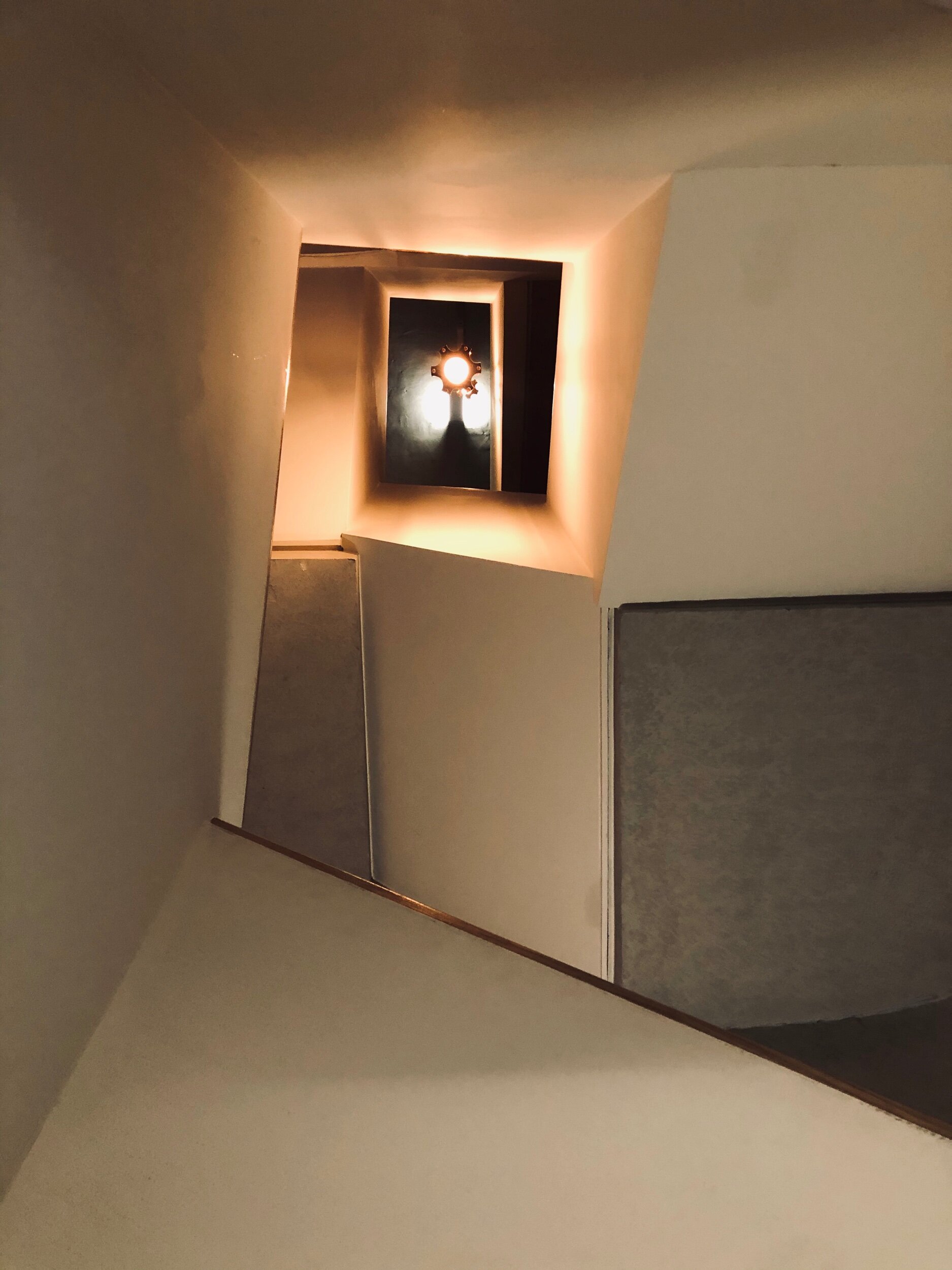
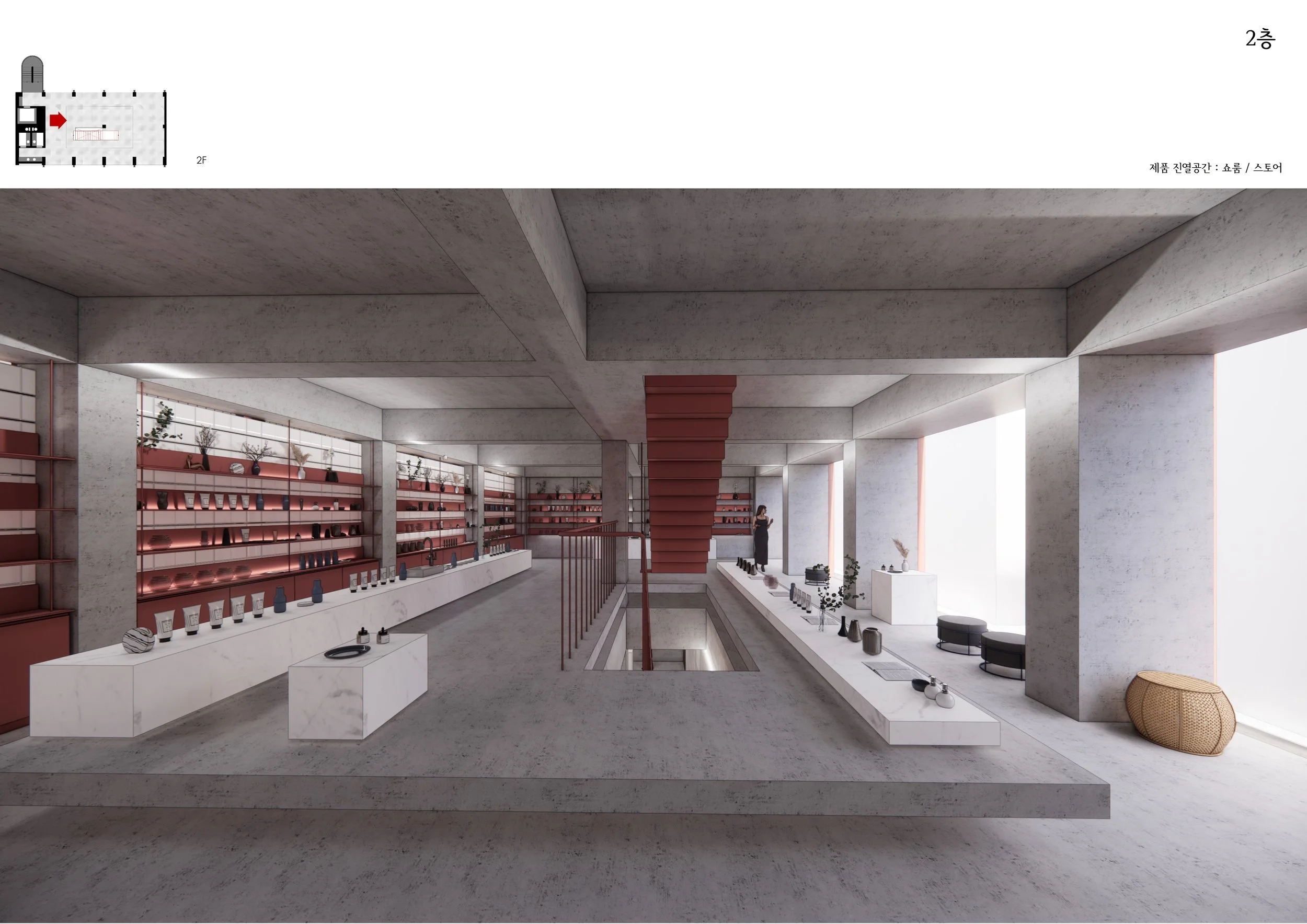
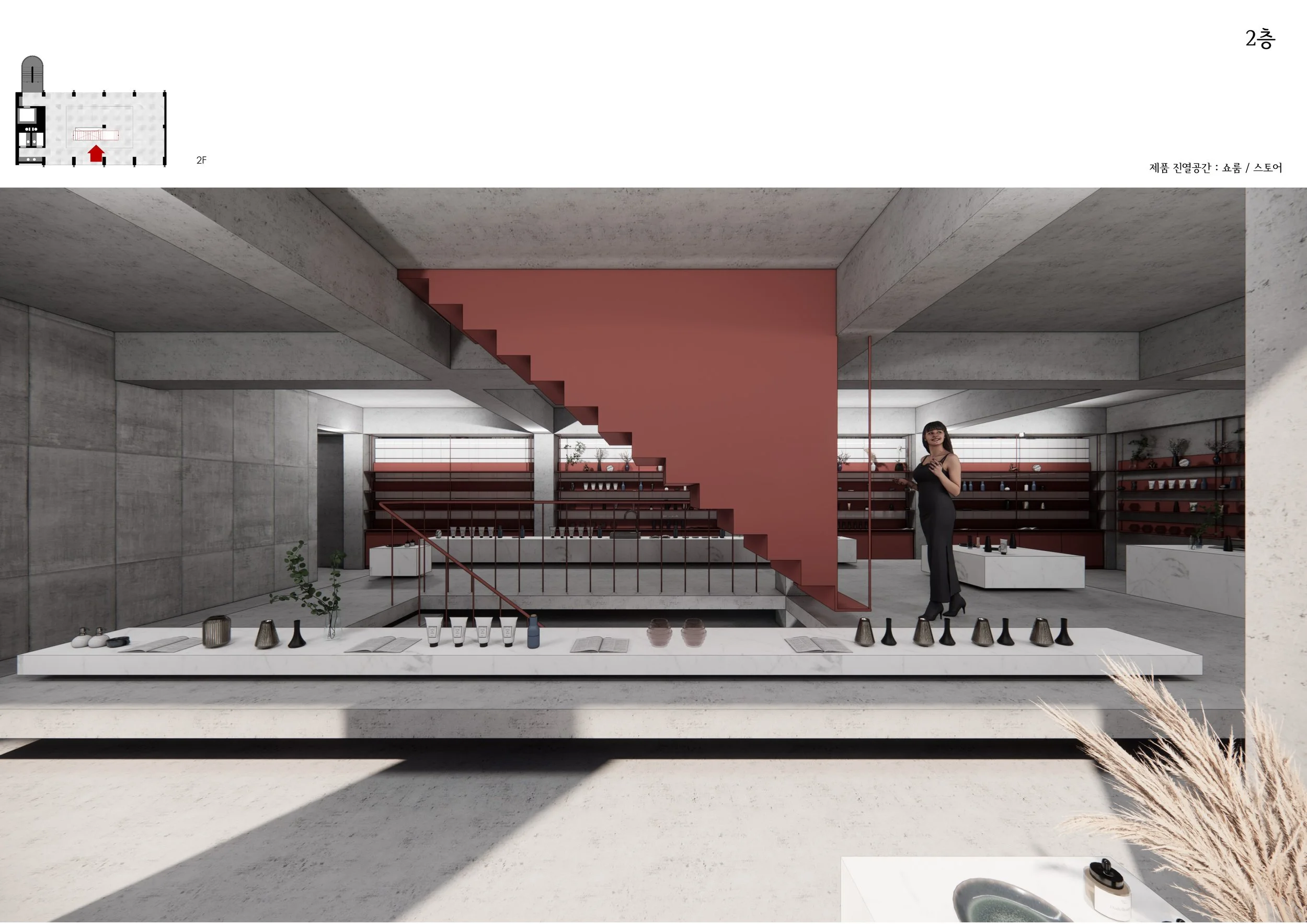
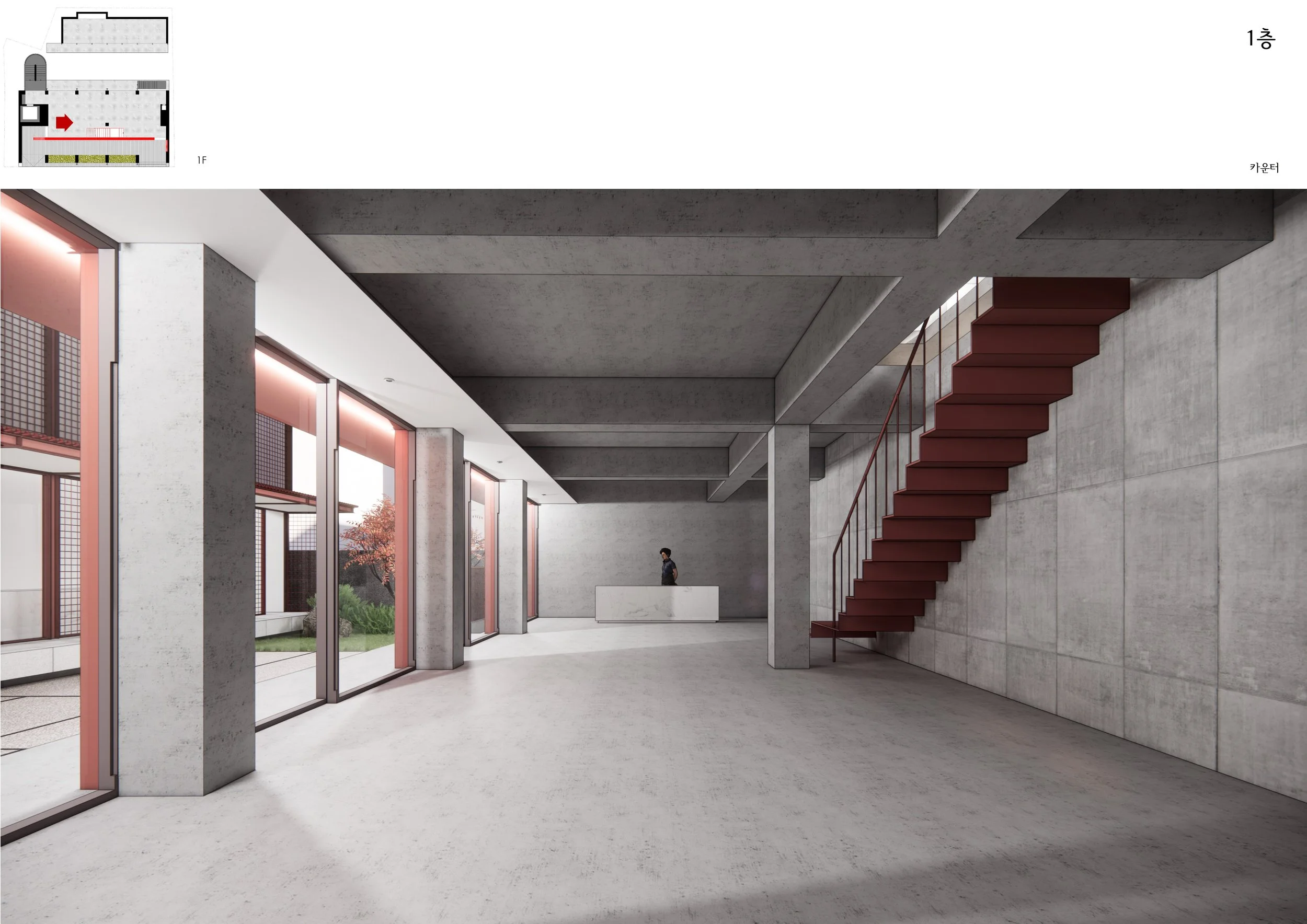
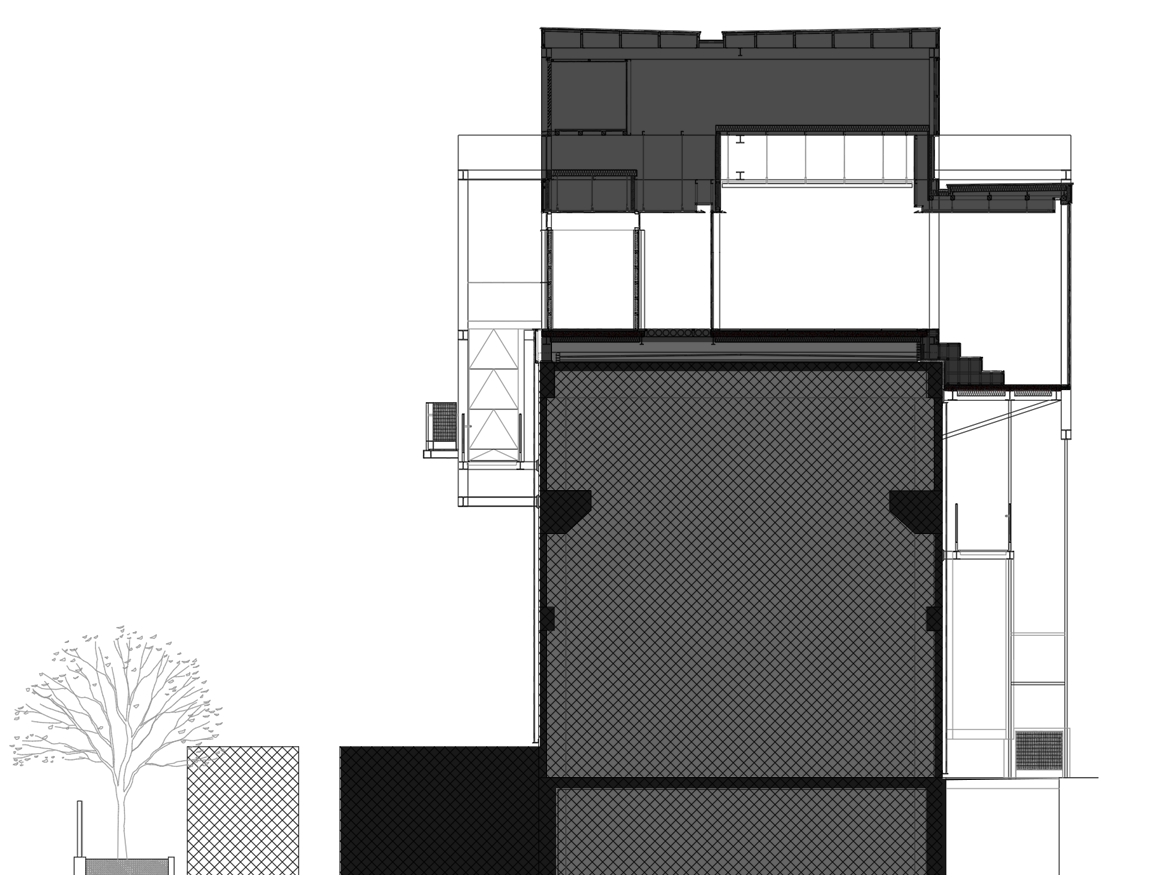
The stair is not concealed behind the façade; instead, movement becomes visible from the intersection. While the structural grid establishes a fixed order, circulation flows freely within it. The stair inserts itself between the columns, ascending through the structural rhythm.
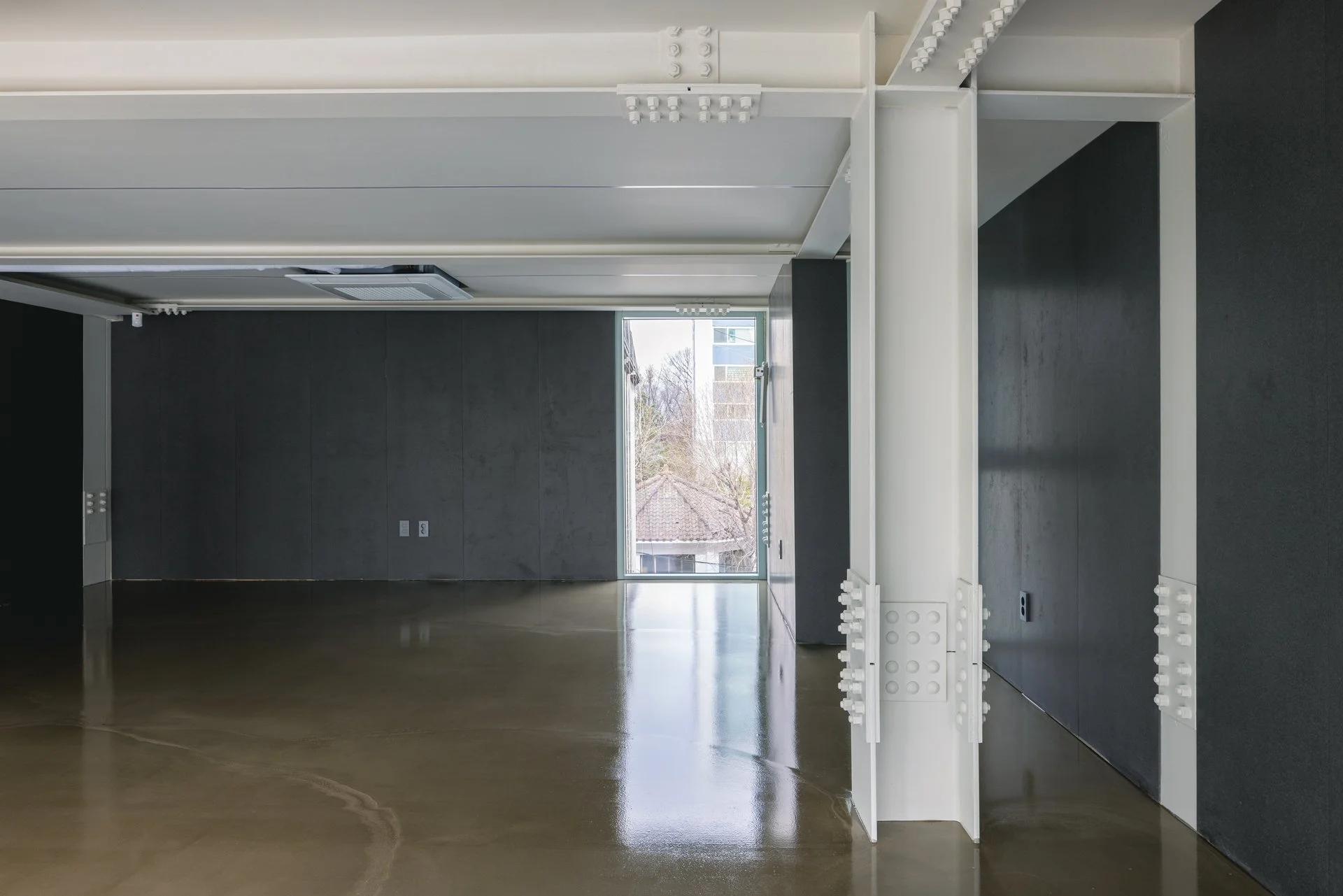
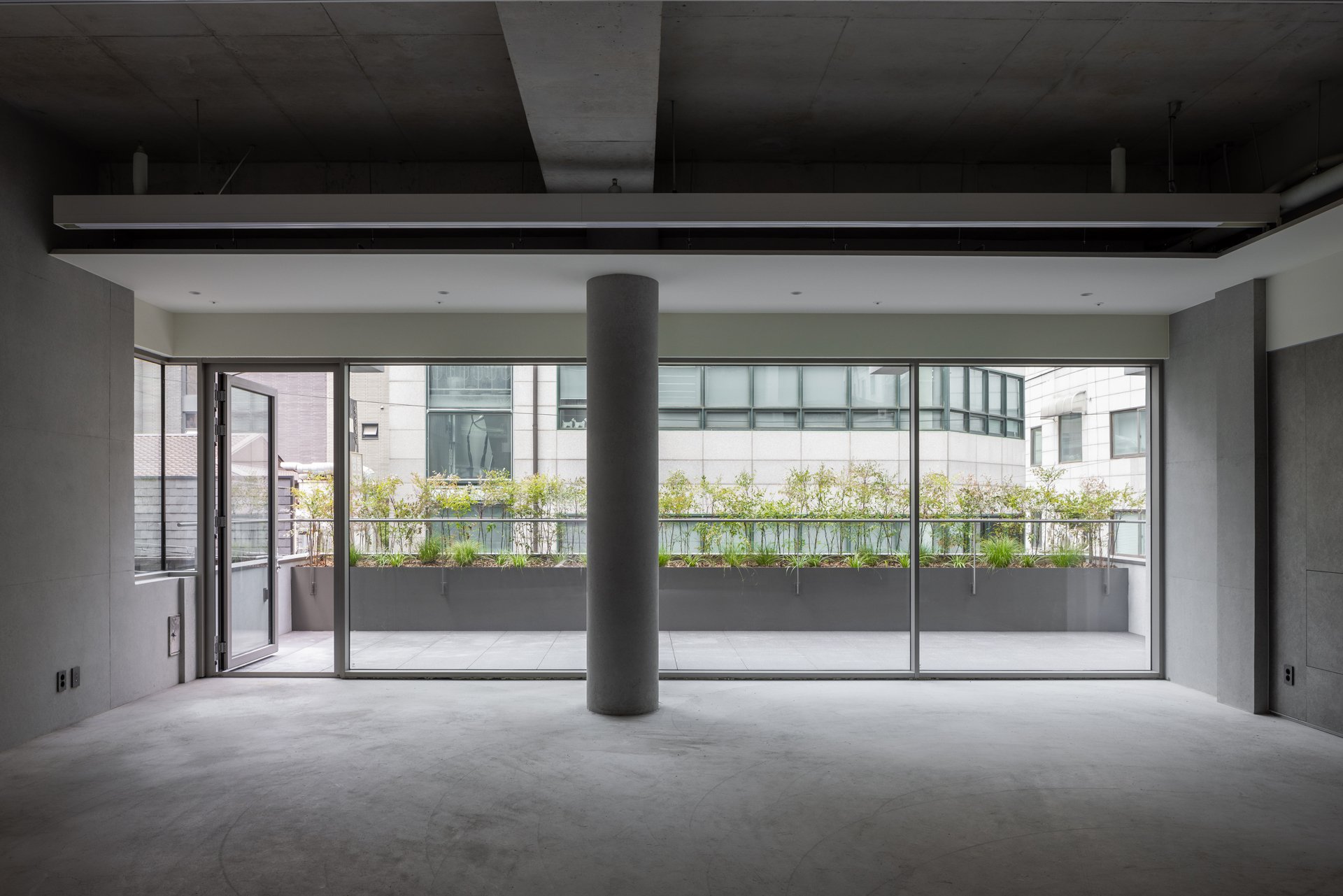
From the outside, the repetition of columns expresses structural order. From within, movement cuts across that order, introducing spatial tension. The building is ultimately completed in the dialogue between stability and flow—between the fixed logic of structure and the temporal presence of human movement.
35mm 사옥
Condition & Method
건축은 단순한 조형적 선택의 결과가 아니다.
하나의 형태는 건축가의 의도만으로 완성되지 않는다. 대지가 가진 법적 조건, 의뢰인의 요구, 프로그램과 구조, 물리적 구축의 방식이 서로 얽히며 건축을 구성한다. 각각의 조건은 제약이자 가능성으로 작동하고, 건축은 그 조건을 해석하고 조직하는 과정 속에서 형성된다.
35mm 사옥은 교차로에 위치한 대지에서 출발한다. 계획 대지는 가각전제(街角剪除) 규정을 따르며, 모서리는 사선으로 절제되어 있다. 이는 도시적 요구에 따른 법적 조건이지만, 우리는 이 사선을 단순히 수용하는 대신 하나의 기준선으로 읽었다.
구조기둥은 이 사선에 맞춰 배치되었고, 그 틀어진 각도는 입면 전체로 확장된다. 대지의 조건은 구조의 방향이 되고, 구조의 배열은 건물의 표정을 형성한다. 틀어진 기둥은 이미지를 만들기 위한 장치가 아니라, 조건을 해석하는 하나의 방법이다. 형태는 자동적으로 도출된 결과가 아니라, 주어진 상황 속에서 선택된 질서의 표현이다.
Light & Surface
35mm 사옥은 빛과 음영을 중심에 두고 계획된 건축이다. 빛은 형상을 드러내고, 표면을 인지하게 하며, 공간의 깊이를 만든다. 이 건축에서 형상과 표면은 분리되지 않는다. 형상은 빛을 받아들이기 위해 존재하고, 표면은 그 빛의 밀도를 조율한다.
교차로 모서리에 선 건물은 틀어진 기둥이 반복되며 중첩된다. 시간에 따라 다른 그림자를 드리우며 입면에 깊이를 형성한다. 기둥의 표면은 거친 질감을 통해 빛을 산란시키고, 강한 대비 대신 은은한 농담이 드러나도록 의도했다. 빛은 날카롭게 반사되지 않고 표면 위에 머물며 미묘한 음영을 만든다.
Material & Mass
상부 매스는 하나의 덩어리로 인지되도록 줄눈 없는 일체형 마감을 적용했다. STO Venetec R 미장 마감을 사용하여 검은 표면을 수차례 갈아내며 질감을 조정했고, 빛에 따라 깊이가 달라지는 표면을 완성했다.
1층 기단부는 UHPC 콘크리트 패널에 샌드블라스팅을 적용했다. 서로 다른 물성이지만 거칠기의 밀도를 조율하여 상부와 질감의 연속성을 유지했다. 다양한 재료는 하나의 빛 아래에서 통일된 음영으로 수렴된다.
Elevation & Stair
건축은 단순한 질서를 기반으로 구축된다. 입면 전체에 배열된 기둥들은 동일한 간격 속에서도 부분적으로 비례를 달리하며 리듬을 형성한다. 반복은 단조로움이 아니라 긴장과 균형을 만든다.
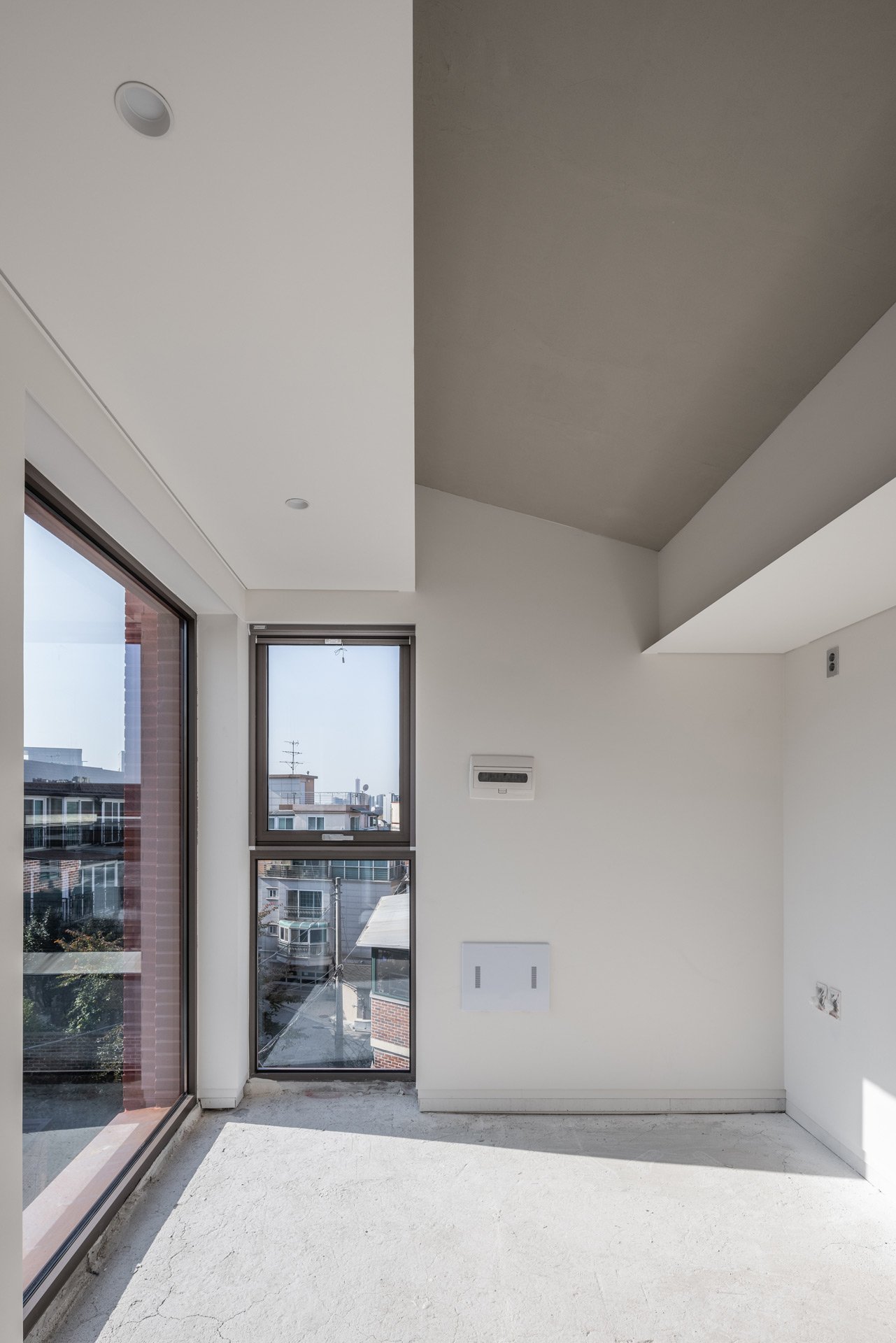
수직 동선은 외부로 드러난다. 계단은 입면 뒤에 숨지 않고, 교차로에서 사람들의 움직임이 읽히도록 계획되었다. 구조는 고정된 질서를 갖지만, 그 사이를 흐르는 동선은 유동적이다. 내부에서 계단은 그리드 사이에 끼어들 듯 자리하며 기둥 사이를 자유롭게 상승한다.
외부에서는 기둥의 반복이 강한 구조적 질서를 형성하고, 내부에서는 동선이 그 질서를 가로지르며 공간적 긴장을 만든다. 결국 이 건축은 고정된 질서와 흐르는 움직임 사이에서 완성된다. 조건을 읽고 선택한 구조적 질서 위에, 빛과 재료, 그리고 사람의 움직임이 겹쳐지며 하나의 장면을 만든다.